Search results for: 'Father feared drowned in river after rescuing his son'
-
 Collection StoriesAfter the Storm: Chittaprosad’s late oeuvre$0.00
Chittaprosad Bhattacharya (1913-1978) was a versatile artist and a lifelong adherent of the socialistic worldview. In 1943, he traveled across the famine-stricken villages of Bengal and produced realistic sketches of human suffering that were regularly published in the pages of the Communist Party journal 'People’s war'. These sketches were later compiled and published as a booklet under the title 'Hungry Bengal'. Fascinated by his artistic skills, the General Secretary of Communist Party of India, Puran Chand Joshi took Chittaprosad to the Party’s headquarters in Bombay (now Mumbai).
Learn More -
 ExhibitionsA Place In The Sun: Women Artists From 20th Century IndiaAs low as $1.00
Sunayani Devi picked up a paintbrush in 1905 when she was thirty years old while supervising her kitchen duties, self-taught, but with enough talent to attract the critical attention of Stella Kramrisch who organised an exhibition of her paintings in Germany in 1927. It was in her worthy footsteps that India’s women artists followed. Devayani Krishna was born five years after Sunayani Devi began painting; Amrita Sher-Gil already had a career in Paris by the time India’s first art school-trained woman artist, Ambika Dhurandhar, earned her diploma in Bombay. B. Prabha followed next, her work reflecting the realities of the marginalised in a piquant language. By the time Nasreen Mohamedi and Zarina Hashmi, both born a decade before Independence, established their careers, women were joining art schools in greater numbers, validating their practice not on the basis of their gender but on its context. Anupam Sud Devayani Krishna Gogi Saroj Pal Latika Katt Madhvi Parekh Mrinalini Mukherjee Navjot Rekha Rodwittiya Shobha Broota Zarina Hashmi
Learn More -
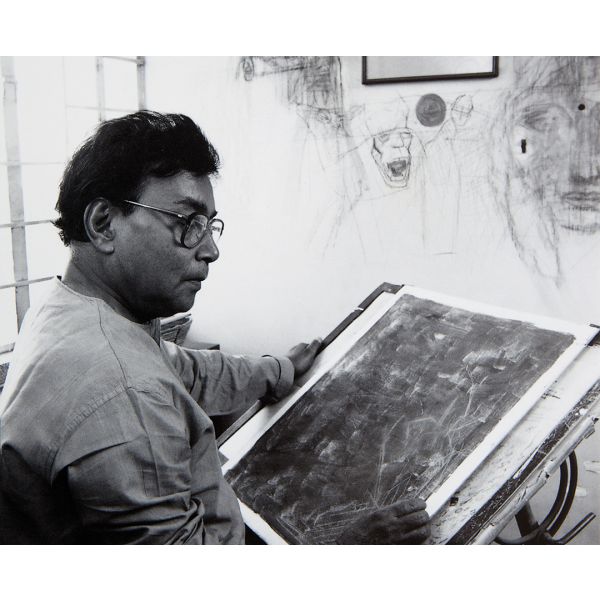 ArtistsGanesh Pyne$0.00Born in 1937 in Calcutta, Ganesh Pyne lost his father before his teens and personally witnessed the horrors of Partition. The social violence and despair of the 1940s and the tumultuous political events of the 1970s had a deep impact on his psyche and work. Coupled with the influence of his grandmother’s stories, Pyne developed an individual style of poetic surrealism woven around mythology and Bengali folklore. Learn More
 -
 ExhibitionsMemory & IdentityAs low as $1.00
Much of Indian modernism is enriched by the work that some of its best known artists produced after they had left the country, choosing as home another land. F. N. Souza was among the first to leave, in 1949, to head for London, where a successful practice catapulted him to the top of Britain’s artists. He was followed, in 1950, by S. H. Raza, who settled in Paris, winning the coveted critics’ award (Prix de la critique) in 1956, while others such as Krishna Reddy (Paris and New York), S. K. Bakre (London), Sakti Burman (Paris), Avinash Chandra (London and New York), Mohan Samant (New York), Natvar Bhavsar (New York), V. Viswanadhan (Paris), Sohan Qadri (Copenhagen), Rajendra Dhawan (Paris), Eric Bowen (Oslo), Ambadas (Oslo), and Zarina Hashmi (New York), followed in the 1950s-70s. These fourteen artists, with their diverse styles and concerns in art making, are masters lauded for the sheer range of responses to their environment that their work has registered. However, the question this exhibition forefronts, as its curator Kishore Singh asks, is: ‘Does the artist’s ethnic identity mean art too has an ethnic identity?’ Ambadas Avinash Chandra Eric Bowen F. N. Souza Krishna Reddy Mohan Samant Natvar Bhavsar Rajendra Dhawan S. H. Raza S. K. Bakre Sakti Burman Sohan Qadri V. Viswanadhan Zarina Hashmi
Learn More -
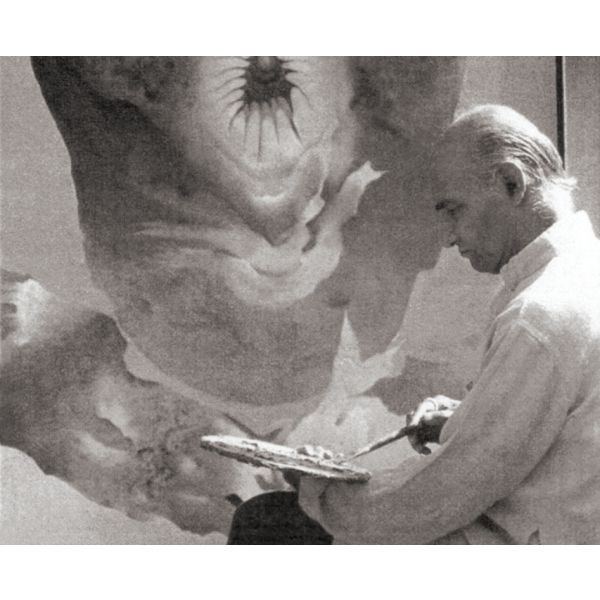 ArtistsBimal Dasgupta$0.00Born in Bengal in 1917, Bimal Dasgupta was raised by his uncle, a government employee posted in Delhi. His uncle’s family did not support his ambition of becoming an artist, so he joined Calcutta’s College of Arts and Crafts in 1937 with his father’s help. Learn More
 -
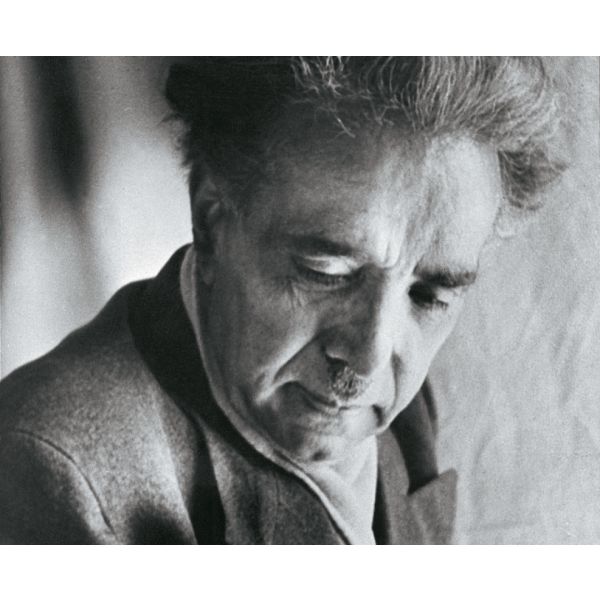 ArtistsM. A. R. Chughtai$0.00Born into a family of artists in Lahore on 21 September 1897, M. Abdur Rahman Chughtai learnt to draw from his father, Mia Karim Baksh. He joined Mayo School of Art in Lahore in 1911, where Samarendranath Gupta, a pupil of Abanindranath Tagore, was vice-principal. He obtained a diploma in photo lithography from Mayo School in 1914, where he went on to become the head instructor in chromo-lithography. He honed his printmaking skills during visits to London in the mid-1930s and exhibited his works across Europe; he also exhibited with Indian Society of Oriental Art in Calcutta around this time. Learn More
 -
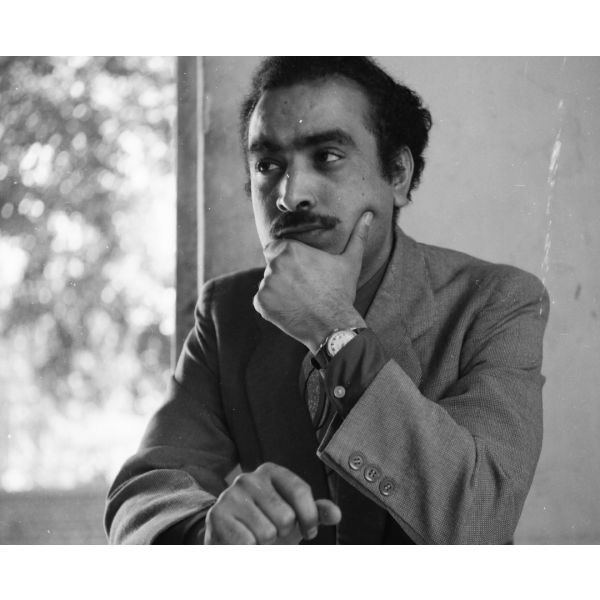 ArtistsG. R. Santosh$0.00Born Gulam Rasool Dar in a Shia Muslim family in Srinagar in Kashmir on 20 June 1929, the artist took on his wife’s Hindu name ‘Santosh’ as his own, in a move opposing patriarchy and religion. His father’s death forced a young Gulam to work as a signboard painter, papier-mâché artist, and weaver. He learnt to paint watercolour landscapes from Dina Nath Raina in Kashmir before studying under N. S. Bendre at M. S. University, Baroda, on the recommendation of S. H. Raza. In Baroda, he produced a large body of figurative and landscape works, mainly in the cubist style. Learn More
 -
 JournalUntitled (Tigers) by Amrita Sher Gil$1.00
The birth of Amrita Sher-Gil to an Indian father and Hungarian mother bequeathed to the nation one of its most incandescent artists. Known for her luminous paintings, her work changed the face of modern Indian art and paved the course it was to take in the country. In a rare sculpture of tigers made, poignantly enough, in the last year of her life, Amrita Sher-Gil is revealed as someone exploring new directions before her tragic demise in 1941.
Learn More -
 ExhibitionsTipu SultanAs low as $1.00
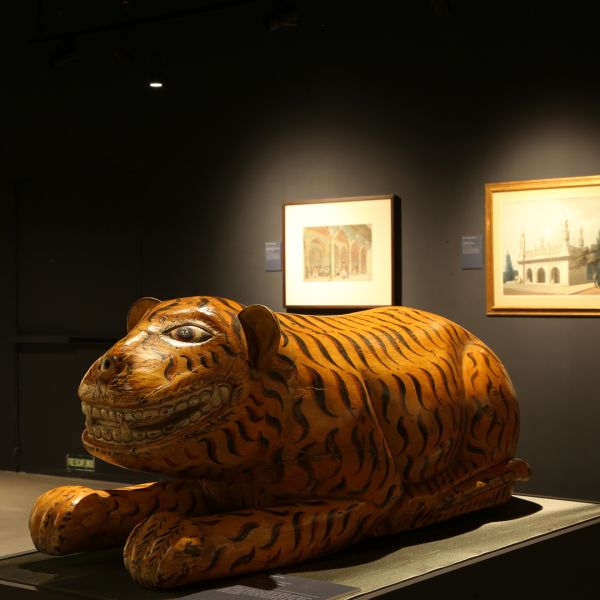
An extraordinary exhibition of paintings, prints, maps and other objects, curated by Giles Tillotson, that recounts a visual history of the Mysore Wars between the East India Company and Tipu Sultan, this DAG exhibition explores how the narrative might have changed 222 years after the siege of Seringapatnam. The images, based on the British view of the time, reflect changing perceptions and Indian views on this epic battle and its political and social fallouts. A highlight of the exhibition is a painting by Henry Singleton depicting The Last Effort and Fall of Tippoo Sultaun, among other stellar works, that will be seen in India for the first time. Alexander Allan Cpt. R. Frazer David Wilkie Edward Orme Henry Singleton J. B. Mauzaisse James Hunter Johann Peter Krafft John Smart Mather Brown Obadiah Sherratt Robert Hyde Colebrooke Robert Home Robert Ker Porter Thomas Stothard
Learn More -
 ExhibitionsIndian LandscapesAs low as $1.00
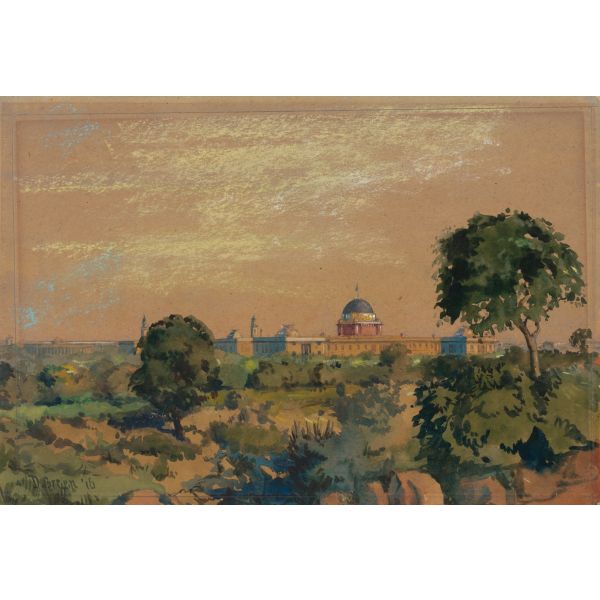
Landscape art arrived in India through travelling European artists who brought the aesthetic of painting mountains, rivers and trees against the sky and a distant horizon—nature as a subject in itself —to Indian art, where it had traditionally only formed a backdrop in narrative-driven, figural paintings. The genre remained popular throughout the nineteenth century with a great demand for landscapes of India both in Europe and among the newly anglicised elite in India. Its popularity began to wane with the advent of modernism and a growing emphasis on the human figure, but several Indian artists, a significant name among them Gopal Ghose, continued to practice the form, now absorbing a wide range of new artistic trends and influences. A.A. Almelkar Abanindranath Tagore Ambika Dhurandhar Amitava Anonymous (Company School) Anonymous (Early Bengal) Atul Bose Avinash Chandra B. C. Gue B. N. Arya Bhupen Khakhar Bijan Choudhary Bikash Bhattcharjee Bimal Dasgupta Bireswar Sen Bishnupada Roychowdhury Chittaprosad D. C. Joglekar D. J. Joshi Devraj Dakoji Devyani Krishna Dharamnarayan Dasgupta Dulal Gue E. A. Dadi Edward Cheney F. N. Souza G. R. Santosh G. S. Haldankar Ganesh Haloi Gobardhan Ash Gopal Ghose H. A. Gade Haren Das Hirachand Dugar Indra Dugar J. P. Gangooly Jamini Roy John Deschamps Jyoti Bhatt K H. Ara K. C. S. Panicker K. K. Hebba K. Laxma Gou K. S. Kulkarni Kanwal Krishna Kisory Roy Kripal Singh Shekhawat L. N. Taskar L. P. Shaw Lalit Mohan Sen Laxman Pai M. F. Husain M. V. Dhurandhar Manishi Dey Mukul Dey N. R. Sardesai N. S. Bendre Nandalal Bose Nikhil Biswas Olinto Ghilardi P. Khemraj Paramjit Singh Pestonji E. Bomanji Prokash Karmakar Prosanto Roy Radha Charan Bagchi Raja Ravi Varma Ram Kumar Ramendranath Chakravorty Ramkinkar Baij Ranen Ayan Dutta Richard Barron Robert Grindlay S. G. Thakur Singh S. K. Bakre S. L. Haldankar Satish Sinha Sudhir Khastgir Sunil Das Thomas Daniell William Carpenter William Hodges
Learn More -
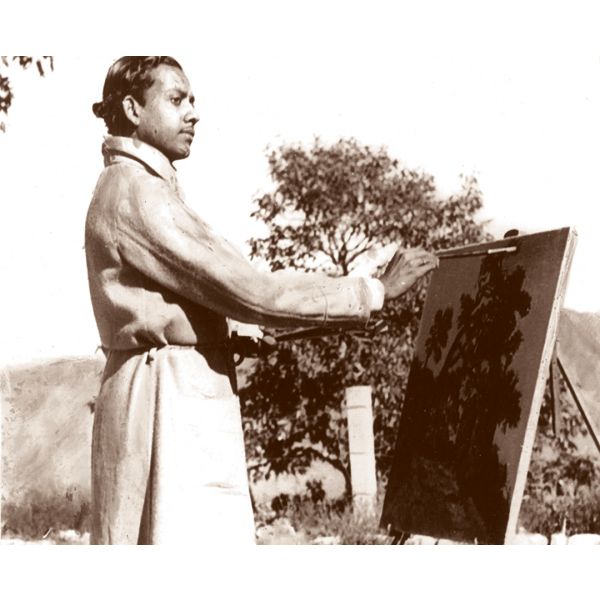 ArtistsKisory Roy$0.00Well-known for his landscape paintings, Kisory Roy was inspired to take up the arts by his father, who worked for the railways and was an occasional painter. Winning a school competition led Roy to the Government School of Art, Calcutta, where he studied from 1931-37. Under Mukul Dey, he learnt to work in several mediums like watercolour, oil, charcoal, and crayon. Learn More