Search results for: 'famous indian paintings in famous offices around the world'
-
 ExhibitionsWays of SeeingAs low as $1.00
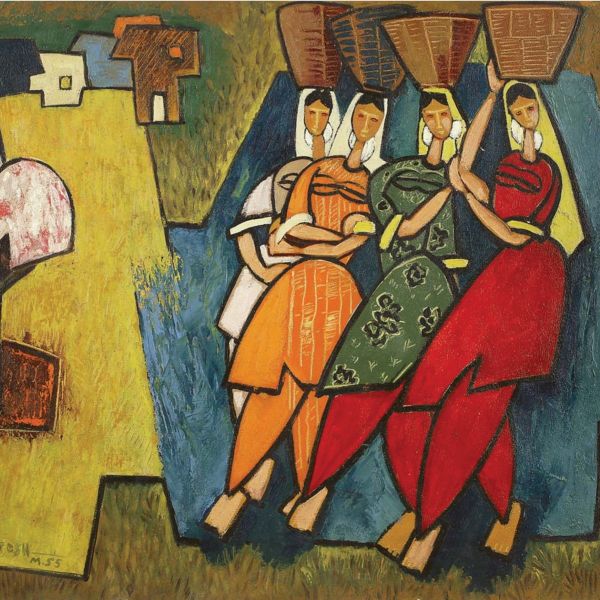
Do we view things differently as we grow older? What are the perspectives that matter most when viewing art? Do we see things differently as men and women? Do we see art differently as men and women? How does one’s gender impact the creation of art? In the months leading up to ‘Ways of Seeing’, these were some of the questions we posed to ourselves, and we wish we could say that we found a generic, universal response, for there are as many standpoints and views as there are viewers and people. Amrita Sher-Gil Anjolie Ela Menon Anupam Sud Arpana Caur B. Prabha Devayani Krishna Elizabeth Brunner Gogi Saroj Pal Jaya Ganguly Kanchan Chander Kavita Nayar Latika Katt Madhvi Parekh Mrinalini Mukherjee Nalini Malani Navjot Nilima Sheikh Rekha Rodwittiya Shobha Broota Sunayani Devi Vasundhara Tewari Broota Zarina Hashmi Akbar Padamsee Avinash Chandra B. C. Sanyal Baburao Painter Bikash Bhattacharjee D. P. Roy Chowdhury Dharamanarayan Dasgupta Dhruva Mistry F. N. Souza G. R. Santosh Ganesh Pyne George Keyt Haren Das Jagadish Dey Jamini Roy Jogen Chowdhury Jyoti Bhatt K. H. Ara K. S. Kulkarni Khagen Roy Krishen Khanna M. F. Husain M. Suriyamoorthy M. V. Dhurandhar Nandalal Bose P. T. Reddy Prokash Karmakar Sakti Burman Satish Sinha Sudhir Khastgir Sunil Das V. Nageshkar
Learn More -
 ArtistsCompany Paintings$0.00
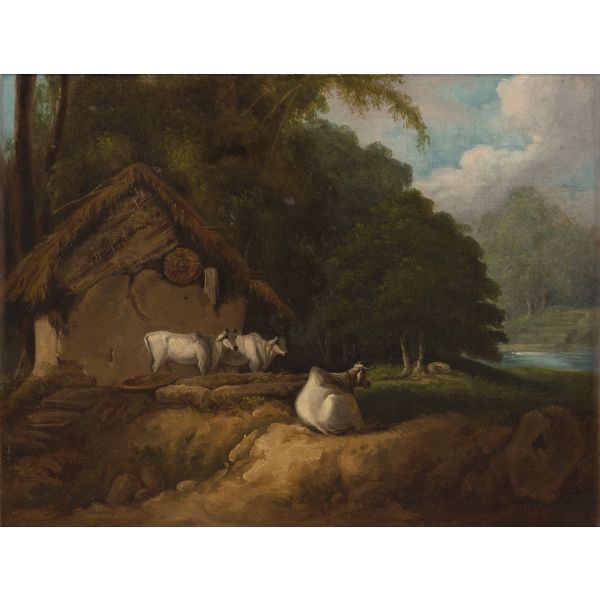
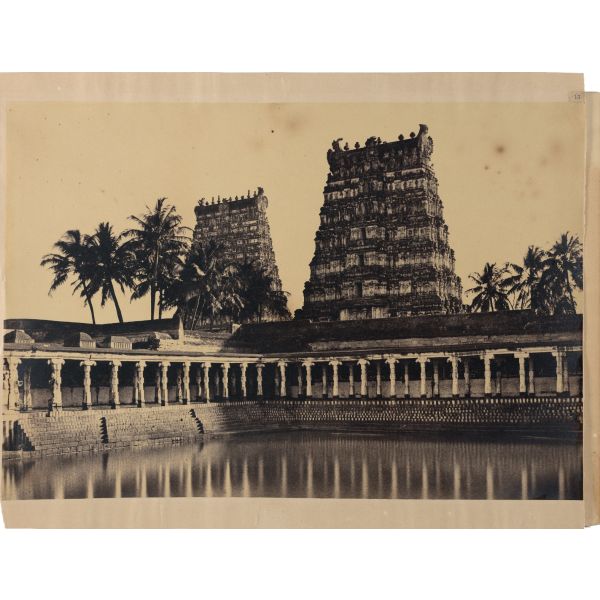
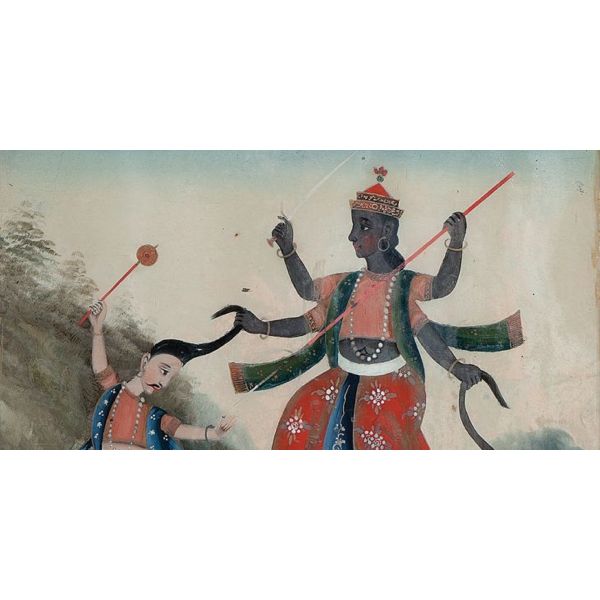
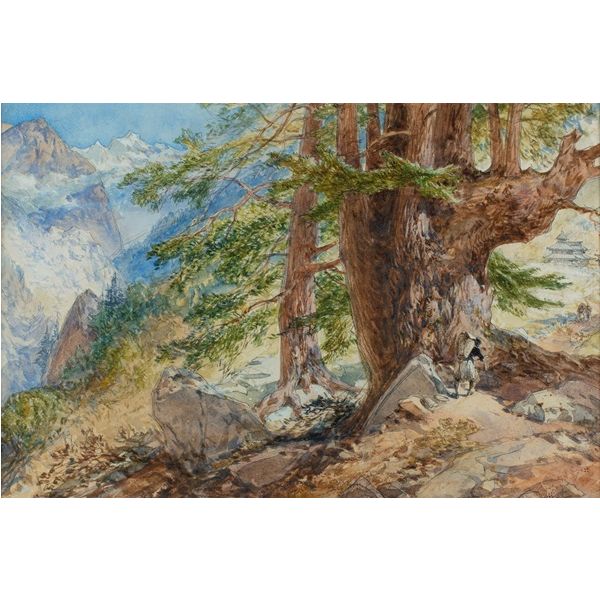
Ethnographic mapping and documentation of a vast country like India was an important part of the political and economic expansion of the East India Company from the middle of the seventeenth century onwards.
Learn More -
 ExhibitionsShanti Dave: Neither Earth, Nor SkyAs low as $1.00
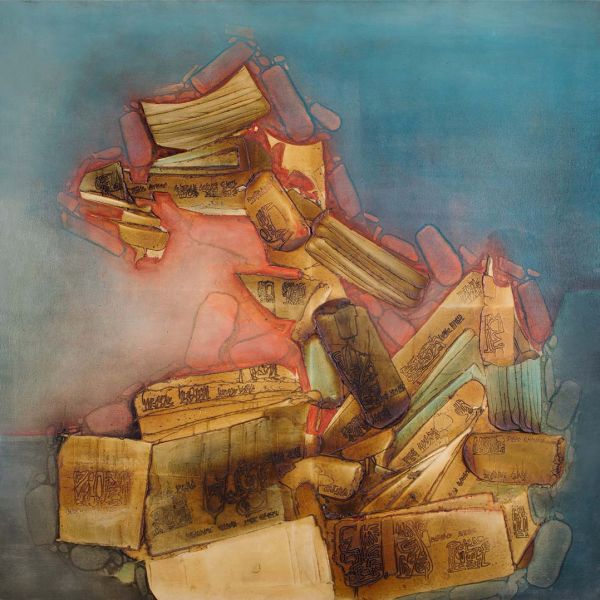
For Shanti Dave, creativity is a consistent and persistent exploration of the word or akshara—a term defined in the Natyashastra as a stroke in musical notes—which he perceives as the source of all creation. Dave’s abstract iconography, beginning in the early 1950s, adapted to modernism, aesthetic continuity and transcultural exchange. He altered, rejected and improvised the archaic image into a resonant form resembling an ancient script.
Learn More -
 Events and ProgrammesCrossing the Midnight Hour$1.00
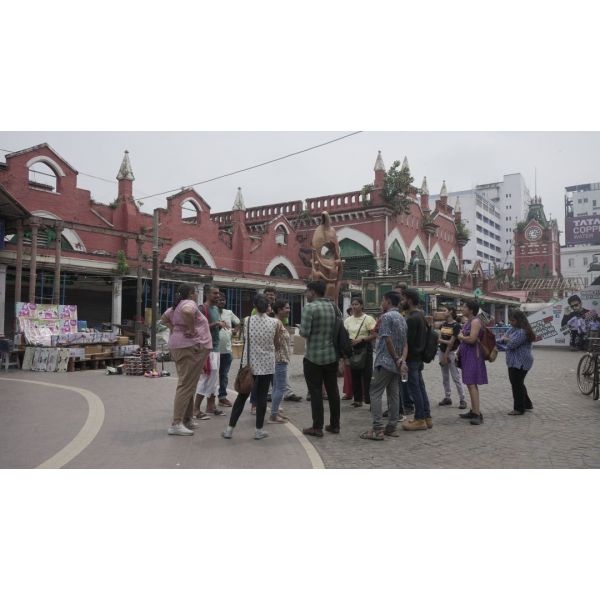
A guided walk by urban history researcher Sujaan Mukherjee, uncovering the forgotten histories of monuments and sites around the Indian Museum, and their changing fates after Independence.
Learn More -
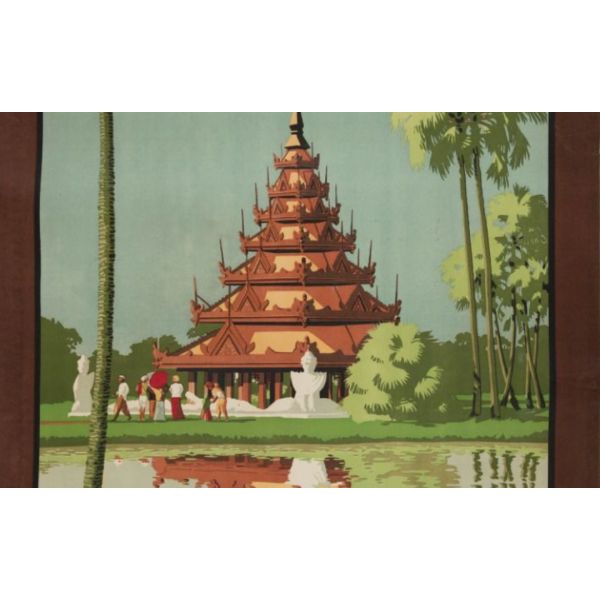 Events and ProgrammesMappa theke Manchitra$1.00
A guided walk of the first free circulating public library of India—Uttarpara Public Library—with researcher Sarbajit Mitra, traversing the history of regional literary cultures, and sifting through their vast archive to delve into the vibrant world of illustrated periodicals in colonial Bengal, followed by a poetry reading by Sujoy Prasad Chatterjee.
Learn More -
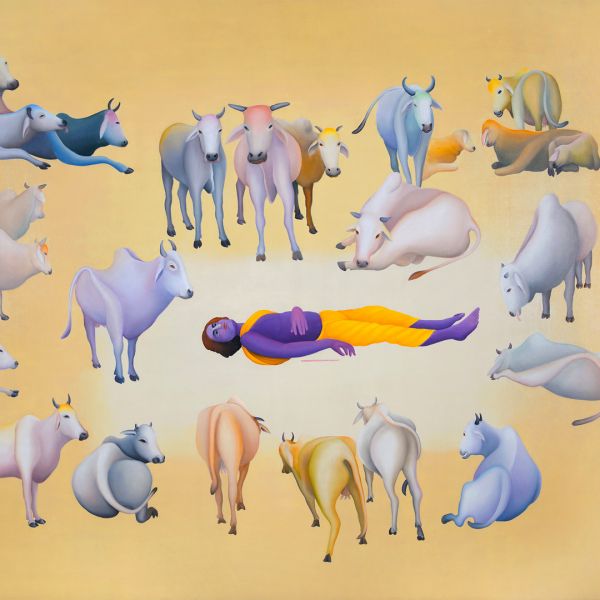 Art FairsIndia Art Fair$0.00
DAG’s emphasis for the 2019 edition of India Art Fair was a rarity—a selection of works of the kind visitors had not before seen. These included a glass mural by Avinash Chandra, a medium the artist loved but which had never before been shown in India; a large mural by Mrinalini Mukherjee; an artist’s chair by Prabhakar Barwe; evocative works by Hemendranath Mazumdar, Manjit Bawa, and Tyeb Mehta; powerful paintings by F. N. Souza, M. F. Husain, Rabin Mondal, and Krishen Khanna; exemplary abstract paintings by Ram Kumar, Shanti Dave, Sohan Qadri, J. Swaminathan, and G. R. Santosh; and other equally powerful artworks including a double-sided sculpture by Meera Mukherjee.
Avinash Chandra F N Souza G R Santosh Hemendranath Majumdar J Swaminathan Krishen Khanna M F Husain Madhvi Parekh Manjit Bawa Meera Mukherjee Mrinalini Mukherjee Paritosh Sen Prabhakar Barwe Rabin Mondal Ram Kumar S H Raza S K Bakre Shanti Dave Sohan Qadri Tyeb Mehta
Learn More -
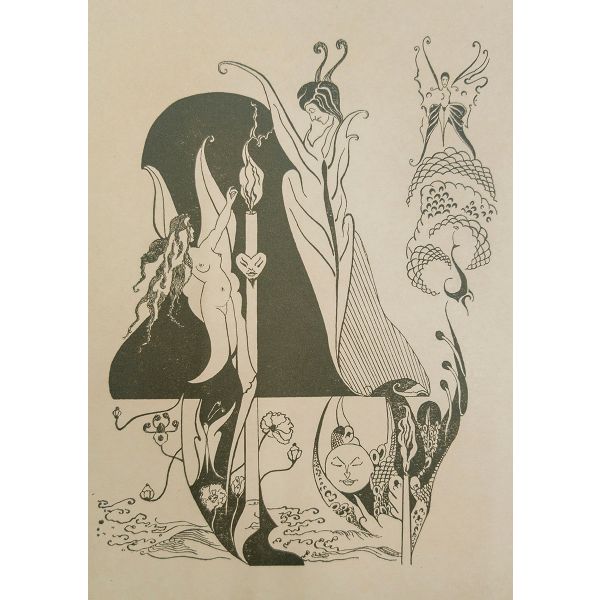 Collection StoriesThe Three Indian Illustrators of the Rubaiyat: A book transcending cultures and time$1.00
The Rubaiyat of Omar Khayyam by Edward FitzGerald is an anthology of four-line verses first published in 1859. The poems were inspired by Persian quatrains credited to Omar Khayyam (1048-1131), which became a global phenomenon at the turn of the twentieth century. The first edition of FitzGerald’s Rubaiyat has been uniquely published over 3700 times, and the verses translated over 1000 times.
Learn More