


Search results for: 'how deep a porcupine pufferfish swim in the wild'
-
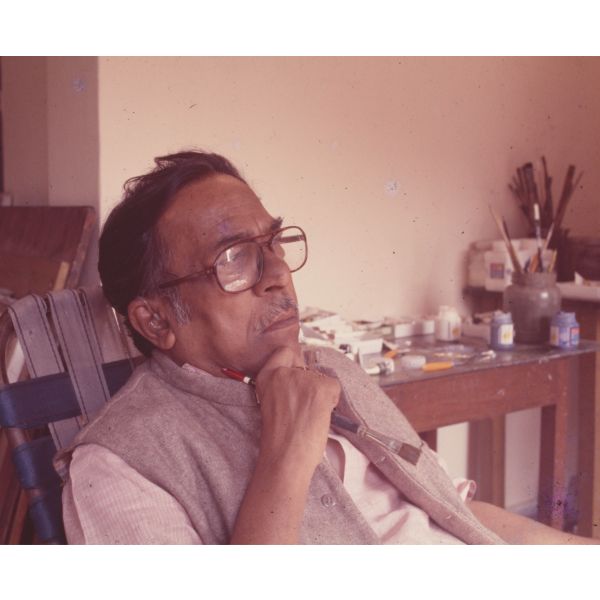 ArtistsShyamal Dutta Ray$0.00Among the most accomplished watercolourists of modern India, Shyamal Dutta Ray was born in Ranchi, then in Bihar, and studied at Government College of Arts and Crafts, Calcutta, from 1950-55. He was a founding member of Society of Contemporary Artists in 1959, and of Painters 80, founded in 1968. Learn More
 -
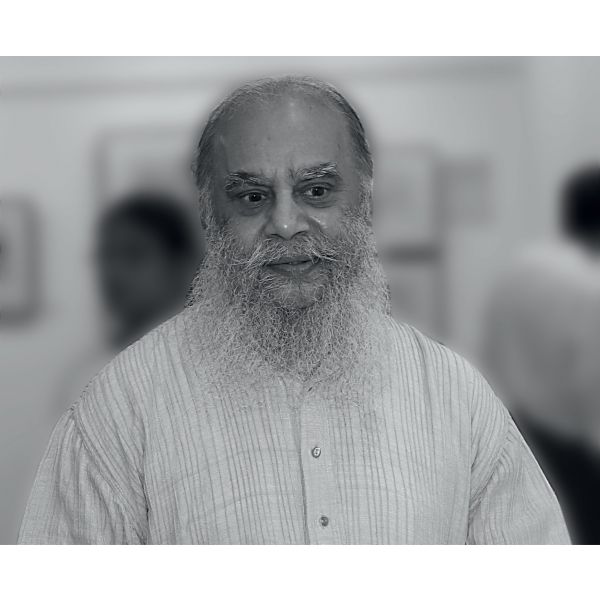 ArtistsShuvaprasanna$0.00Born in Calcutta on 20 October 1947, Shuvaprasanna is a quintessential painter of the eastern metropolis that he unabashedly loves. He graduated from Indian College of Art, Rabindra Bharati University, Calcutta, in 1969. An active member of Calcutta Painters group, urban themes are a constant in his work. Beset by problems and politics, but possessing great potential, Kolkata has remained his abiding inspiration as he absorbs and responds to its upheavals, the tumult of its masses, and its frequent political turbulence. Learn More
 -
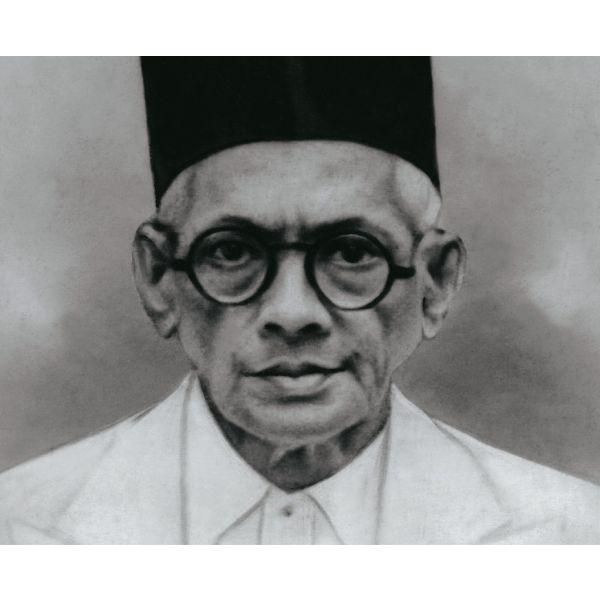 ArtistsN. R. Sardesai$0.00N. R. Sardesai was born in 1885 in Ratnagiri, Maharashtra, and completed his early education at the Ratnagiri School of Industry. Here, he studied carpentry and drawing in 1906, before joining Sir J. J. School of Art, Bombay, for formal training in art. Thereafter, he began work as a drawing teacher in a school in Fort, Bombay. In 1915, he had a short stint as a drawing teacher at his alma mater too. Learn More
 -
 ArtistsM. S. Joshi$0.00Born in Nashik, Maharashtra, M. S. Joshi studied at Sir J. J. School of Art, Bombay, in the 1930s. Joshi combined his training in academic realism with a sense of vitality, precision and aesthetics to reveal India’s rich cityscapes and landscapes in his watercolour and gouache works. There was immense depth in the rendering of his subjects, which included people, places, architectural elements, all done in a subdued yet textured palette. Learn More
 -
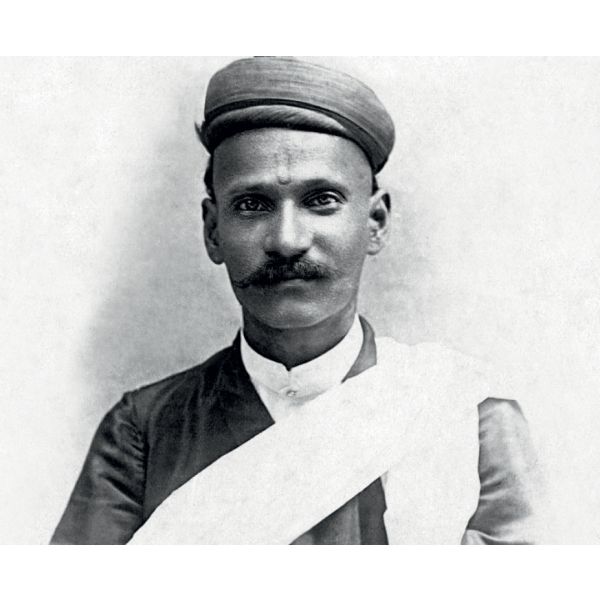 ArtistsL. N. Taskar$0.00Laxman Narain Taskar’s paintings mirror the ideals of academic realism introduced by the British within their art education system. Indian artists were trained in naturalism, with lessons in soft effects of chiaroscuro and the three-dimensionality of the external world. History painting, perspective, and the copying of Victorian portraits became a vital ingredient within these art schools. Learn More
 -
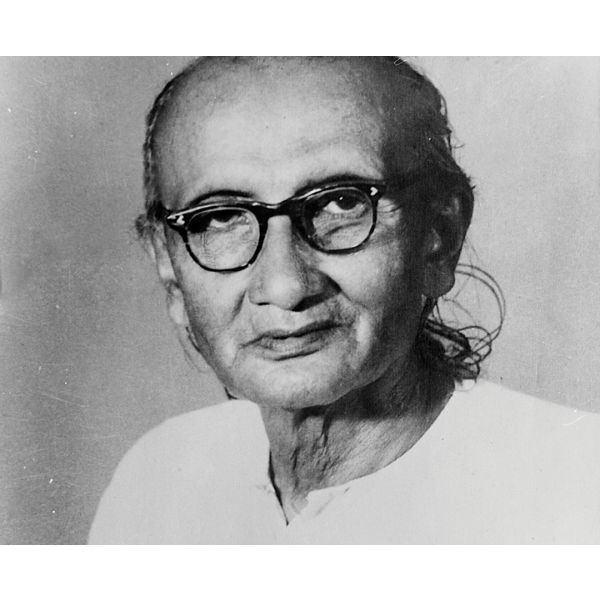 ArtistsKshitindranath Majumdar$0.00Kshitindranath Majumdar, born on July 31, 1891, in Jagtai village of Murshidabad in West Bengal, is often referred to as a saint-artist who considered art as a form of devotion. Strongly influenced by Vaishnavism as propounded by the fifteenth century saint, Chaitanya Mahaprabhu, Majumdar trained in hymn singing, interpreted legends from Indian epics, and acted in productions of the theatre group owned by his father. Learn More
 -
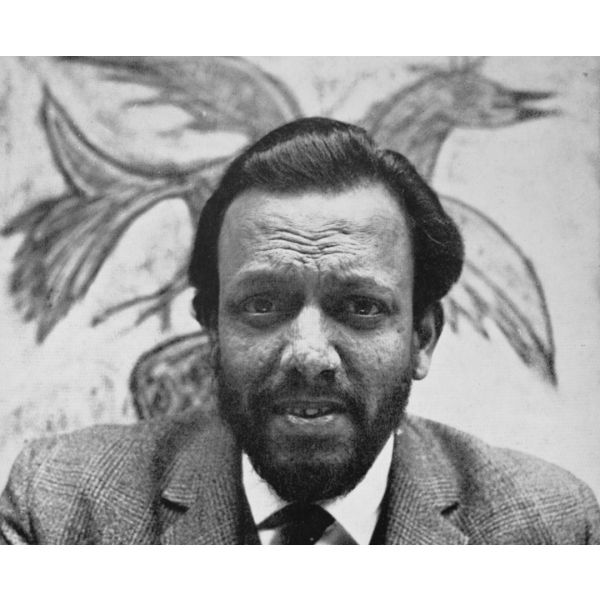 ArtistsF. N. Souza$0.00
Francis Newton Souza, born on 12 April 1924, was expelled from school, then from his college—Sir J. J. School of art, Bombay—and later, as he insisted on saying, from his own country. Born in Goa, Souza’s catholic mother brought him up to be a priest, but he showed early signs of rebellion that would become an integral part of his life.
Learn More -
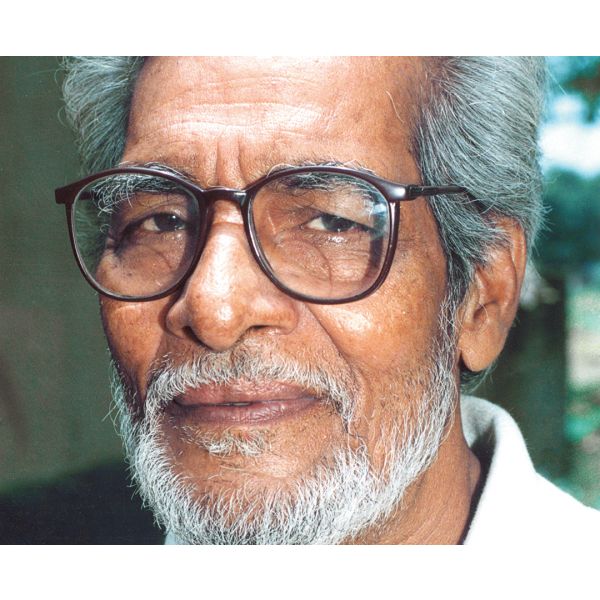 ArtistsBijan Chowdhury$0.00Born in Faridpur in present-day Bangladesh, Bijan Chowdhury moved to Calcutta to study at the Government School of Art, but due to his leftist activities, was expelled. He then went to the Government Institute of Arts, Dacca, headed by his erstwhile teacher, Zainul Abedin, from where he graduated in 1953. Learn More
 -
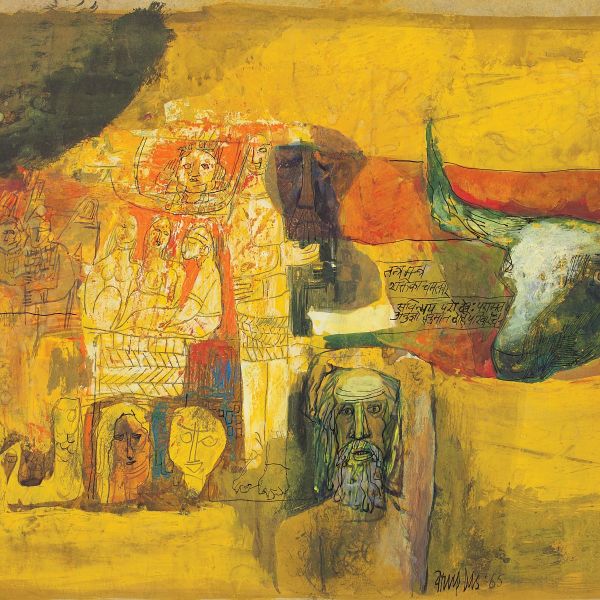 ExhibitionsThe Centum Series Edition 2As low as $1.00
Indian art defies any easily tailored silos to carve for itself a confident assertion of its own identity within a global context, while being a part of its larger assimilative journey. it is this rich legacy of Indian modernism that we hope to explore with The Centum Series which opens a window to the tantalising glimpse of the extraoridnary depth and breadth of its scope and variety. Round numbers are attractive, so we picked one hundred as our choice for this medley of artists and artworks that offers you a unique opportunity to acquire Indian modern art at attractive prices specially tailored for this sale. J. Sultan Ali Altaf Ambadas Amit Ambalal Amitava Anonymous (Early Bengal) Anonymous (Kalighat Pat) Dattatraya Apte B. N. Arya Radha Charan Bagchi Ramkinkar Baij S. K. Bakre Maniklal Banerjee Ananda Moy Banerji Prabhakar Barwe R. B. Bhaskaran Jyoti Bhatt Bikash Bhattacharjee Nikhil Biswas Nandalal Bose Eric Bowen Shobha Broota Vasundhara Tewari Broota Sakti Burman Ramendranath Chakravorty Kanchan Chander Avinash Chandra Sankho Chaudhuri Chittaprosad Jagmohan Chopra Jogen Chowdhury M. A. R. Chughtai Thomas Daniell Arup Das Prodosh Das Gupta Haren Das Sunil Das Bimal Dasgupta Shanti Dave Partha Pratim Deb Jagadish Dey Mukul Dey Rajendra Dhawan Indra Dugar Gopal Ghose Nemai Ghosh Subba Ghosh Bipin Behari Goswami K. Laxma Goud Satish Gujral Ajit Gupta S. L. Haldankar Somnath Hore M. F. Husain Prokash Karmakar Sudhir Khastgir P. Khemraj Bose Krishnamachari K. S. Kulkarni Ram Kumar Walter Langhammer Pradip Maitra Hemanta Misra Dhruva Mistry Rabin Mondal A. H. Müller L. Munuswamy V. Nageshkar Reddeppa Naidu S. Nandagopal Ved Nayar Akbar Padamsee Laxman Pai Gogi Saroj Pal Rm. Palaniappan M. K. Parandekar Madhvi Parekh Manu Parekh R. N. Pasricha Ganesh Pyne Sohan Qadri K. S. Radhakrishnan A. A. Raiba Krishna Reddy P. T. Reddy Rekha Rodwittiya Jamini Roy Prosanto Roy G. R. Santosh Paritosh Sen Nataraj Sharma Lalu Prasad Shaw Shuvaprasanna Paramjeet Singh F. N. Souza Anupam Sud Thota Vaikuntam S. G. Vasudev Jai Zharotia Moti Zharotia
Learn More -
 ExhibitionsMaster Maqbool: Works by M. F. HusainAs low as $1.00
He was the colossus of the Indian art world whose reign over twentieth-century modern art remains unparalleled. M. F. Husain (1913-2011) was the face of Indian modernism and owned it completely. Having started out as a painter of billboards in Bombay, he became its unchallenged monarch as a member of the influential Progressive Artists’ Group in 1947. He claimed the first National Award instituted by the Lalit Kala Akademi in 1955, and went on to become India’s most celebrated artist. In a practice that spanned over seventy years, Husain was playful, experimental, provocative, controversial—but never mediocre.
Learn More -
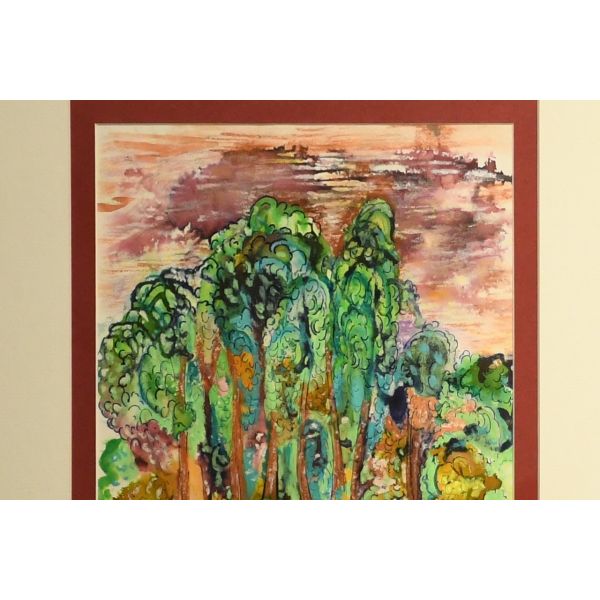 JournalPersonalising the Epics: Amar Nath Sehgal's 'Mythologies'$0.00
The India International Centre at New Delhi, in collaboration with the Amar Nath Sahgal Trust, presented a large suite of works by Amar Nath Sahgal (1922—2007), one of post-independent India’s foremost sculptors, in order to celebrate his centenary year in March 2023.
Learn More -
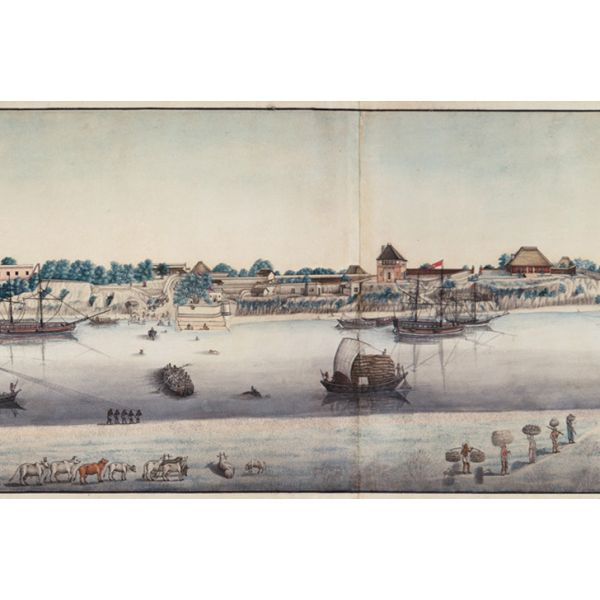 JournalWilliam Dalrymple on 'Indian Painting for the East India Company'$1.00
Also known as Company School, this genre is the Indo-European style of painting made in India by Indian artists, most of whom worked under the patronage of the East India Company. Focusing on a spectacular painting, William Dalrymple takes us through a journey of this neglected yet outstanding genre of art from nineteenth century India.
Learn More