Search results for: 'History of india and indian nat'
-
-
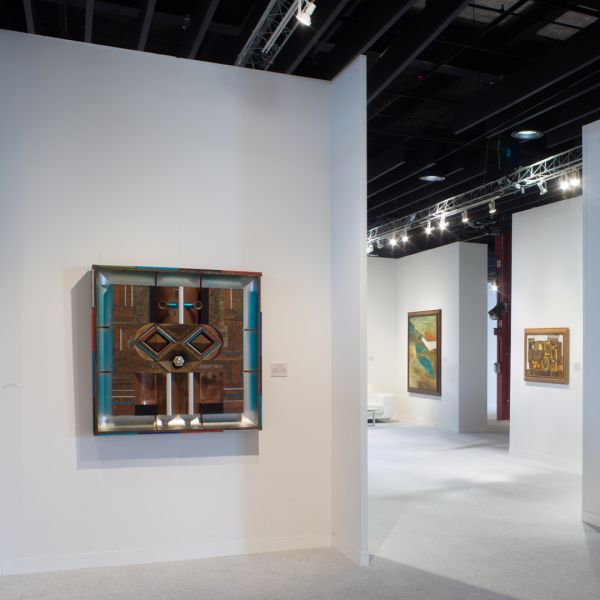 Art FairsThe Armory Show$0.00
New York’s popular Armory Show required DAG to put forth its most emphatically modernist artists. These included several who had been fellows of the John D. Rockefeller III Fund and would thus have a resonance among art connoisseurs in America for their language and context. Instead of concentrating on the Progressives, therefore, DAG decided to curate a selection that included works by Avinash Chandra and Natvar Bhavsar with extensive careers in New York, and an important body of works by artists such as S. H. Raza, Ram Kumar, Krishen Khanna, Paritosh Sen, and Satish Gujral, among others. Avinash Chandra Jyoti Bhatt K G Subrmanyan Krishen Khanna Natvar Bhavsar Paritosh Sen Ram Kumar Tyeb Mehta Rekha Rodwittiya S. H. Raza Satish Gujral
Learn More -
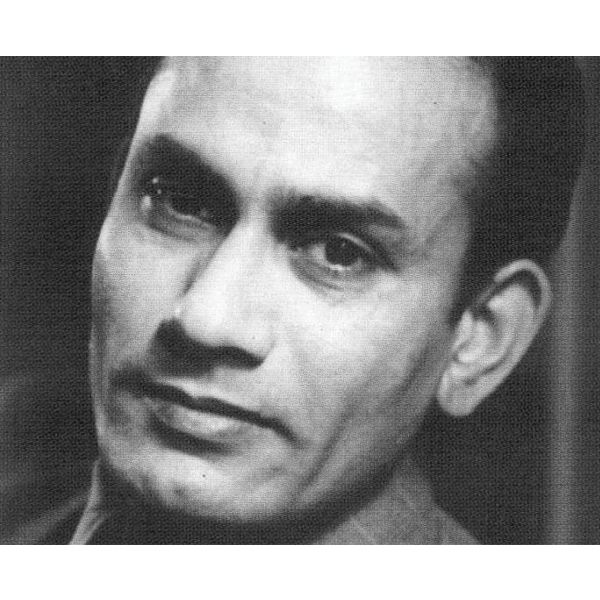 ArtistsVishwanath Nageshkar$0.00Of Goan origin, Vishwanath Nageshkar was born and raised in Kolhapur, Maharashtra, in 1910. He obtained his diploma from Sir. J. J. School of Art, Bombay, in 1930; he also specialised in frescos from the same institute. A contemporary of Amrita Sher-Gil, Nageshkar was one of the first Indian artists to move to Paris for his education—he studied at École National Supérieure des Beaux-Arts from 1930-35. Later, he studied at Kunstakademic in Munich, Germany, from 1938-40, and under Professor A. Strübe in Berlin, 1940-41. Learn More
 -
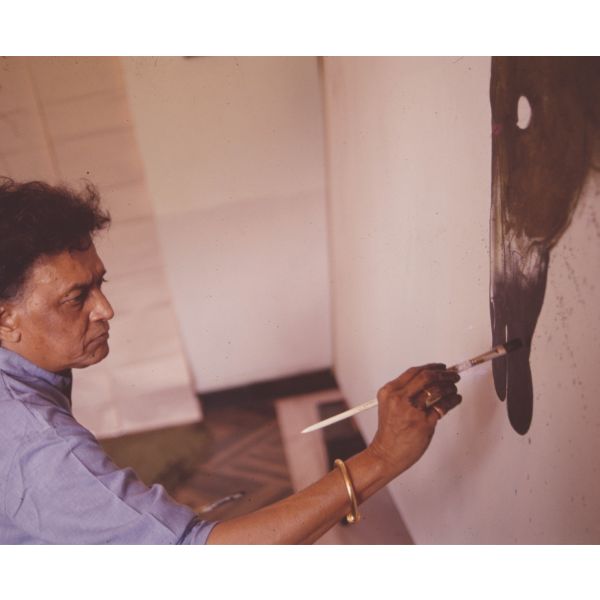 ArtistsSunil Das$0.00One of India’s most important post-modernist painters, Sunil Das is known for his iconic drawings and paintings of horses and bulls. He rose to prominence early when he became the only Indian artist to win the Lalit Kala Akademi’s national award while still an undergraduate student, in 1959. Learn More
 -
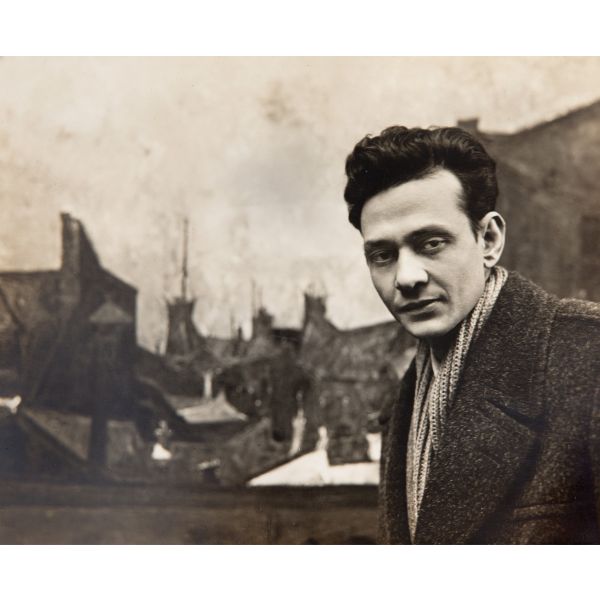 ArtistsS. H. Raza$0.00
One of India’s most seminal modernists, Syed Haider Raza was born on 22 February 1922 in Mandla, Madhya Pradesh, and forged a new language of art by integrating Indian symbolism with Western expression. A student of Sir J. J. School of Art, Bombay (1943-47), and one of the first members of the Progressive Artists’ Group, the turning point of his career was his journey to Paris in 1950 on a French government scholarship to study at École Nationale des Beaux-Arts. In 1956, he became the first non-French artist to win the critic’s award, the Prix de la critique.
Learn More -
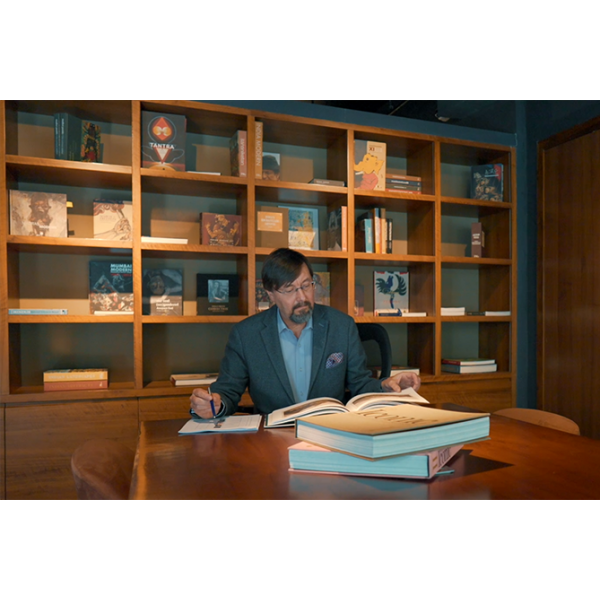 JournalGiles Tillotson on Thomas Daniell$0.00'Iconic Masterpieces of Indian Modern Art, Edition 2' opened on 11 February, featuring fifty artworks which shaped the trajectory of pre-modern and modern art in the country. As part of the exhibition, Giles Tillotson reflects on Thomas Daniell’s painting ‘Hunting the Serow in India’, which draws from the artist’s experience of travelling to India. The painting depicts an unusual hunting scene, where an act of sudden violence is juxtaposed with a space of tranquility. Learn More
 -
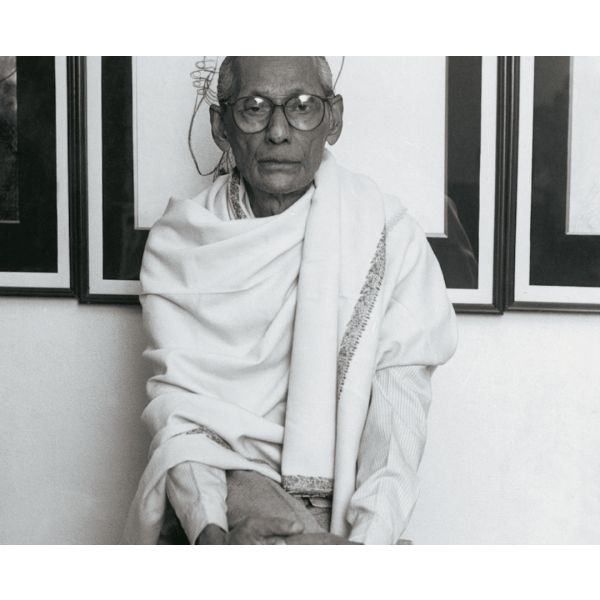 ArtistsGopal Sanyal$0.00Born into a family of classical musicians in Cuttack, Orissa, Gopal Sanyal came to Calcutta in 1948 and took a diploma in fine arts from the Government College of Arts and Crafts in 1957. A national scholarship awardee in painting for three years from the Government of India, Sanyal was a founder member of Calcutta Painters and had exhibited at its inaugural group show at All India Fine Arts and Crafts Society, New Delhi, in 1963; he was also a lecturer in fine arts. Learn More
 -
-
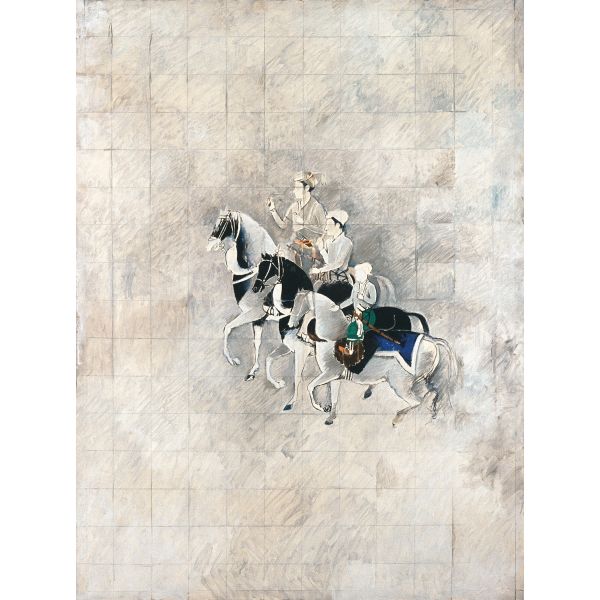 Events and ProgrammesModern Art in Pakistan$1.00
A journey through the decades post the 1950s in Pakistan with art historian Simone Wille, from the University of Innsbruck, exploring the works of pioneering artists who looked to history and tradition to develop new visual languages, while also creating dialogues globally through travel.
Learn More