


Search results for: 'Man with a Guitar Time period: Late 1960s–1970s'
-
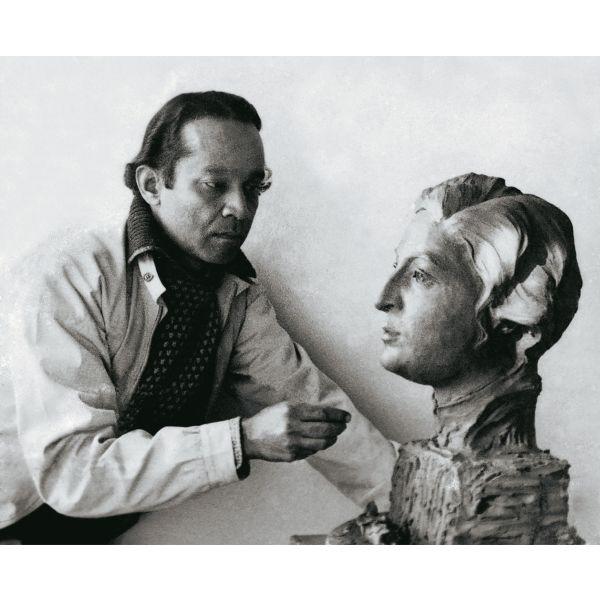 ArtistsSudhir Ranjan Khastgir$0.00Sudhir Ranjan Khastgir was born on 24 September 1907 in Chittagong in present-day Bangladesh, and studied at Kala Bhavana, Santiniketan, under Nandalal Bose. Like his classmate, Ramkinkar Baij, he took up sculpture as a subject, continuing its pursuit in Lucknow under Hiranmoy Roychaudhuri in 1932, and under Ganpath Kashinath Mahatre, in Bombay, in 1933. The same year, he joined Scindia School, Gwalior, as a teacher and, later, Doon School in Dehradun. Learn More
 -
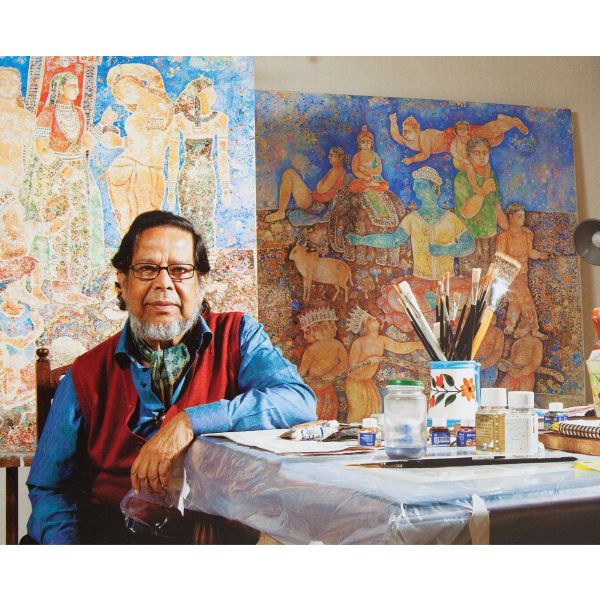 ArtistsSakti Burman$0.00Born in Calcutta, Sakti Burman studied at the city’s Government College of Arts and Crafts, and later at École Nationale des Beaux-Arts, Paris. Like most other Indian artists who studied or lived in the French capital, Paris-based Burman’s works blend European and Indian imagery. Learn More
 -
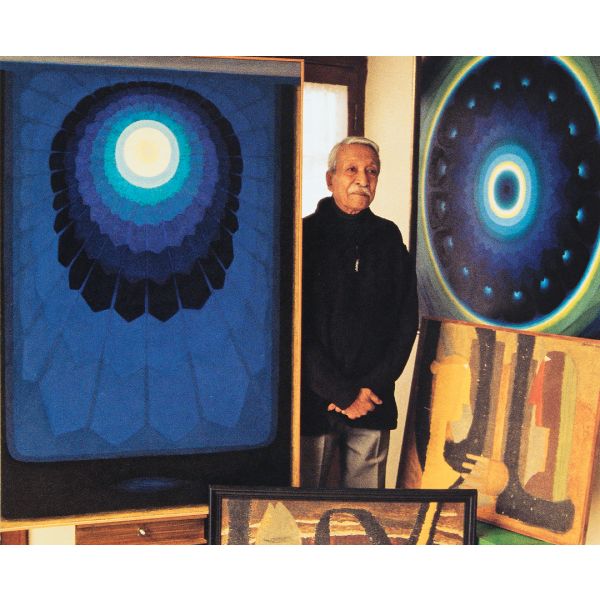 ArtistsBiren De$0.00Born on 8 October 1926, in Faridpur (in present day Bangladesh), Biren De shifted to Calcutta with his family before Partition and studied at the Government College of Arts and Crafts. Later, he moved to New Delhi to teach at College of Art. Years spent in New York and extensive travelling over continents subsequently enriched his artistic expression with new forms. Learn More
 -
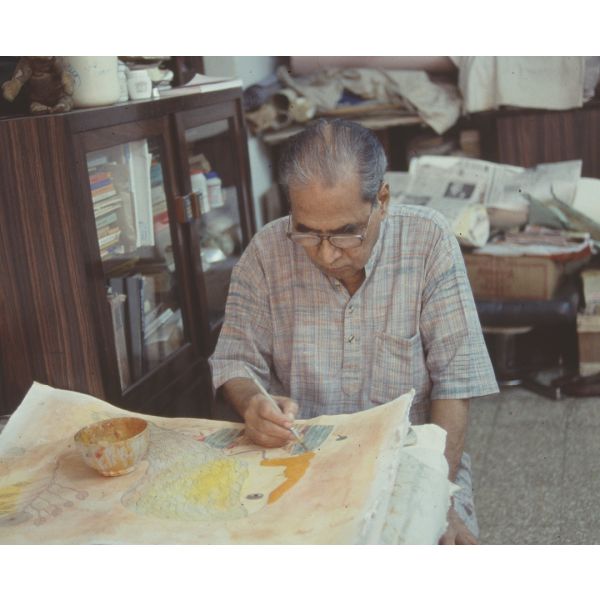 ArtistsBadri Narayan$0.00Born on 22 July 1929 in Secunderabad (now in Telangana), Badri Narayan began his career in the late 1940s working with ceramic tiles and mosaics, and moved later to using ink, pastel and watercolour as his primary mediums. Learn More
 -
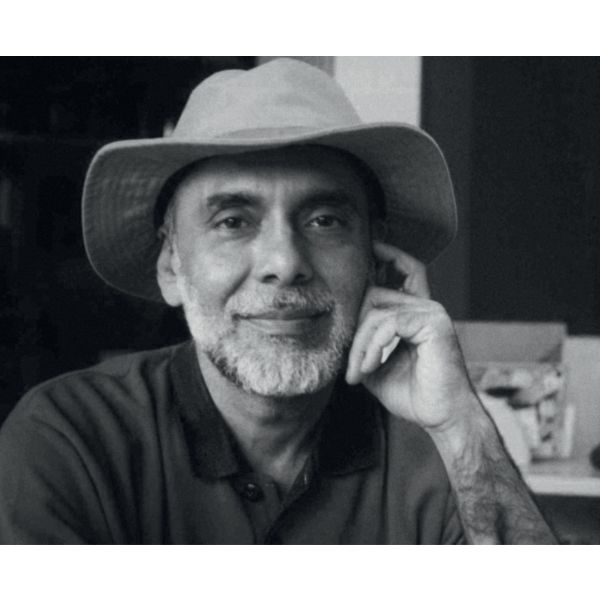 ArtistsRanbir Singh Kaleka$0.00Born in Patiala, Punjab, in 1953, Ranbir Kaleka earned a diploma in painting from Punjab University’s College of Art in Chandigarh. He spent the next few years teaching at Punjab University and College of Art, New Delhi, before leaving for London on a Charles Wallace scholarship to study at Royal College of Art from 1985-87. He stayed on in London for several years and returned to India in the late 1990s. Learn More
 -
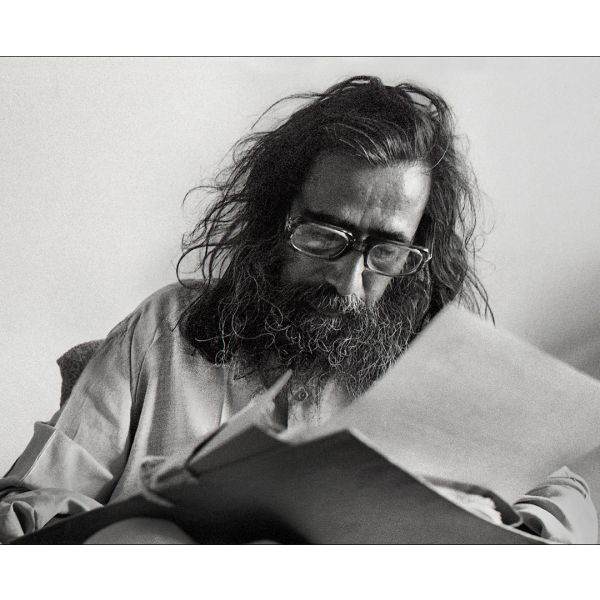 ArtistsJ. Swaminathan$0.00Known for establishing the multi-arts complex, Bharat Bhavan, in Bhopal, and for foregrounding tribal art on the Indian art horizon, Jagdish Swaminathan took up the arts professionally later in life, despite an early aptitude towards drawing and painting. Learn More
 -
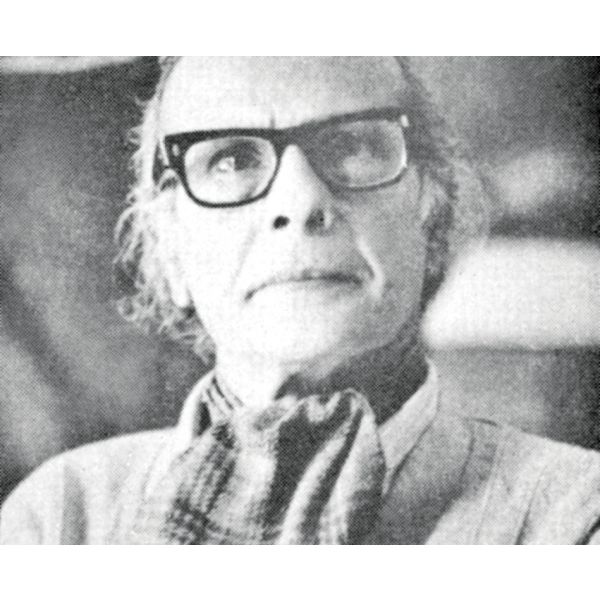 ArtistsHemanta Misra$0.00One of the pioneers of surrealism in Indian modern art, Hemanta Misra was born in Sivasagar, Assam, on 13 October 1917. He went to school in his hometown and later studied at Cotton College, Guwahati, and St. Edmund’s, Shillong. As for the arts, he was self-taught, polishing his skills through a correspondence course with British artist John Hassal. Learn More
 -
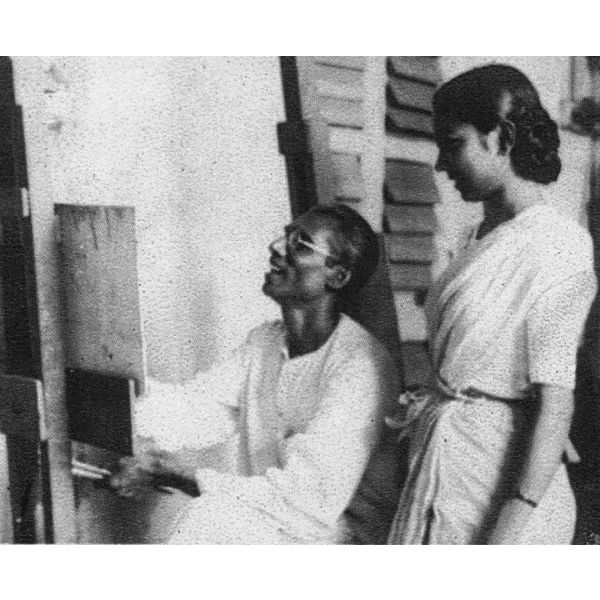 ArtistsGobardhan Ash$0.00Born in 1907, Gobardhan Ash came into his own as an artist at a time when Indian art was in a state of historical flux, when the imagination of young artists was infused with the spirit of country’s freedom from colonial rule. He trained at the Government College of Art in Calcutta from 1926-30, and at the Government School of Arts and Crafts, Madras, till 1932. He was an active member of various artist collectives such as the Calcutta Group that he joined in 1950, the Art Rebel Centre, and the Young Artists Union, of which he was a founder member. Learn More
 -
 Events and ProgrammesMapping the Colony$1.00
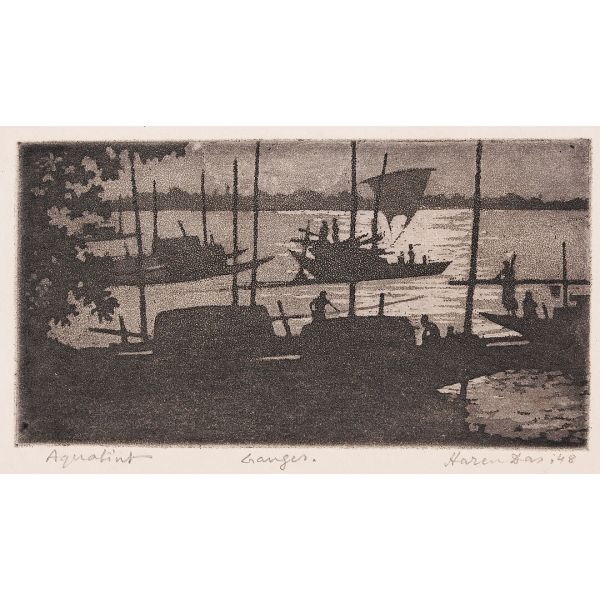
A workshop by Priyank Patel, from the Department of Geography, Presidency University, for ages 16 and above, on mapmaking in the colonial and postcolonial era and how maps of Calcutta (and later, Kolkata) were shaped through these different ways of knowing the world.
Learn More -
 Institutional CollaborationsDRISHYAKALA$1.00
How did the multiple trajectories of visual arts develop in the subcontinent? Where did they originate and how did their paths converge? Drishyakala offers a sweeping journey into the heterogenous histories of visual arts in India, from the first European travelling artists who drew landscapes to popular prints of the earliest woodcuts and lithographs evolving into the thriving advertising visuals of the 20th century. The exhibition is broadly divided into four categories, each exploring an unique area of development—the art of portraiture through photography and painting, oriental sceneries drawn by European travelling artists, popular prints from the late eighteenth century to post-independence and artworks of the nine National Treasure Artists. Together, these sections give brief glimpses into the dizzying variety of forms, styles and languages of South Asian art.
Learn More -
 Institutional CollaborationsBirds of India: Company Paintings c. 1800 to 1835$1.00
In celebration of birds and the long relationship art has shared with the winged creatures, this exhibition brings together four folios to present portraits of Indian birds made in the early nineteenth century. While representations of birds date back to the Ajanta murals, naturalistic imagery reached its peak in Mughal art under Emperor Jahangir. In the late 18th century two connected developments emerged in Lucknow and Calcutta. While General Claude Martin provided imported European paper to the artists in Lucknow to prepare botanical studies and other natural history works, in Calcutta Mary, Lady Impey (wife of Chief Justice of the Supreme Court in Bengal, Elijah Impey) had a menagerie where she employed artists to portray variety of animals and birds. Dr. William Roxburgh, superintendent of Calcutta Botanical Garden from 1793, also added to the discourse of natural history by appointing local artists to make botanical studies of the specimens in his charge. The efforts of Martin, Impey, Roxburgh and their artists gave rise to a large body of Company Paintings dedicated to natural history.
Learn More -
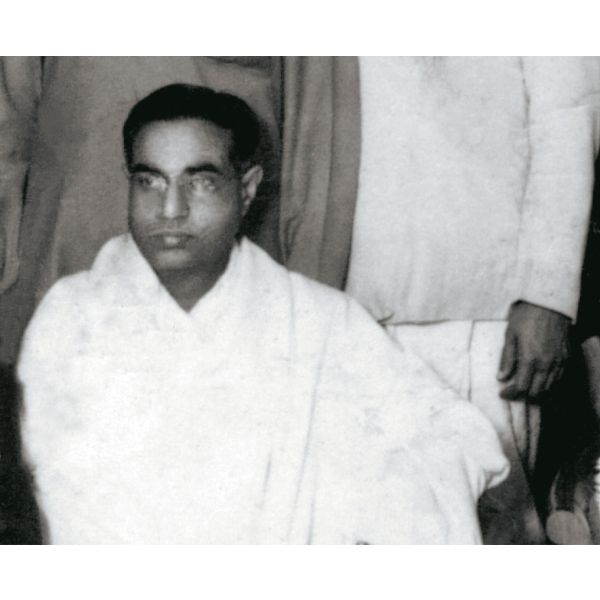 ArtistsSarada Charan Ukil$0.00An artist whose eponymously named art institution groomed some important Indian modern artists such as Ram Kumar and J. Swaminathan, Sarada Charan Ukil was an early pioneer of the Bengal School. Born on 14 November 1888 in Bikrampur near present-day Dhaka, Ukil shifted later to Calcutta with his family and studied at the city’s Government Art School under Abanindranath Tagore. Learn More