Search results for: 'Developed India art and craft'
-
-
 JournalART IN PRINT: VIEWING PERIODICALS AT THE UTTARPARA LIBRARY$0.00
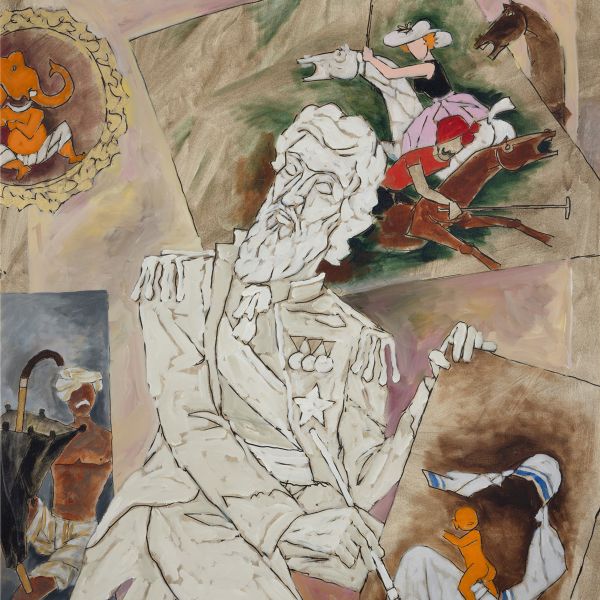
Have you wondered how people looked at paintings and photographs in the nineteenth century? For DAG’s annual Heritage Festival ‘The City as a Museum’, we explored various aspects of the city’s visual culture. As we are about to launch the DAG Journal let us revisit the walk co-led by Sarbajit Mitra and Amreeta Das at the Uttarpara Jaykrishna public library to delve into the periodical archive and trace the evolution of printed pictures in India. Flipping through the pages of these periodicals offered glimpses into the everyday habits of consuming art—from simple wood-cut and lithograph illustrations, to full plate colour reproductions of paintings and photographs, artist albums, and exquisitely ornate typography.
Learn More -

-
 Art FairsArt Basel$0.00
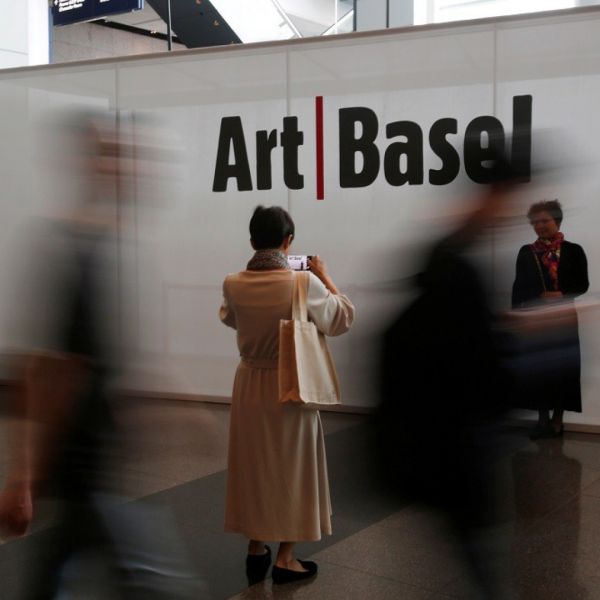
DAG’s debut at Art Basel Hong Kong aimed to provide an overview of the twentieth century Indian art, tracking key catalytic movements and introducing important masters and artists to an art audience unfamiliar with their work. This included the Progressives, of course, but also other modernists whose contribution to Indian art has been significant. The exhibition display at its large booth was aimed at maximising the number of paintings that could be displayed, including sculptures, and was accompanied by a catalogue. A. A. Raiba Akbar Padamsee Anjolie Ela Menon Avinash Chandra B. Prabha Bikash Bhattacharjee Biren De D. P. Roy Chowdhury F. N. Souza G. R. Santosh Ganesh Pyne Gogi Saroj Pal H. A. Gade Himmat Shah J. Sultan Ali Jogen Chowdhury K. H. Ara K. K. Hebbar K. Laxma Goud M. F. Husain P. T. Reddy Prodosh Das Gupta Prosanto Roy Ram Kumar S. Dhanapal S. H. Raza S. K. Bakre Sankho Chaudhuri Sohan Qadri Sunil Das
Learn More -
 Institutional CollaborationsThe Printed Picture: Four Centuries of Indian Print-Making$1.00
As printing technologies improved around the turn of the 18th century, a large number of cheaply reproduced printed pictures—illustrated books, almanacs and mythological images—became available to the common people. This became an important vehicle of social change because people could own, produce and disseminate images of all kinds—from their beloved deities and favourite fictional characters to political cartoons critiquing colonial authorities. Printmaking was equally treasured by artists for its aesthetic potential, as techniques like lithography, etching, metal engraving, viscosity, gave practitioners infinite opportunities for creative exploration. This landmark exhibition gives us a comprehensive overview of the history of the printed picture in India.
Learn More -
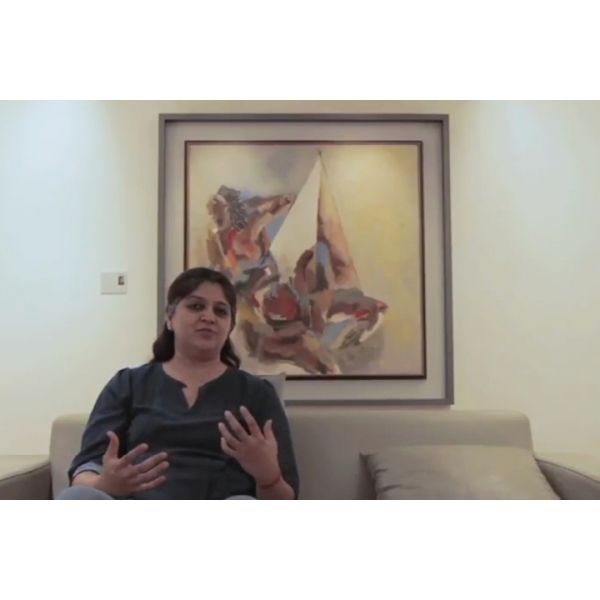 JournalMasterpieces of Indian Art Edition 2$0.00A landmark DAG exhibition, the second edition of Masterpieces of Indian Art at India Art Fair offered a microcosm of museum-quality works by well-known masters. Catch a glimpse of some of the masterpieces in this truly extraordinary exhibition. Learn More
 -
 Collection OnlineTHE WASH TECHNIQUE$1.00
The wash technique has come to be associated in India with the art of the Bengal School, but the story of its origins in India takes us back to an era of rich cultural exchanges. In the early twentieth century artists like Abanindranath Tagore were trying to imagine a pan-Asian cultural identity, and they turned for inspiration to traditions from across Persia to Japan. Rabindranath Tagore's friendship with Okakura Kakuzō occasioned the arrival of several Japanese artists in Kolkata, such as Yokoyama Taikan, Hishida Shunsō and Katsuta Shōkin. While the latter found inspiration in the Hindu epics, artists in Bengal adapted techniques that were used by the Japanese, such as the wash technique or the subtle use of ink and brush. Since then, the wash technique has been interpreted widely by individual artists, offering an ethereal quality of light to their works, or, in some cases, like for Gaganendranath Tagore and Prosanto Roy, new possibilities of painting in various shades of darkness.
Learn More -

-
-
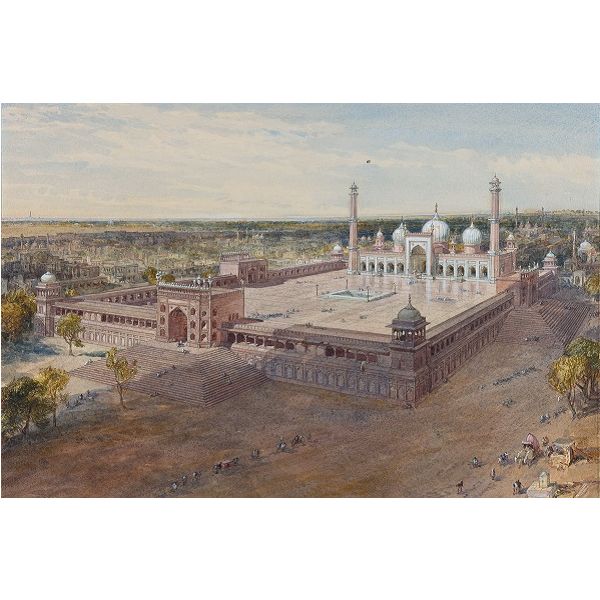 JournalRepresenting Architecture: How art influenced architecture$0.00European artists and architects were deeply influenced by the rich cultural heritage and artistic traditions of India, which, in turn, influenced their architectural designs. Artistic representations served as a bridge between cultures, leading to the incorporation of Indian motifs, styles, and decorative elements in colonial architecture. Learn More