


Search results for: 'donde dice ue habia una ley cuando franco que le permitia pegar dospalizas al año a la mujer'
-
 Institutional CollaborationsBirds of India: Company Paintings c. 1800 to 1835$1.00
In celebration of birds and the long relationship art has shared with the winged creatures, this exhibition brings together four folios to present portraits of Indian birds made in the early nineteenth century. While representations of birds date back to the Ajanta murals, naturalistic imagery reached its peak in Mughal art under Emperor Jahangir. In the late 18th century two connected developments emerged in Lucknow and Calcutta. While General Claude Martin provided imported European paper to the artists in Lucknow to prepare botanical studies and other natural history works, in Calcutta Mary, Lady Impey (wife of Chief Justice of the Supreme Court in Bengal, Elijah Impey) had a menagerie where she employed artists to portray variety of animals and birds. Dr. William Roxburgh, superintendent of Calcutta Botanical Garden from 1793, also added to the discourse of natural history by appointing local artists to make botanical studies of the specimens in his charge. The efforts of Martin, Impey, Roxburgh and their artists gave rise to a large body of Company Paintings dedicated to natural history.
Learn More -
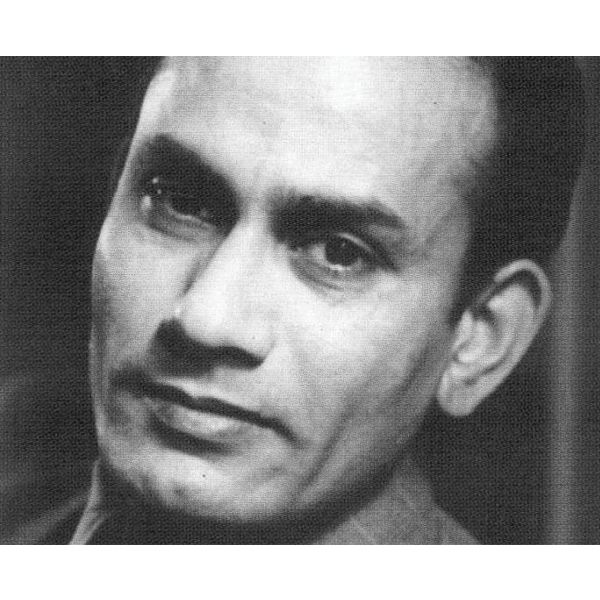 ArtistsVishwanath Nageshkar$0.00Of Goan origin, Vishwanath Nageshkar was born and raised in Kolhapur, Maharashtra, in 1910. He obtained his diploma from Sir. J. J. School of Art, Bombay, in 1930; he also specialised in frescos from the same institute. A contemporary of Amrita Sher-Gil, Nageshkar was one of the first Indian artists to move to Paris for his education—he studied at École National Supérieure des Beaux-Arts from 1930-35. Later, he studied at Kunstakademic in Munich, Germany, from 1938-40, and under Professor A. Strübe in Berlin, 1940-41. Learn More
 -
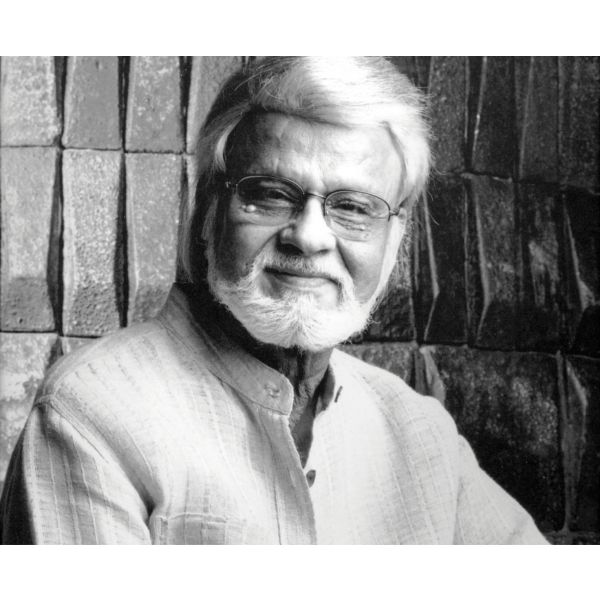 ArtistsSatish Gujral$0.00Renowned for his versatility as painter, sculptor, muralist, and architect, Satish Gujral was born in Jhelum in pre-Partition Punjab on 25 December 1925. His parents nurtured his inclination towards the creative arts while he was recovering from an accident as a child that cost him his hearing and speech. He trained at Mayo School of Art, Lahore, and briefly at Sir J. J. School of Art, Bombay. He also came in contact with the Progressive Artists’ Group but parted ways to chart his own course in search of an Indian modernism. Learn More
 -
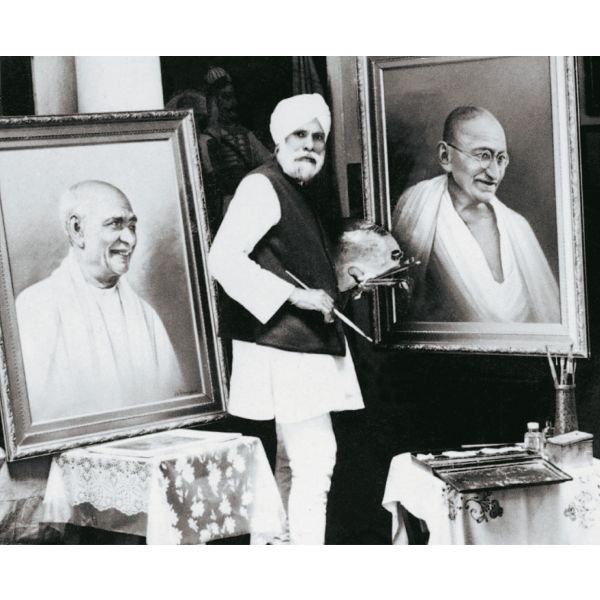 ArtistsS. G. Thakar Singh$0.00Born in 1899 in the village of Verka near Amritsar, S. G. Thakar Singh showed early aptitude for the arts by drawing on the walls of his home with coal. With no formal training, he went on to excel in the academic style of painting, rendering stunning landscapes, portraits and still-lifes. He apprenticed under local artist Mohd. Alam and moved with him to Bombay when the latter found a job as a stage artist with a theatre company. Learn More
 -
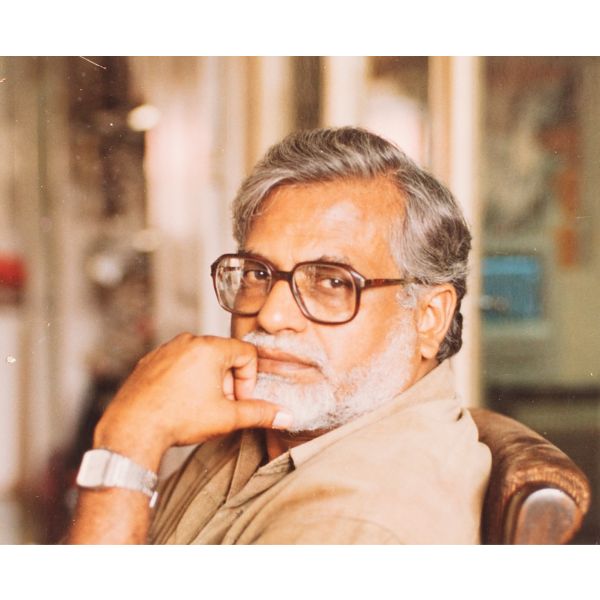 ArtistsManu Parekh$0.00Born in Ahmedabad, Gujarat, Manu Parekh studied at Sir J. J. School of Art, Bombay. With influences as varied as Arshile Gorky, Roberto Matta, S. B. Palsikar and Rabindranath Tagore, Parekh has always sought to explore his inner landscape through art. Learn More
 -
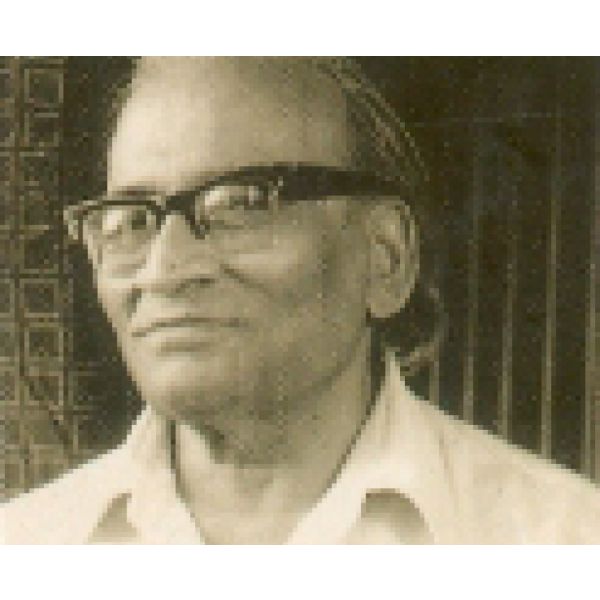 ArtistsM. S. Joshi$0.00Born in Nashik, Maharashtra, M. S. Joshi studied at Sir J. J. School of Art, Bombay, in the 1930s. Joshi combined his training in academic realism with a sense of vitality, precision and aesthetics to reveal India’s rich cityscapes and landscapes in his watercolour and gouache works. There was immense depth in the rendering of his subjects, which included people, places, architectural elements, all done in a subdued yet textured palette. Learn More
 -
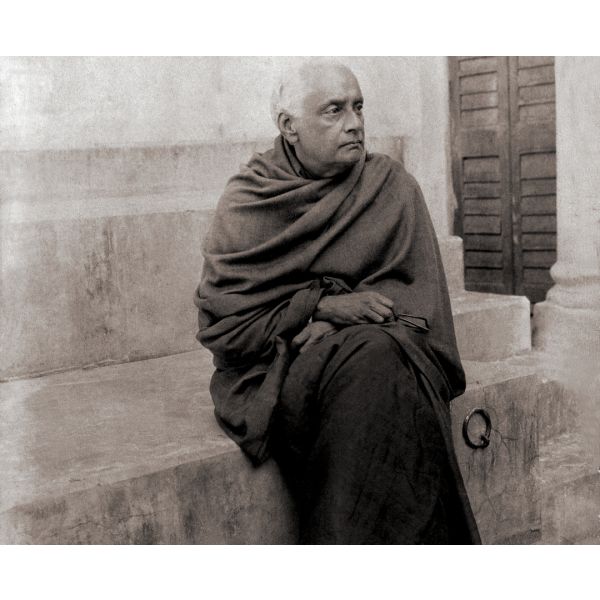 ArtistsGaganendranath Tagore$0.00The true pioneer of cubism in India and acclaimed for his satirical works of art, Gaganendranath Tagore was born on 17 September 1867. Along with his Nobel-laureate uncle Rabindranath Tagore, and brother Abanindranath Tagore, he was at the forefront of cultural revival in Bengal in the early twentieth century; the brothers established the Indian Society of Oriental Art, Calcutta, in 1907. Learn More
 -
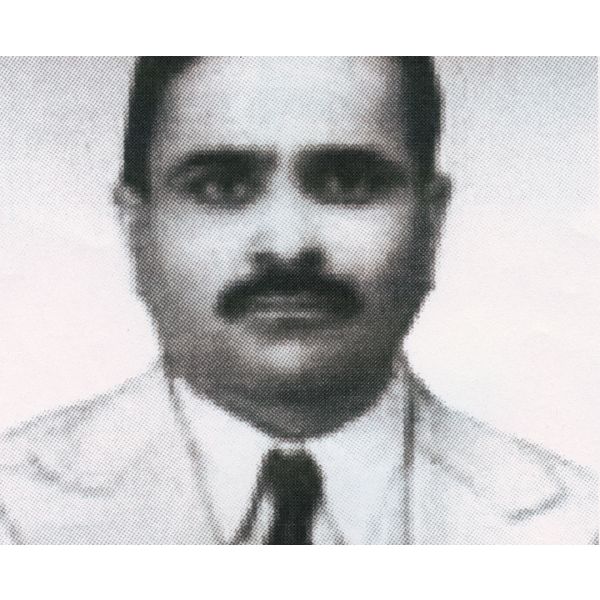 ArtistsD. C. Joglekar$0.00Exemplifying the art of the now-forgotten Bombay School, which was based on realism, or naturalism, as taught by the British, D. C. Joglekar was one of the finest artists who captured India’s panoramic landscapes along with her glorious architectural wonders, including temples, monuments, and archaeological sites. Learn More
 -
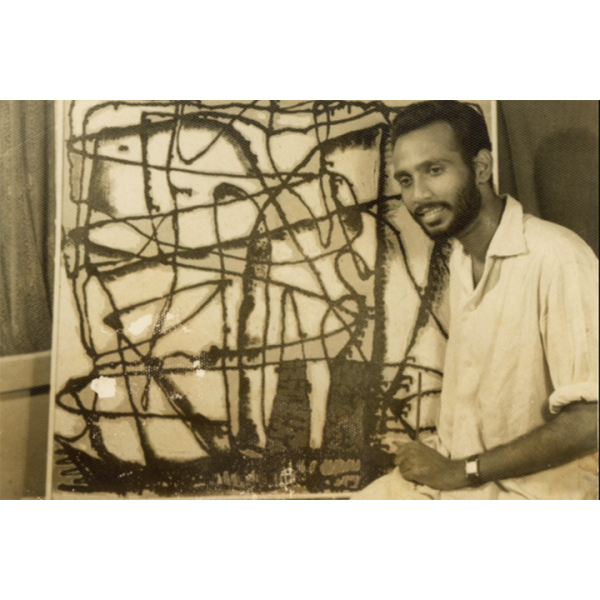 JournalKishore Singh on P. Khemraj$0.00‘Iconic Masterpieces of Indian Modern Art, Edition 2’ opened on 11 February at DAG’s Janpath Gallery in New Delhi featuring fifty artworks which shaped the trajectory of pre-modern and modern art in the country. As part of the exhibition, Kishore Singh speaks on P. Khemraj’s ‘Charpoi’ painting and its sensualist language. The autobiographical elements of the work and its depiction of universally felt emotions within a language of abstraction, personalizes its appeal. Learn More
 -
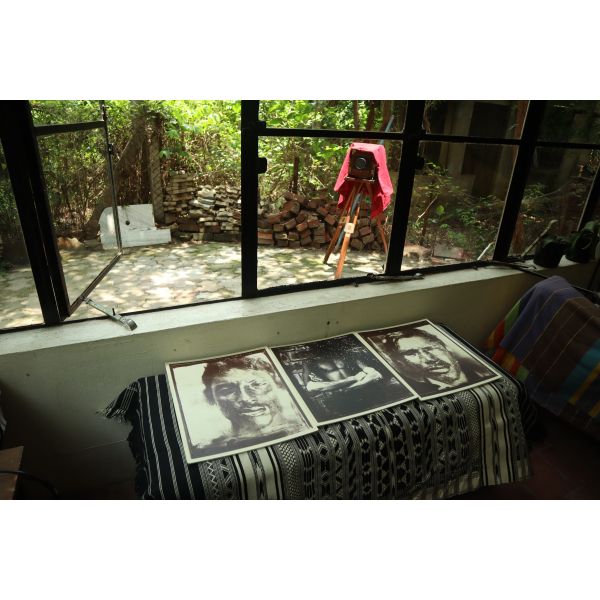 Events and ProgrammesPhotograph: Material Matters$1.00
A visit to Studio Goppo in Santiniketan to learn the process of wet plate collodion, which was used to develop photographs in 19th and early 20th century India, with the artist and pedagogue Arpan Mukherjee.
Learn More -
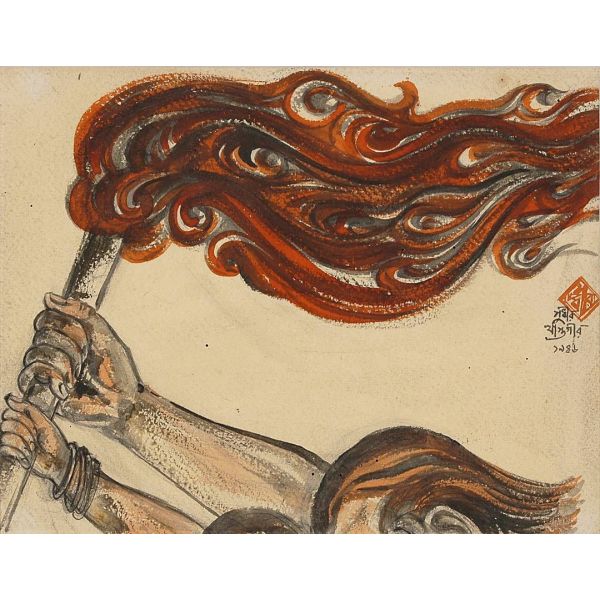 Events and ProgrammesMarch to Freedom: Curator's Take$1.00
A guided walk of the exhibition with historian Prof Aparna Vaidik, Ashoka University, and Dr Giles Tillotson, SVP Exhibitions and Publications, DAG, exploring the lesser-known narratives of the Independence movement through art.
Learn More -
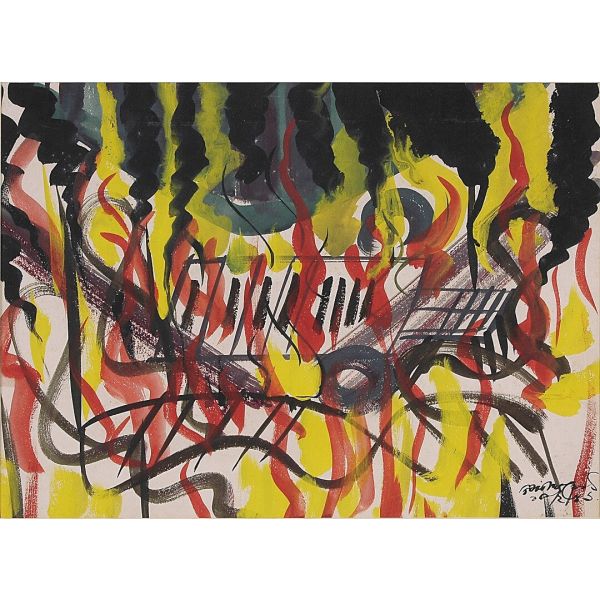 Events and ProgrammesAn Enquiry into the Freedom Movement$1.00
A workshop for middle school educators on implementing an arts-led and project-based module for learners, using artworks and archival objects from ‘March to Freedom’, DAG’s historic exhibition on the 75th year of Indian Independence.
Learn More