Search results for: 'region pigmentada de la mama crucigrama'
-
 JournalSketching a Temple: Nandalal Bose’s Konark album$0.00
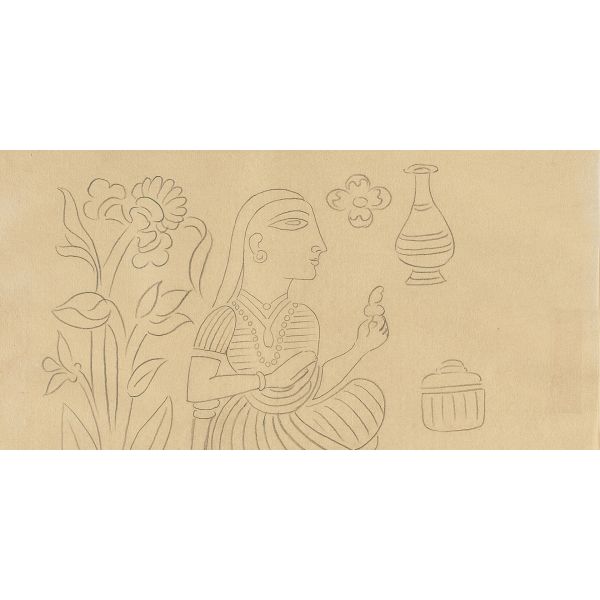
One of India’s nine national treasure artists, Nandalal Bose (1882—1966) forged a long and glittering career as the foremost artist-pedagogue bridging the late-colonial period and the first few decades after Indian independence. He maintained an active drawing practice throughout his life, with many small sketches done on postcards that he carried around with him as a sort of visual notebook.
Learn More -
 JournalTerm of the Month: Figure Drawing$0.00
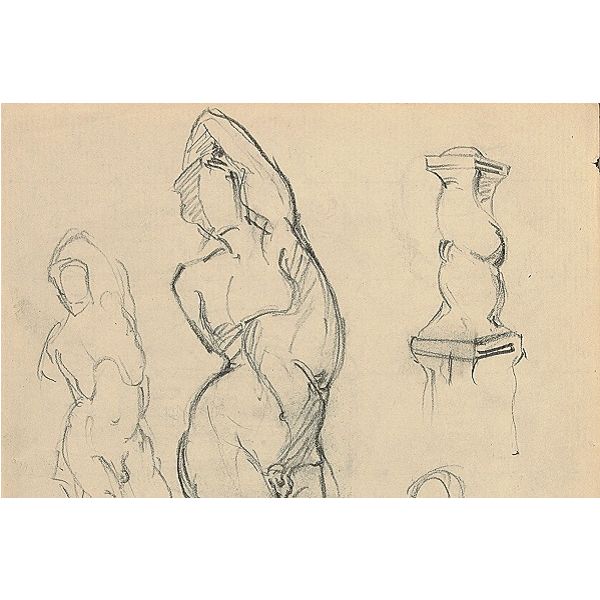
The advent of abstraction is a defining moment in art history as we devise divisions between representational, figurative, and abstract art, with the need arising from this pivotal formal shift in the modern world. The term ‘figurative’ has come to represent an antithesis of sorts to the term abstract. One is representational of reality, the latter a derived (abstracted) representation or even non-representational (colour-field paintings for example).
Learn More -
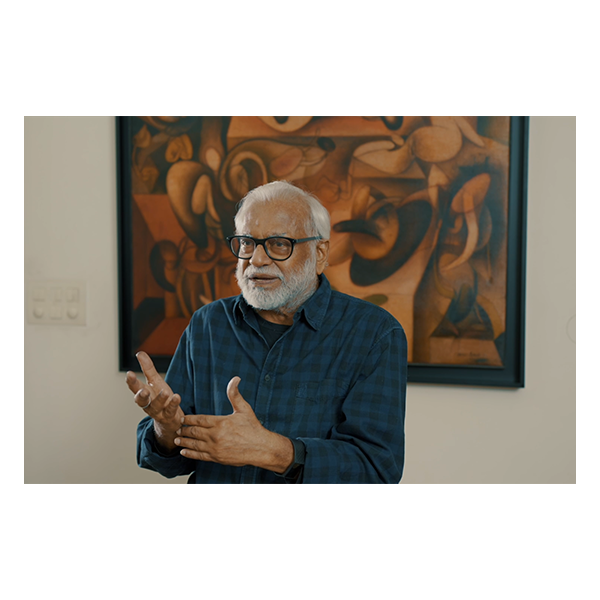 JournalManu Parekh on 'Shiva'$0.00‘Iconic Masterpieces of Indian Modern Art, Edition 2’ opened on 11 February at DAG’s Janpath Gallery in New Delhi featuring fifty artworks which shaped the trajectory of pre-modern and modern art in the country. As part of the exhibition, Manu Parekh speaks about his 1971 painting ‘Shiva’, created at a pivotal juncture of his artistic career when he was trying to forge a visual language different from the Bengal School. Learn More
 -
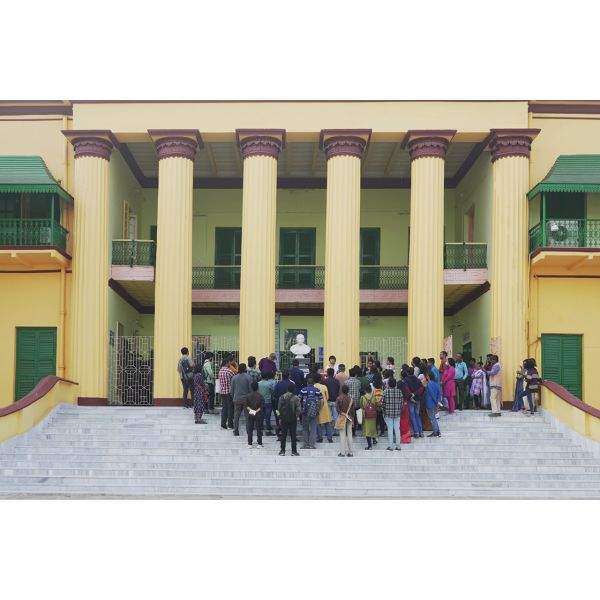 JournalART IN PRINT: VIEWING PERIODICALS AT THE UTTARPARA LIBRARY$0.00
Have you wondered how people looked at paintings and photographs in the nineteenth century? For DAG’s annual Heritage Festival ‘The City as a Museum’, we explored various aspects of the city’s visual culture. As we are about to launch the DAG Journal let us revisit the walk co-led by Sarbajit Mitra and Amreeta Das at the Uttarpara Jaykrishna public library to delve into the periodical archive and trace the evolution of printed pictures in India. Flipping through the pages of these periodicals offered glimpses into the everyday habits of consuming art—from simple wood-cut and lithograph illustrations, to full plate colour reproductions of paintings and photographs, artist albums, and exquisitely ornate typography.
Learn More -
 Collection OnlineCHITTAPROSAD$1.00
Chittaprosad (1915 – 1978) was an artist of the people. A firm believer in the power of political art to bring tangible change in society, he is remembered for political cartoons and caricatures lampooning the ruling elite while championing the cause of the working class.
He was also a dedicated journalist working for the Communist Party of India (CPI) and was sent by the party to document the effects of the Great Bengal Famine of 1943 in Bengal’s villages and towns. He would come back with harrowing stories and sketches of hunger and death and publish them in the CPI’s journal People’s War, something that would prove to be extremely important in the face of British censorship on news about the famine.
Post-Independence, Chittaprosad distanced himself from the CPI due to ideological differences and moved to the outskirts of Bombay. He continued registering protest through his art but focussed increasingly on art for children. He setup a puppet studio, Khela-ghar and created beautiful retellings of epics and folk tales in print.
Learn More -
 Collection StoriesAn Imperial Spectacle: The Delhi Durbars and its Ceremonies$1.00
The Delhi Durbars were a series of coronation events held by the British in India which formally declared the British monarch as the Emperor or Empress of India. They took place thrice—first, in 1887, acknowledging Queen Victoria as the Empress of India, followed by one in 1903, for King Edward VII, and finally in 1911 for King George V, which saw the monarch’s attendance in person.
Learn More -
 ExhibitionsPrimitivism and Modern Indian ArtAs low as $1.00
The idea of primitivism centres on the wish to identify with, or respond to, elements of a society that are deemed ‘primitive’. In artistic terms, it is about rejecting realism, simplifying technique and reducing the formal means of expression to a ‘primitive’ state. The term itself is borrowed from discussions of Western art, where high-profile examples include the images of Tahiti and its people made in the 1890s by Paul Gauguin, and responses to African sculpture by Pablo Picasso in 1906-09. The second thread of primitivism—the reduction of formal means—is best exemplified by the ‘cut-outs’ made by Henri Matisse in the 1940s.
Learn More -
 ExhibitionsHome is a PlaceAs low as $1.00
'Home is a Place’ explores the visual world of the home as a physical space having both an exterior and an interior—with all its magic, hope and memories—in villages and towns. Our homes are central to our existence and society, being the reason for shaping towns and countries, civilisations and histories. The exhibition covers the complexity of lives within the jurisdiction of the home—women at their toilettes, women painted alone gazing out of the window or gossiping in a group; figures working in their library, engaged in household work, or as parents bathing children; a family posing together or feuding over a game of cards, food or egos; and those fighting tyranny or painted as embracing lovers. Altaf Ambika Dhurandhar Amit Ambalal Anonymous Anonymous (Kalighat Pat) Anonymous (Waring & Gillow) Avinash Chandra Badri Narayan Bijan Choudhary Chakravorty Chittaprosad Dattatraya Apte Dhanraj Bhagat G. R. Santosh Ganesh Pyne Gogi Saroj Pal Gopal Ghose Haren Das Hemen Mazumdar Hiranmoy Indra Dugar Indu Rakshit Jagadish Dey Jagmohan Chopra Jamini Roy Jyoti Bhatt K. C. S. Paniker K. S. Kulkarni Kisory Roy M. A. R. Chughtai M. Bulkley M. F. Husain M. V. Dhurandhar Madhvi Parekh Maniklal Banerjee N. R. Sardesai Nandalal Bose Navjot Nemai Ghosh P. T. Reddy Partha Pratim Deb Piraji Sagara Prabhakar Barwe R. B. Bhaskaran Rabin Mondal Radha Charan Bagchi Ramendranath Rekha Rodwittiya Roychaudhuri S S. K. Bakre Sadequain Sakti Burman Sanat Kar Shanti Dave Shyamal Dutta Ray Somnath Hore Subba Ghosh V. A. Mali V. Nageshkar Ved Nayar Abani Sen Paritosh Sen Sunil Madhav Sen Sushil Chandra Sen Nataraj Sharma Shuvaprasanna Muni Singh Paramjeet Singh Paramjit Singh S. G. Thakar Singh Sobha Singh Satish Sinha F. N. Souza K. G. Subramanyan Anupam Sud L. N. Taskar Vasudha Thozhur
Learn More -
 ExhibitionsChittaprosadAs low as $1.00
One of India’s most important artists, Chittaprosad recorded pivotal political and social movements in the country, such as the Great Bengal Famine of 1943-44 and its fallout, in heart-wrenching sketches and drawings, alongside protests against colonialism, economic exploitation, urban poverty and depravity, just as beautifully as the many drawings, linocuts and scraper board illustrations he made for children, recording a beatific phase of plenitude and family values, and involving himself with marionettes for their entertainment.
Learn More -
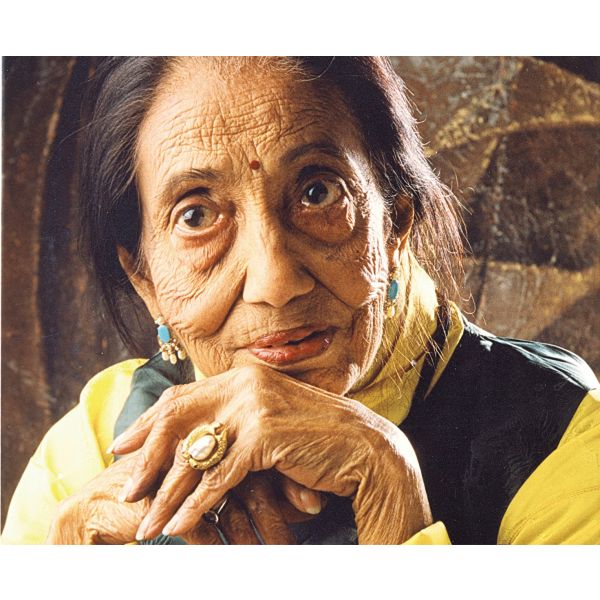 ArtistsDevayani Krishna$0.00An intrepid traveller, Devayani Krishna’s journey into art began at a very early age in Indore. Learn More
 -
-