Search results for: 'Him and I'
-
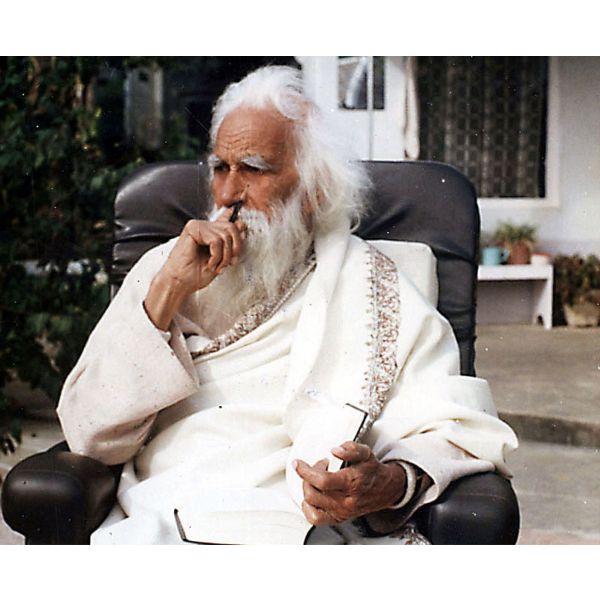 ArtistsSobha Singh$0.00The most definitive painter of the portraits of the Sikh gurus, Sobha Singh was born on 29 November 1901 at Gurdaspur in the Punjab. Interested in the arts since childhood, he learnt to draw and sculpt on his own, the early death of his parents depriving him of formal training in art. He joined the British Indian army as a draughtsman and continued to learn from studying the works of English and European artists. Learn More
 -
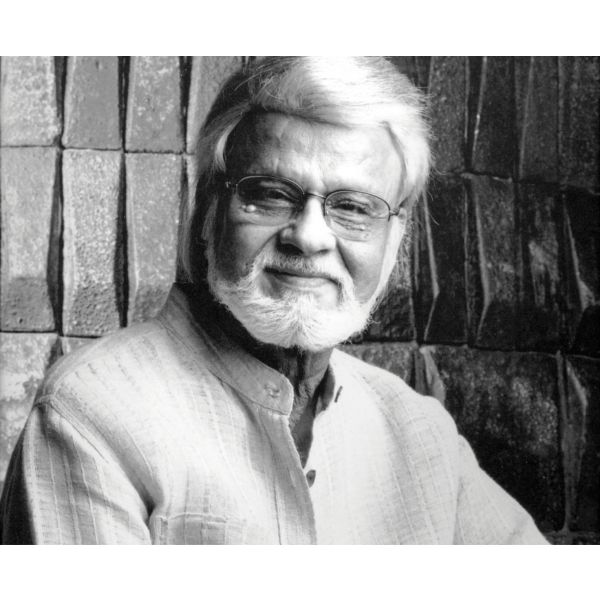 ArtistsSatish Gujral$0.00Renowned for his versatility as painter, sculptor, muralist, and architect, Satish Gujral was born in Jhelum in pre-Partition Punjab on 25 December 1925. His parents nurtured his inclination towards the creative arts while he was recovering from an accident as a child that cost him his hearing and speech. He trained at Mayo School of Art, Lahore, and briefly at Sir J. J. School of Art, Bombay. He also came in contact with the Progressive Artists’ Group but parted ways to chart his own course in search of an Indian modernism. Learn More
 -
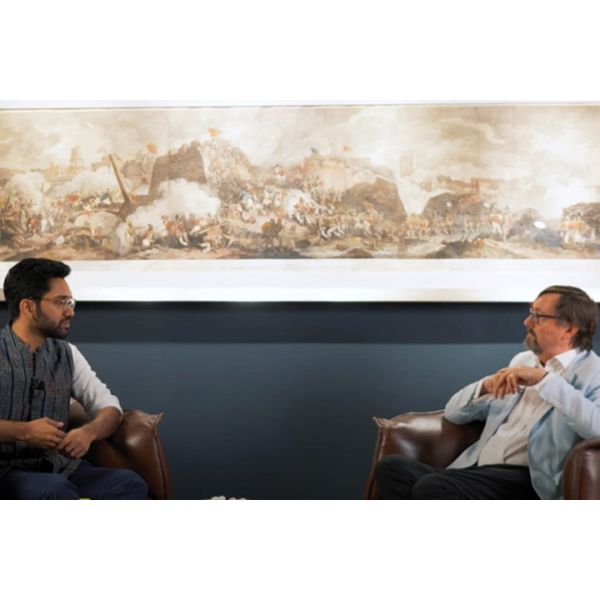 JournalRemembering Tipu Sultan: Manu Pillai and Giles Tillotson$0.00Historian and author Manu S. Pillai in conversation with art historian and curator Giles Tillotson on the subject of Tipu Sultan in the context of DAG’s exhibition, 'Tipu Sultan: Image and Distance' Learn More
 -
 ExhibitionsIconicAs low as $1.00
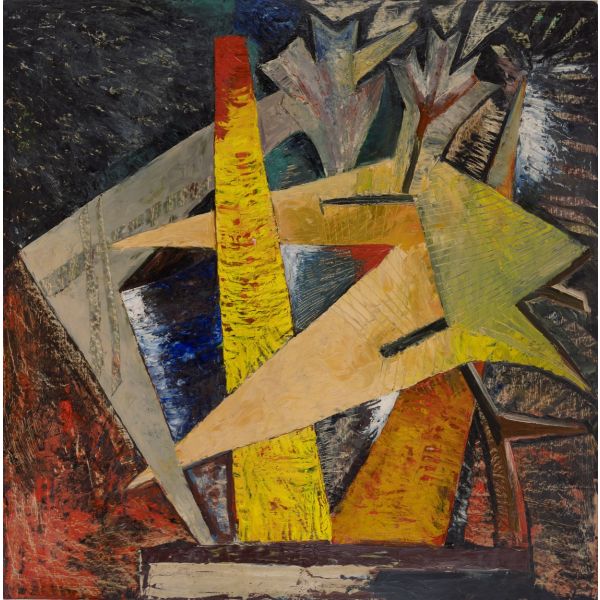
From 1797, when British artist Thomas Daniell painted his masterly landscape of Mahabalipuram, to 2003, the year Rameshwar Broota's painting pitching man against metal resulted in a powerful image, the Indian art world has seen a succession of artists and movements that have enriched its vocabulary in more ways than one. Thomas Daniell Sita Ram Early Bengal School Raja Ravi Varma Edwin Lord Weeks Marius Bauer Ustad Allah Bakhsh Studio of Bourne & Shepherd M. V. Dhurandhar Hemendranath Mazumdar M. A. R. Chughtai Nandalal Bose Jamini Roy Laxman Pai J. Swaminathan Francis Newton Souza J. Sultan Ali Rabin Mondal S. H. Raza K. K. Hebbar Akbar Padamsee Tyeb Mehta K. H. Ara S. K. Bakre Bireswar Sen Nirode Mazumdar Shanti Dave Gulam Rasool Santosh Madhvi Parekh Satish Gujral Bikash Bhattacharjee Maqbool Fida Husain Meera Mukherjee Rameshwar Broota
Learn More -
 JournalTerm Of The Month: The Diagonal Method$0.00
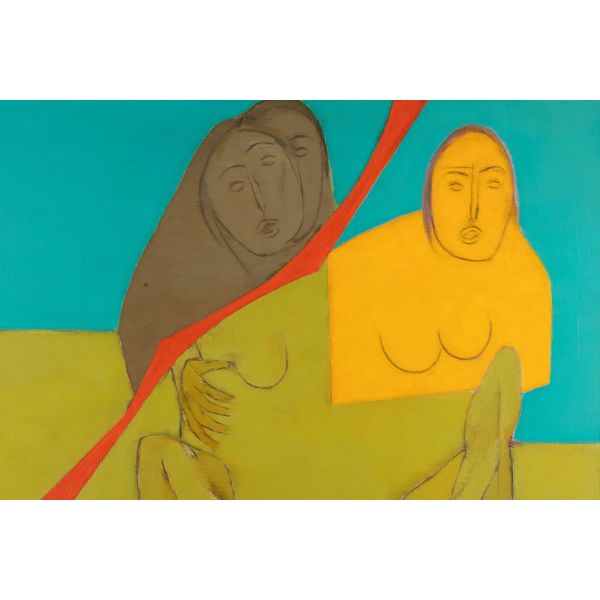
As one of India’s most well-known artists, Tyeb Mehta still commands our attention for his commitment to experimentation. His ‘Diagonal series’ established him as a dynamic figure within the world of modern art, but how did this diagonal method come to be an important tool of composition in the last century? It all started with the invention of another compoitional tool called the 'rule of thirds'. Read below as we explore the origins of this artistic tool and see how it has evolved over time.
Learn More -
 Institutional CollaborationsMARCH TO FREEDOM: REFLECTIONS ON INDIA'S INDEPENDENCE$1.00
March to Freedom re-interprets the well-known story of the Indian freedom struggle and anticolonial movement through works of art and some historic artefacts. Drawn from the collections of DAG, they range from eighteenth and nineteenth century European paintings and prints, to lesser known works by Indian artists that merit greater recognition, alongside some iconic pieces. Rather than following the usual chronological path, the story is structured around eight themes. Each represents one arena, or stage, on which the anti-colonial struggle took place, to expand the story beyond politics, politicians, and battles (which also feature). Conceived to commemorate and celebrate the 75th anniversary of India’s independence, this visual journey seeks to do more. For even as we remember the struggles, the sacrifices, and the stories, such anniversaries are also occasions for reflection, including upon the scholarship that has developed on South Asian history. Some of the latter may be familiar to academics, or those with special interests. For most of the rest of us, our knowledge of this past is derived in large part from hazy memories of school lessons, which change from one generation to the next, and are influenced by concurrent national politics. We also learn from narratives on offer through public channels or in the media, to mark moments of national remembrance or controversy.
Learn More -
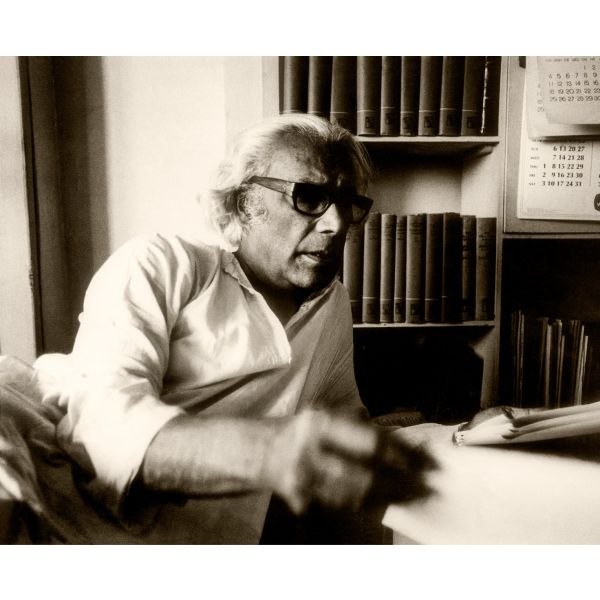 ArtistsProdosh Das Gupta$0.00Born in Dacca (now Dhaka) in present-day Bangladesh, Prodosh Das Gupta studied sculpture under Hiranmoy Roy Chowdhary at the Lucknow School of Arts and Crafts (1932-33), and under D. P. Roy Chowdhury at Government School of Art and Craft, Madras (1933-37). Over the next two years, he studied bronze casting at LCC Central School, London, and sculpture at Royal Academy of Arts, London, and Académie de la Grande Chaumière, Paris. He returned to India in 1940 and set up his studio in Calcutta. He subsequently taught at M. S. University, Baroda, and at Calcutta’s Government College of Arts and Crafts. Learn More
 -
 ExhibitionsALTAF: Early DrawingsAs low as $0.00
England shaped Altaf’s political consciousness as well as his persona. He engaged in the anti-apartheid demonstration at Trafalgar Square held against the imprisonment of Nelson Mandela; a peaceful protest at the American Embassy opposing the bombing in North Vietnam; the Aldermaston March against the nuclear bomb; the Campaign for Nuclear Disarmament; he became a member of the Youth Wing of the Communist Party of Great Britain (CPGB) and the Young Communist League (YCL). Any examination of the theoretical aspect of Altaf’s work must start with the knowledge that the work in question exemplified an element of ‘existentialist’ thought.
Learn More -

-
 JournalBourne's Legacy: Tracing Samuel Bourne's travels in India$0.00
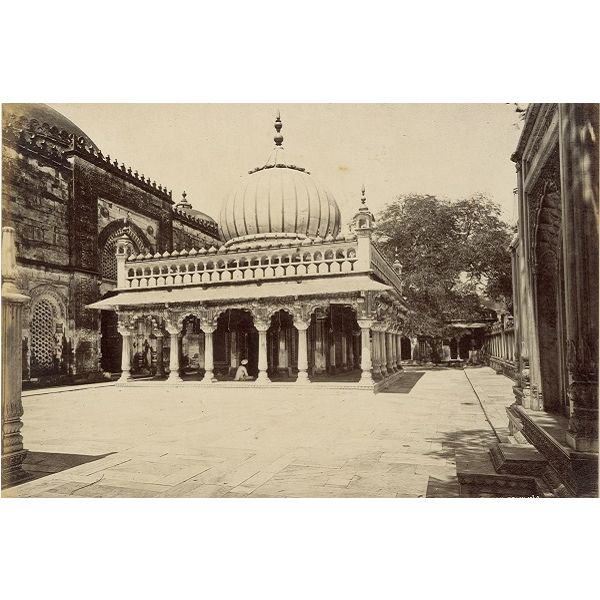
Samuel Bourne (1834—1912) was a British photographer known for his prolific seven years' work in India, from 1863 to 1870. Landing first at Madras, then Calcutta, he travelled across the subcontinent—leading some of the earliest photographic trips to the Himalayas—and wrote about his first impressions of the places he visited.
Learn More -
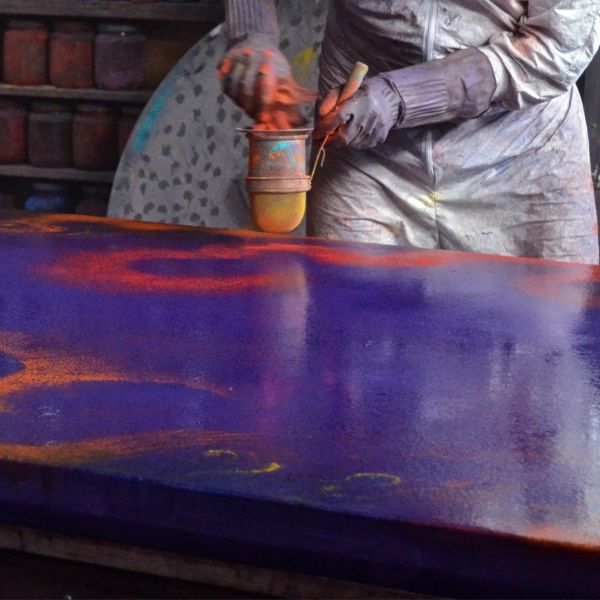 ExhibitionsNatvar Bhavsar: HomecomingAs low as $1.00
It is strange that Natvar Bhavsar, one of Indian art’s leading names, should never have been shown in India before. Having lived and worked in USA from 1962 onwards, it remains a mystery why his work has been seen in America but almost not at all in India. In spite of a few eminent collectors who have his work, Bhavsar has remained inexplicably ignored—an anomaly DAG is happy to correct with this seminal exhibition.
Learn More