


Search results for: 'distribution de la chambre d'à côté'
-
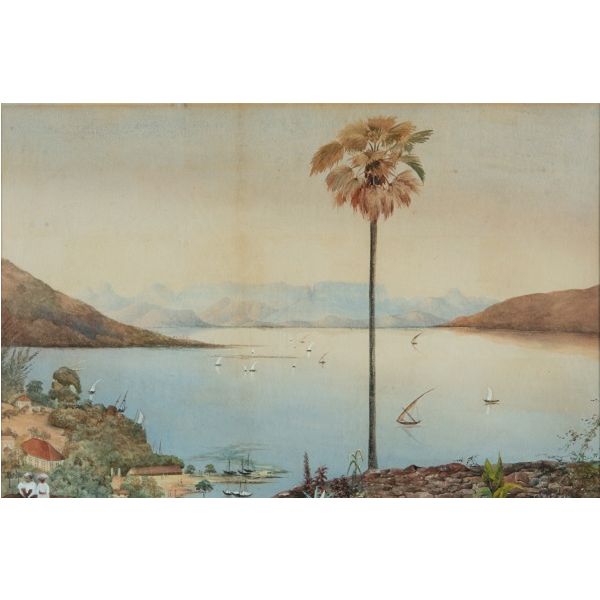 JournalBombay through the eyes of European Artists$0.00
The city was consolidated over the course of the eighteenth century, and its access to global trade routes helped it grow over the following centuries as well, leading some to describe it as the 'door of the East with its Face to the West'. How did European artists view this growing city?
Learn More -
 JournalNavratna: India’s National Treasure artists$0.00It was in the 1970s that the government of India declared nine artists as National Treasures, attesting to the significance of their contribution to the shaping of modern Indian art identity. ‘Navratna: Nine Gems of Indian Art’ was a unique opportunity to see seminal works by all the nine together, to understand the uniqueness of their collective contribution, at Drishyakala, a joint collaboration between DAG and the Archaeological Survey of India. Learn More
 -
 ExhibitionsSoliloquies of SolitudeAs low as $1.00
The mid-twentieth century saw a churn in the practice of art in India with a number of artists beginning to explore a genre that had swept the West with its absence of figuration in favour of abstraction. The non-representational began to gain traction as artists found within it a way to express themselves purely through colour as a potent tool to communicate emotions. Abstraction emphasised the relationship between originality and expression in ways that were complex, leading one to debate about the eventual goal of art. Ambadas, Krishna Reddy, Sohan Qadri, Zarina Hashmi, Rajendra Dhawan
Learn More -
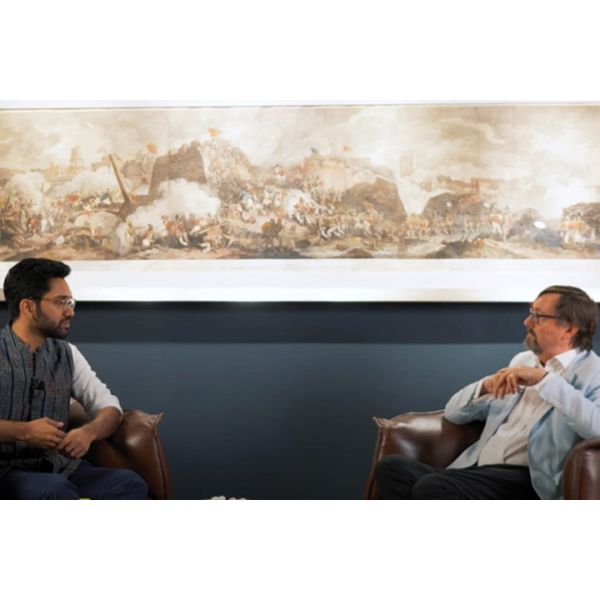 JournalRemembering Tipu Sultan: Manu Pillai and Giles Tillotson$0.00Historian and author Manu S. Pillai in conversation with art historian and curator Giles Tillotson on the subject of Tipu Sultan in the context of DAG’s exhibition, 'Tipu Sultan: Image and Distance' Learn More
 -
 JournalBefore the Chaos of Destruction: Jeram Patel's Iconic Works$0.00
Artists often proceed through a trial and error method—an incessant experimentation—leaving behind a singular trail of oeuvre composed of an irreconcilable, yet inseparable, set of works. Born in the small town of Sojitra in the Kheda district of Gujarat, Jeram Patel studied drawing and painting at Sir J. J. School of Art, Bombay. In 1959, excellence in his work led him to pursue commercial design at Central School of Arts and Crafts, London, on a scholarship, and also travel to France and Japan. Thereafter, he successfully held solo exhibition at various places in India and abroad, and participated in international events such as the Tokyo Biennale and Sao Paulo Art Biennale (both in 1963).
Learn More -
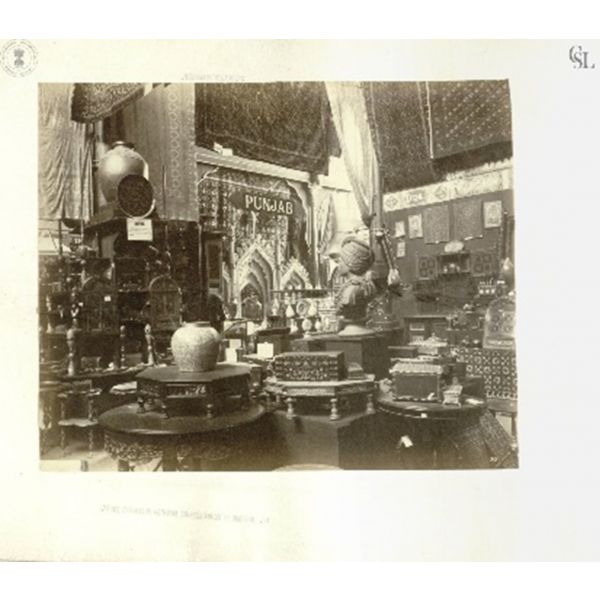 Events and ProgrammesAn Origin Story$1.00
Join Tapati Guha-Thakurta for a museum visit and presentation as we explore the beginnings of the colonial traditions of art and design in India through the twin histories of the Indian Museum and the Government College of Art and Craft.
Learn More -
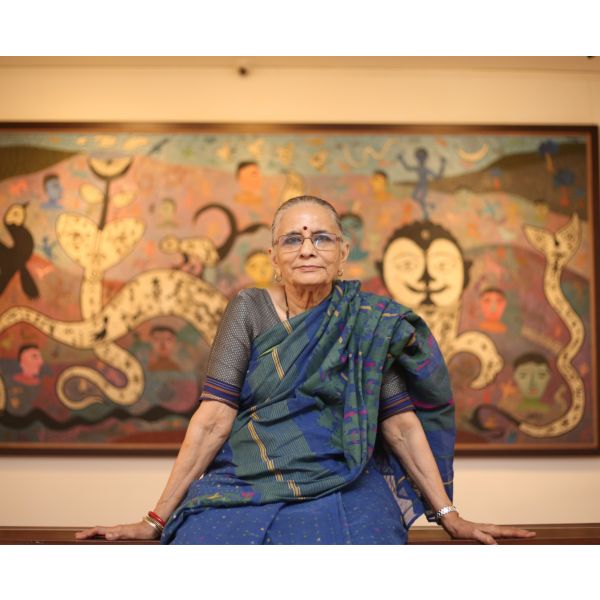 ArtistsMadhvi Parekh$0.00Madhvi Parekh was born and raised in Sanjaya, a village in Gujarat. Though she is self-taught and took up painting only in 1964, inspired by her artist-husband Manu Parekh, art remained a part of her consciousness through childhood memories, her family’s rituals such as the traditional floor designs of rangoli, popular folk stories, and simple village life. While expecting their first child, Parekh’s husband gifted her a book on drawing exercises by Paul Klee, and soon she was taking the first steps towards creating her own art vocabulary. Learn More
 -
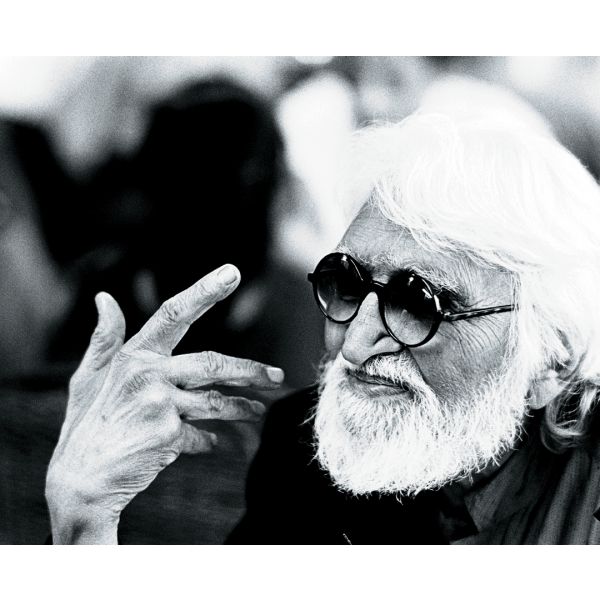 ArtistsM. F. Husain$0.00In the galaxy of modern masters, one name that is synonymous with twentieth century Indian art, is M. F. Husain’s. Born in Pandharpur, Maharashtra, on 17 September 1911, Husain came to Bombay in 1937 to become a painter, where he slept on footpaths and painted under streetlights. A self-taught artist, he began his career painting cinema posters and hoardings, and, in 1941, started making toys and furniture designs. Learn More
 -
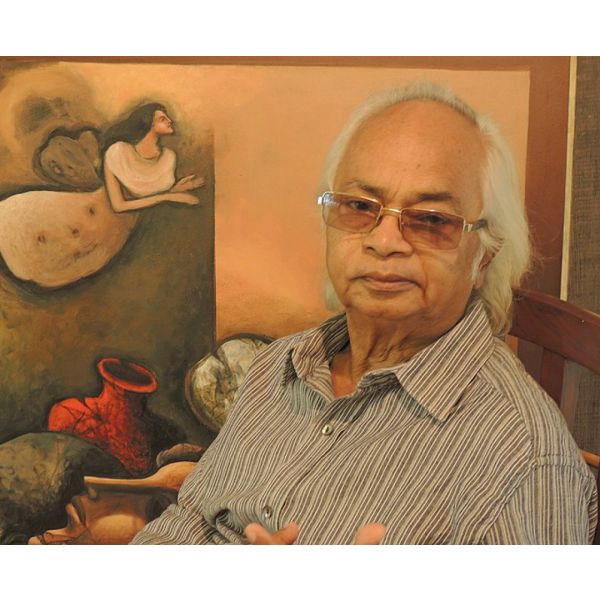 ArtistsJagadish Dey$0.00Born in Sylhet in present-day Bangladesh, painter and graphic artist Jagadish Dey graduated from Delhi Polytechnic in 1963. He has been the co-founder of several artist collectives such as Group 8, The Six, and Gallery 26. Learn More
 -
 ExhibitionsNatvar Bhavsar: HomecomingAs low as $1.00
It is strange that Natvar Bhavsar, one of Indian art’s leading names, should never have been shown in India before. Having lived and worked in USA from 1962 onwards, it remains a mystery why his work has been seen in America but almost not at all in India. In spite of a few eminent collectors who have his work, Bhavsar has remained inexplicably ignored—an anomaly DAG is happy to correct with this seminal exhibition.
Learn More -
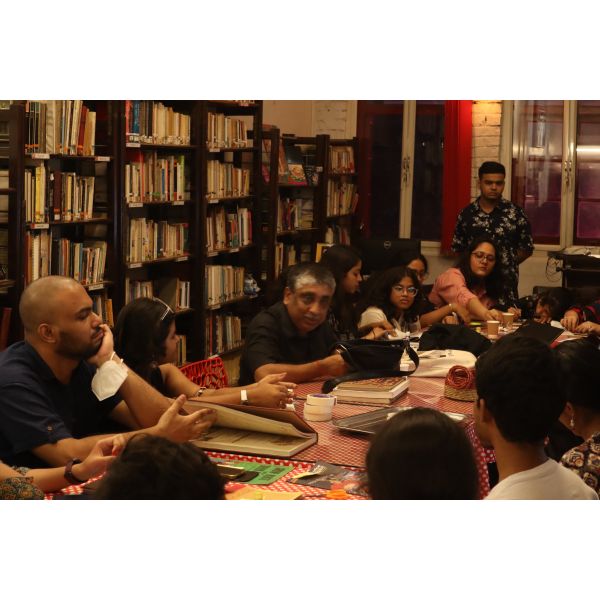 Events and ProgrammesAssemblage: Histories$1.00
A sketching and reading session with art historian Debdutta Gupta on the artistic practice of assemblage centred on the text Khuddur Jatra by Abanindranath Tagore.
Learn More -
 Art FairsIndia Art Fair$0.00
This exemplary themed exhibition at DAG’s booth at the India Art Fair 2018 was a masterclass in Indian art dedicated to the nine National Treasure artists. This declaration in the decade of the 1970s was intended to identify artists whose contribution had national significance. Even though the selection appears arbitrary and argumentative, the nine artists cannot be faulted for the quality of their work and the role they played in segueing the pre-independence freedom movement with their role and responsibility as artists. Nandalal Bose Sailoz Mookherjea Abanindranath Tagore Jamini Roy Amrita Sher-Gil Rabindranath Tagore Gagnendranath Tagore Nicholas Roerich Raja Ravi Varma
Learn More