


Search results for: 'vivo Hi-Fi 芯片 认证 标准 2026'
-
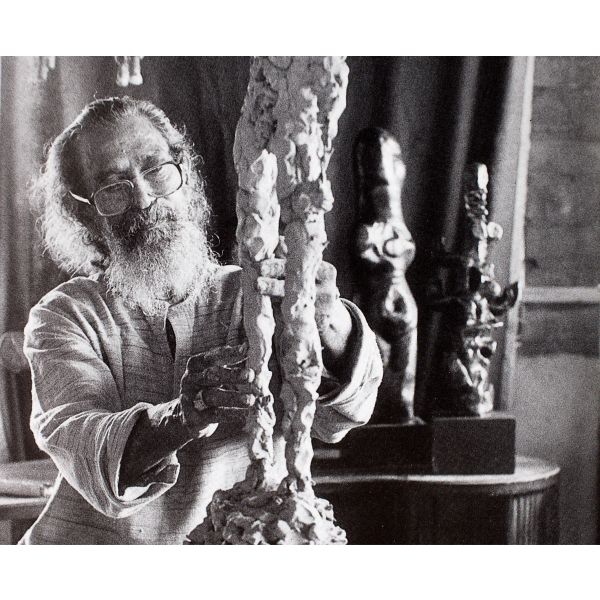 ArtistsS. Dhanapal$0.00Born on 3 March 1919 in Madras, S. Dhanapal trained under sculptor-teacher D. P. Roy Chowdhury at the city’s Government College of Art and Craft. He joined the faculty of his college after completing his studies, and, in 1957, when K. C. S. Paniker was principal, Dhanapal was appointed the head of the sculpture department. He eventually became principal of his alma mater in 1972. Learn More
 -
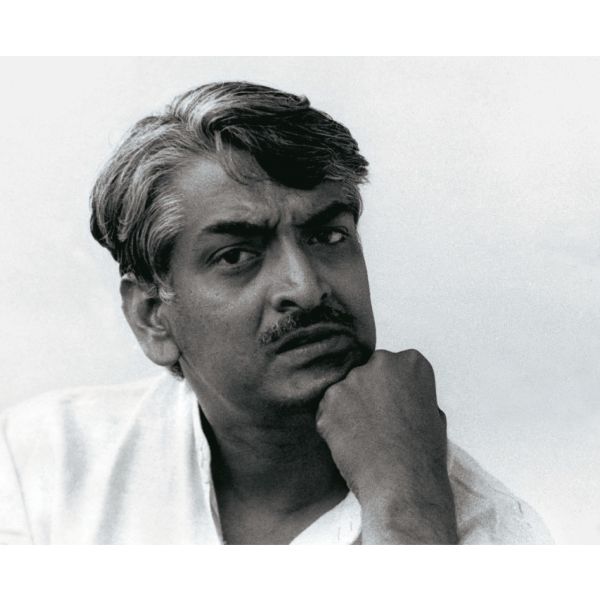 ArtistsR. B. Bhaskaran$0.00Born in Madras, R. B. Bhaskaran is best known for his series on cats, and on couples, as also for his rejection of the ‘restrictive’ need to establish an Indian cultural identity through his works, which he feels is ‘an instinctive by-product of one’s work’. Learn More
 -
 ArtistsParamjeet Singh$0.00Well-known for his silkscreen prints, Paramjeet Singh was born and brought up in Jamshedpur in present-day Jharkhand where career prospects appeared limited to engineering or medicine. His parents hoped he would study architecture, but destiny had other plans as a friend took Singh to a local art class, which spurred his interest in drawing and painting. Learn More
 -
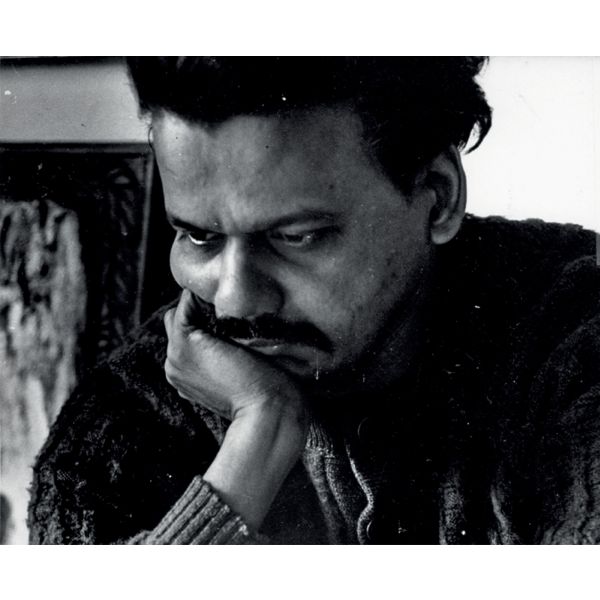 ArtistsMohan Samant$0.00Born in Bombay, Mohan Samant showed early proficiency for both music and art. A lifelong player of sarangi—an Indian bowed, string instrument—Samant chose painting as a career and obtained a diploma from Sir J. J. School of Art, Bombay, in 1952. In the early 1950s, he was influenced by his teacher Shankar Palsikar, a painter of the traditional school, but moved soon towards an expressionistic mode in an attempt to discover his own style, fusing the expressive, the primitive and the abstract in his art. Learn More
 -
 ArtistsM. S. Joshi$0.00Born in Nashik, Maharashtra, M. S. Joshi studied at Sir J. J. School of Art, Bombay, in the 1930s. Joshi combined his training in academic realism with a sense of vitality, precision and aesthetics to reveal India’s rich cityscapes and landscapes in his watercolour and gouache works. There was immense depth in the rendering of his subjects, which included people, places, architectural elements, all done in a subdued yet textured palette. Learn More
 -
 ArtistsM. A. R. Chughtai$0.00Born into a family of artists in Lahore on 21 September 1897, M. Abdur Rahman Chughtai learnt to draw from his father, Mia Karim Baksh. He joined Mayo School of Art in Lahore in 1911, where Samarendranath Gupta, a pupil of Abanindranath Tagore, was vice-principal. He obtained a diploma in photo lithography from Mayo School in 1914, where he went on to become the head instructor in chromo-lithography. He honed his printmaking skills during visits to London in the mid-1930s and exhibited his works across Europe; he also exhibited with Indian Society of Oriental Art in Calcutta around this time. Learn More
 -
 ArtistsAltaf$0.00Born in Baroda, Altaf Mohamedi’s interest in painting began while at the Scindia School in Gwalior under the tutelage of his art instructor Niyogi. His nascent interest was also encouraged by his elder sister and noted painter Nasreen Mohamedi. Learn More
 -
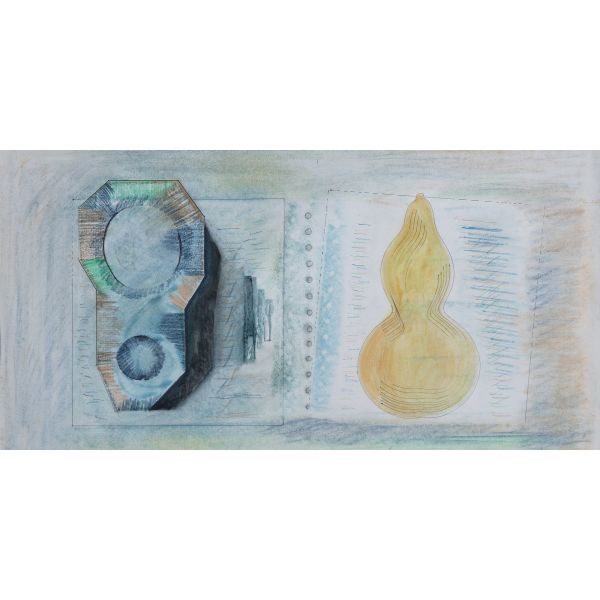 JournalSearching for the ‘Inner Form’ in Prabhakar Barwe’s Blank Canvas$0.00
Artists have often formulated their theories and observations to analyse and become aware of the cognitive modes of art making, and to associate with broader contemporaneous art movements. These manifestos become a window into an artist’s process. Prabhakar Barwe’s seminal treatise, <i>Kora Canvas</I> (The Blank Canvas, 1989), exemplifies his deep understanding of the fundamental elements of art and keen observations of nature and his surroundings.
Learn More -
 ExhibitionsPrabhakar Barwe: Between Object and SpaceAs low as $1.00
Prabhakar Barwe (1936-95) could well have ended up a theoretician whose book 'Kora Canvas' (Blank Canvas) was a manifesto that established the multi-dimensional relationship between an artist, the object on which he paints, and his subjects. That he was not just an intellectual scholar but an artist whose work speaks for him, is evident through a range of works in which Barwe dissects our understanding of the world and how we view it. Taking commonplace objects and our perception of their existence in the space they occupy, he shifts the dialogue to a point of discomfiture that makes us question our understanding of them. Using scale, discordant juxtapositions, and displacements, he reimagines the everyday in a manner that is thought-provoking, even provocative, as alternate realities—whether perceived or imagined.
Learn More -
 JournalUntitled by Nasreen Mohamedi$1.00
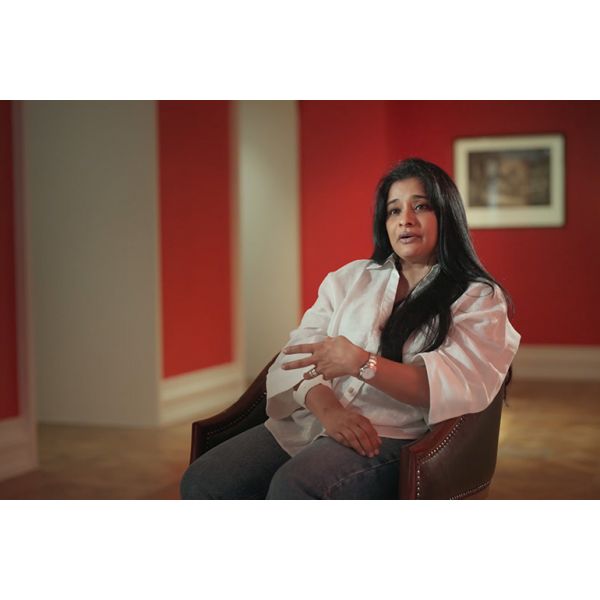
When the Met-Breuer opened in New York, its very first exhibition was a retrospective of Nasreen Mohamedi. Nasreen’s work is regarded as extremely important in the context of abstraction with delicate lines marking her compositions with a strength that is as remarkable as it is astounding, altering the way we see the world. The artist preferred drawing and sometimes photography, as a result her canvases are extremely rare to find. Sasha Altaf tells us more in this film about a canvas painted by her in Bahrain in 1969.
Learn More -
 JournalUntitled by Shanti Dave$1.00
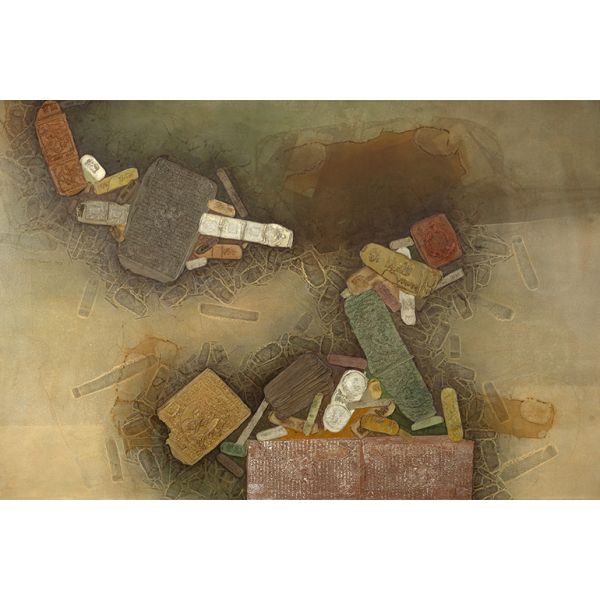
This Untitled painting, created in the early-to-mid-1970s, reflects Shanti Dave's fervent experimentation during a prolific period marked by international recognition in mural making and exhibitions. Drawing inspiration from childhood memories of Badapura and nearby archaeological ruins, the abstract composition blends colour pigments, beeswax, and oil solutions in a dynamic interplay. Employing a reverse image technique with molten wax, the painting challenges perceptions and invites contemplation on the nature of truth. Noted fashion designer and art-collector Tarun Tahiliani explains the nuances of Shanti Dave’s work in a film specially created on the painting.
Learn More -
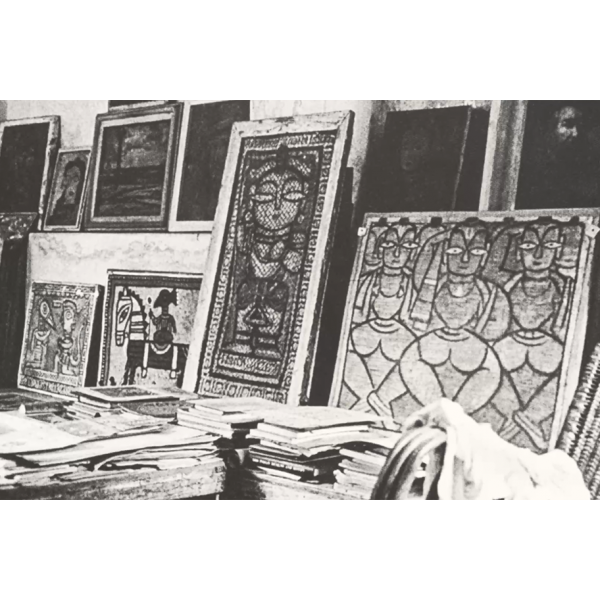 JournalShobhaa De on Jamini Roy$0.00'Iconic Masterpieces of Indian Modern Art, Edition 2' opened on 11 February, featuring fifty artworks which shaped the trajectory of pre-modern and modern art in the country. As part of the exhibition, Shobhaa De explores the confluence of European academic style and Byzantine art in Jamini Roy’s ‘Madonna and Child’. Learn More