Search results for: 'vinho de lote o que é'
-
 ExhibitionsIconicAs low as $1.00
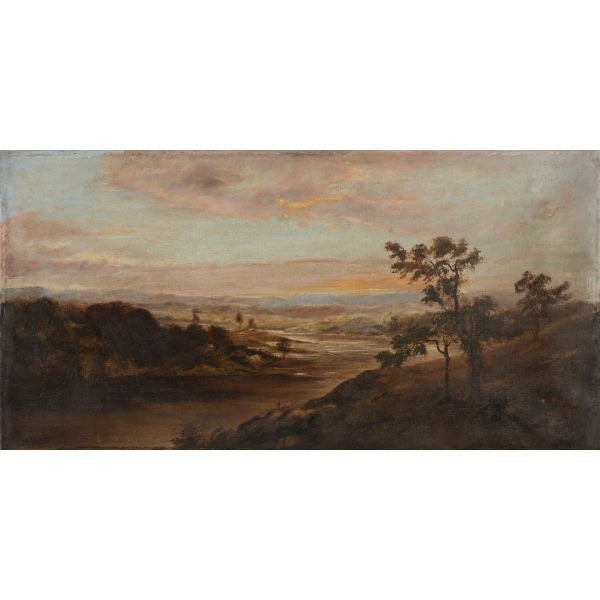
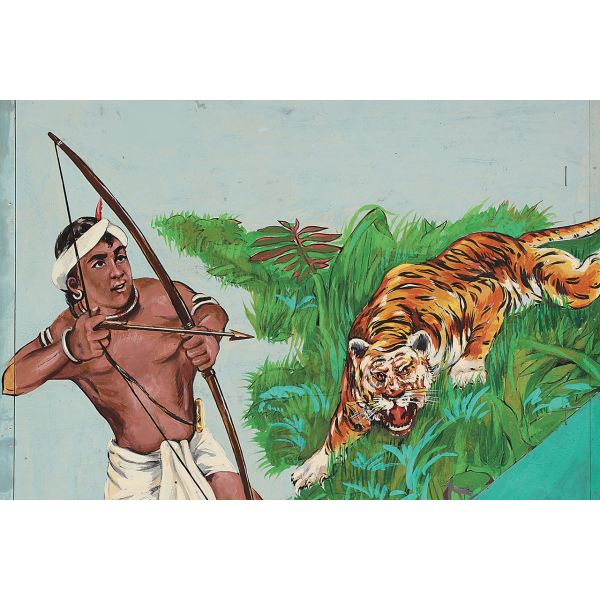
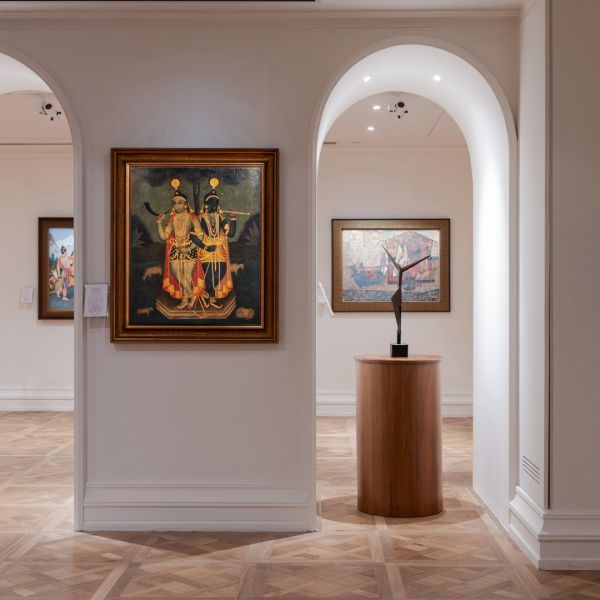
'Iconic Masterpieces of Indian Modern Art' is an exhibition specially curated to commemorate the opening of DAG’s new galleries at the Taj Mahal Palace in Mumbai. The pathbreaking exhibition of some of the finest nineteenth and twentieth century art related to India consists of fifty outstanding works, each of them exceptional for their historicity, rarity, and quality. Established in 1993, DAG has created an enviable reputation over the decades for its collection and exhibitions of twentieth century art. But with 'Iconic Masterpieces of Indian Modern Art', it draws attention to its growing strength in nineteenth century art, a new area that it has now committed itself to with a growing inventory of Western artists who travelled to India to paint, as well as Indian artists whose identities have remained unknown for lack of adequate documentation. The earliest work in this exhibition, dated 1805-10, is of one of the largest recorded Company Paintings, and concludes with a rare sculpture cast as recently as 2021 in Indonesia. Ramachandran Adi Davierwalla Ambadas Avinash Chandra Bikash Bhattacharjee Dhanraj Bhagat Early Bengal Oils Edwin Lord Weeks F. N. Souza Frank Brooks G. R. Santosh Ganesh Haloi J. Sultan Ali J. Swaminathan Jamini Roy Jeram Patel Jogen Chowdhury K. C. S. Paniker K. G. Subramanyan K. K. Hebbar K. Laxma Goud K. S. Radhakrishnan Krishen Khanna Laxman Pai M. A. R. Chughtai M. F. Husain M. V. Dhurandhar Madhvi Parekh Marius Bauer Natvar Bhavsar Nicholas Roerich Nikhil Biswas Paritosh Sen Prabhakar Barwe Rabin Mondal Rabindranath Tagore Rajendra Dhawan Ram Kumar Rameshwar Broota Ramgopal Vijaivargiya Ramkinkar Baij Ranbir Singh Kaleka Satish Gujral Shanti Dave Sohan Qadri Stefan Norblin Studio of Raja Ravi Varma Sunil Das Tyeb Mehta Company Paintings
Learn More -
 JournalPersonalising the Epics: Amar Nath Sehgal's 'Mythologies'$0.00
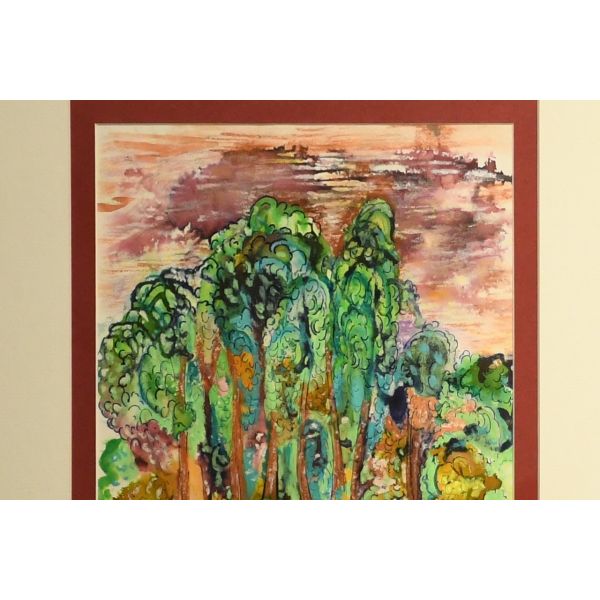
The India International Centre at New Delhi, in collaboration with the Amar Nath Sahgal Trust, presented a large suite of works by Amar Nath Sahgal (1922—2007), one of post-independent India’s foremost sculptors, in order to celebrate his centenary year in March 2023.
Learn More -
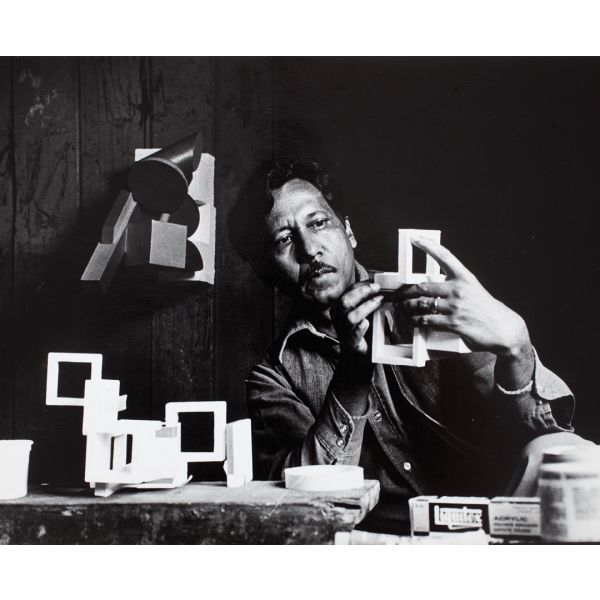 ArtistsEric Bowen$0.00Eric Bowen was born in Allahabad on 3 May 1929 and received a diploma from the College of Art, New Delhi, in 1959. Though he joined the short-lived Group 1890, his journey to be a part of the significant art movements in the 1960s took root when he and Paramjit Singh started the Group Unknown, a Delhi-based collective of young artists and sculptors. Learn More
 -
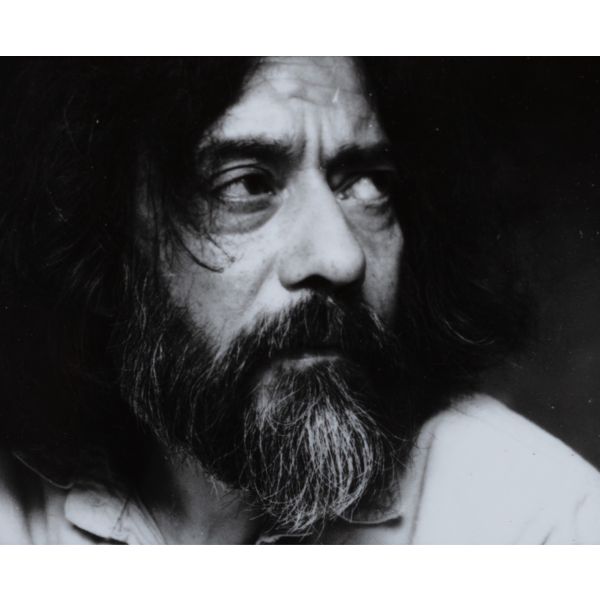 ArtistsRajendra Dhawan$0.00Born in 1936 in New Delhi, Rajendra Dhawan studied at the Polytechnic (later renamed College of Art) from 1953-58, and at Belgrade in erstwhile Yugoslavia from 1960-62. While in New Delhi, he became a founding member of the group called The Unknown that survived from 1960-64. Learn More
 -
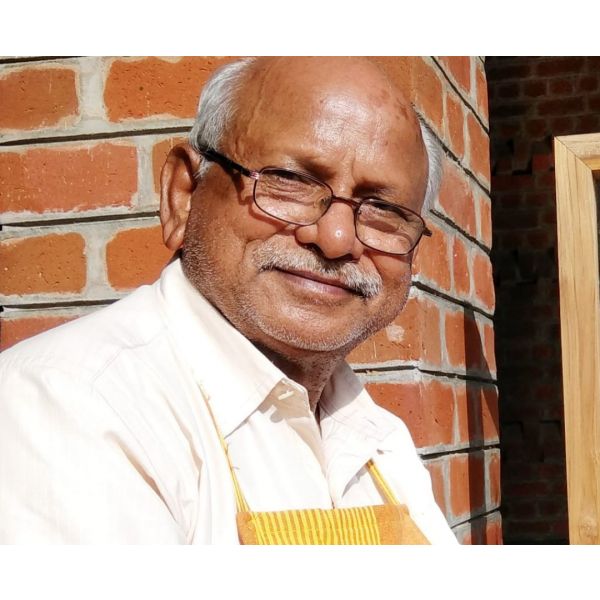 ArtistsMoti Zharotia$0.00Moti Zharotia was born in Delhi and remembers taking impressions of patterns carved on potatoes in childhood as his earliest artistic activity. He loved creating works of art but dreamt of becoming a lawyer, and therefore graduated in political science from Delhi University. Learn More
 -
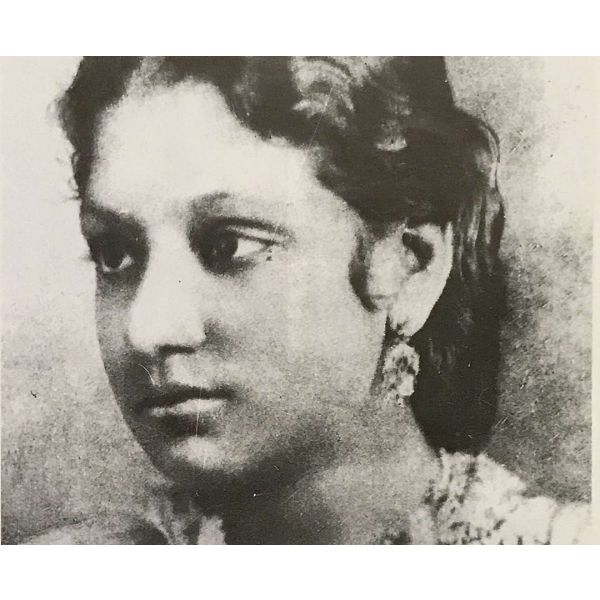 ArtistsSunayani Devi$0.00Sunayani Devi was born on 18 June 1875 in the Tagore family of talented writers and painters—Nobel-laureate Rabindranath Tagore was an uncle, and Gaganendranath and Abanindranath Tagore were her elder brothers. Essentially a self-taught artist, she witnessed the Bengal renaissance, but it was only in her thirties that she began to paint, encouraged by her husband, the grandson of reformist Raja Ram Mohun Roy. Learn More
 -
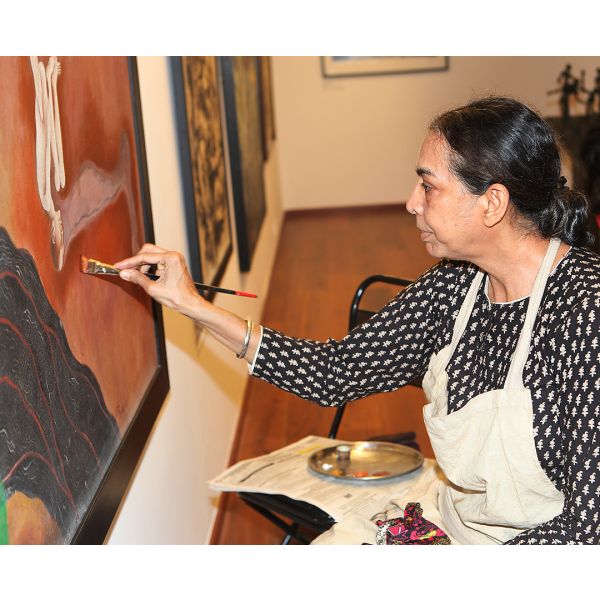 ArtistsArpana Caur$0.00Born in New Delhi in 1954, Arpana Caur completed her post-graduation in literature from Delhi University before choosing art as her vocation. She started studying painting at Central Saint Martins art college in London but could not complete the course. Learn More
 -
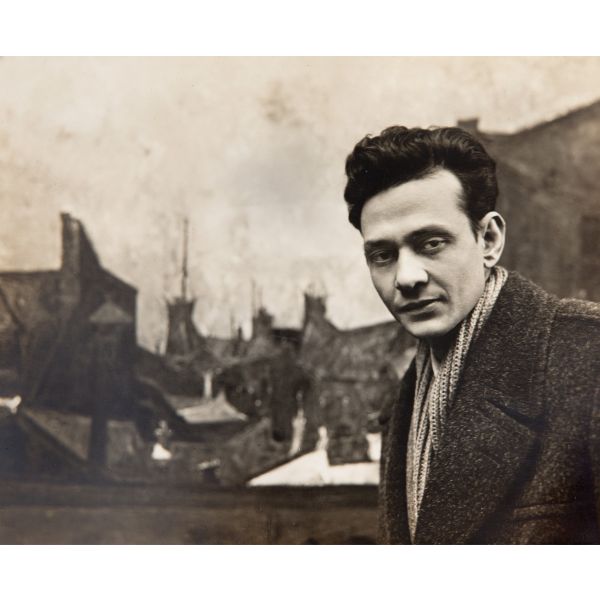 ArtistsS. H. Raza$0.00
One of India’s most seminal modernists, Syed Haider Raza was born on 22 February 1922 in Mandla, Madhya Pradesh, and forged a new language of art by integrating Indian symbolism with Western expression. A student of Sir J. J. School of Art, Bombay (1943-47), and one of the first members of the Progressive Artists’ Group, the turning point of his career was his journey to Paris in 1950 on a French government scholarship to study at École Nationale des Beaux-Arts. In 1956, he became the first non-French artist to win the critic’s award, the Prix de la critique.
Learn More -
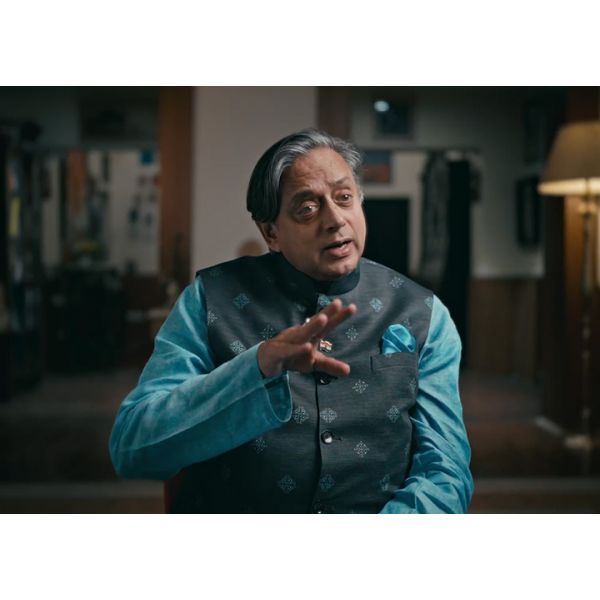 JournalThe Last Effort and Fall of Tippoo Sultaun by Henry Singleton$1.00
Henry Singleton’s The Last Effort and Fall of Tippoo Sultaun belongs to a genre known as history painting: the depiction of important historical events, usually on a large scale, as if they were playing out in front of one’s eyes. Author and parliamentarian Shashi Tharoor and art historian Giles Tillotson explain the lively imagination deployed in Singleton’s painting that depicts the British assault on Seringapatam and the killing of its ruler, Tipu Sultan—himself the source of so many stories that it was difficult to unravel the truth from the many falsities spun by the biased colonial administration and historians of the time.
Learn More -
 JournalEighty-Five Safety Pins by Prabhakar Barwe$1.00
Prabhakar Barwe’s Eighty-Five Safety Pins is a pioneering work that merges technology and traditional art. Created in 1991 using graphic design software on an Apple Macintosh, Barwe explored the concept of pixels, a hallmark of the digital era, while incorporating his signature enamel paint. This innovative approach reflects his curiosity about embracing the unknown future and reinterpreting it artistically. By abstracting the safety pin from its conventional form, Barwe invites viewers to reconsider its essence, offering an open-ended visual experience that challenges preconceived notions and encourages alternative perspectives. Art connoisseur Shireen Gandhy, a friend of the late artist, takes us behind the making of this extraordinary painting.
Learn More