


Search results for: 'who wrote Cardi B What's Goin On'
-
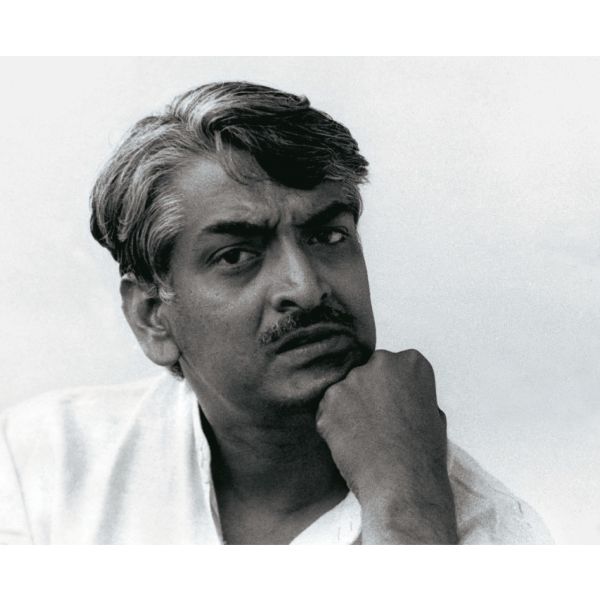 ArtistsR. B. Bhaskaran$0.00Born in Madras, R. B. Bhaskaran is best known for his series on cats, and on couples, as also for his rejection of the ‘restrictive’ need to establish an Indian cultural identity through his works, which he feels is ‘an instinctive by-product of one’s work’. Learn More
 -
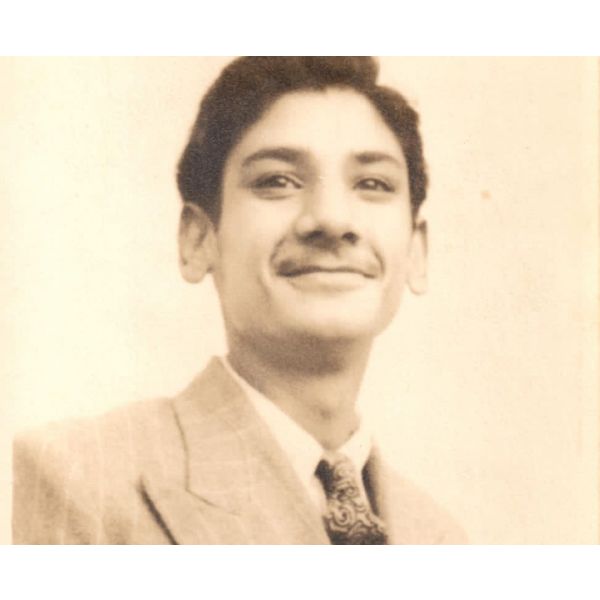 ArtistsBishamber Khanna$0.00One of the first few artists to experiment in the medium of enamelling, Bishamber Khanna was born in Peshawar and studied at Forman Christian College, Lahore, now in Pakistan. Learn More
 -
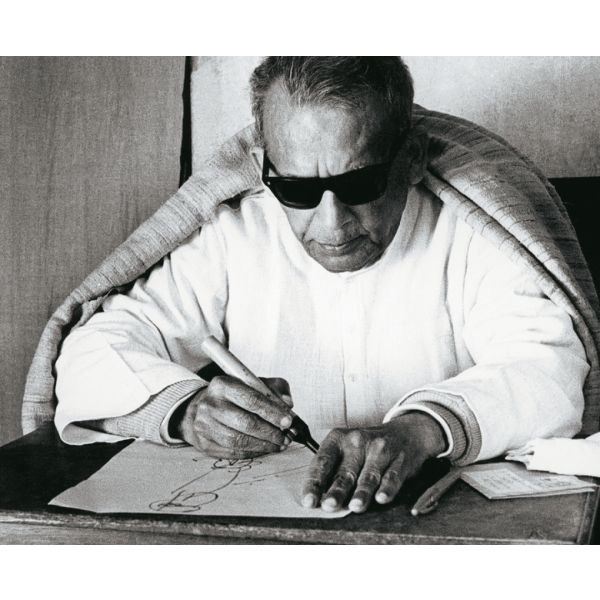 ArtistsBenode Behari Mukherjee$0.00Born on 7 February 1904, in Behala, Bengal, Benode Behari Mukherjee joined Santiniketan in 1917, and Kala Bhavana in 1919, where he was one of the first students of Nandalal Bose. A congenitally impaired vision that denied him normal schooling and resulted in a lonely childhood, brought him close to nature and had a deep impact on his art. Learn More
 -
 Art FairsArt Dubai$0.00
Continuing its theme of introducing Indian abstractionists at Art Dubai, DAG handpicked works by eight eminent abstract artists and juxtaposed them to bring into focus how brushwork and colour are imbued with emotion and can compel viewers to spend hours studying such works. The artists presented by DAG at Art Dubai 2018—Ambadas, Sohan Qadri, Natvar Bhavsar, Avinash Chandra, Rajendra Dhawan, Shanti Dave, Ram Kumar and S. H. Raza—worked in different styles but their use of vivid colours highlighted this somewhat neglected genre of art in India that has begun to enjoy a premium in recent years. These artists had their studios in different parts of the world—Copenhagen, Oslo, New York, Paris, London, New Delhi—but had one thing in common: they were all of Indian origin and had trained and begun their careers in India. AMBADAS SOHAN QADRI NATVAR BHAVSAR AVINASH CHANDRA SHANTI DAVE G. R. SANTOSH J. SWAMINATHAN RAM KUMAR JERAM PATEL RAJENDRA DHAWAN K. V. HARIDASAN
Learn More -
 Art FairsIndia Art Fair$0.00
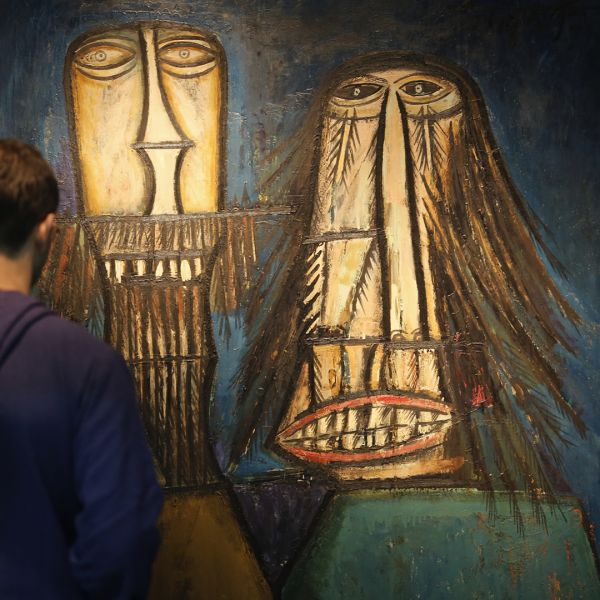
For the second year running at the India Art Fair, DAG built upon its theme with a second edition of ‘Masterpieces of Indian Modern Art’, on a scale as ambitious as the previous year. A portrait by Raja Ravi Varma was the highlight among the old masters, but a stunning painting by F. N. Souza—Man and Woman Laughing—stole the show. Once again, the lavish booth set new standards in terms of display, visitor experience, private lounges, and a souvenir and book store. Special lectures were organised at the booth, and a large number of walkthroughs were arranged for pre-booked groups. As in the previous edition, a large book was published on the displayed works, and a daily art newspaper was published for visitors to the fair. Avinash Chandra Nandalal Bose Chittaprosad F. N. Souza G. R. Santosh M. V. Dhurandhar J. Sultan Ali Jamini Roy K. H. Ara M. F. Husain Ram Kumar S. H. Raza Rabindranath Tagore
Learn More -
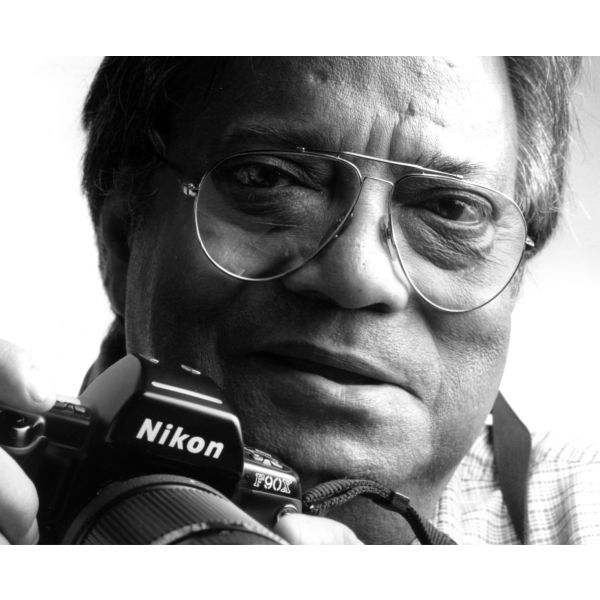 ArtistsNemai Ghosh$0.00Globally renowned filmmaker Satyajit Ray called his photographer Nemai Ghosh ‘Boswell with a camera, instead of a pen’. Just like James Boswell’s biography of English writer Samuel Johnson is considered the finest in the language, Ghosh’s photo-biography of his mentor is one of the finest photo essays on a legend’s life; Ghosh was Ray’s photographer from 1968 until Ray’s death in 1992. Learn More
 -
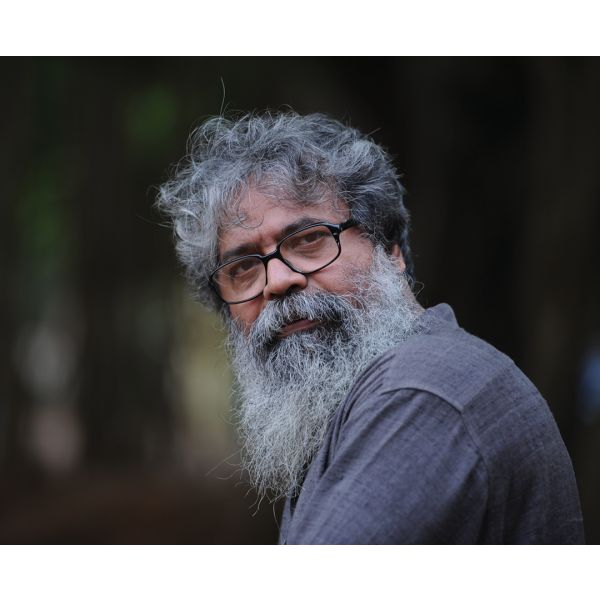 ArtistsK. S. Radhakrishnan$0.00Maiya and Musui—the thinly-fluted male and female bronze figures, often swaying or leaping in joy—are perhaps as well-known as their creator, K. S. Radhakrishnan. One of the most significant contemporary sculptors, Radhakrishnan often refers to the bronze characters as his alter egos. Learn More
 -
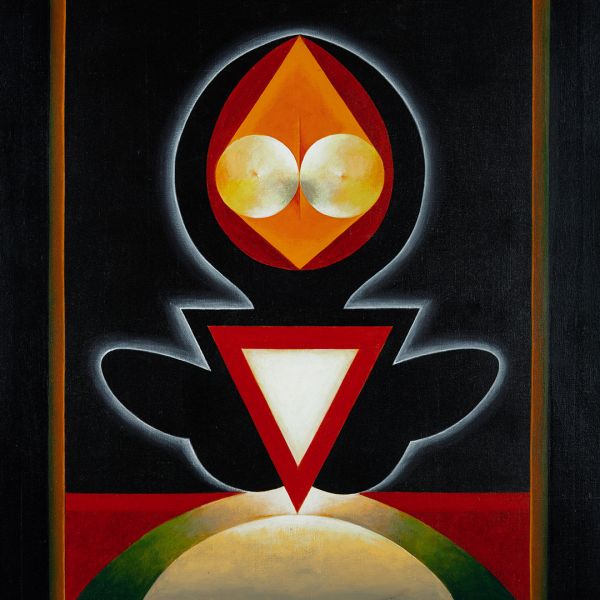 Art FairsFrieze Masters 2023$1.00The medieval ages saw the rise in India and parts of Asia of philosophical, theological, cultural, literary and visual manifestations that derived from diverse faiths but with one aim—to attain enlightened liberation. Its resistance to Brahmanical texts and hegemony resulted in the creation of geometrical aesthetics that were interpreted by way of texts, paintings, and architecture and had a monumental impact on society. At the centre of its geometric configurations—the triangle, the square, and the circle—lay the idea of Creation itself, the source of primal energy that could to be diverted towards a higher consciousness, and all universe was manifest in this. Learn More
 -
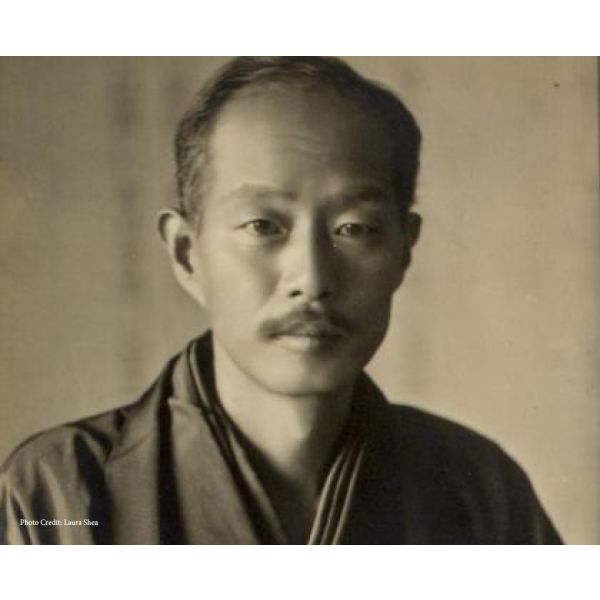 ArtistsYoshida Hiroshi$1.00
Painter-printmaker Yoshida Hiroshi, one of the leading figures of Japanese printmaking after the end of the Meiji period (1912), was born on 19 September 1876 in Kurume in Fukuoka prefecture.
Learn More -
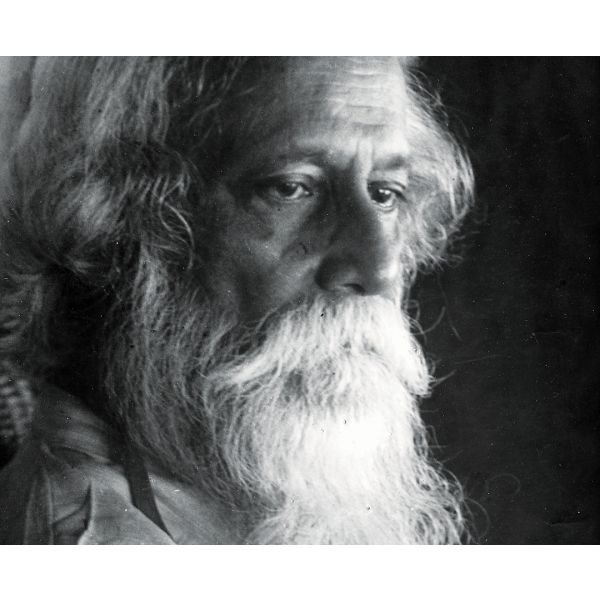 ArtistsRabindranath Tagore$0.00
Poet, novelist, musician, playwright, and Asia’s first Nobel Prize awardee—which he won for literature in 1913—Rabindranath Tagore was born on 7 May 1861, and took to painting and drawing only in his sixties.
Learn More -
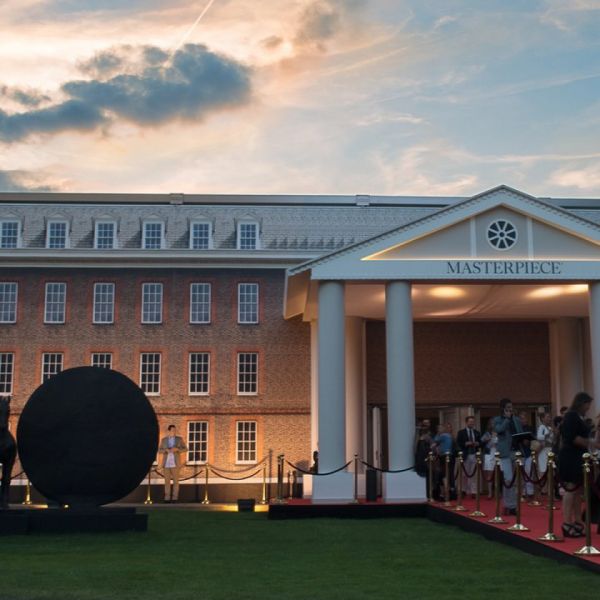 Art FairsMasterpiece$0.00
DAG’s second outing at Masterpiece London, the prestigious fair for everything from exceptional jewellery, furniture and antiquities to works of art held annually at Chelsea, was marked by outstanding inclusions of works by modern masters. The showstopper was a massive sized British Raj - Procession by M. F. Husain (one of two works, the other being his Theorem II) that grabbed everyone’s attention, but equally hypnotising were paintings by Natvar Bhavsar (Eketak), George Keyt (Two Women Amid Plants), F. N. Souza’s fabulous Temple Dancer, tantra-based paintings by G. R. Santosh, Prabhakar Barwe and a work in relief by Satish Gujral. Bikash Bhattacharjee Natvar Bhavsar Avinash Chandra K. K. Hebbar M. F. Husain Ranbir Singh Kaleka George Keyt Krishen Khanna Jehangir Sabavala G. R. Santosh F. N. Souza
Learn More -
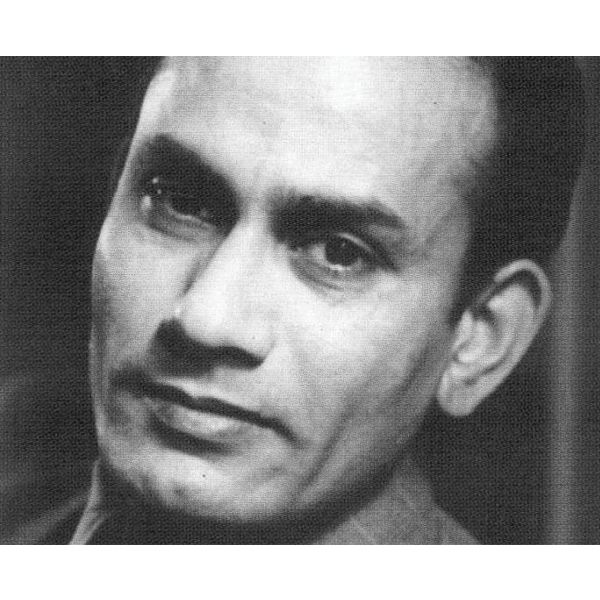 ArtistsVishwanath Nageshkar$0.00Of Goan origin, Vishwanath Nageshkar was born and raised in Kolhapur, Maharashtra, in 1910. He obtained his diploma from Sir. J. J. School of Art, Bombay, in 1930; he also specialised in frescos from the same institute. A contemporary of Amrita Sher-Gil, Nageshkar was one of the first Indian artists to move to Paris for his education—he studied at École National Supérieure des Beaux-Arts from 1930-35. Later, he studied at Kunstakademic in Munich, Germany, from 1938-40, and under Professor A. Strübe in Berlin, 1940-41. Learn More