Search results for: 'Dhurandhar worked extensively for textbooks, magazines, and calendars.'
-
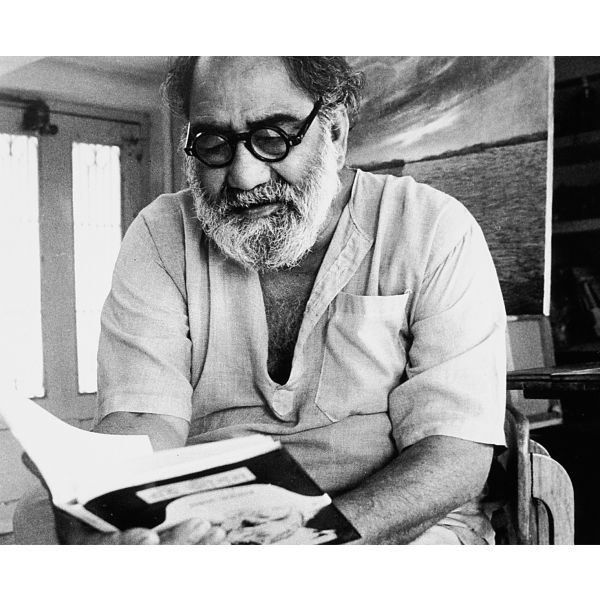 ArtistsProkash Karmakar$0.00Prokash Karmakar learnt painting at his father, artist-teacher Prahlad Karmakar’s atelier, till the socio-political turmoil of the 1940s and his father’s early death put an end to it. After his matriculation, Karmakar joined Government College of Arts and Crafts, Calcutta, but quit soon thereafter for reasons of poverty. In between, he designed book covers and worked as an illustrator for his livelihood; he even joined the army but absconded after two years, driven by his desire to paint. Learn More
 -
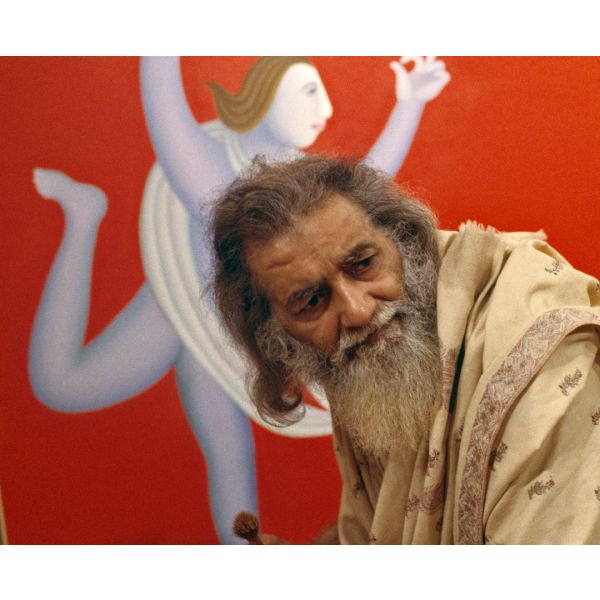 ArtistsManjit Bawa$0.00Born in Dhuri, Punjab, Manjit Bawa was encouraged by his brothers to pursue art and he studied at Delhi Polytechnic from 1958-63 under eminent artist-teachers Somnath Hore, Dhanraj Bhagat, B. C. Sanyal, and Abani Sen. He moved to England in 1964, where he worked as a silkscreen printmaker and studied at London School of Painting. Learn More
 -
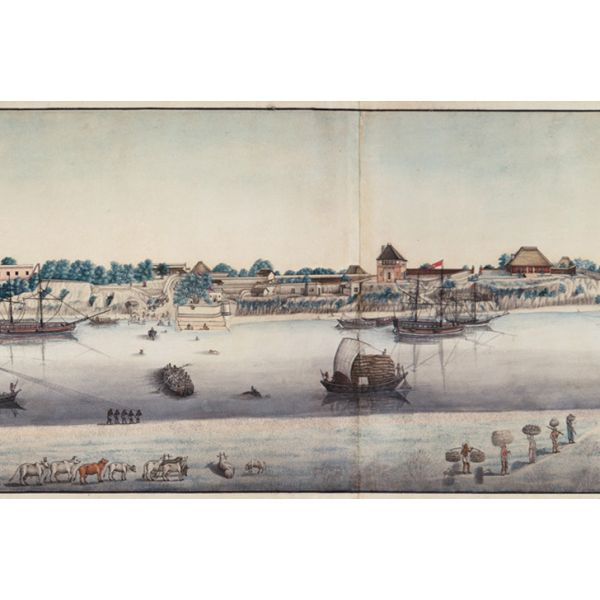 JournalWilliam Dalrymple on 'Indian Painting for the East India Company'$1.00
Also known as Company School, this genre is the Indo-European style of painting made in India by Indian artists, most of whom worked under the patronage of the East India Company. Focusing on a spectacular painting, William Dalrymple takes us through a journey of this neglected yet outstanding genre of art from nineteenth century India.
Learn More -
 ExhibitionsTipu SultanAs low as $1.00
An extraordinary exhibition of paintings, prints, maps and other objects, curated by Giles Tillotson, that recounts a visual history of the Mysore Wars between the East India Company and Tipu Sultan, this DAG exhibition explores how the narrative might have changed 222 years after the siege of Seringapatnam. The images, based on the British view of the time, reflect changing perceptions and Indian views on this epic battle and its political and social fallouts. A highlight of the exhibition is a painting by Henry Singleton depicting The Last Effort and Fall of Tippoo Sultaun, among other stellar works, that will be seen in India for the first time. Alexander Allan Cpt. R. Frazer David Wilkie Edward Orme Henry Singleton J. B. Mauzaisse James Hunter Johann Peter Krafft John Smart Mather Brown Obadiah Sherratt Robert Hyde Colebrooke Robert Home Robert Ker Porter Thomas Stothard
Learn More -
 ExhibitionsG. R. Santosh: AwakeningAs low as $1.00
An unassuming trailblazer, Gulam Rasool Santosh is the most important artist from the movement known as neo-tantra in Indian art, synonymous with masters such as Biren De and Sohan Qadri. Self-taught, Santosh began his career painting landscapes in his native Kashmir before being spotted by S. H. Raza, which enabled him to study at the Maharaja Sayajirao University at Baroda under the famous artist N. S. Bendre. After a few years of painting figurative and abstract works in the mould of the other Indian Progressives, Santosh’s art changed dramatically towards tantra when he had a mystical experience in the Amarnath cave in 1964. From then on, until his death in 1997, G. R. Santosh dedicated his life to the study and practice of tantra, a yogi as much as an artist.
Learn More -
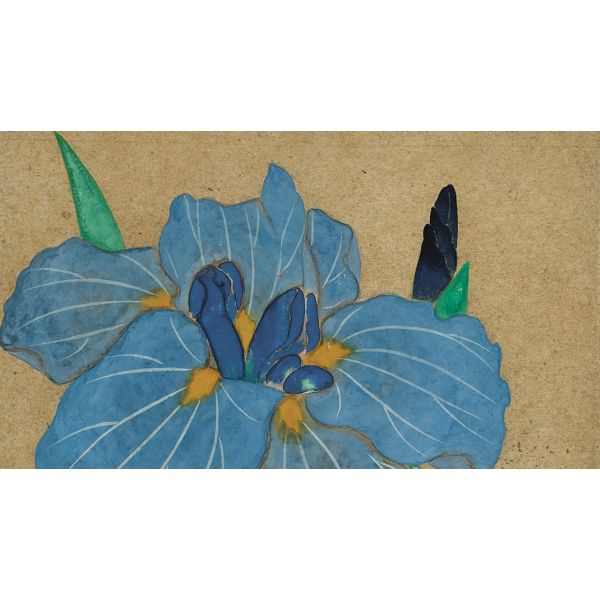 Institutional CollaborationsKripal: The Art of Kripal Singh Shekhawat$1.00
Kripal Singh Shekhawat of Jaipur worked his entire life to bridge the gap between the vernacular and the contemporary, combining what was considered the craft of a kumhar—potter—with the fine art of miniature painting. He paved a new path for a pioneering social and aesthetic mode of life in twentieth century India.
Learn More -
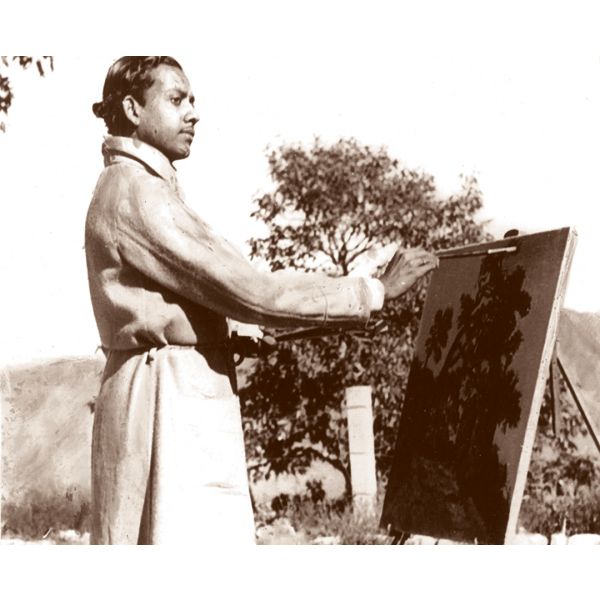 ArtistsKisory Roy$0.00Well-known for his landscape paintings, Kisory Roy was inspired to take up the arts by his father, who worked for the railways and was an occasional painter. Winning a school competition led Roy to the Government School of Art, Calcutta, where he studied from 1931-37. Under Mukul Dey, he learnt to work in several mediums like watercolour, oil, charcoal, and crayon. Learn More
 -
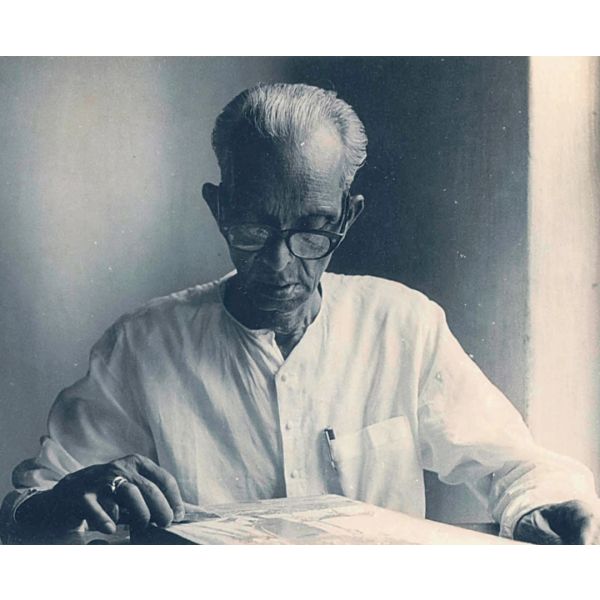 ArtistsHaren Das$0.00Master printmaker Harendra Narayan Das, popularly known as Haren Das, was born in Dinajpur in present day Bangladesh on 1 February 1921. He took a diploma in fine art, with specialisation in graphic arts, from the Government College of Arts and Crafts, Calcutta, in 1938. He worked almost exclusively in printmaking at a time when oil painting ruled popular consciousness and prints were considered inferior. Learn More
 -
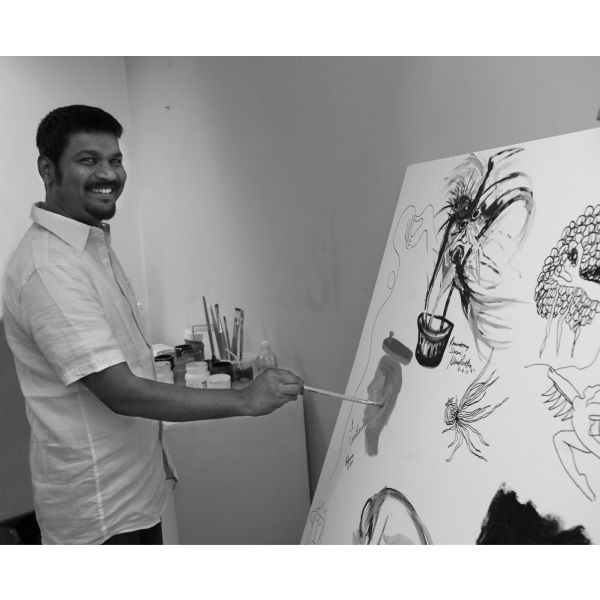 ArtistsG. R. Iranna$0.00Born in Sindgi, Karnataka, Iranna G. Rukumpur, popularly known as G. R. Iranna, grew up on his father’s farm, worked in the fields, and studied in Sarang Math (a traditional village school or an ashram) where he discovered his early interest in drawing and painting. As a child, freshly laid-out roads were Iranna’s earliest canvases on which he drew images of Hanuman, the monkey-god, with chalk. Learn More
 -
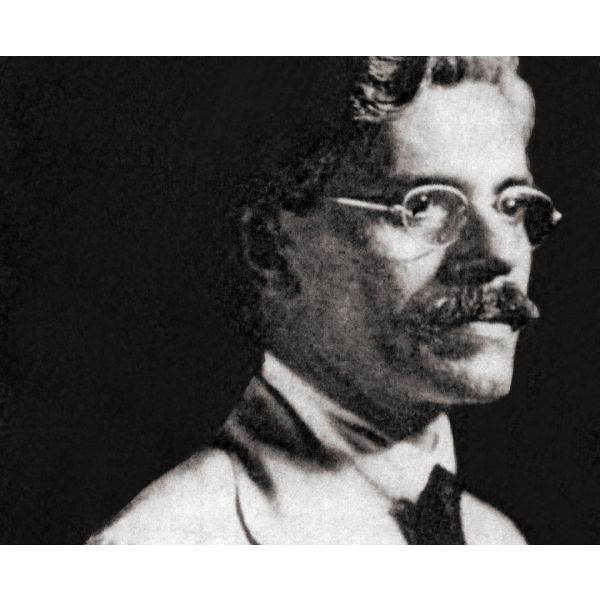 ArtistsA. H. Müller$0.00Archibald Herman Müller, born of German parentage in Cochin, Kerala, on 11 March 1878, lived and worked in India. He joined the Madras School of Art and received early recognition as an artist. Learn More
 -
 ExhibitionsThe Fifties ShowAs low as $1.00
The twentieth century was marked by two important decades—the 1910s, when the Bengal School saw the establishment of a revivalist practice that came to signify Indian modern art in general; and the 1950s, when a newly independent nation put its colonised past behind it and embraced a triumphant modernism. A. A. RAIBA ADI DAVIERWALLA AVINASH CHANDRA BABURAO SADWELKAR BADRI NARAYAN BIREN DE CHITTAPROSAD D. P. ROY CHOWDHURY DEVYANI KRISHNA DHANRAJ BHAGAT G. R. SANTOSH GANESH PYNE HAREN DAS Indra Dugar J. SULTAN ALI JYOTI BHATT K C S PANIKER K S Kulkarni K. G. SUBRAMANYAN K. K. HEBBAR KANWAL KRISHNA KISORY ROY KRISHEN KHANNA KRISHNA REDDY Laxman Pai M. F. HUSAIN MOHAN SAMANT NANDALAL BOSE NIKHIL BISWAS P. T. REDDY PARITOSH SEN S. H. RAZA S. K. BAKRE SAKTI BURMAN SHANTI DAVE SUNIL DAS SUNIL MADHAV SEN VISHWANATH NAGESHKAR
Learn More -