Search results for: 'This is the definition of cool for me'
-
-
 ExhibitionsThe Wonder of IndiaAs low as $1.00
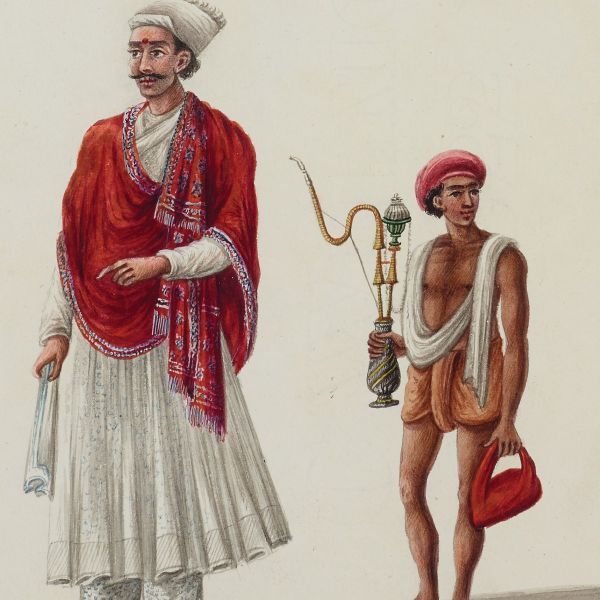
An ancient civilisation, India was always prized for her fabled wealth—textiles, crafts, spices—her knowledge—literature, scholarship, universities—and her culture—music, dance, theatre, art. It is the only country with an unbroken tradition in each of these disciplines extending all the way back to the Indus Valley Civilisation. Ambadas Anonymous (Kalighat Pat) Arun Bose Asit Kumar Haldar Avinash Chandra B. Prabha Balraj Khanna Bikash Bhattacharjee Bimal Dasgupta Biren De Chittaprosad Company Painting D. P. Roy Chowdhury Early Views of India G. R. Santosh Ganesh Haloi Himmat Shah J. Sultan Ali Jamini Roy Jeram Patel K. S. Kulkarni Krishna Reddy L. Munuswamy M. F. Husain M. Suriyamoorthy Natvar Bhavsar Nikhil Biswas P. T. Reddy Paritosh Sen Prodosh Das Gupta Prokash Karmakar Prosanto Roy Rabin Mondal Rajendra Dhawan S. G. Vasudev Sakti Burman Sanat Kar Sankho Chaudhuri Satish Sinha Shanti Dave Shyamal Dutta Ray Sunayani Devi Sunil Das Sunil Madhav Sen V. Viswanadhan
Learn More -
 JournalThe Poet (Head of Rabindranath Tagore) by Ramkinkar Baij$1.00
Ramkinkar Baij is rightfully described as India’s first modernist sculptor for his pathbreaking use of cement and laterite as material, his choice of subjects and scale in public art projects, and his unconventional development of ideas.
The Poet is an abstract portrait of Rabindranath Tagore, imagined through negative spaces, concaves and convexes forming the eyes in a hollowed head, a masterclass in Baij’s cubist vocabulary. The portrait shared almost no physical attributes with the subject, instead focusing on distorting Tagore’s visage to give us insights into the state of his mind.
Learn More -
 Events and ProgrammesMumbai Gallery Weekend$1.00
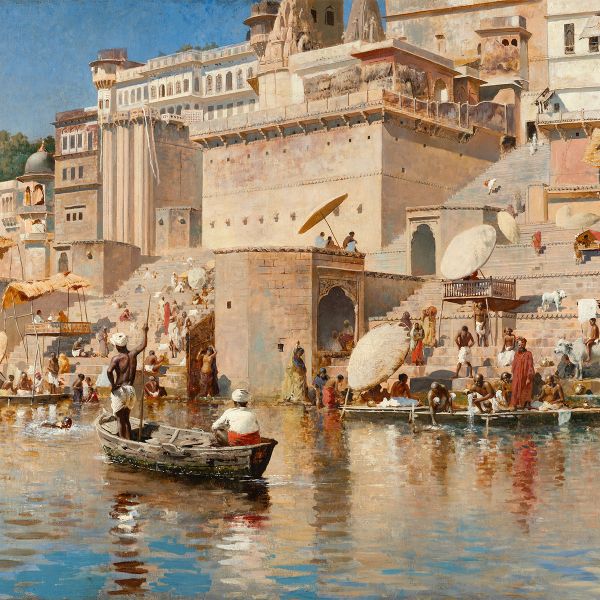
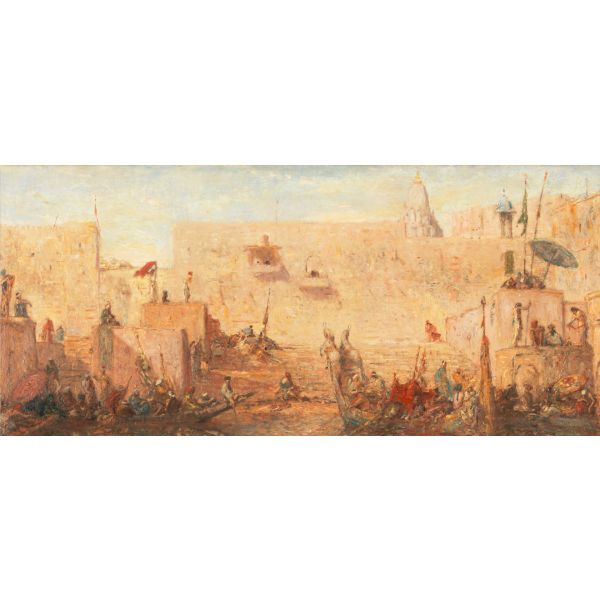
The exhibition presents views of the ancient city of Benares (now Varanasi) as depicted by foreign artists in the nineteenth and early twentieth centuries.
Learn More -
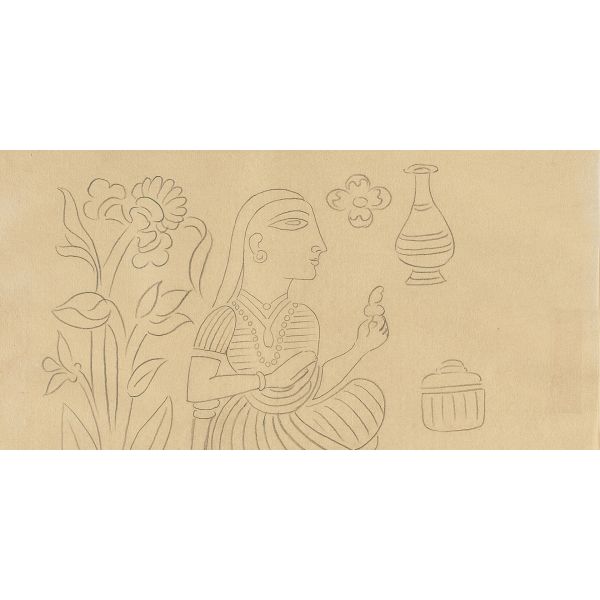 JournalSketching a Temple: Nandalal Bose’s Konark album$0.00
One of India’s nine national treasure artists, Nandalal Bose (1882—1966) forged a long and glittering career as the foremost artist-pedagogue bridging the late-colonial period and the first few decades after Indian independence. He maintained an active drawing practice throughout his life, with many small sketches done on postcards that he carried around with him as a sort of visual notebook.
Learn More -
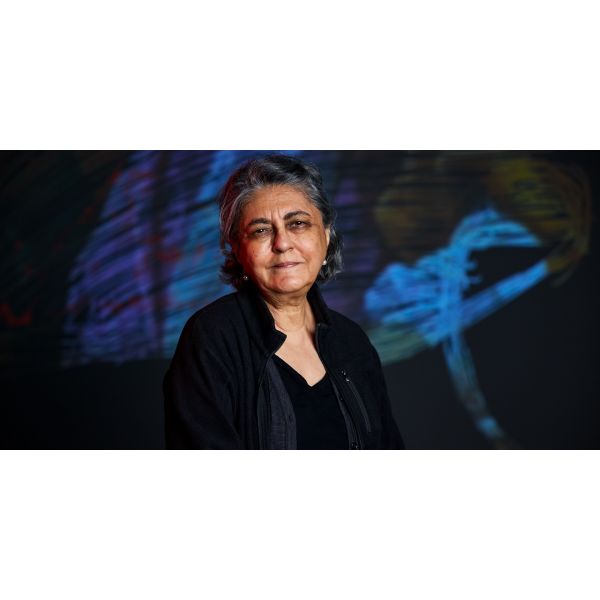 JournalRadical as a way of Being: Inaugural Contemporary Fellow Nalini Malani at London's National Gallery$0.00
What is the role of collectors and collections or archives in the world of art today? Does it simply allude to practices of producing a consumable past today or does it also aspire to question the ways in which history has been shaped by powerful interventions in the form of artworks, performances and installations? In this series of conversations, we wanted to explore the idea of collecting recent or contemporary art—and how it inevitably takes us back to the moderns who influenced such practices heavily.
Learn More -
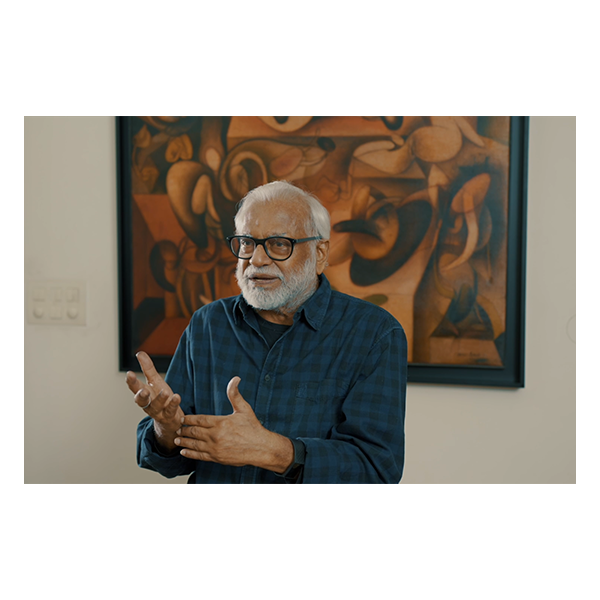 JournalManu Parekh on 'Shiva'$0.00‘Iconic Masterpieces of Indian Modern Art, Edition 2’ opened on 11 February at DAG’s Janpath Gallery in New Delhi featuring fifty artworks which shaped the trajectory of pre-modern and modern art in the country. As part of the exhibition, Manu Parekh speaks about his 1971 painting ‘Shiva’, created at a pivotal juncture of his artistic career when he was trying to forge a visual language different from the Bengal School. Learn More
 -
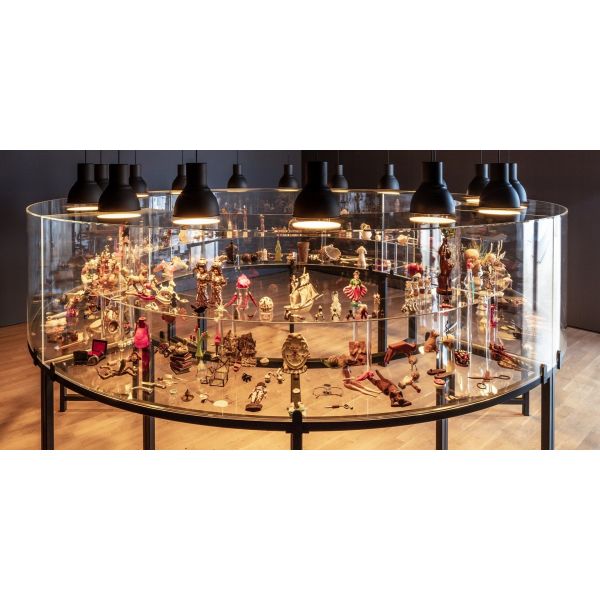 JournalConscious Collecting with Asia Art Archive and Durjoy Rahman$0.00
What is the role of collectors and collections or archives in the world of art today? Does it simply allude to practices of producing a consumable past today or does it also aspire to question the ways in which history has been shaped by powerful interventions in the form of artworks, performances and installations? In this series of conversations, we wanted to explore the idea of collecting recent or contemporary art—and how it inevitably takes us back to the moderns who influenced such practices heavily.
Learn More -
 JournalThe Artist as Collector: At Home with Shuvaprasanna$0.00
Artist and institution-builder Shuvaprasanna’s residence is located in a leafy corner of Kolkata’s suburban township, Bidhannagar or ‘Salt lake City’, which was envisaged by the former Chief Minister of West Bengal, Dr. Bidhan Chandra Roy in the late 1950s. Having grown up elsewhere—in College Street, in fact—the artist only moved here in 2002-03 with his family, which included his wife and fellow-artist, Shipra Bhattacharya. In this photo-essay we will learn about Shuvaprasanna’s personal collection and the relationship between his collecting practices and his art-making.
Learn More -
 JournalDrishyakala by DAG in collaboration with ASI$0.00
DAG in collaboration with ASI (Archaeological Survey of India) presents Drishyakala. An incredible array of over 400 artworks spread over 25,000 square ft. by India’s leading artists from the DAG collection—made all the more unique for its presentation within a UNESCO World Heritage Site—the Red Fort.
Learn More -
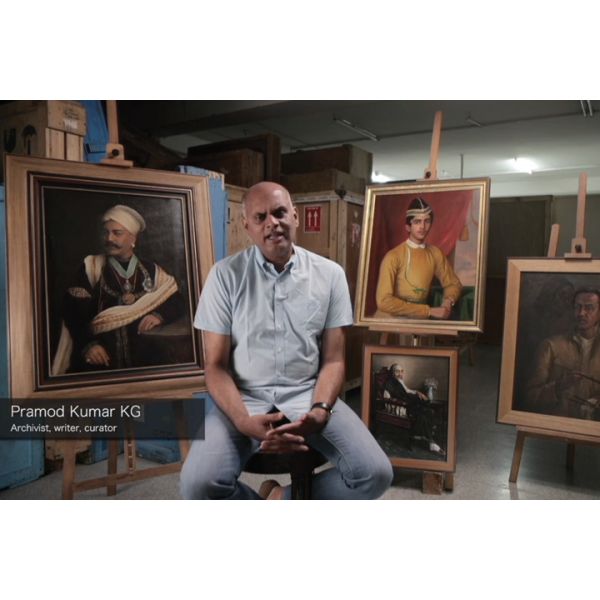 JournalA Portrait of our People$0.00
This exhbition explored the evolution of the genre of portrait painting in India. Curated by Pramod Kumar KG, it was specially created for Drishyakala, a joint collaboration between DAG and the Archaeological Survey of India, at Red Fort, Delhi. Visitors came face to face with dazzling canvases, expressive watercolours and early prints of people known and unknown in this extraordinary exhibition.
Learn More