


Search results for: 'fortnite its time to go emote'
-
 JournalArchive Case Files$0.00
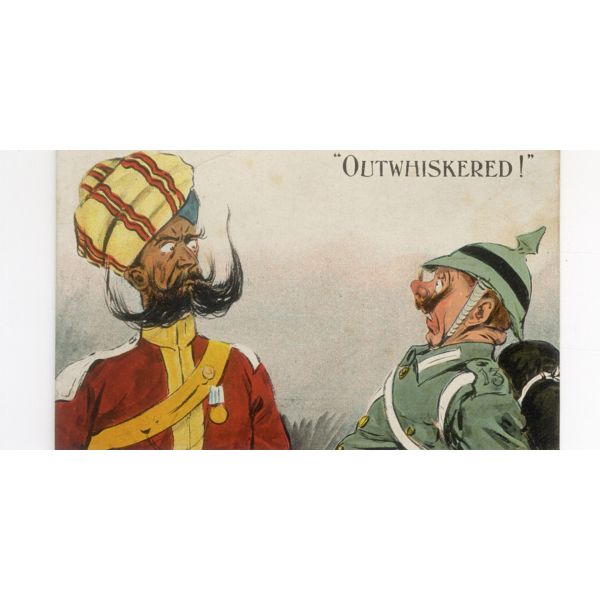
The DAG Archives travel to schools and colleges for the first time with a new education programme—Archive Case Files. Follow the journey of these students as they work with a collection of World War I postcards, to learn more about the role of visual archives in the classroom.
Learn More -
 JournalTapati Guha Thakurta on Bengal Oil Paintings$1.00
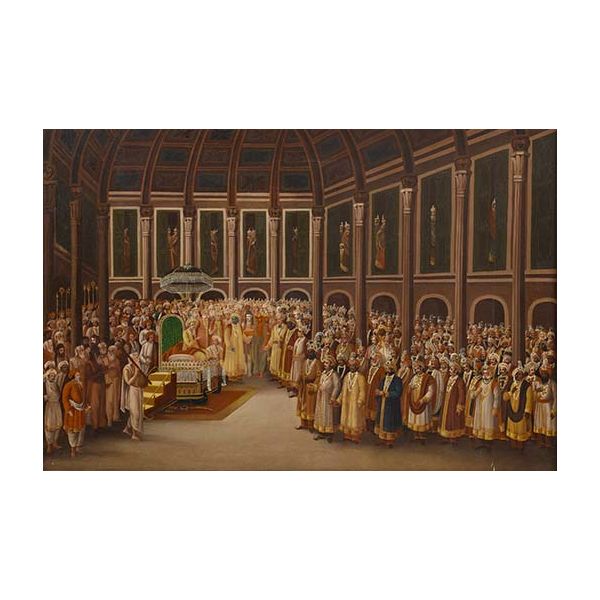
Artists may be anonymous but their times are not. Art historian and curator Dr. Tapati Guha-Thakurta takes us through the Early Bengal oil paintings from the 19th and early 20th century on display at DAG, New Delhi.
Learn More -
 JournalShobhaa De on Sailoz Mookherjea$0.00'Iconic Masterpieces of Indian Modern Art, Edition 2' opened on 11 February, featuring fifty artworks which shaped the trajectory of pre-modern and modern art in the country. As part of the exhibition, Shobhaa De reflects on Sailoz Mookherjea’s painting created ten years after the tragedy of Hiroshima-Nagasaki, drawing attention to the motifs and textures which convey a sense of fractured time affecting his personal and political worlds. Learn More
 -
 JournalOriental Scenery: Aquatints by Thomas & William Daniell$0.00
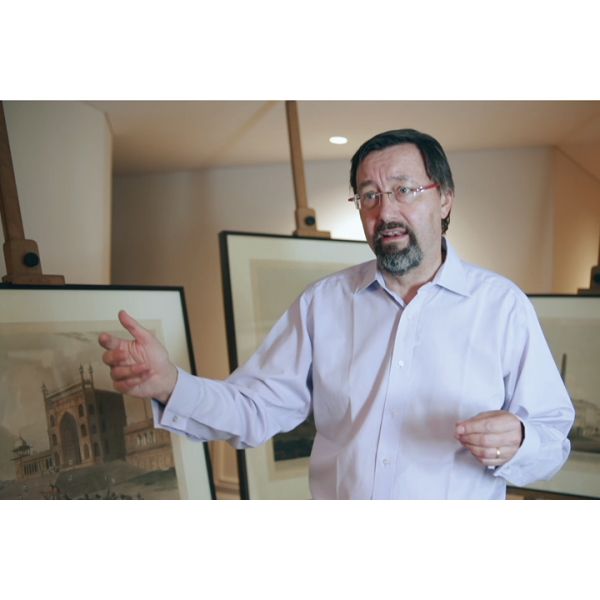
What wonder it must have been for the people in England to ‘see’ India for the first time, the exotica that they had only heard of until then! The artists who made this possible through their paintings and aquatints were the uncle-nephew duo of Thomas Daniell and William Daniell, whose magnum opus, Oriental Scenery, was the subject of this landmark exhibition at Drishyakala, a joint collaboration between DAG and the Archaeological Survey of India.
Learn More -
 Institutional CollaborationsGhare Baire: The World, the Home and Beyond 18th – 20th Century Art in Bengal$1.00
Ghare Baire was a museum-exhibition showcasing over 200 years of art in Bengal. Presented by DAG in collaboration with the National Gallery of Modern Art and the Archaeological Survey of India, the exhibition was housed at the historic Currency Building, across twelve galleries featuring over 700 artworks. The exhibition was the largest showcase of Bengal Art, presenting a panoramic view of the evolution of art in a region that has been critical to the development of Indian modern art. The exhibition starts with the arrival of the travelling European artists at a time of exchange between Bengal and the world. This confluence of cultures stimulated new visual languages as we see in the Kalighat pat, the Bengal School, and the subsequent emergence of artists who fearlessly and freely experimented with form and subject, reshaping the trajectory of art in India.
Learn More -
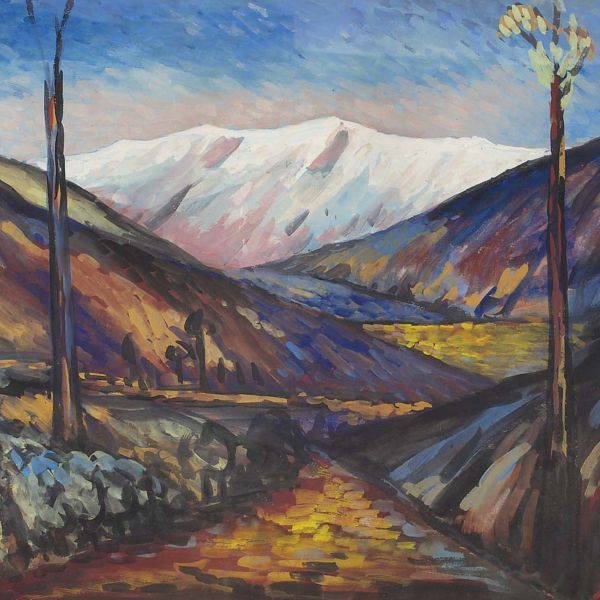 ExhibitionsManifestations VII: 75 ArtistsAs low as $1.00
The exhibition features several works of academic realist portraiture from early 20th century—vivid oil portraits by masters of the form such as Pestonji Bomanji, M. F. Pithawalla, Baburao Painter and L. N. Taskar as well as charcoal sketches by M. V. Dhurandhar, an academic artist of renown of the same period. The selection features Western academic oil-influenced works on mythological themes by the school referred to as Early Bengal and two works painted in a Raja Ravi Varma-derived style—an anonymous work by the Ravi Varma ‘School’ and Aroomoogam Pillay. A. A. Almelkar Abalall Rahiman Abani Sen Akbar Padamsee Ambadas Anonymous (EarlyBengal) Anonymous (Portraiture ) Anupam Sud Aroomoogam Pillay Avinash Chandra Baburao Painter Badri Narayan Bijan Choudhary Bikash Bhattacharjee Biren De Chintamoni Kar Chittaprosad D. P. Roy Chowdhury Devyani Krishna Dharamnarayan Dasgupta F. N. Souza G. R. Santosh G. Ravinder Reddy Ganesh Haloi Gogi Saroj Pal Gopal Ghose H. A. Gade Himmat Shah J. Sultan Ali J. Swaminathan Jamini Roy Jeram Patel Jogen Chowdhury Jyoti Bhatt K. H. Ara K. K. Hebbar K. Laxma Goud K. S. Kulkarni K. V. Haridasan Kshitindranath Majumdar L. Munuswamy L. N. Taskar Laxman Pai M. F. Husain M. F. Pithawalla M. V. Dhurandhar Madhvi Parekh Mukul Dey N. S. Bendre Nandalal Bose Nasreen Mohammedi Nicholas Roerich Nikhil Biswas P. Khemraj P. T. Reddy Paritosh Sen Pestonji E. Bomanji Prosanto Roy Rabin Mondal Ram Kumar Ramkinkar Baij Ravi Varma ‘School’ S. H. Raza S. K. Bakre Sadequain Sailoz Mukherjea Shanti Dave Shyamal Dutta Ray Sohan Qadri Sudhir Patwardhan Sunil Das Sunil Madhav Sen Tarak Garai Ved Nayar Walter Langhammer
Learn More -
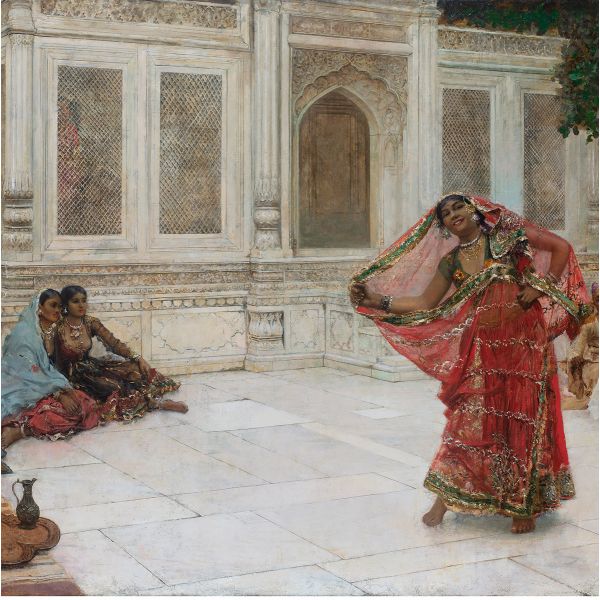 Art FairsArt Mumbai$0.00
As in previous editions, ‘Iconic Masterpieces’ allows viewers to experience the pinnacles of Indian art through its lens of quality, historicity, and rarity—to which the element of surprise adds an unexpected piquancy. An ‘Iconic’ exhibition from DAG is like a museum tour where the best Indian art can be enjoyed through a lively and perceptive curatorial eye that acknowledges and helps extend our knowledge of it.
Learn More -
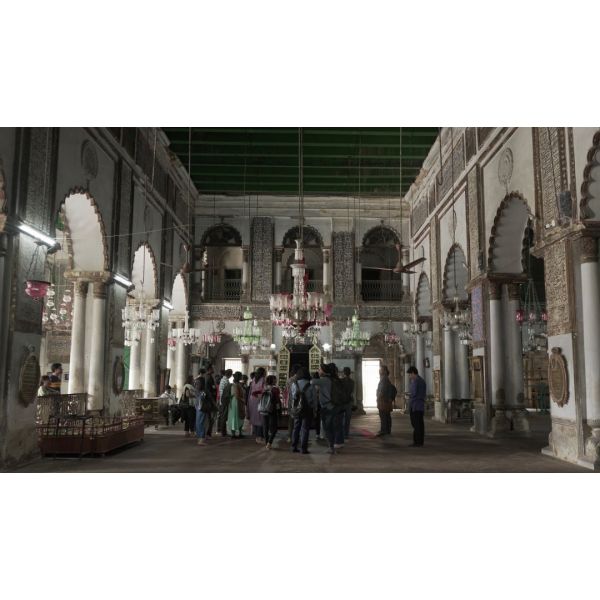 Events and ProgrammesRelearning the Fresco$1.00
An art workshop and a tour of the Hooghly Imambara, relating the history of this iconic monument and the remaking of the fresco paintings that adorn its interiors with Agnibesh Ghosh, Mirza Sajid Ali and Sumantra Mukherjee.
Learn More -
 Collection StoriesThe Afterlife of the Taj Gardens: Changes in the Landscape$1.00
Often described as ‘Poetry in Stone’, the Taj Mahal was laid out between 1631-43 by Mughal Emperor Shah Jahan as a mausoleum for his wife Mumtaz Mahal. It is the architectural elements of the Taj complex that grab the most attention, but in fact the garden is the heart of the complex . The visitors today are so transfixed by the Taj itself that they remember very little of the garden. DAG Archive attempts to illustrate the life and ‘afterlife’ of the Taj gardens, once its control was taken over by the British. This archive deep dive showcases the objects from A. E. P. Griessen’s (1875–1935) collection.
Learn More -
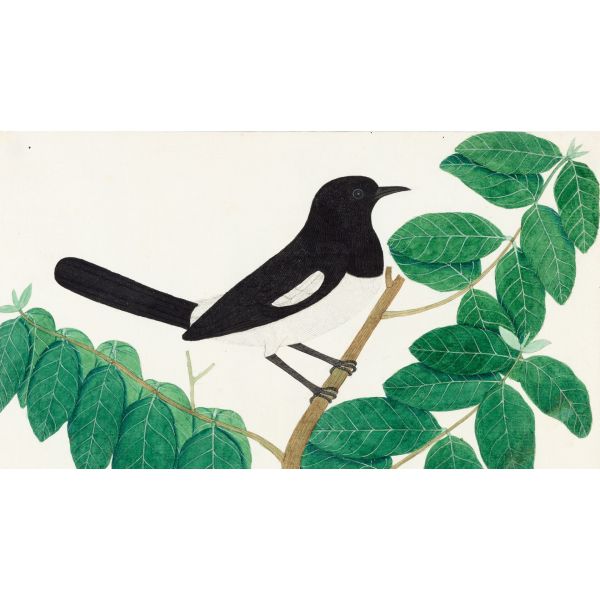 Institutional CollaborationsBirds of India: Company Paintings c. 1800 to 1835$1.00
In celebration of birds and the long relationship art has shared with the winged creatures, this exhibition brings together four folios to present portraits of Indian birds made in the early nineteenth century. While representations of birds date back to the Ajanta murals, naturalistic imagery reached its peak in Mughal art under Emperor Jahangir. In the late 18th century two connected developments emerged in Lucknow and Calcutta. While General Claude Martin provided imported European paper to the artists in Lucknow to prepare botanical studies and other natural history works, in Calcutta Mary, Lady Impey (wife of Chief Justice of the Supreme Court in Bengal, Elijah Impey) had a menagerie where she employed artists to portray variety of animals and birds. Dr. William Roxburgh, superintendent of Calcutta Botanical Garden from 1793, also added to the discourse of natural history by appointing local artists to make botanical studies of the specimens in his charge. The efforts of Martin, Impey, Roxburgh and their artists gave rise to a large body of Company Paintings dedicated to natural history.
Learn More -
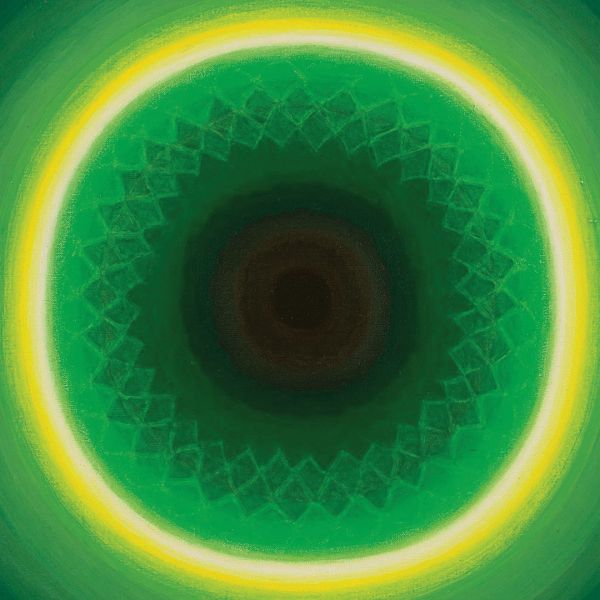 Art FairsArt Dubai$0.00
For its debut participation in the modern section of Art Dubai 2017, DAG focussed on the unconventional theme of Neo-Tantra as a way of bringing India’s unique school of abstraction to global attention. The booth featured works by two of the country’s leading practitioners of this school—G. R. Santosh and Biren De. The stunning, colour- and energy-filled canvases drew all eyes towards itself, making it the singularly most-visited booth in the section.
Learn More -
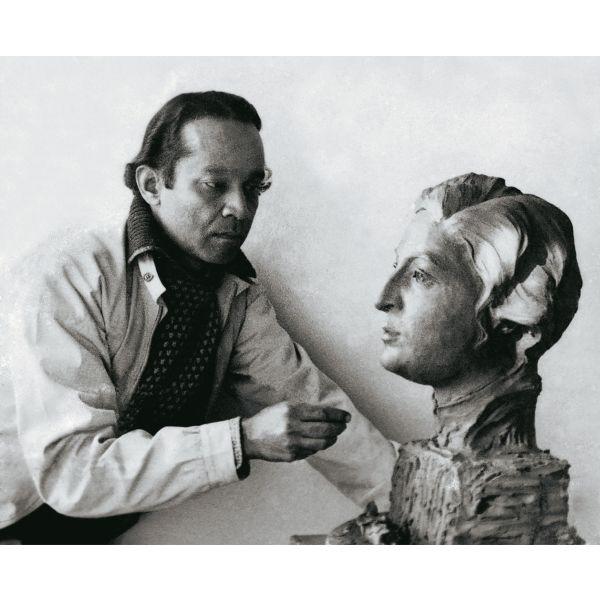 ArtistsSudhir Ranjan Khastgir$0.00Sudhir Ranjan Khastgir was born on 24 September 1907 in Chittagong in present-day Bangladesh, and studied at Kala Bhavana, Santiniketan, under Nandalal Bose. Like his classmate, Ramkinkar Baij, he took up sculpture as a subject, continuing its pursuit in Lucknow under Hiranmoy Roychaudhuri in 1932, and under Ganpath Kashinath Mahatre, in Bombay, in 1933. The same year, he joined Scindia School, Gwalior, as a teacher and, later, Doon School in Dehradun. Learn More