


Search results for: 'Museo Civico Etnografico Archeologico C.G. Fanchini, Vicolo Chiesa, Oleggio, NO'
-
 ExhibitionsThe Sixties ShowAs low as $1.00
The 1960s was a period of immense change around the world, and it had deep ramifications on India’s socio-political scenario. The country had left behind the jubilation of Independence and was feeling the pinch of a nation grappling with the issues of development that impacted society and environment. A war with China in 1962 and Pakistan in 1965 had far-reaching implications on the national psyche— the first of shame, the latter of pride. Crippling shortages and unemployment were impacting life, even as the country’s success with the Green Revolution was directed at self-sufficiency. Migration from the villages to urban centres was increasing. Disparities—economic, gender or class—provided fertile ground for the alienation of the other. The more anglicised among the youth found themselves being drawn into the vortex of a global hippie movement. A. A. RAIBA AMBADAS ANUPAM SUD AVINASH CHANDRA BIKASH BHATTACHARJEE BIMAL DASGUPTA DHANRAJ BHAGAT F. N. SOUZA G. R. SANTOSH HIMMAT SHAH J. SULTAN ALI J. SWAMINATHAN JAMINI ROY JERAM PATEL JOGEN CHOWDHURY JYOTI BHATT K. G. SUBRAMANYAN K. LAXMA GOUD KRISHEN KHANNA LAXMAN PAI M. F. HUSAIN MADHVI PAREKH P. T. REDDY PARITOSH SEN PRABHAKAR BARWE PRODOSH DASGUPTA PROKASH KARMAKAR RABIN MONDAL RAM KUMAR RAMESHWAR BROOTA S. H. RAZA S. K. BAKRE SAKTI BURMAN SATISH GUJRAL SHANTI DAVE SOHAN QADRI SOMNATH HORE SUNIL DAS ZARINA HASHMI
Learn More -
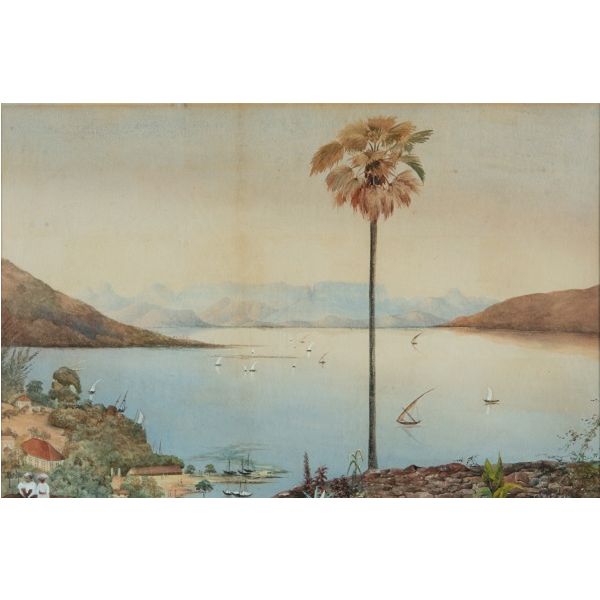 JournalBombay through the eyes of European Artists$0.00
The city was consolidated over the course of the eighteenth century, and its access to global trade routes helped it grow over the following centuries as well, leading some to describe it as the 'door of the East with its Face to the West'. How did European artists view this growing city?
Learn More -
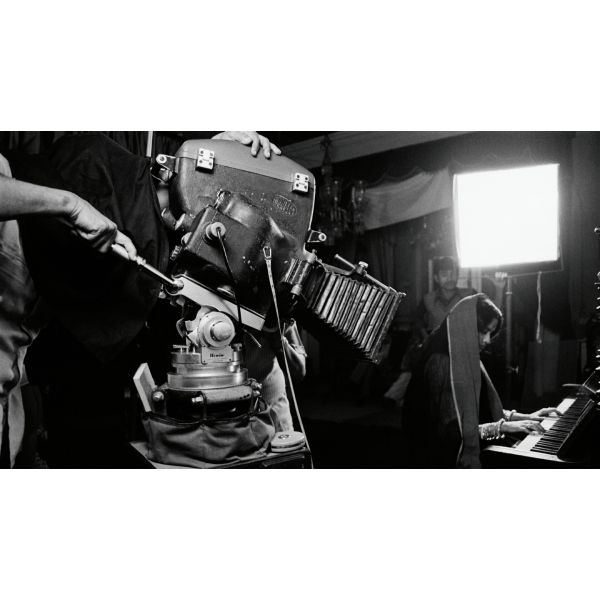 Institutional CollaborationsNemai Ghosh: Satyajit Ray and Beyond$1.00
Nemai Ghosh (1934-2020) is primarily remembered today as the photographer who, through his lens, composed a visual biography of Indian filmmaker, Satyajit Ray, for a period spanning close to three decades. This exhibition draws from DAG's extensive collection of Nemai Ghosh's ouevre to explore his work with Ray, while also exploring his contribution to documenting and immortalising the best of Indian cinema.
Learn More -
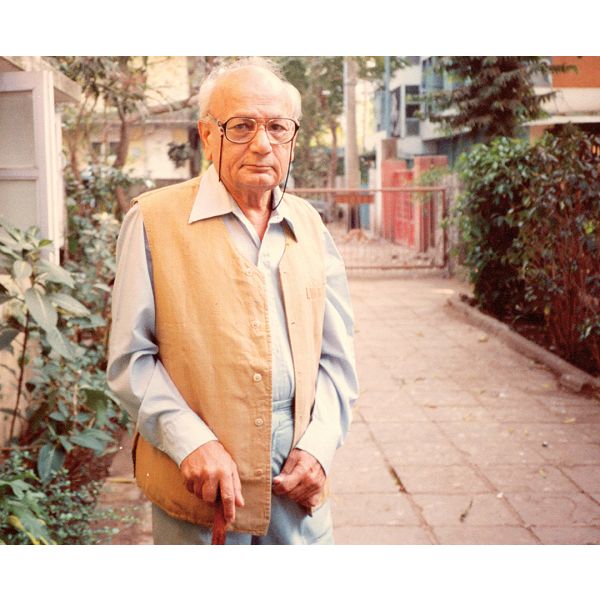 ArtistsH. A. Gade$0.00
A founder member of the Progressive Artists’ Group, Hari Ambadas Gade was born in Amravati, Maharashtra, in 1917. In his own words, he had a ‘compelling interest in science and mathematics’, as a result of which he graduated in science. However, he started making landscapes while on a visit to Jabalpur; subsequently, S. H. Raza guided him on the nuances of landscape painting. Gade eventually obtained a masters from the Nagpur School of Art in 1950.
Learn More -
-
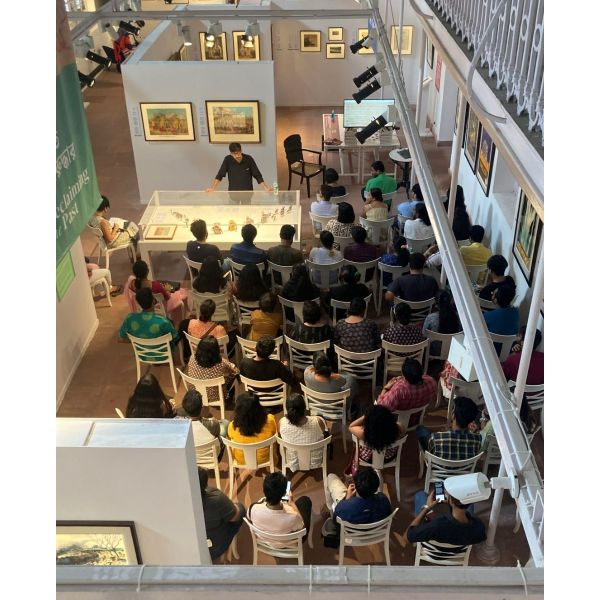 Events and ProgrammesGallery Teach-In$1.00
A unique academic engagement where professors from diverse disciplines bring their classrooms into the galleries, explore connections between their curriculum and the collection on view and experiment with new ways of teaching through art.
Learn More -
 ExhibitionsVision & LandscapeAs low as $1.00
The series of aquatint prints known as Oriental Scenery represent the single largest and most impressive project by English artists to depict Indian architecture and landscape. Thomas Daniell (1749-1840) and his nephew William Daniell (1769-1837) travelled extensively in India between 1786 and 1793. On their return to Britain they produced many paintings, drawings and prints based on the sketches they had made while travelling. The aquatints were issued in pairs between March 1795 and December 1808. Subscribers who purchased all of them could assemble them into six volumes, each with 24 prints, making up a total of 144 – of which half are shown here.
Learn More -
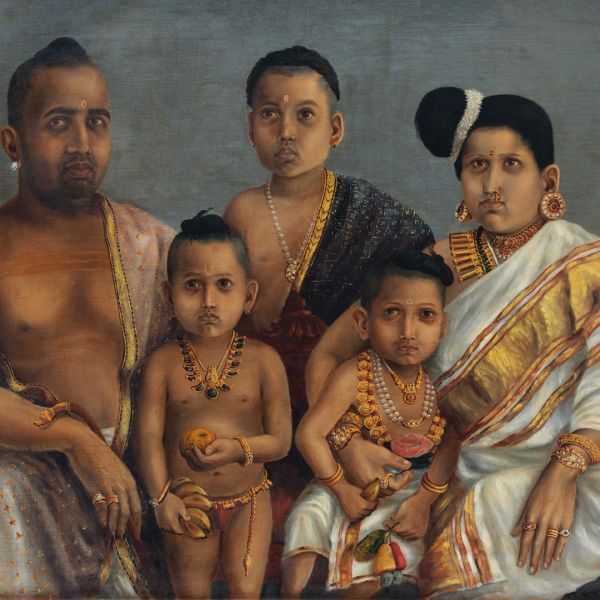 ExhibitionsIconicAs low as $1.00
‘Iconic Masterpieces of Indian Modern Art, Edition 02’, the second iteration of DAG’s annual exhibition that redefines the concept of modernism in the Indian context, will be on view in New Delhi this month. Timed to coincide with the launch of its new gallery in the capital, ‘Iconic Masterpieces’ brings together the finest instances of art created in the country by Western and Asian travelling artists and Indian masters spread a little over two centuries. Selected for their rarity, historicity, and excellence, each work of art in this exhibition marks the zenith in terms of the quality of art created in different periods and styles in the subcontinent.
Learn More -
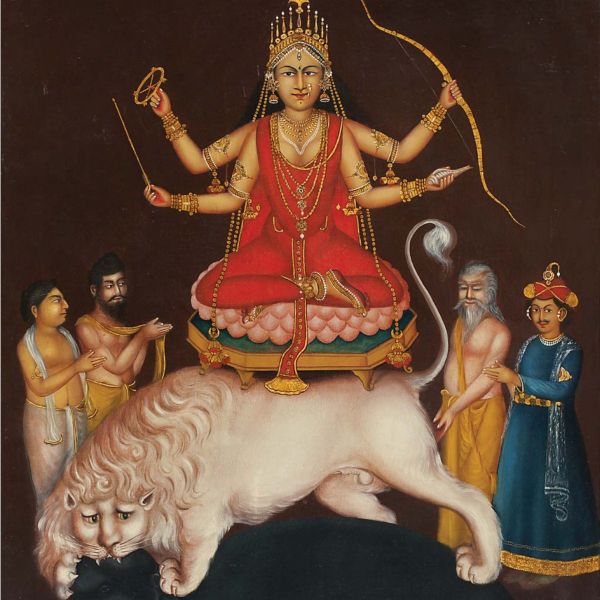 ExhibitionsIndian DivineAs low as $1.00
The exhibition, Indian Divine, begins with the late nineteenth century art on mythological and religious themes from regions as diverse as Bombay and Bengal—these include Western style oil paintings of deities by such well-known artists of the academic realist styles as Raja Ravi Varma and M. V. Dhurandhar, and mythological/ religious episodes and figures featured in the hybrid style, a mix of Western realistic painting and traditional Indian art and concerns—the Early Bengal style, a very popular form, of which the exhibition presents over fifty works. It goes on to document Kalighat paintings on religious and mythological themes from the late nineteenth and early twentieth centuries that were very popular, as well popular bazaar prints on these themes that flooded the markets with the advent of lithography and mechanical printing. 19th-20th century Popular Print Art School Print A. A. Almelkar A. A. Raiba A. P. Bagchi Asit Haldar B. C. Law B. N. Jija Baburao Painter Bat-tala Print (Anonymous) Bikash Bhattacharjee Bipin Behari Goswami Bishnupada Roychowdhury Chittaprosad D. B. Onkar D. D. Burman D. N. Sharma Debabrata Chakraborty Devyani Krishna Dhanraj Bhagat Dhirendra Narayan Dhruva Mistry Dipen Bose Early Bengal Early Bengal (Anonymous) F. N. Souza G. R. Santosh Ganesh Pyne Gogi Saroj Pal Haren Das Heramba Kumar Ganguly Indu Rakshit J. Sultan Ali Jamini Roy K. C. Pyne K. K. Hebbar K. Laxma Goud K. S. Kulkarni Kalighat pat (Anonymous) Kalipada Ghoshal Kamal Chattopadhyay Kanwal Krishna Krishen Khanna Kshitindranath Majumdar Laxman Pai M. F. Husain M. V. Dhurandhar Madhvi Parekh Mukul Dey Nandalal Bose Nihar Ranjan Sengupta P. T. Reddy P. V. Janakiram R. Vijaivargiya Rabin Mondal Radha Charan Bagchi Raja Ravi Varma Ramananda Bandhopadhyay Ramendranath Chakravorty Ranada Charan Ukil Ravi Varma School (Anonymous) Reddappa Naidu Roopkrishna S. Dhanapal S. G. Vasudev Sanat Chatterjee Sanjay Bhattacharya Sarada Charan Ukil Shyamal Dutta Ray Sohan Qadri Sudhanshu Ghosh Sudhir Ranjan Khastagir Sunil Das Sunil Madhav Sen Surendranath Ganguly V. Nageshkar
Learn More -
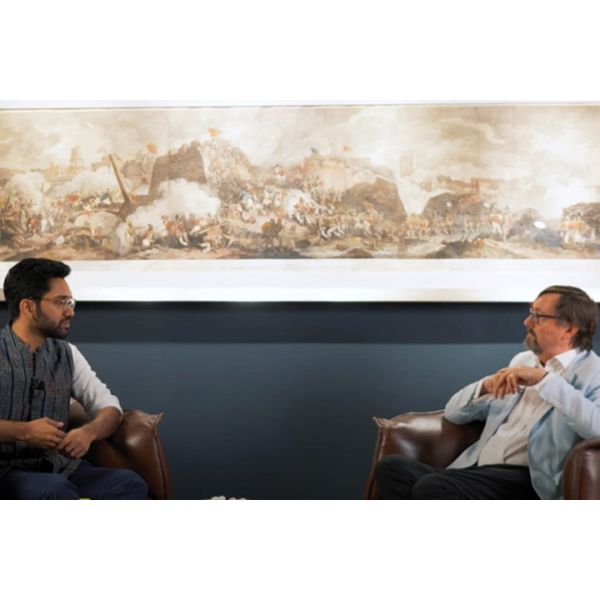 JournalRemembering Tipu Sultan: Manu Pillai and Giles Tillotson$0.00Historian and author Manu S. Pillai in conversation with art historian and curator Giles Tillotson on the subject of Tipu Sultan in the context of DAG’s exhibition, 'Tipu Sultan: Image and Distance' Learn More
 -
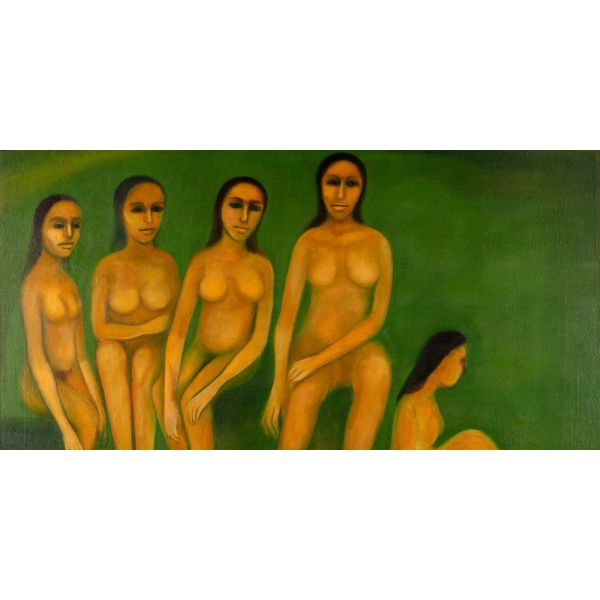 JournalSinging the Body Electric: A Conversation with Gogi Saroj Pal$0.00
Gogi Saroj Pal is one of India's most important artists working with the female body.
Learn More -
 Institutional CollaborationsGhare Baire: The World, the Home and Beyond 18th – 20th Century Art in Bengal$1.00
Ghare Baire was a museum-exhibition showcasing over 200 years of art in Bengal. Presented by DAG in collaboration with the National Gallery of Modern Art and the Archaeological Survey of India, the exhibition was housed at the historic Currency Building, across twelve galleries featuring over 700 artworks. The exhibition was the largest showcase of Bengal Art, presenting a panoramic view of the evolution of art in a region that has been critical to the development of Indian modern art. The exhibition starts with the arrival of the travelling European artists at a time of exchange between Bengal and the world. This confluence of cultures stimulated new visual languages as we see in the Kalighat pat, the Bengal School, and the subsequent emergence of artists who fearlessly and freely experimented with form and subject, reshaping the trajectory of art in India.
Learn More