Search results for: 'funky in the style of Chris brown in 2011'
-
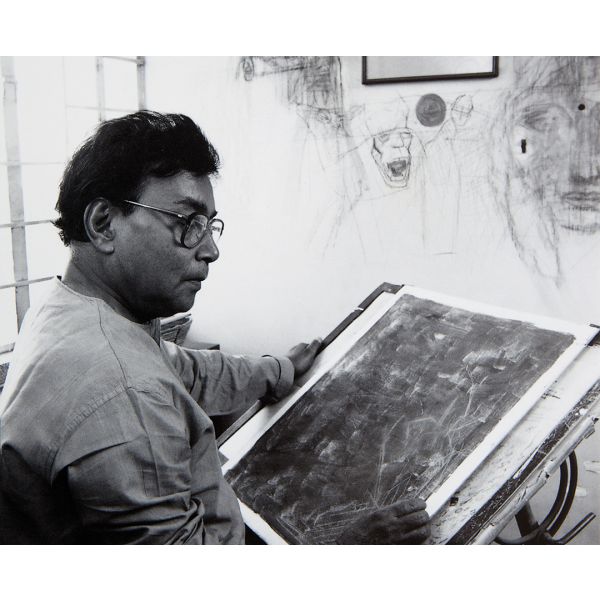 ArtistsGanesh Pyne$0.00Born in 1937 in Calcutta, Ganesh Pyne lost his father before his teens and personally witnessed the horrors of Partition. The social violence and despair of the 1940s and the tumultuous political events of the 1970s had a deep impact on his psyche and work. Coupled with the influence of his grandmother’s stories, Pyne developed an individual style of poetic surrealism woven around mythology and Bengali folklore. Learn More
 -
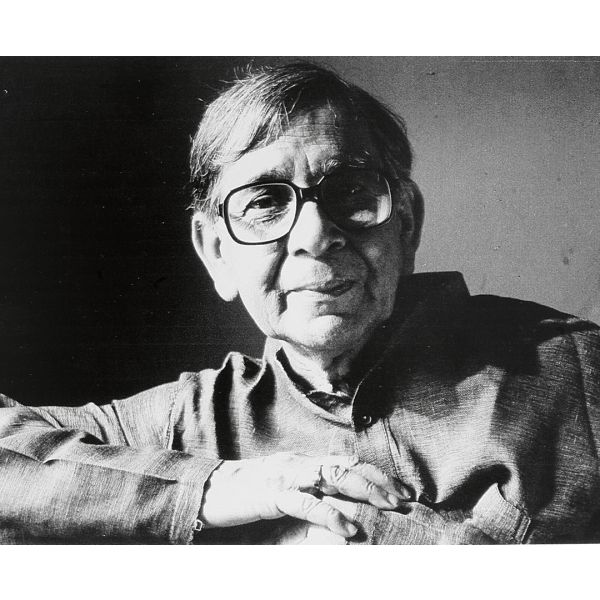 ArtistsGanesh Haloi$0.00Born in Jamalpur in present day Bangladesh on 9 February 1936, Ganesh Haloi migrated with his family to Calcutta upon Partition. From 1952-56, he studied at the city’s Government College of Arts and Crafts, where he acquired his personal style of sophisticated elegance and finish. Upon graduation, he joined the Archaeological Survey of India and was assigned the documentation of the cave paintings of Ajanta from 1957-63. Learn More
 -
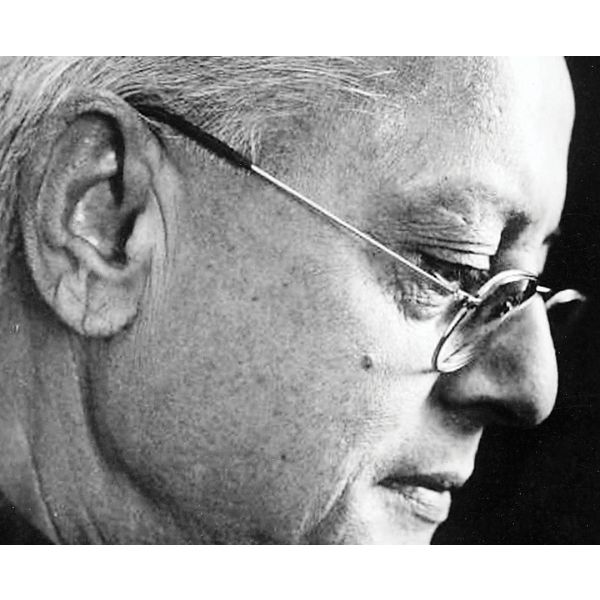 ArtistsBireswar Sen$0.00A miniature landscape artist par excellence, Bireswar Sen is known for evolving a unique style wherein he painted vistas of the gigantic Himalayas and the deep valleys on a minuscule scale. Learn More
 -
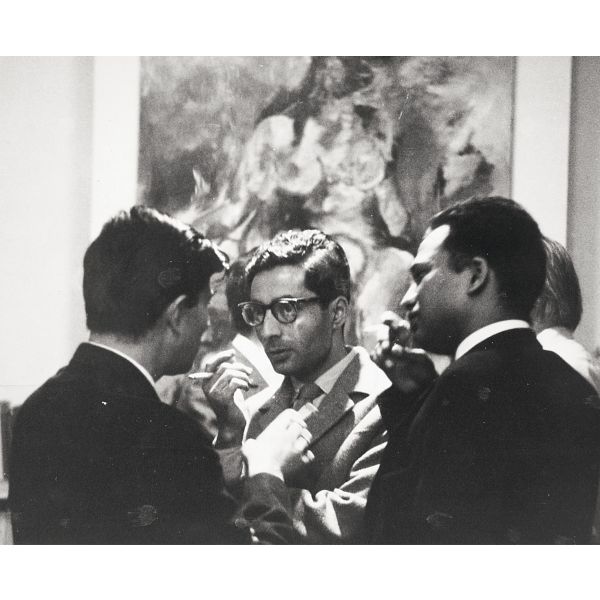 ArtistsRam Kumar$0.00Ram Kumar was born in Simla on 23 September 1924. Completing his master’s in economics from St. Stephen’s College, Delhi University, he attended evening classes at Sarada Ukil School of Art, where he learnt the ‘Western style’ of painting under Sailoz Mookherjea. Learn More
 -
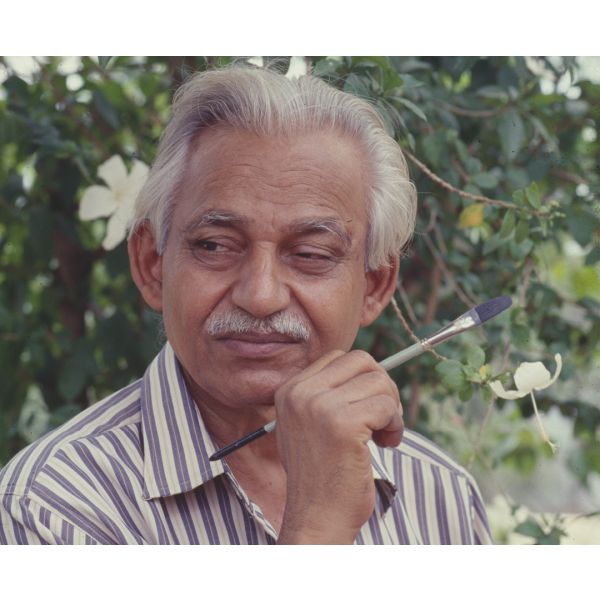 ArtistsLalu Prasad Shaw$0.00Born in Suri, Bengal, in 1937, Lalu Prasad Shaw obtained a diploma in painting from the Government College of Art and Craft, Calcutta, in 1959. Despite training in Company School art, traditional Kalighat pats and Ajanta cave frescos, Shaw evolved his distinctive style to work in watercolours and oil. His teachers were some of the leading artists of the time, such as Gopal Ghose, Rathin Maitra, and Maniklal Banerjee. Learn More
 -
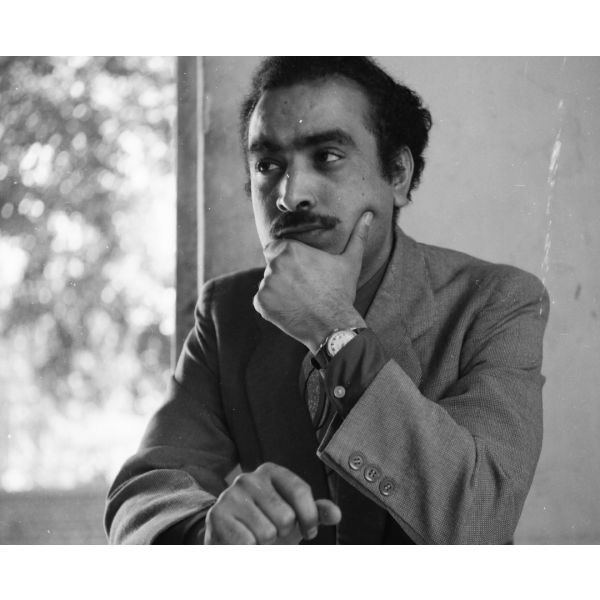 ArtistsG. R. Santosh$0.00Born Gulam Rasool Dar in a Shia Muslim family in Srinagar in Kashmir on 20 June 1929, the artist took on his wife’s Hindu name ‘Santosh’ as his own, in a move opposing patriarchy and religion. His father’s death forced a young Gulam to work as a signboard painter, papier-mâché artist, and weaver. He learnt to paint watercolour landscapes from Dina Nath Raina in Kashmir before studying under N. S. Bendre at M. S. University, Baroda, on the recommendation of S. H. Raza. In Baroda, he produced a large body of figurative and landscape works, mainly in the cubist style. Learn More
 -
 ExhibitionsVision & LandscapeAs low as $1.00
The series of aquatint prints known as Oriental Scenery represent the single largest and most impressive project by English artists to depict Indian architecture and landscape. Thomas Daniell (1749-1840) and his nephew William Daniell (1769-1837) travelled extensively in India between 1786 and 1793. On their return to Britain they produced many paintings, drawings and prints based on the sketches they had made while travelling. The aquatints were issued in pairs between March 1795 and December 1808. Subscribers who purchased all of them could assemble them into six volumes, each with 24 prints, making up a total of 144 – of which half are shown here.
Learn More -
 ExhibitionsAvinash Chandra: HumanscapesAs low as $1.00
This is the first-ever retrospective of the Indian modern artist Avinash Chandra who lived most of his life in the West, in London and New York. The artist, who had trained in New Delhi, left soon after for London, and most of his practice was limited to London and New York, the two cities he called his home till his unfortunately early death in 1991. In the roughly three-and-a-half decades of his career, Avinash’s work changed amazingly, reflecting his environment and milieu as he grew and adapted to cities vastly different from their Indian counterparts, with their own sub-cultures. That this happily coincided with a discovery of India, however superfluously, as a land of spirituality and sexuality, seemed to serve him well as his muse.
Learn More -
 ExhibitionsShanti Dave: Neither Earth, Nor SkyAs low as $1.00
For Shanti Dave, creativity is a consistent and persistent exploration of the word or akshara—a term defined in the Natyashastra as a stroke in musical notes—which he perceives as the source of all creation. Dave’s abstract iconography, beginning in the early 1950s, adapted to modernism, aesthetic continuity and transcultural exchange. He altered, rejected and improvised the archaic image into a resonant form resembling an ancient script.
Learn More -
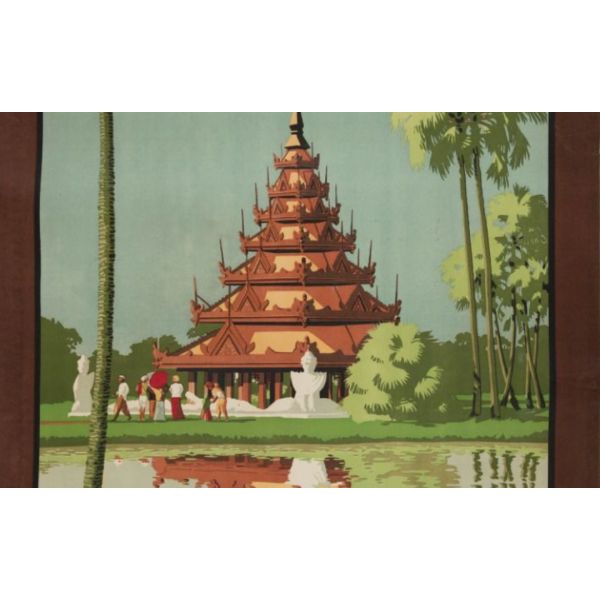 Events and ProgrammesMappa theke Manchitra$1.00
A guided walk of the first free circulating public library of India—Uttarpara Public Library—with researcher Sarbajit Mitra, traversing the history of regional literary cultures, and sifting through their vast archive to delve into the vibrant world of illustrated periodicals in colonial Bengal, followed by a poetry reading by Sujoy Prasad Chatterjee.
Learn More -
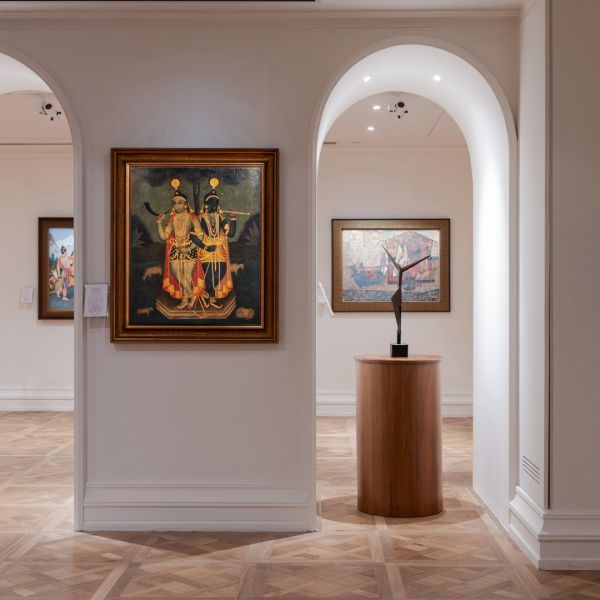 ExhibitionsIconicAs low as $1.00
'Iconic Masterpieces of Indian Modern Art' is an exhibition specially curated to commemorate the opening of DAG’s new galleries at the Taj Mahal Palace in Mumbai. The pathbreaking exhibition of some of the finest nineteenth and twentieth century art related to India consists of fifty outstanding works, each of them exceptional for their historicity, rarity, and quality. Established in 1993, DAG has created an enviable reputation over the decades for its collection and exhibitions of twentieth century art. But with 'Iconic Masterpieces of Indian Modern Art', it draws attention to its growing strength in nineteenth century art, a new area that it has now committed itself to with a growing inventory of Western artists who travelled to India to paint, as well as Indian artists whose identities have remained unknown for lack of adequate documentation. The earliest work in this exhibition, dated 1805-10, is of one of the largest recorded Company Paintings, and concludes with a rare sculpture cast as recently as 2021 in Indonesia. Ramachandran Adi Davierwalla Ambadas Avinash Chandra Bikash Bhattacharjee Dhanraj Bhagat Early Bengal Oils Edwin Lord Weeks F. N. Souza Frank Brooks G. R. Santosh Ganesh Haloi J. Sultan Ali J. Swaminathan Jamini Roy Jeram Patel Jogen Chowdhury K. C. S. Paniker K. G. Subramanyan K. K. Hebbar K. Laxma Goud K. S. Radhakrishnan Krishen Khanna Laxman Pai M. A. R. Chughtai M. F. Husain M. V. Dhurandhar Madhvi Parekh Marius Bauer Natvar Bhavsar Nicholas Roerich Nikhil Biswas Paritosh Sen Prabhakar Barwe Rabin Mondal Rabindranath Tagore Rajendra Dhawan Ram Kumar Rameshwar Broota Ramgopal Vijaivargiya Ramkinkar Baij Ranbir Singh Kaleka Satish Gujral Shanti Dave Sohan Qadri Stefan Norblin Studio of Raja Ravi Varma Sunil Das Tyeb Mehta Company Paintings
Learn More -