Search results for: 'drawing the n'
-
 ExhibitionsPrimitivism and Modern Indian ArtAs low as $1.00
The idea of primitivism centres on the wish to identify with, or respond to, elements of a society that are deemed ‘primitive’. In artistic terms, it is about rejecting realism, simplifying technique and reducing the formal means of expression to a ‘primitive’ state. The term itself is borrowed from discussions of Western art, where high-profile examples include the images of Tahiti and its people made in the 1890s by Paul Gauguin, and responses to African sculpture by Pablo Picasso in 1906-09. The second thread of primitivism—the reduction of formal means—is best exemplified by the ‘cut-outs’ made by Henri Matisse in the 1940s.
Learn More -
 JournalA Child, the Youth, now Man by Rameshwar Broota$1.00
Painted in 2003 by Rameshwar Broota and titled A Child, the Youth, now Man, is bisected horizontally by a hyper-realistic finger, which partially covers a comparatively hazy vertical male torso. The evocative cruciform structure of this composition, possibly alluding to ideas of masculinity, corruption and persecution, also aides the artist in highlighting human vulnerability. There is no face visible here, only an unprotected body.
Learn More -
 Art FairsIndia Art Fair$0.00
This exemplary themed exhibition at DAG’s booth at the India Art Fair 2018 was a masterclass in Indian art dedicated to the nine National Treasure artists. This declaration in the decade of the 1970s was intended to identify artists whose contribution had national significance. Even though the selection appears arbitrary and argumentative, the nine artists cannot be faulted for the quality of their work and the role they played in segueing the pre-independence freedom movement with their role and responsibility as artists. Nandalal Bose Sailoz Mookherjea Abanindranath Tagore Jamini Roy Amrita Sher-Gil Rabindranath Tagore Gagnendranath Tagore Nicholas Roerich Raja Ravi Varma
Learn More -
-
-
-
 Collection StoriesScripting the Camera: Satyajit Ray’s cinema as ‘archive’$0.00
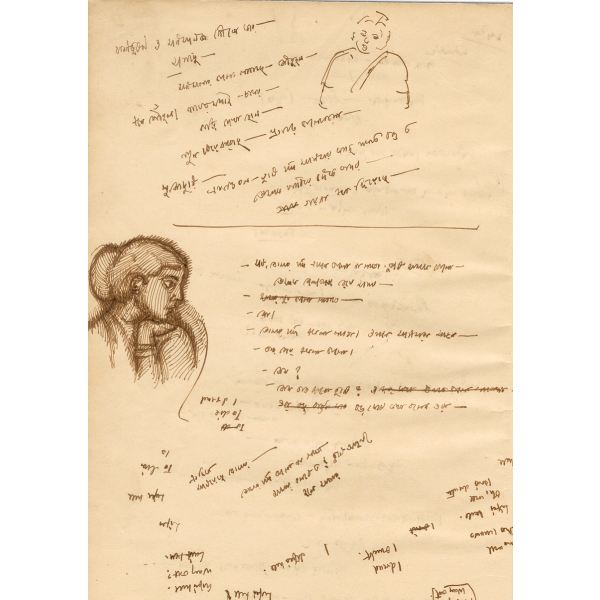
The DAG Archive has over 90,000 photographs taken by Nemai Ghosh, a bulk of which includes still photographs and behind the scenes images of films as well as candid and staged portraits of Satyajit Ray. In conjunction to these materials, DAG Archive has also acquired a set of two notebooks of Ray which contains the hand-written film scripts of <i>Ghare Baire</I> (The Home and The World, 1984) and Samapti (The Conclusion) which is one of the short films from the anthology, Teen Kanya (Three Women, 1961). Interestingly, both these films are adaptations from Rabindranath Tagore’s literary works.
Learn More -
 Art FairsArt Dubai$0.00
Shown at the Shanghai Biennale, exhibited in New York, widely admired for his consistency throughout his career, Rabin Mondal’s excoriating paintings are a savage indictment of social and political ills. A reticent, reserved artist, Mondal’s works offer a scathing commentary on the pursuit and abuse of power. A primal, primordial figuration describes his work in which people in positions of authority are rendered vulnerable because of the very power they aspire to. Their contorted features and clawed hands and feet represent their venality. Strong outlines, naked brushstrokes and potent use of green and red characterise most his work.
Learn More -
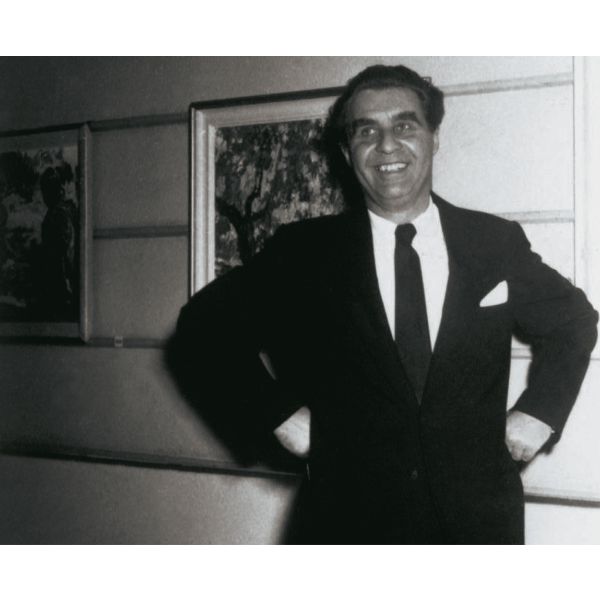 ArtistsWalter Langhammer$0.00Born in Graz, Austria, Walter Langhammer came to India in the 1930s with his wife Käthe Urbäch, escaping Nazi Germany like other refugees. Some media reports suggest that British authorities had arrested the couple on their arrival in India till a friend, noted art critic Rudolf von Leyden, came to their rescue. Learn More
 -
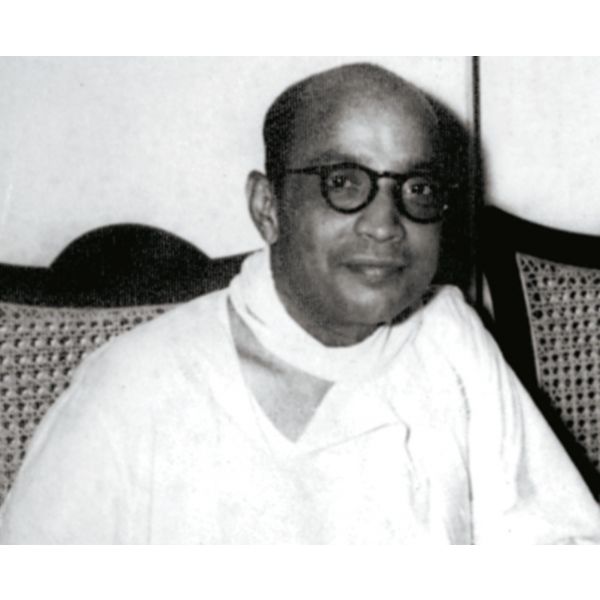 ArtistsRamendranath Chakravorty$0.00Born in 1902 in Tripura, Ramendranath Chakravorty went to the Government College of Art in Calcutta in 1919 but left it in 1921 to join the newly founded Kala Bhavana at Visva-Bharati University, Santiniketan. Soon after graduation, he began his teaching career, first at Kalashala at Andhra National Art Gallery in Machilipatnam, and then at Kala Bhavana. He then joined Government School of Art, Calcutta, as a teacher in 1929, when Mukul Dey, the pioneer of dry point etching in India, was its principal. In 1943-46, Chakravorty was the school’s officiating principal when he set up its graphics department. Eventually, he became the school principal in 1949. Learn More
 -
 Art FairsThe Armory Show$0.00
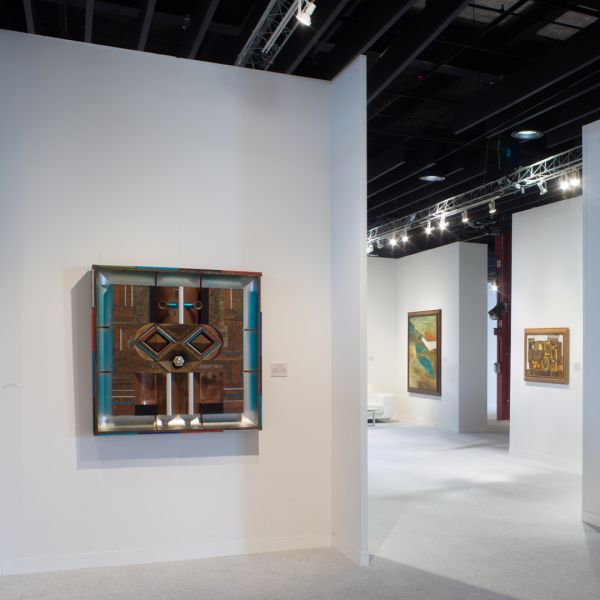
New York’s popular Armory Show required DAG to put forth its most emphatically modernist artists. These included several who had been fellows of the John D. Rockefeller III Fund and would thus have a resonance among art connoisseurs in America for their language and context. Instead of concentrating on the Progressives, therefore, DAG decided to curate a selection that included works by Avinash Chandra and Natvar Bhavsar with extensive careers in New York, and an important body of works by artists such as S. H. Raza, Ram Kumar, Krishen Khanna, Paritosh Sen, and Satish Gujral, among others. Avinash Chandra Jyoti Bhatt K G Subrmanyan Krishen Khanna Natvar Bhavsar Paritosh Sen Ram Kumar Tyeb Mehta Rekha Rodwittiya S. H. Raza Satish Gujral
Learn More -