


Search results for: 'The Only Man in a Ladi3s' Residence hentai'
-
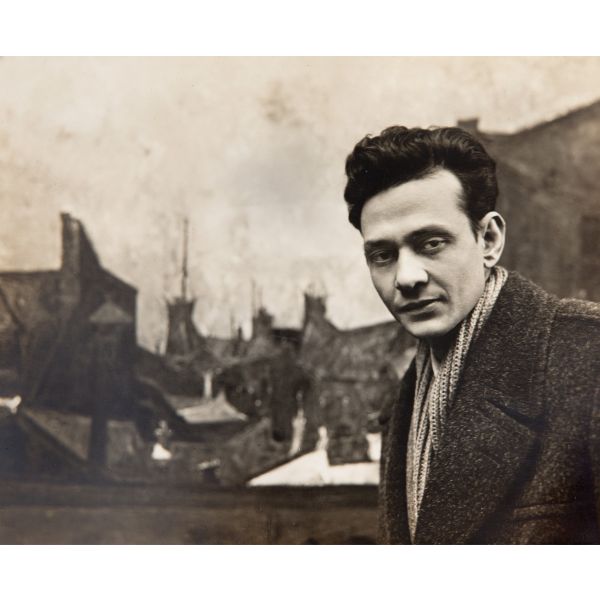 ArtistsS. H. Raza$0.00
One of India’s most seminal modernists, Syed Haider Raza was born on 22 February 1922 in Mandla, Madhya Pradesh, and forged a new language of art by integrating Indian symbolism with Western expression. A student of Sir J. J. School of Art, Bombay (1943-47), and one of the first members of the Progressive Artists’ Group, the turning point of his career was his journey to Paris in 1950 on a French government scholarship to study at École Nationale des Beaux-Arts. In 1956, he became the first non-French artist to win the critic’s award, the Prix de la critique.
Learn More -
 ExhibitionsThe Seventies ShowAs low as $1.00
The 1970s was a decade like no other for a young India gaining in confidence nationally as well as on the global firmament. In 1971, Prime Minister Indira Gandhi led the country to a decisive victory against Pakistan, leading to the creation of Bangladesh. The Green Revolution had borne fruit, and Operation Flood now launched a milk revolution in the country, and the culmination of the privy purse turned it into a socialist republic with a strong handle on its economic button. Internationally, much was made of India’s resilience, and the country’s soft power began to win it recognition for its films, fashion, food and culture. India had arrived. ALTAF AMBADAS AMITAVA AVINASH CHANDRA BIKASH BHATTACHARJEE BIREN DE BIRESWAR SEN ERIC BOWEN F. N. SOUZA G. R. SANTOSH GANESH HALOI GOGI SAROJ PAL INDRA DUGAR J. SULTAN ALI J. SWAMINATHAN K C S PANIKER K. K. HEBBAR K. LAXMA GOUD KRISHNA REDDY LAXMAN PAI M. F. HUSAIN MADHVI PAREKH NAVJOT ALTAF P. T. REDDY PARITOSH SEN PRABHAKAR BARWE PRODOSH DASGUPTA PROKASH KARMAKAR RABIN MONDAL RAJENDRA DHAWAN RAM KUMAR S G VASUDEV SATISH GUJRAL SHANTI DAVE SHYAMAL DUTTA RAY SOHAN QADRI TYEB MEHTA V. VISWANADHAN ZARINA HASHMI
Learn More -
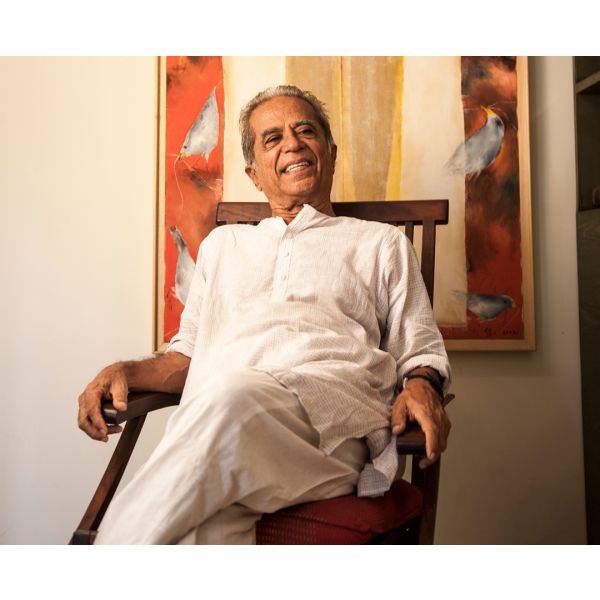 ArtistsHaku Shah$0.00Born on 26 March 1934 in the village of Valod, Gujarat, Haku Shah absorbed deeply the way of life, culture and beliefs of the pastoral and the folk, which he amply manifested in his works. This understanding also moulded him into a cultural anthropologist who brought global academic focus on tribal and folk arts and culture of India. Learn More
 -
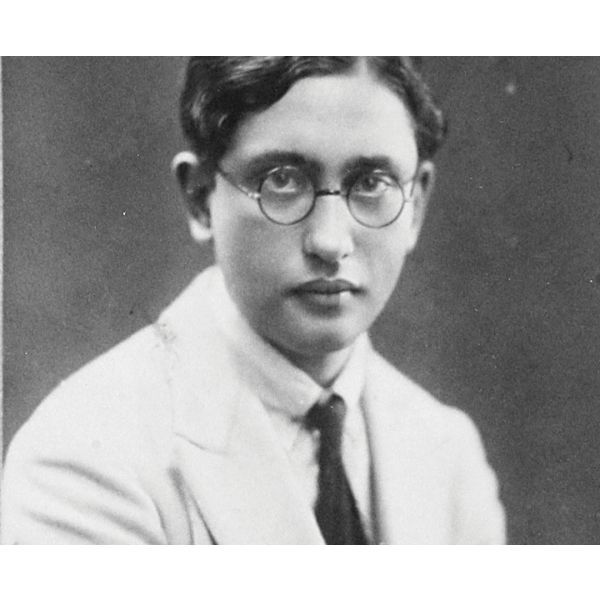 ArtistsGeorge Keyt$0.00Born into a prosperous Ceylonese family of Indo-Dutch origin, George Keyt spent his childhood in an environment where Buddhist, Hindu, Muslim, and European cultures commingled, a premise that would later appear in his work. A self-taught artist, Keyt’s success was unparalleled with many celebrities such as actor Vivian Leigh, writer Evelyn Waugh, poet Pablo Neruda, and photographer Henri Cartier-Bresson, among others, visiting him, his art, his exhibitions. Learn More
 -
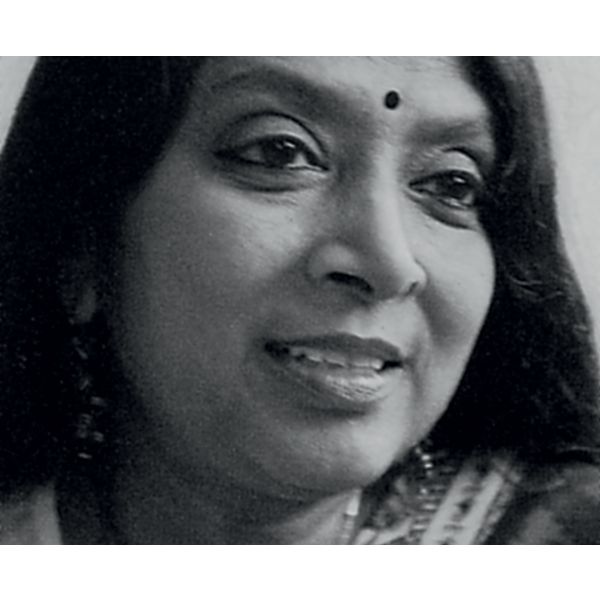 ArtistsB. Prabha$0.00Born in Nagpur, B. Prabha became an artist at a time when not many Indian women practiced it as a profession. She studied at the Nagpur School of Art and obtained a diploma from Sir J. J. School of Art, Bombay, in 1955. Learn More
 -
 ExhibitionsG. R. Santosh: AwakeningAs low as $1.00
An unassuming trailblazer, Gulam Rasool Santosh is the most important artist from the movement known as neo-tantra in Indian art, synonymous with masters such as Biren De and Sohan Qadri. Self-taught, Santosh began his career painting landscapes in his native Kashmir before being spotted by S. H. Raza, which enabled him to study at the Maharaja Sayajirao University at Baroda under the famous artist N. S. Bendre. After a few years of painting figurative and abstract works in the mould of the other Indian Progressives, Santosh’s art changed dramatically towards tantra when he had a mystical experience in the Amarnath cave in 1964. From then on, until his death in 1997, G. R. Santosh dedicated his life to the study and practice of tantra, a yogi as much as an artist.
Learn More -
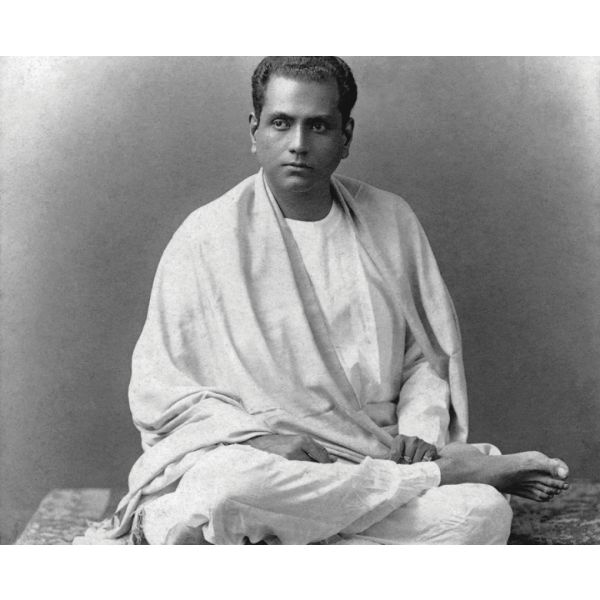 ArtistsAbanindranath Tagore$0.00Abanindranath Tagore was born on 7 August 1871 at Jorasanko, the sprawling mansion of the Tagore family in Calcutta, as the son of artist Gunendranath Tagore and nephew of the Nobel-laureate Rabindranath Tagore. Learn More
 -
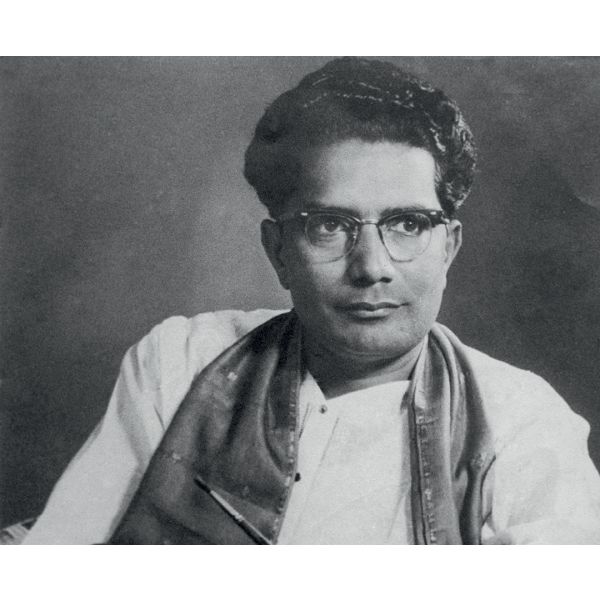 ArtistsA. A. Almelkar$0.00Abdulrahim Appabhai Almelkar was born on 10 October 1920 in Solapur, Maharashtra. He graduated from Sir J. J. School of Art, Bombay, in 1948, and during his student years, won many prizes for his works. Learn More
 -
 Art FairsIndia Art Fair$0.00
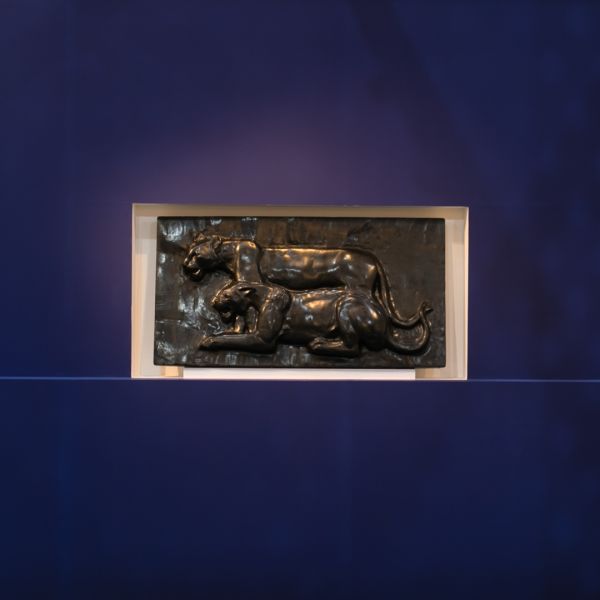
This exemplary themed exhibition at DAG’s booth at the India Art Fair 2018 was a masterclass in Indian art dedicated to the nine National Treasure artists. This declaration in the decade of the 1970s was intended to identify artists whose contribution had national significance. Even though the selection appears arbitrary and argumentative, the nine artists cannot be faulted for the quality of their work and the role they played in segueing the pre-independence freedom movement with their role and responsibility as artists. Nandalal Bose Sailoz Mookherjea Abanindranath Tagore Jamini Roy Amrita Sher-Gil Rabindranath Tagore Gagnendranath Tagore Nicholas Roerich Raja Ravi Varma
Learn More -
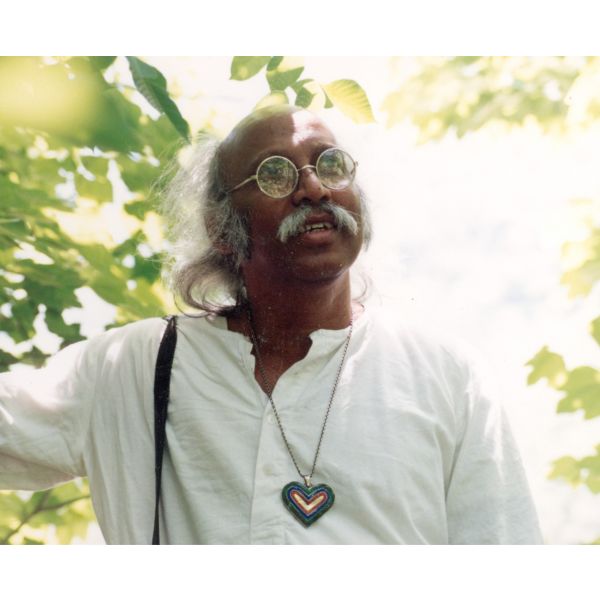 ArtistsP. Khemraj$0.00Hailing from an artistic family based in Bombay, P. Khemraj was fascinated with manifestations of all things fine in every aspect of life. On completion of his training in drawing and painting at Sir J. J. School of Art, Bombay, Khemraj, a fine violinist, left for New Delhi to learn the sitar from Pandit Ravi Shankar. Learn More
 -
 ArtistsLalu Prasad Shaw$0.00Born in Suri, Bengal, in 1937, Lalu Prasad Shaw obtained a diploma in painting from the Government College of Art and Craft, Calcutta, in 1959. Despite training in Company School art, traditional Kalighat pats and Ajanta cave frescos, Shaw evolved his distinctive style to work in watercolours and oil. His teachers were some of the leading artists of the time, such as Gopal Ghose, Rathin Maitra, and Maniklal Banerjee. Learn More
 -
 ExhibitionsThe Art Of SantiniketanAs low as $1.00
The Art of Santiniketan showcases the work of its four chief artists—Santiniketan’s founder, Rabindranath Tagore, its first principal and the architect of the Santiniketan pedagogy, Nandalal Bose, and his two illustrious students who went on to make a name for themselves as highly original and significant artists—Benode Behari Mukherjee and Ramkinkar Baij. Santiniketan was a path-breaking educational institution Rabindranath Tagore set up in rural Bengal in the early twentieth century, and the exhibition begins by examining its genesis in Tagore’s radical ideas of basing education in freedom and in the midst of nature. Benode Behari Mukherjee Nandalal Bose Rabindranath Tagore Ramkinkar Baij
Learn More