Search results for: 'cinema belo horizonte 15/03 programação'
-
 ExhibitionsNemai GhoshAs low as $1.00
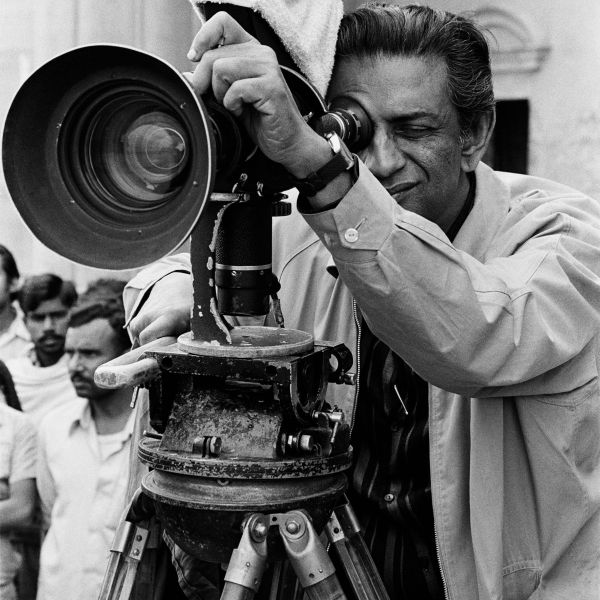
Photographer Nemai Ghosh has been the quintessential Satyajit Ray biographer through his decades-long close association with the master filmmaker. Over a lifetime of work, he has built up a vast and valuable photographic archive, now housed at DAG.
Learn More -
 Collection Stories150 years of Abanindranath Tagore$1.00
At the turn of the twentieth century, Abanindranath Tagore asked himself if the emerging artists of modern India should continue to paint in the manner of their European colonizers; or was there a new path waiting to be forged? His answers led him to envision a pan-Asian cultural identity, spanning traditions from Persia to Japan, and culminating in a ‘new “Indian” art.’ Regarded as the founder of the Bengal School, Abanindranath left an unparalleled legacy both in terms of his own diverse body of work, and through his pupils, like Nandalal Bose, who shaped the contours of art across the subcontinent in the twentieth century.
Learn More -
 Collection StoriesScripting the Camera: Satyajit Ray’s cinema as ‘archive’$0.00
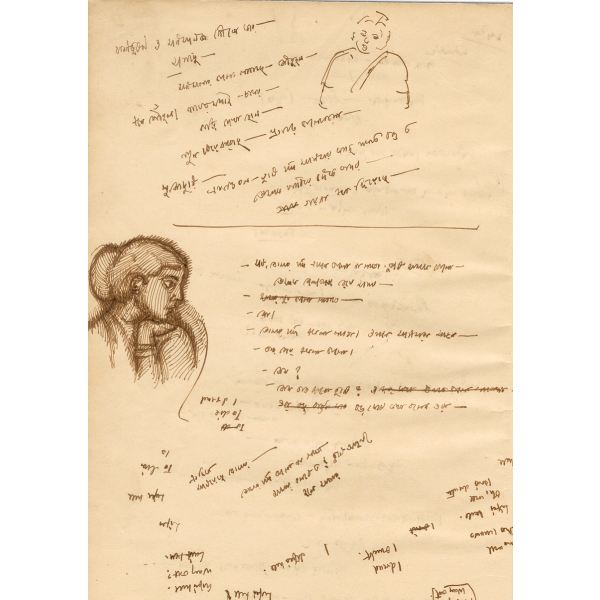
The DAG Archive has over 90,000 photographs taken by Nemai Ghosh, a bulk of which includes still photographs and behind the scenes images of films as well as candid and staged portraits of Satyajit Ray. In conjunction to these materials, DAG Archive has also acquired a set of two notebooks of Ray which contains the hand-written film scripts of <i>Ghare Baire</I> (The Home and The World, 1984) and Samapti (The Conclusion) which is one of the short films from the anthology, Teen Kanya (Three Women, 1961). Interestingly, both these films are adaptations from Rabindranath Tagore’s literary works.
Learn More -
 JournalThe Painters’ Camera: Husain and Mehta's Moving Images$0.00Twenty years after India’s independence, Films Division, the government’s documentary and propaganda filmmaking body, was seeking to re-invent itself. It had the mandate of recording the nation’s history on film. It was also a project of moulding the citizen through films that were screened in cinema theatres, before the entertainment feature. The films covered varied subjects from development, self-reliance, social issues, to art and culture, making them an invaluable archive of the Indian state’s record of the nation’s history as a modern, progressive nation. The films remained largely unpopular, like homework, among the unwilling audience of people who waited for the entertainment film to follow the documentary. Learn More
 -
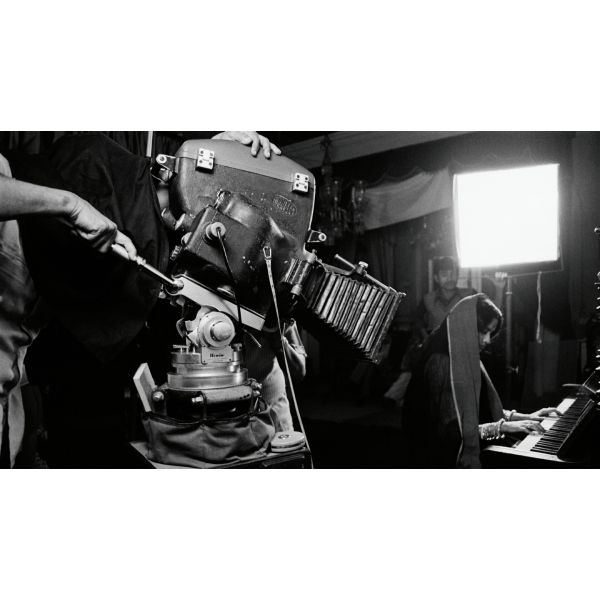 Institutional CollaborationsNemai Ghosh: Satyajit Ray and Beyond$1.00
Nemai Ghosh (1934-2020) is primarily remembered today as the photographer who, through his lens, composed a visual biography of Indian filmmaker, Satyajit Ray, for a period spanning close to three decades. This exhibition draws from DAG's extensive collection of Nemai Ghosh's ouevre to explore his work with Ray, while also exploring his contribution to documenting and immortalising the best of Indian cinema.
Learn More -
 ExhibitionsChittaprosadAs low as $1.00
One of India’s most important artists, Chittaprosad recorded pivotal political and social movements in the country, such as the Great Bengal Famine of 1943-44 and its fallout, in heart-wrenching sketches and drawings, alongside protests against colonialism, economic exploitation, urban poverty and depravity, just as beautifully as the many drawings, linocuts and scraper board illustrations he made for children, recording a beatific phase of plenitude and family values, and involving himself with marionettes for their entertainment.
Learn More -
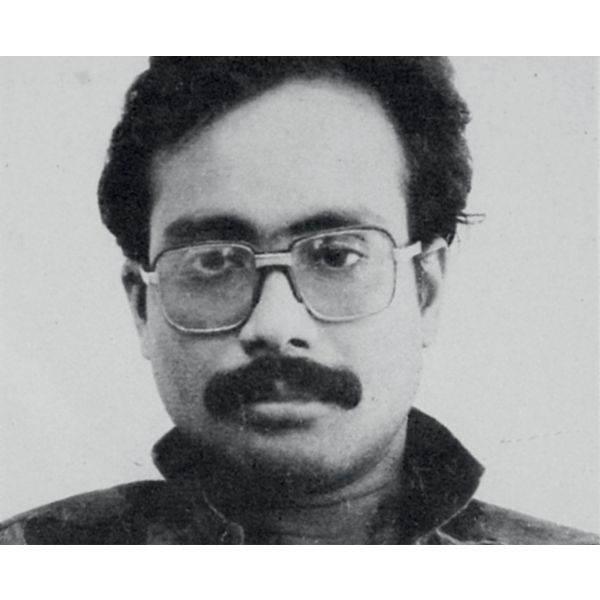 ArtistsRm. Palaniappan$0.00Born in Devakottai in Tamil Nadu, Rm. Palaniappan often incorporates the syntax of the sciences such as diagrammatic notations, and symbols, in his work. The memory of the first sight of the earth from above, while on a flight, also appears frequently in the form of maps, grids, and aerial terrain. Another important trope in his works has been imagery associated with the flying machine, inspired by his fascination with Second World War cinema. Learn More
 -
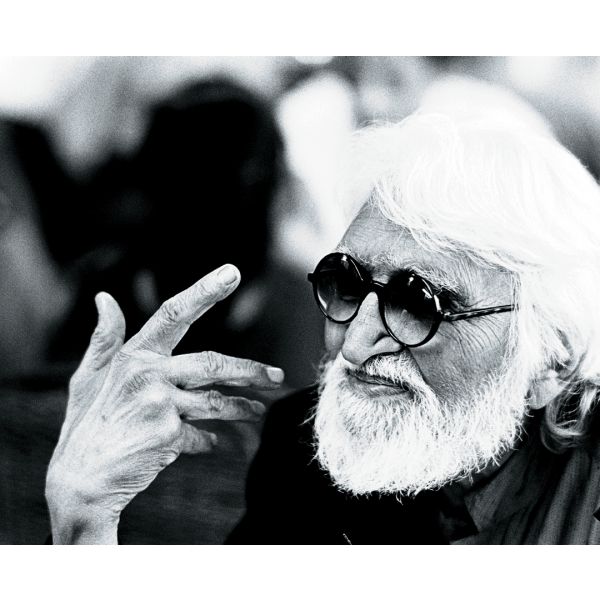 ArtistsM. F. Husain$0.00In the galaxy of modern masters, one name that is synonymous with twentieth century Indian art, is M. F. Husain’s. Born in Pandharpur, Maharashtra, on 17 September 1911, Husain came to Bombay in 1937 to become a painter, where he slept on footpaths and painted under streetlights. A self-taught artist, he began his career painting cinema posters and hoardings, and, in 1941, started making toys and furniture designs. Learn More
 -
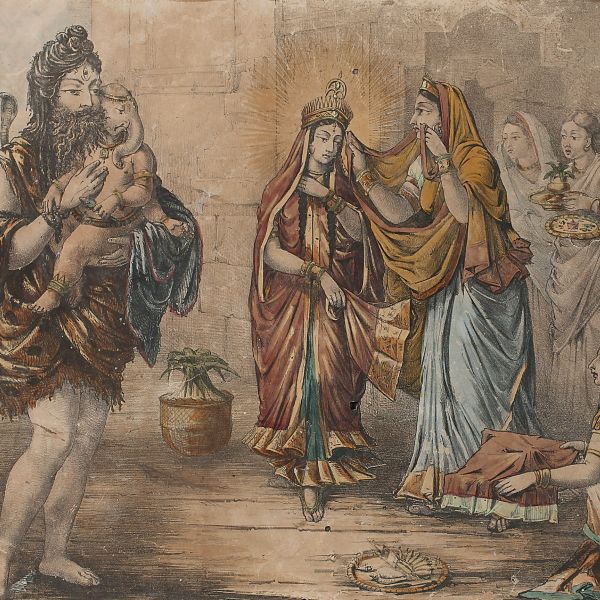 ExhibitionsThe Printed PictureAs low as $1.00
A print is an original work of art created and printed by hand by an artist or a professional printing assistant from a ‘matrix’—a plate, block of stone, wood or stencil. The image is created on the matrix and the artist takes a limited number of impressions or prints off it. These impressions are numbered and signed by the artist and belong to a limited edition, and this makes the print an original work of art and not a reproduction. Printmaking consists of a wide range of processes: relief printmaking which consists of techniques like engraving, woodcut and linocut; planographic processes such as lithography and oleography, intaglio processes such as drypoint, etching, aquatint, mezzotint, photo processes and collography; and serigraphy, where the image is printed through a silk screen on to the paper. A P Bagchi A Ramachandran Abanindranath Tagore Ajit Dubey Akhilesh verma Akkitham Naryanan Amitabh Banerjee Amitava Anonymous Print Anupam Sud Arun Bose B P Banerjee Basudev Roy Bengal Lithograph Bengal Oleographs Bengal Woodcut Benod Behari Mukherjee Bhupen Khakhar Bijan Choudhury Chittaprosad Daniell William Devraj Dakoji Devyani Krishna Francis N Souza F. B Solvyns Ganesh Haloi Gulam Sheikh Haren Das Himmat Shah Indu Rakshit Indumati Roop Krishna Jagdish Dey Jagmohan Chopra Jai Zahrotia Jamini Roy Jyoti Bhatt K Laxma Goud K V Haridasan Krishna Ahuja Krishna Reddy Lalu Prasad Shaw M F Husain M. V Dhurandhar Madhvi Parekh Maniklal Banerjee Manu Parekh Moti Zahrotia Mrinalini Mukherjee Mukul Dey Nagji Patel Nalini Malani Nandalal Bose Navjot Paneer Selvam Partha Pratim Deb Portrait Punjab Litho Qamrool Hassan R B Bhaskaran Rabin Mondal Radha Charan Bagchi Ram Kumar Ramendranath Chakravorthy Ramkinkar Baij Rani Dey Ravi Varma Press Ravi Varma Print Rini Dhumal Sakti Burman Sanat Kar Satish Gujral Shobha Broota Shyamal Dutta Ray Somnath Hore Sudhir Khastgir Sunil Das Sunil Madhav Sen Suren Gangooly Sushanta Guha Sushil Sen Suvaprasanna Tapan Bhowmik Tarak Basu Thoman Daniell V Vishwanadhan Various Litho and Olio Vijay Bagodi Vinayak Masoji Vivan Sundaram Walter D’Souza Yogesh Rawal Zainul Abedin
Learn More -
 JournalThe Last Effort and Fall of Tippoo Sultaun by Henry Singleton$1.00
Henry Singleton’s The Last Effort and Fall of Tippoo Sultaun belongs to a genre known as history painting: the depiction of important historical events, usually on a large scale, as if they were playing out in front of one’s eyes. Author and parliamentarian Shashi Tharoor and art historian Giles Tillotson explain the lively imagination deployed in Singleton’s painting that depicts the British assault on Seringapatam and the killing of its ruler, Tipu Sultan—himself the source of so many stories that it was difficult to unravel the truth from the many falsities spun by the biased colonial administration and historians of the time.
Learn More -
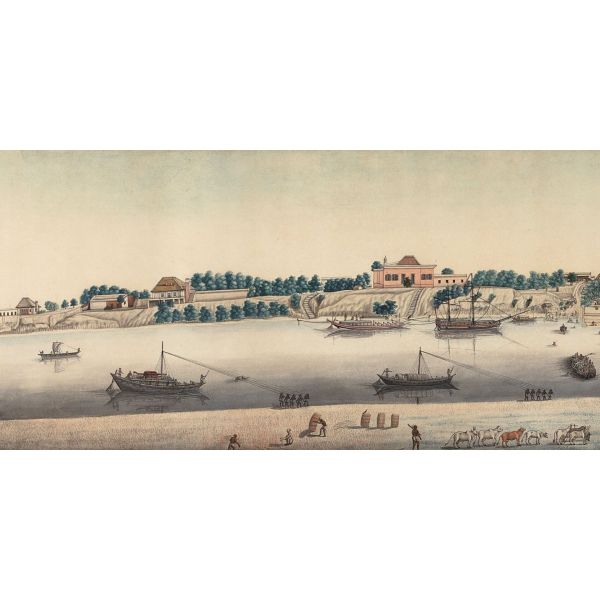 JournalTerm of the Month: Provenance$0.00
One of the most important ways in which a work of art is authenticated is by checking its provenance. What does provenance mean and how does it affect the identity of an artwork itself? The concept has evolved historically over the years; below, we try to highlight some of the important aspects of this debate in our recurring series, Argot, that seeks to demystify some of the major ideas from the world of art.
Learn More