


Search results for: 'happenings ten years time ago wiki'
-
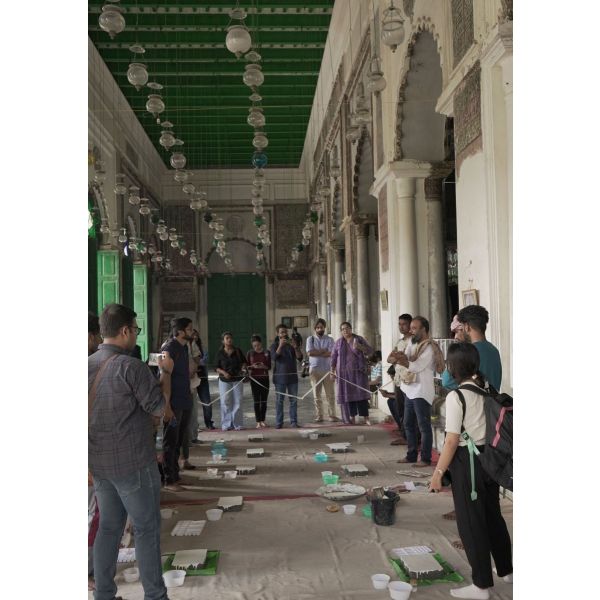 Collection StoriesThe City as a Museum, Kolkata—A Visual Journey$1.00
DAG Museum’s annual festival ‘The City as a Museum’ attempts to explore the various archives, communities and artistic traditions that cohere around the life of a city. Put together, they tell different stories about the city across time and space, from the point of view of neighbourhoods, collections and institutions, but not just limited to those either.
In order to learn more about this unique programme that seeks to explore heritage outside the walls of a traditional gallery or museum, read on!
Learn More -
 Collection StoriesA Tryst with Destiny: A Visual Journey$1.00
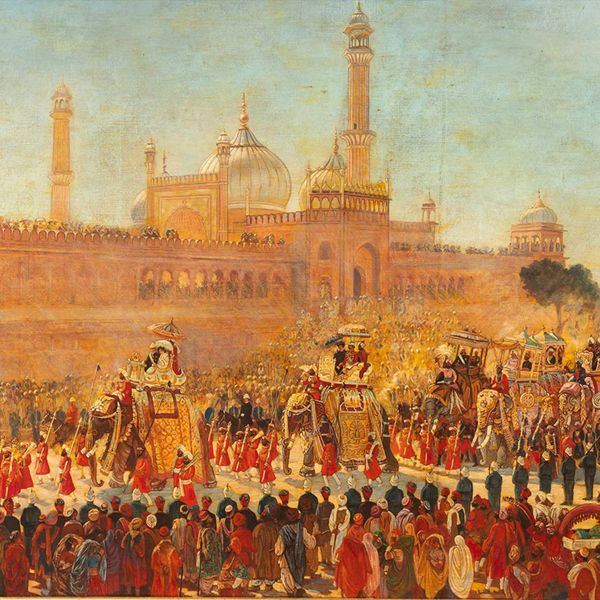
Colonization is perhaps best understood as a process that unfolded over time than as a single historical event. In India and South Asia it began with the East India Company acquiring rights over land in different parts of the country, with the occasional political victories won on the battlefields. Since the Battle of Plassey (1757), their power over legislative and judicial matters grew steadily, backed by a strong military presence. Following the First War of Independence in 1857, the British Crown brought most parts of the Indian subcontinent under its direct rule, continuing to hold power until 1947.
Learn More -
-
-
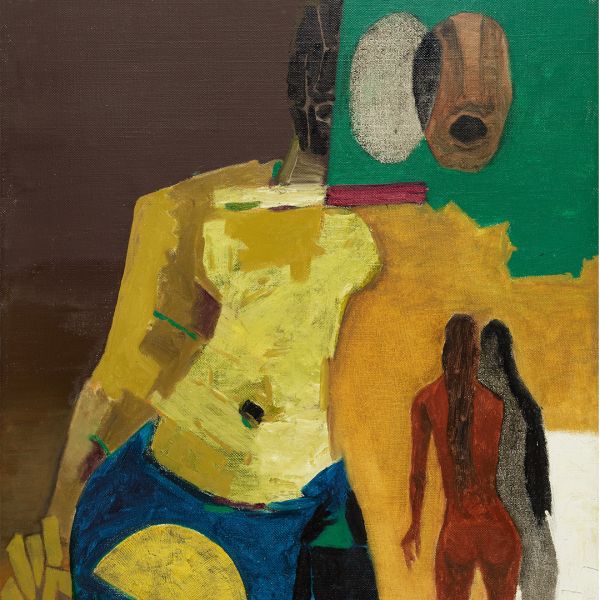 Art FairsAD Design Show 2023$1.00
At the three-day show, DAG will present Celebrating the Modern, an ode to the vibrancy of Indian art with a hand-picked selection that guides us through the development of Indian modernism through diverse movements and genres—a tribute to its appeal that has extended beyond time to be part of a distinctive global language.
Learn More -
 Art FairsAD Design Show$1.00
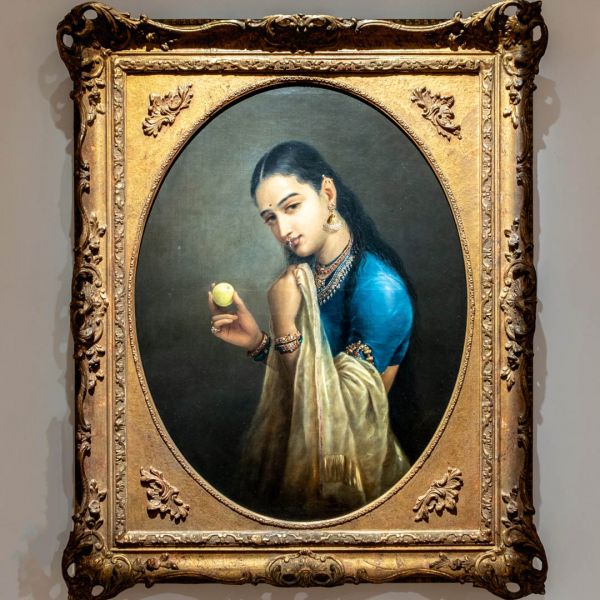
‘Celebrating the Modern’ is DAG’s ode to the vibrancy of Indian art with a hand-picked selection spanning a century that saw the development of Indian modernism through diverse movements and genres—a tribute to its appeal that has extended beyond time to be part of a distinctive global language.
Learn More -
 ExhibitionsThe Sixties ShowAs low as $1.00
The 1960s was a period of immense change around the world, and it had deep ramifications on India’s socio-political scenario. The country had left behind the jubilation of Independence and was feeling the pinch of a nation grappling with the issues of development that impacted society and environment. A war with China in 1962 and Pakistan in 1965 had far-reaching implications on the national psyche— the first of shame, the latter of pride. Crippling shortages and unemployment were impacting life, even as the country’s success with the Green Revolution was directed at self-sufficiency. Migration from the villages to urban centres was increasing. Disparities—economic, gender or class—provided fertile ground for the alienation of the other. The more anglicised among the youth found themselves being drawn into the vortex of a global hippie movement. A. A. RAIBA AMBADAS ANUPAM SUD AVINASH CHANDRA BIKASH BHATTACHARJEE BIMAL DASGUPTA DHANRAJ BHAGAT F. N. SOUZA G. R. SANTOSH HIMMAT SHAH J. SULTAN ALI J. SWAMINATHAN JAMINI ROY JERAM PATEL JOGEN CHOWDHURY JYOTI BHATT K. G. SUBRAMANYAN K. LAXMA GOUD KRISHEN KHANNA LAXMAN PAI M. F. HUSAIN MADHVI PAREKH P. T. REDDY PARITOSH SEN PRABHAKAR BARWE PRODOSH DASGUPTA PROKASH KARMAKAR RABIN MONDAL RAM KUMAR RAMESHWAR BROOTA S. H. RAZA S. K. BAKRE SAKTI BURMAN SATISH GUJRAL SHANTI DAVE SOHAN QADRI SOMNATH HORE SUNIL DAS ZARINA HASHMI
Learn More -
 ExhibitionsRabin Mondal: Kingdom of ExileAs low as $1.00
Rabin Mondal is like a striding colossus of our times, scorching up the firmament with images that reflect societal malaise and his own inner turmoil. His determination to paint in a market-unfriendly manner is characteristic of his resolve. His canvases provide no safety net for the unwary viewer. Here is a confident artist aware of his self and his role with no fig leaf to offer those seeking beauty in art—not that his work is unbeautiful.
Learn More -
 ExhibitionsThe World Will Go OnAs low as $1.00
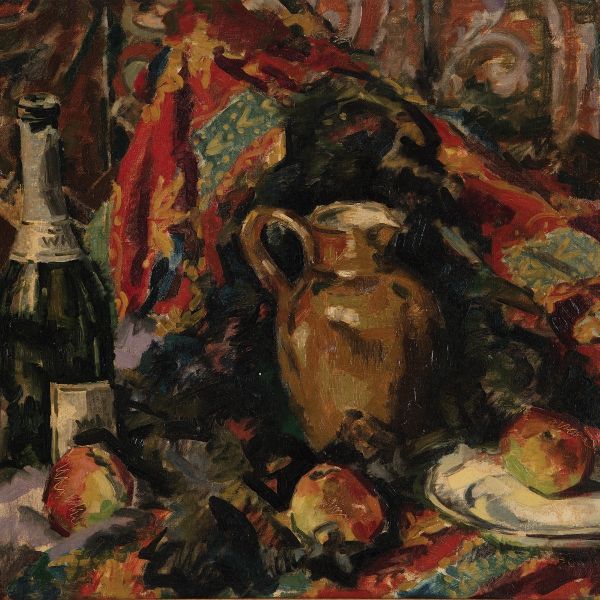
2020 marks a special year in mankind’s history and India’s destiny. Often used in reference to development goals, 2020 has taught us to never take things for granted. While humanity has made major leaps, even conquering outer space, nature has shown us how little we know about it, and how little we appreciate what we have. 2020 has taught us to review our values. We have suffered but also been comforted, and we have learned to acknowledge that irrespective of our joys and sorrows, our triumphs and our failures, the world will not stop, it will go on. Husain Rabin Mondal Santosh Jehangir Sabavala Mohan Samant Swaminathan Paramjit Paramjeet Ramgopal Vijaivargiya Seal Singh Dasgupta Haren Das Shanti Dave Jagadish Dhanapal Dhurandhar Bipin Behari Goswami Laxma Goud George Keyt Ara Nandalal Bose Jyoti Bhatt Natvar Bhavsar Eric Bowen Shobha Broota Avinash Chandra Sanat Chatterjee Shiavax Chavda Hebbar Khemraj Krishen Khanna Walter Langhammer Jeram Patel Aroomogam Pillay Raza Reddy Jamini Roy Vasudev Viswanadhan Manu Madhvi Parekh Laxman Pai Dhirendra Narayan Dharamanarayan.
Learn More -
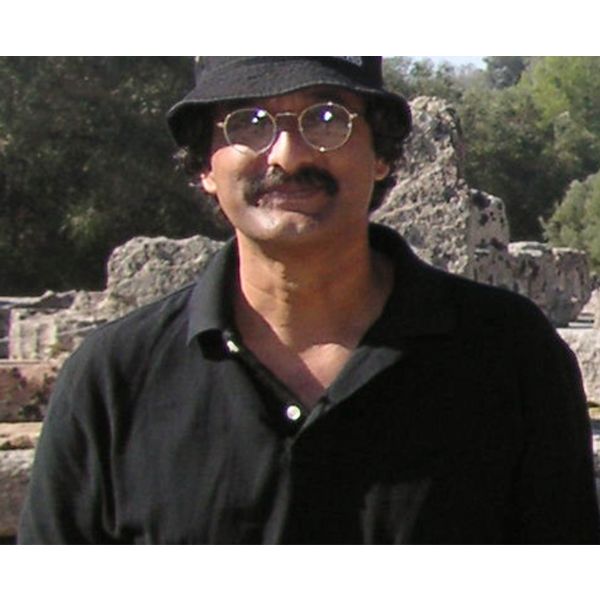 ArtistsNataraj Sharma$0.00For a socially responsive artist like Nataraj Sharma, the frenzied pace of change in contemporary times coupled with his upbringing in vastly different cultural milieus of India, Egypt, England, and Zambia, has proved to be the proverbial grist for his art mill. Learn More
 -
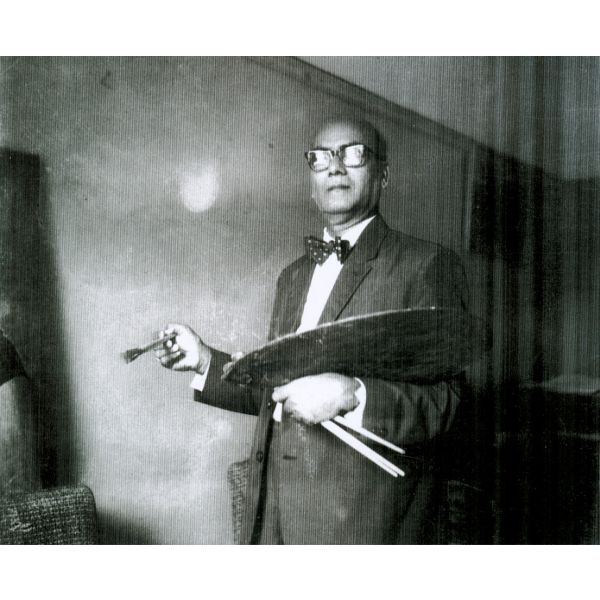 ArtistsV. B. Pathare$0.00Known for his portraits and landscapes rendered in academic-realist style, V. B. Pathare studied painting under S. L. Haldankar in Bombay and Prof. Martin Latuterburg in Bern, Switzerland. After studying portraiture under the renowned Sir Charles Dugdale in London, Pathare painted portraits of several national leaders over time, from Mahatma Gandhi, Rabindranath Tagore and Mahatma Jyotiba Phule to Indira Gandhi and Maharaja Sayajirao Gaekwad of Baroda. Learn More
 -
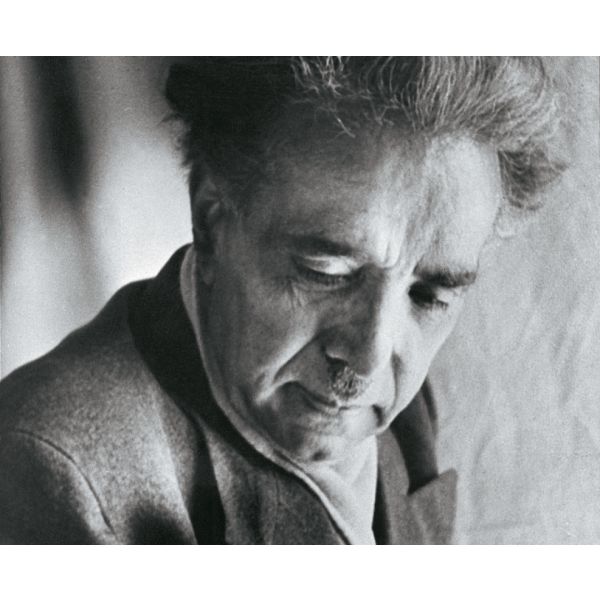 ArtistsM. A. R. Chughtai$0.00Born into a family of artists in Lahore on 21 September 1897, M. Abdur Rahman Chughtai learnt to draw from his father, Mia Karim Baksh. He joined Mayo School of Art in Lahore in 1911, where Samarendranath Gupta, a pupil of Abanindranath Tagore, was vice-principal. He obtained a diploma in photo lithography from Mayo School in 1914, where he went on to become the head instructor in chromo-lithography. He honed his printmaking skills during visits to London in the mid-1930s and exhibited his works across Europe; he also exhibited with Indian Society of Oriental Art in Calcutta around this time. Learn More