


Search results for: 'lola lolita se queda solita por bribana loquita por andar con una pistilita'
-
 ExhibitionsMadras ModernAs low as $1.00
The Madras Art Movement that emerged in the early 1960s was a late phenomenon of modernity in south India within the national context. It developed as a regional phenomenon that began to take shape from the mid-1950s onwards as a search for authenticity in modernism derived largely from the region’s cultural heritage. D. P. ROY CHOWDHURY A P SANTHANARAJ ACHUTHAN KUDALLUR AKKITHAM NARAYANAN ALPHONSO DOSS C DOUGLAS C J ANTHONY DOSS J. SULTAN ALI K C S PANIKER K M ADIMOOLAM K RAMANUJAM K SREENIVASULU K V HARIDASAN L MUNUSWAMY M SENATHIPATI M SURYAMOORTHY P GOPINATH P PERUMAL P S NANDHAN PANEER SELVAM R B BHASKARAN REDDEPPA NAIDU Rm. PALANIAPPAN S G VASUDEV S. DHANAPAL S. NANDAGOPAL V. VISWANADHAN VIDYASHANKAR STHAPATI
Learn More -
 ExhibitionsManifestations XI: 75 ArtistsAs low as $1.00
The art of the twentieth century may be too recent for us to judge it from the viewpoint of longevity, but if the past is any criterion, art is set to outlive us by far—a reason why its documentation is one of the more important tasks before us. This is where the Manifestations series is so important. It encourages discussion and debates around the selection of unique works by seventy-five acknowledged artists spanning a century (or more) of Indian modernism across a range of variously permutable combinations: periods, movements, mediums, materials, regions. Raiba Ambadas Arpana Caur Arun Bose Asit Kumar Haldar Avinash Chandra Bal Chhabda Bikash Bhattacharjee Bimal Dasgupta Biren De Bireswar Sen C. Douglas Chittaprosad Devayani Krishna Dhanraj Bhagat Dharamnarayan Dasgupta Early Bengal (Anonymous) F. N. Souza G. R. Santosh Ganesh Pyne Gogi Saroj Pal Himmat Shah Indra Dugar J. C. Seal J. Sultan Ali J. Swaminathan Gaganendranath Tagore Raja Ravi Varma Jamini Roy Jeram Patel Jyoti Bhatt K. Adimoolam K. C. S. Paniker K. G. Subramanyan K. H. Ara K. K. Hebbar K. Laxma Goud K. S. Radhakrishnan Kalighat Pat (Anonymous) Khagen Roy Krishen Khanna L. Munuswamy Laxman Pai Laxman Shrestha M. F. Husain M. Senathipathi M. V. Dhurandhar N. S. Bendre Nandalal Bose Navjot Nemai Ghosh Nikhil Biswas P. Khemraj P. T. Reddy Paritosh Sen Partha Pratim Deb Prokash Karmakar Prosanto Roy Rabin Mondal Rabindranath Tagore Radha Charan Bagchi Ram Kumar Ranbir S. Kaleka Robert Ker Porter S. H. Raza Sakti Burman Satish Gujral Shanti Dave Shyamal Dutta Ray Gopal Ghose Sohan Qadri Sunil Das Sunil Madhav Sen Thota Vaikuntam Ved Nayar
Learn More -
 Collection OnlineDEVIS$1.00
The Devi or the female power in Hindu mythology appears in various avatars in our everyday lives—as idols during the puja, on covers of magazines, product labels, calendars and posters. The modern history of visualising the Devi goes back to naturalistic depictions in oil paintings by the Early Bengal artists, which were surpassed in popularity and fame by Raja Ravi Varma and his studio. His representation, however, was regarded as too human-like by artists of the Bengal School in the early twentieth century, who created idealised forms based on a synthesis of classical visual traditions. In the twentieth century, we find artists responding to distinctive traits of the goddess to portray specific aspects of her power, or to convey the artist's own relationship with divinity. Few artists who have turned to Hindu myths have been able to escape the temptation to interpret the female power in their own way, and the diversity in style, medium, and mood is a testament to that.
Learn More -
 ExhibitionsA Place In The Sun: Women Artists From 20th Century IndiaAs low as $1.00
Sunayani Devi picked up a paintbrush in 1905 when she was thirty years old while supervising her kitchen duties, self-taught, but with enough talent to attract the critical attention of Stella Kramrisch who organised an exhibition of her paintings in Germany in 1927. It was in her worthy footsteps that India’s women artists followed. Devayani Krishna was born five years after Sunayani Devi began painting; Amrita Sher-Gil already had a career in Paris by the time India’s first art school-trained woman artist, Ambika Dhurandhar, earned her diploma in Bombay. B. Prabha followed next, her work reflecting the realities of the marginalised in a piquant language. By the time Nasreen Mohamedi and Zarina Hashmi, both born a decade before Independence, established their careers, women were joining art schools in greater numbers, validating their practice not on the basis of their gender but on its context. Anupam Sud Devayani Krishna Gogi Saroj Pal Latika Katt Madhvi Parekh Mrinalini Mukherjee Navjot Rekha Rodwittiya Shobha Broota Zarina Hashmi
Learn More -
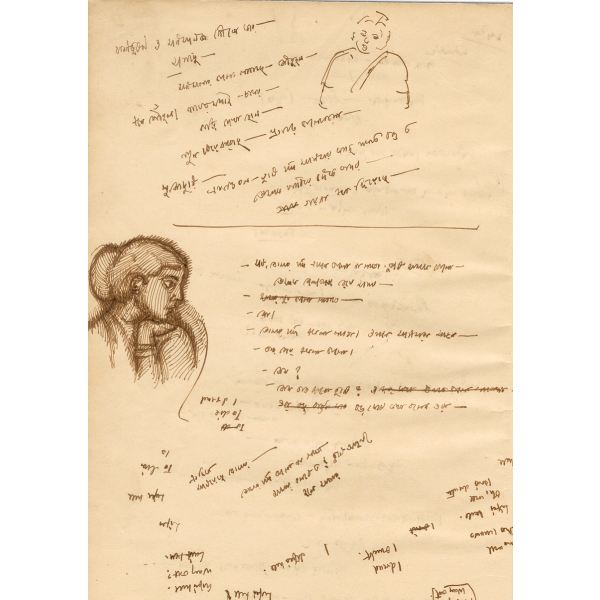 Collection StoriesScripting the Camera: Satyajit Ray’s cinema as ‘archive’$0.00
The DAG Archive has over 90,000 photographs taken by Nemai Ghosh, a bulk of which includes still photographs and behind the scenes images of films as well as candid and staged portraits of Satyajit Ray. In conjunction to these materials, DAG Archive has also acquired a set of two notebooks of Ray which contains the hand-written film scripts of <i>Ghare Baire</I> (The Home and The World, 1984) and Samapti (The Conclusion) which is one of the short films from the anthology, Teen Kanya (Three Women, 1961). Interestingly, both these films are adaptations from Rabindranath Tagore’s literary works.
Learn More -
 Institutional CollaborationsDRISHYAKALA$1.00
How did the multiple trajectories of visual arts develop in the subcontinent? Where did they originate and how did their paths converge? Drishyakala offers a sweeping journey into the heterogenous histories of visual arts in India, from the first European travelling artists who drew landscapes to popular prints of the earliest woodcuts and lithographs evolving into the thriving advertising visuals of the 20th century. The exhibition is broadly divided into four categories, each exploring an unique area of development—the art of portraiture through photography and painting, oriental sceneries drawn by European travelling artists, popular prints from the late eighteenth century to post-independence and artworks of the nine National Treasure Artists. Together, these sections give brief glimpses into the dizzying variety of forms, styles and languages of South Asian art.
Learn More -
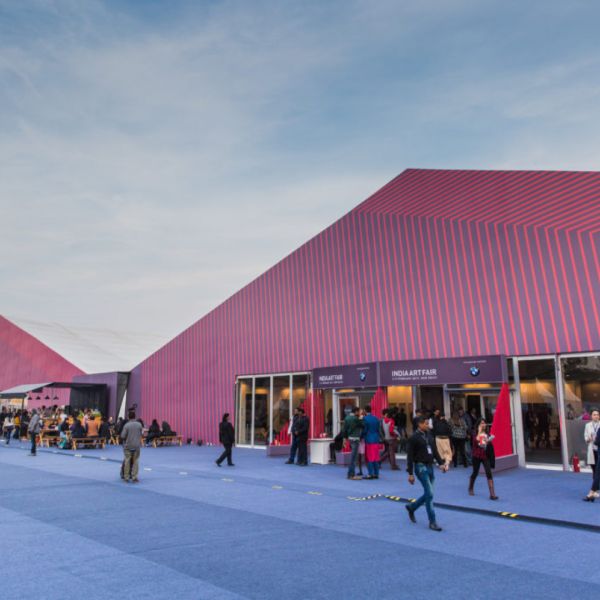 Art FairsIndia Art Fair$0.00
The 2015 edition of the India Art fair saw DAG securing a lavish booth across two different spaces spread over 11,000 sq. ft. Likened to a museum (albeit a temporary one), the gallery presented a show of close to one thousand artworks that consisted of both paintings and sculptures. The thematically curated exhibition consisted of nine categories: pre-modern art, the Bengal school, academic realism, the Bombay Progressive artists, high modernism, the Baroda School and Group 1890, the Cholamandal artists, tantra and sculptures. This categorically-placed collection successfully attempted to showcase the dynamic range of Indian art over two hundred years. A special sculpture gallery was set up in a covered courtyard and featured the largest sculpture in India—by K. S. Radhakrishnan. Pre-Moderns Early Bengal Kalighat Pat Company School Popular Prints Birth of Modernism M. R. Achrekar Almelkar Radha Charan Bagchi Richard Barron Pestonji E. Bomanji Atul Bose Sakti Burman William Carpenter Jogen Chowdhury Devraj Dakoji Thomas Daniell John Deschamps M. V. Dhurandhar Indra Dugar J. P. Gangooly Olinto Ghilardi S. L. Haldankar K. K. Hebbar Benjamin Hudson D. C. Joglekar Prahlad C. Karmakar J. A. Lalkaka B. C. Law Hemendranath Mazumdar M. Mali H. Muller Ramaswamy Naidu M. K. Parandekar William Parker Prema Pathare V. B. Pathare M. F. Pithawalla Portraiture (Anonymous) Thomas Prinsep Abalall Rahiman ‘Ravi Varma School’ Kisory Roy Baburao Sadwelkar N. R. Sardesai Bireswar Sen Lalit Mohan Sen Sushil Chandra Sen S. G. Thakar Singh Satish Chandra Sinha L. N. Taskar Raja Ravi Varma Revivalism and Beyond Radha Charan Bagchi Bengal School (Anonymous) Nandalal Bose Ramendranath Chakravorty M. A. R. Chughtai Haren Das Sunayini Devi 438 Mukul Dey Surendranath Ganguly Asit Kumar Haldar Chintamoni Kar Kshitindranath Majumdar Indu Rakshit Prosanto Roy Bisnhupada Roychowdhury D. P. Roy Chowdhury Abanindranath Tagore Sarada Charan Ukil Ramgopal Vijaivargiya Jamini Roy Santiniketan: A New Expressionism Ramkinkar Baij Nandalal Bose Benode Behari Mukherjee The Bengal Famine in Art Gobardhan Ash Ramkinkar Baij Chittaprosad Somnath Hore Bengal Modernist Calcutta Group Gopal Ghose Hemanta Misra Prankrishna Pal Paritosh Sen Sunil Madhav Sen Calcutta Painters Nikhil Biswas Bijan Chowdhury Jogen Chowdhury Prokash Karmakar Rabin Mondal Society of Contemporary Artists Bikash Bhattacharjee Sunil Das Shyamal Dutta Ray Ganesh Haloi Ganesh Pyne Lalu Prasad Shaw Lone Stars: Other Bengal Modernists Amalnath Chakladhar Partha Pratim Deb Nemai Ghosh Somnath Hore Sudhir Ranjan Khastgir Sailoz Mookherjea Gaganendranath Tagore Rabindranath Tagore Rise of Modernsim K. H. Ara S. K. Bakre Bal Chhabda H. A. Gade V. S. Gaitonde M. F. Husain Krishen Khanna Ram Kumar Tyeb Mehta Akbar Padamsee S. H. Raza Mohan Samant F. N. Souza A Modern Vernacular Baroda School N. S. Bendre Devraj Dakoji Shanti Dave Bhupen Khakhar Dhruva Mistry Haku Shah Nilima Sheikh K. G. Subramanyan Vivan Sundaram Group 1890 Ambadas Jyoti Bhatt Eric Bowen Jeram Patel Raghav Kaneria Himmat Shah Gulammohammed Sheikh J. Swaminathan Alternate Sensibilities Discourses in Feminism Arpana Caur Nalini Malani Navjot Gogi Saroj Pal Anupam Sud A Language of Minimalism Zarina Hashmi Nasreen Mohammedi The Topsy Turvy World of Magic Realism Amit Ambalal Sakti Burman Dharamnarayan Dasgupta Ranbir Singh Kaleka Sanat Kar P. Khemraj Anjolie Ela Menon New Delhi Modernists Amitava Manjit Bawa Rameshwar Broota Shobha Broota Bimal Dasgupta Biren De Manu Parekh Ved Nayar Ramachandran G. R. Santosh Arpita Singh Silpi Chakra Group Dhanraj Bhagat Avinash Chandra Satish Gujral Bishamber Khanna Devayani Krishna Kanwal Krishna K. S. Kulkarni C. Sanya Mumbai Modernists Altaf Prabhakar Barwe Chittaprosad K. K. Hebbar George Keyt Gieve Patel Prabha Raiba V. Nageshkar Jehangir Sabavala Laxman Shreshtha Region and Identity Cholamandal Artists’ Village J. Sultan Ali Reddappa Naidu Akkitham Narayanan K. C. S. Paniker K. Ramanujam M. Senathipathi S. G. Vasudev V. Viswanadhan Modernists of the South K. M. Adimoolam R. B. Bhaskaran S. Dhanapal P. V. Janakiram L. Munuswamy P. Santhanraj Laxman Pai K. Laxma Goud Badri Narayan G. Ravinder Reddy Krishna Reddy P. T. Reddy S. Krishnaswamy Srinivasulu Thota Vaikuntam Sacred and Sensual Neo-Tantra as a Modern Conceit Jyoti Bhatt Sunil Das Biren De K. V. Haridasan Jeram Patel Sohan Qadri P. T. Reddy G. R. Santosh Erotic Art Ramkinkar Baij Sunil Das K. Laxma Goud M. F. Husain Ranbir Singh Kaleka Prokash Karmakar K. S. Kulkarni Laxman Pai P. T. Reddy G. R. Santosh F. N. Souza Modernism in Indian Sculpture Ramkinkar Baij S. K. Bakre P. Roy Chowdhury Jogen Chowdhury Sankho Chaudhuri Prodosh Das Gupta M. Davierwala Jacob Epstein Tarak Garai Bipin Behari Goswami Satish Gujral Asit Kumar Haldar Dhruva Mistry Mrinalini Mukherjee S. Nandagopal Navjot Nagji Patel K. S. Radhakrishnan S. H. Raza Jamini Roy Himmat Shah Prabhas Sen B. Vithal Other Sculptors
Learn More -
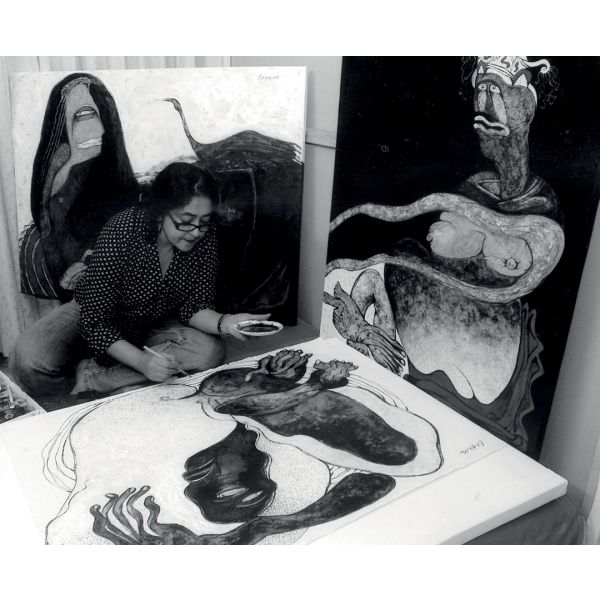 ArtistsJaya Ganguly$0.00Jaya Ganguly is known for turning the concept of aesthetics on its head while portraying social hypocrisies through her paintings. However, it’s not just the duplicity of the privileged vis-à-vis the have-nots that she seeks to express, but also the pretenses that the former keep up with in their comfortable yet orthodox existence. Learn More
 -
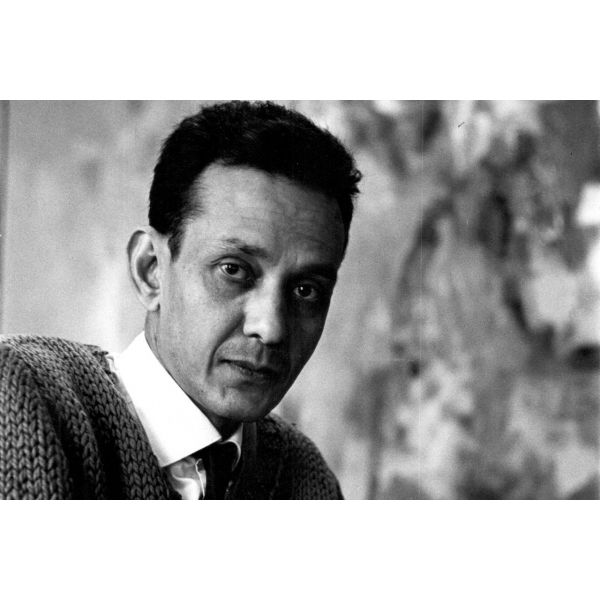 JournalThe French Connection: S. H. Raza at Paris' Centre Pompidou$0.00
In February, Paris' Centre Pompidou--a premier centre for modern art since its construction in 1977--mounted an extensive solo show looking back at S. H. Raza’s career in painting. It represents a historic moment for Indian modern art’s international story as it unfolded over the twentieth century, and also marked Raza's own symbolic return to the place where he stayed for most of his working life. The fertile post-independent period saw cross-cultural connections being forged by Indian artists in Europe and America on their own terms and this show is a testament to Raza’s evolving encounters with land and mythology. The curators, Catherine David and Diane Toubert, spoke to DAG highlighting some of the takeaways from this major retrospective.
Learn More -
 JournalSearching for the ‘Inner Form’ in Prabhakar Barwe’s Blank Canvas$0.00
Artists have often formulated their theories and observations to analyse and become aware of the cognitive modes of art making, and to associate with broader contemporaneous art movements. These manifestos become a window into an artist’s process. Prabhakar Barwe’s seminal treatise, <i>Kora Canvas</I> (The Blank Canvas, 1989), exemplifies his deep understanding of the fundamental elements of art and keen observations of nature and his surroundings.
Learn More -
 JournalDebating secularism in South Asian Art with Tapati Guha-Thakurta$0.00
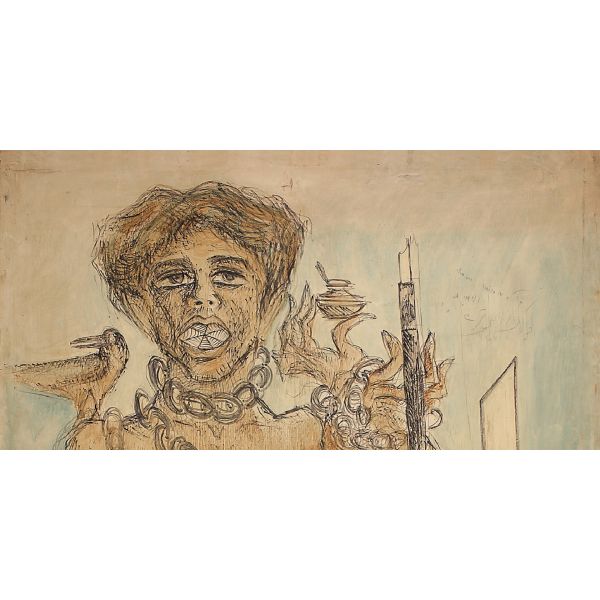
This collection of essays, co-edited by eminent scholars of art history, Tapati Guha-Thakurta and Vazira Zamindar, navigate the fraught religio-political contexts of South Asia to bring into relief the fragility and amorphous nature of a contested term like the ‘secular’.
Learn More -
 ExhibitionsNavrasaAs low as $1.00
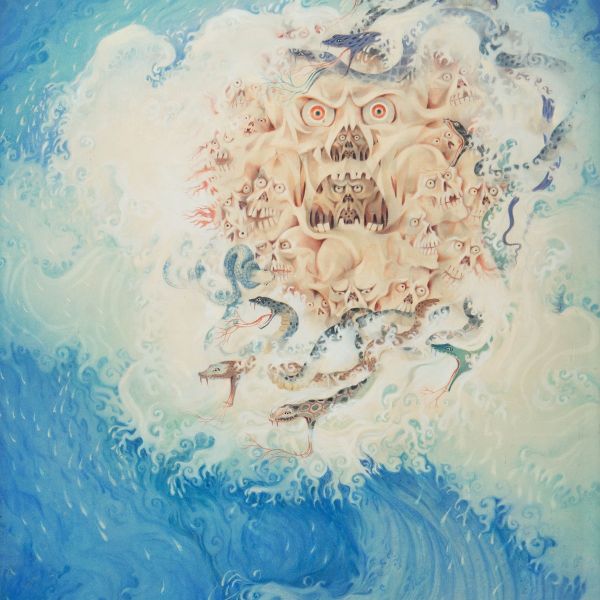
The pinwheel of emotions is the genesis of our current exhibition, 'Navrasa: The Nine Emotions of Art'. This unique treatise of emotions and moods has formed the foundation for the performing and visual arts in India. As we researched deeper to explore the dynamics it shares with Indian modern art, we found that all emotions are intrinsically linked with each other, that they trigger actions and reactions and are catalysts for change. 'Navrasa' explores Indian modernism and looks at the works of masters through the nine primary emotions, and breaks new ground in the visualisation of Indian art. Raiba A. H. Muller A. Ramachandran Altaf Amal Nath Chakladar Amit Ambalal Anonymous Anonymous (Bengal ‘School’) Anonymous (Early Bengal School) Anonymous (Early Bengal, Kalighat Style) Anonymous (Kalighat Pat Anupam Sud Arpana Caur Arun Bose Arup Das Asit Haldar B. N. Arya B. Prabha Badri Narayan Bijan Choudhury Bikash Bhattacharjee Bireswar Sen C. Douglas Chintamoni Kar Chittaprosad D. P. Roy Chowdhury Dattatraya Apte Dharamanarayan Dasgupta F. N. Souza G. Reghu Gogi Saroj Pal Gopal Ghose Gopal Sanyal Haren Das Indu Rakshit J. Sultan Ali Jagadish Dey Jai Zharotia Jamini Roy Jaya Ganguly Jogen Chowdhury Jyoti Bhatt K. C. S. Paniker K. G. Subramanyan K. H. Ara K. K. Hebbar K. S. Kulkarni Kanchan Chander Kartick Chandra Pyne Krishen Khanna Kshitindranath Mazumdar Laxman Pai M. F. Husain Madhvi Parekh Mukul Dey Navjot Nemai Ghosh Nikhil Biswas P. S. Chander Shekar P. T. Reddy Paritosh Sen Prodosh Das Gupta Prokash Karmakar Rabin Mondal Radhacharan Bagchi Raja Ravi Varma Rameshwar Broota Ranbir Singh Kaleka S. Dhanapal Sakti Burman Sanat Chatterjee Sanat Kar Satish Gujral Satish Sinha Shyamal Dutta Ray Somnath Hore Stefan Norblin Subba Ghosh Sudhir Khastgir Sukhvinder Singh Sunil Das Sunil Madhav Sen Thota Vaikuntam Tyeb Mehta V. Nageshkar
Learn More