Search results for: 'site:deviantart.com "meant to say" "tg"'
-
 ExhibitionsManifestations 5: 75 ArtistsAs low as $1.00
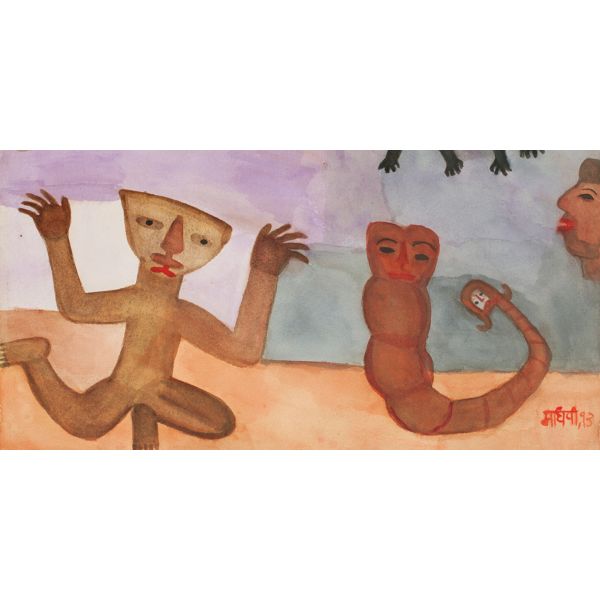
The fifth edition in the Manifestations series continues the tradition of showcasing the very best of Indian modern art. Seventy-five artists feature in Manifestations 5, bringing together the country’s best known and most established modern artists. To reduce the work of one whole century (give or take a few decades more or less) could be flawed, for this most dynamic period in Indian art history covers many genres, styles, mediums, and influences, and is difficult to paraphrase, especially in the absence of a theme for the collection. It is for this reason that the selection has to be incisive, open to change till the very end, where the addition, or deletion, can change the contextual bird’s eye-view we hope to provide in every series. The exhibition is accompanied by our traditional publication that helps to create a comprehensive understanding about the exhibition’s curatorial decisions. A. H. Muller Altaf Ambadas Amit Ambalal Amitava Arpita Singh Avinash Chandra Badri Narayan Bhupen Khakhar Bikash Bhattacharjee Bimal Dasgupta Biren De Bireswar Sen C. Douglas Chintamani Kar Chittaprosad D. P. Roy Chowdhury Dhanraj Bhagat Dharamnarayan Dasgupta F. N. Souza G. R. Santosh Ganesh Haloi Ganesh Pyne Gogi Saroj Pal Gopal Ghose Himmat Shah Indra Dugar J. C. Seal J. Sultan Ali J. Swaminathan Jamini Roy Jeram Patel Jogen Chowdhury Jyoti Bhatt K. C. S. Panicker K. H. Ara K. K. Hebbar K. Laxma Goud K. S. Kulkarni Krishen Khanna Kshitindranath Majumdar L. Munuswamy Lalu Prasad Shaw Laxman Pai M. F. Husain M. V. Dhurandhar Nandalal Bose Navjot Nikhil Biswas P. Khemraj Paritosh Sen Partha Pratim Deb Prabhakar Barwe Prodosh Das Gupta Prokash Karmakar Prosanto Roy Rabin Mondal Rabindranath Tagore Rameshwar Broota Ramkinkar Baij Rekha Rodwittiya S. H. Raza S. L. Haldankar Satish Gujral Shobha Broota Sohan Qadri Sunil Das Sunil Madhav Sen Surendran Nair V. S. Gaitonde Vasudha Thozhur Ved Nayar Viswanadhan Vivan Sundaram Zarina Hashmi
Learn More -
 ExhibitionsDelhi Durbar: Empire, Display and the Possession of HistoryAs low as $1.00
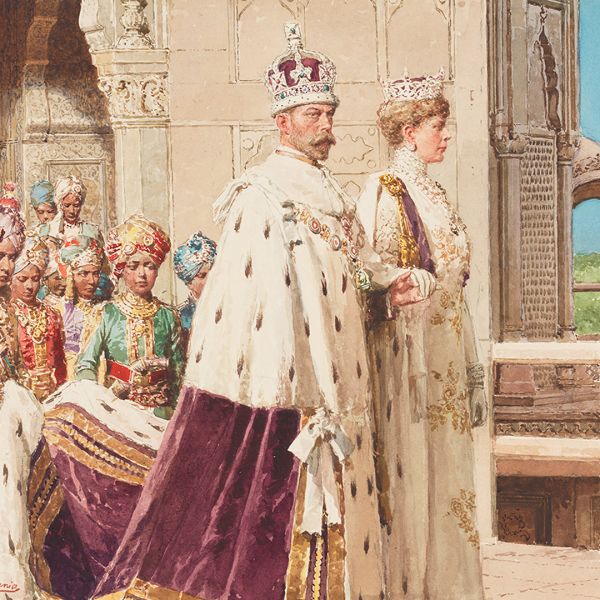
DAG invited leading historians of Delhi, Swapna Liddle and Rana Safvi, to explore our archives collection. The items they found there include numerous photographs of the three durbars, taken by prominent photographers of the day. They also include many other objects relating to the durbars, from portraits and medals, to maps and official guidebooks, and to tickets and programmes. Historians in the past have analysed the ideology of the Delhi durbars, but never before has such a collection of the material culture of these events been brought together for display.
Learn More -
 JournalRadical as a way of Being: Inaugural Contemporary Fellow Nalini Malani at London's National Gallery$0.00
What is the role of collectors and collections or archives in the world of art today? Does it simply allude to practices of producing a consumable past today or does it also aspire to question the ways in which history has been shaped by powerful interventions in the form of artworks, performances and installations? In this series of conversations, we wanted to explore the idea of collecting recent or contemporary art—and how it inevitably takes us back to the moderns who influenced such practices heavily.
Learn More -
 JournalConscious Collecting with Asia Art Archive and Durjoy Rahman$0.00
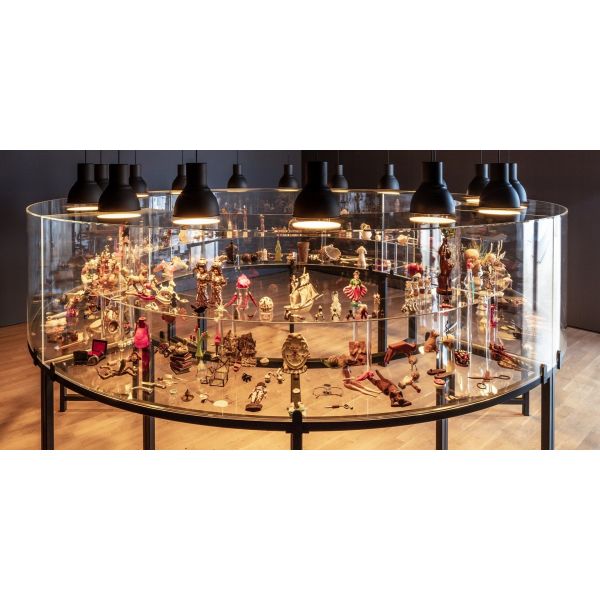
What is the role of collectors and collections or archives in the world of art today? Does it simply allude to practices of producing a consumable past today or does it also aspire to question the ways in which history has been shaped by powerful interventions in the form of artworks, performances and installations? In this series of conversations, we wanted to explore the idea of collecting recent or contemporary art—and how it inevitably takes us back to the moderns who influenced such practices heavily.
Learn More -
 ArtistsCompany Paintings$0.00
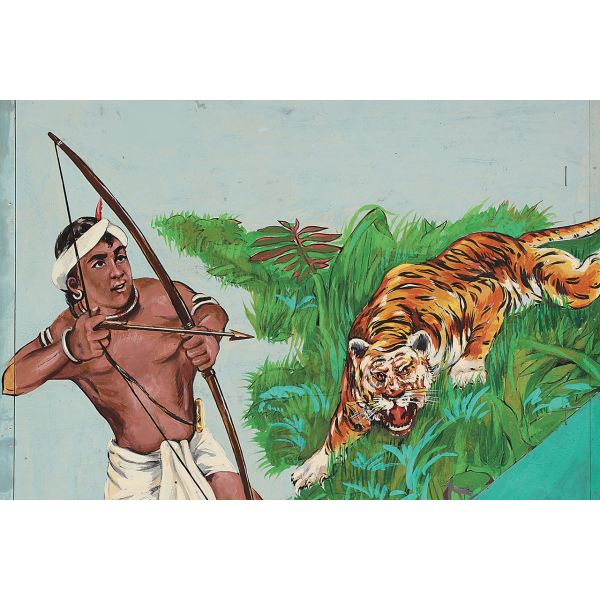
Ethnographic mapping and documentation of a vast country like India was an important part of the political and economic expansion of the East India Company from the middle of the seventeenth century onwards.
Learn More -
 Collection StoriesAfter the Storm: Chittaprosad’s late oeuvre$0.00
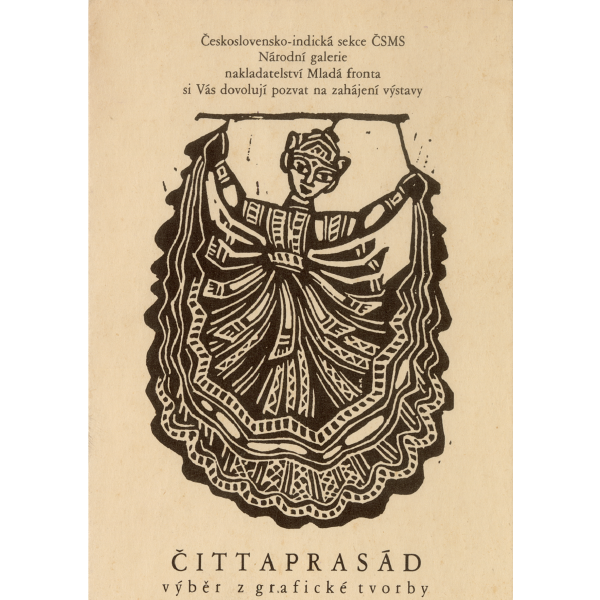
Chittaprosad Bhattacharya (1913-1978) was a versatile artist and a lifelong adherent of the socialistic worldview. In 1943, he traveled across the famine-stricken villages of Bengal and produced realistic sketches of human suffering that were regularly published in the pages of the Communist Party journal 'People’s war'. These sketches were later compiled and published as a booklet under the title 'Hungry Bengal'. Fascinated by his artistic skills, the General Secretary of Communist Party of India, Puran Chand Joshi took Chittaprosad to the Party’s headquarters in Bombay (now Mumbai).
Learn More -
 Collection StoriesThe Afterlife of the Taj Gardens: Changes in the Landscape$1.00
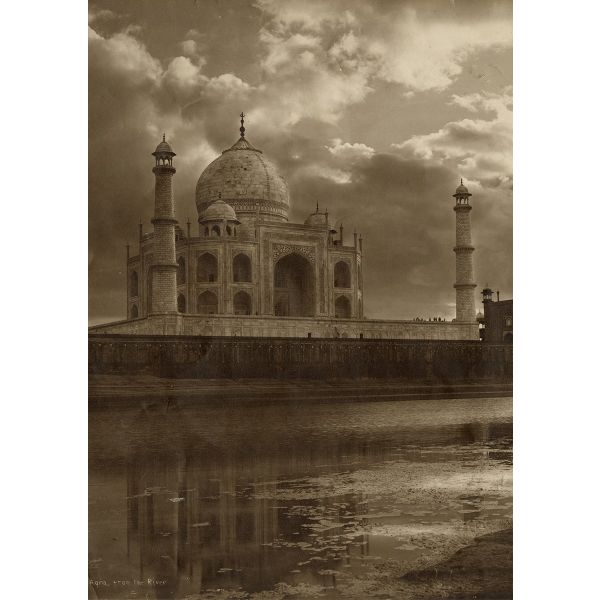
Often described as ‘Poetry in Stone’, the Taj Mahal was laid out between 1631-43 by Mughal Emperor Shah Jahan as a mausoleum for his wife Mumtaz Mahal. It is the architectural elements of the Taj complex that grab the most attention, but in fact the garden is the heart of the complex . The visitors today are so transfixed by the Taj itself that they remember very little of the garden. DAG Archive attempts to illustrate the life and ‘afterlife’ of the Taj gardens, once its control was taken over by the British. This archive deep dive showcases the objects from A. E. P. Griessen’s (1875–1935) collection.
Learn More -
 ExhibitionsRabin Mondal: Kingdom of ExileAs low as $1.00
Rabin Mondal is like a striding colossus of our times, scorching up the firmament with images that reflect societal malaise and his own inner turmoil. His determination to paint in a market-unfriendly manner is characteristic of his resolve. His canvases provide no safety net for the unwary viewer. Here is a confident artist aware of his self and his role with no fig leaf to offer those seeking beauty in art—not that his work is unbeautiful.
Learn More -
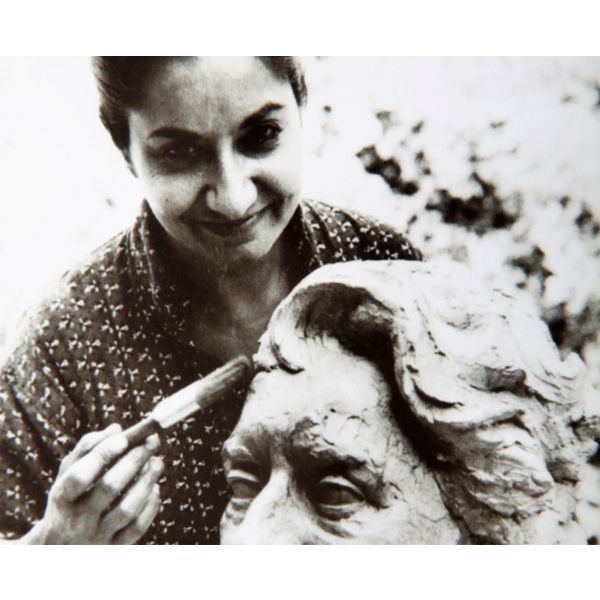 ArtistsLatika Katt$0.00Growing up in Dehradun, Latika Katt learnt to observe everything closely through the numerous trekking expeditions she took with her botanist father. She completed her bachelor’s in fine arts from Banaras Hindu University and later completed her master’s from the Faculty of Fine Arts, M. S. University, Baroda, in 1971. Interestingly, hers was the first art degree batch of the prestigious institution and she was the first female student to receive a gold medal in sculpture from the university. Later, in 1981, she received a research scholarship from the Slade School of Art, London. Learn More
 -
 ExhibitionsIndian AbstractsAs low as $1.00
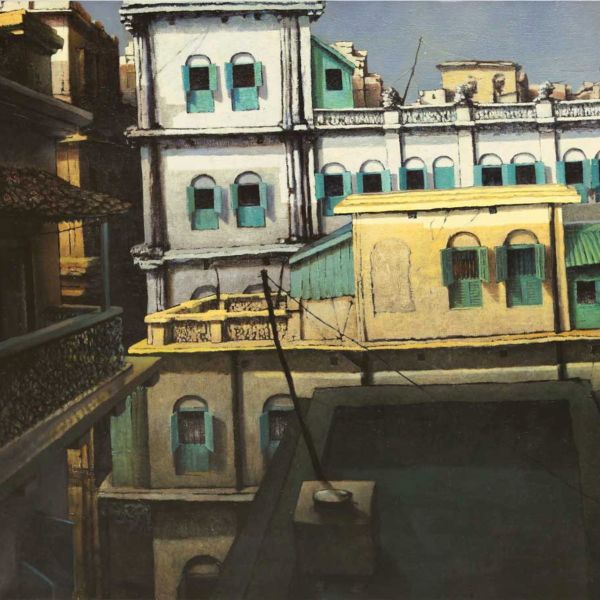
The term ‘abstract’ has been loosely used, more so in the Indian context, where we have only a vague notion of what it implies. Even the slightest distortion in art is popularly referred to as abstraction. And while distortion ultimately results in abstraction, the two are at opposing ends of the visual pole as far as understanding the genre goes. Over several years, viewers have been guided almost by a gut instinct of what constitutes abstract art. And though one concedes that rigid compartments to demarcate genres are neither practical, nor desirable, some understanding of what constitutes abstract art is essential. A. M. Davierwalla Akbar Padamsee Ambadas Amitava Amrut Patel Asit Kumar Haldar Avinash Chandra Baburao Sadwelkar Benode Behari Mukherjee Bikash Bhattacharjee Bimal Dasgupta Biren De Bishamber Khanna Biswanath Mukerji Devayani Krishna Devraj Dakoji Dhanraj Bhagat Dharamnarayan Dasgupta F. N. Souza G. R. Santosh Ganesh Haloi H. A. Gade Hemanta Misra Himmat Shah J. Swaminathan Jeram Patel Jyoti Bhatt K. C. S. Paniker K. G. Subramanyan K. S. Kulkarni Krishna Reddy L. Munuswamy Laxman Pai Laxman Shrestha M. F. Husain Nasreen Mohamedi P.Khemraj P.T.Reddy Partha Pratim Deb Piloo Pochkhanawala Prabhakar Barwe Prabhakar Kolte Prokash Karmakar R. M. Palaniappan R. N. Pasricha Rabin Mondal Raghav Kaneria Ram Kumar S. G. Vasudev S. H. Raza S. K. Bakre S. R. Bhushan Sanat Kar Sankho Choudhuri Satish Gujral Shanti Dave Shobha Broota Sohan Qadri Somnath Hore Sunil Das Sunil Madhav Sen Tapan Ghosh V. S. Gaitonde V. Viswanadhan Vivan Sundaram Zarina Hashmi
Learn More