Search results for: 'GALLERY D ART STARTED IN LUCKNOW'
-
 JournalGroup 1890$0.00Group 1890 remains unique in the journey of modern Indian art for various reasons, the most important being J. Swaminathan as the force behind the short-lived collective that held only one exhibition in its lifetime, in 1963. In 2016, DAG organized a ‘second’ exhibition of the group, featuring works by all its founder members. Learn More
 -
 JournalPersonalising the Epics: Amar Nath Sehgal's 'Mythologies'$0.00
The India International Centre at New Delhi, in collaboration with the Amar Nath Sahgal Trust, presented a large suite of works by Amar Nath Sahgal (1922—2007), one of post-independent India’s foremost sculptors, in order to celebrate his centenary year in March 2023.
Learn More -
 JournalThe Poet (Head of Rabindranath Tagore) by Ramkinkar Baij$1.00
Ramkinkar Baij is rightfully described as India’s first modernist sculptor for his pathbreaking use of cement and laterite as material, his choice of subjects and scale in public art projects, and his unconventional development of ideas.
The Poet is an abstract portrait of Rabindranath Tagore, imagined through negative spaces, concaves and convexes forming the eyes in a hollowed head, a masterclass in Baij’s cubist vocabulary. The portrait shared almost no physical attributes with the subject, instead focusing on distorting Tagore’s visage to give us insights into the state of his mind.
Learn More -
 JournalUntitled (Tigers) by Amrita Sher Gil$1.00
The birth of Amrita Sher-Gil to an Indian father and Hungarian mother bequeathed to the nation one of its most incandescent artists. Known for her luminous paintings, her work changed the face of modern Indian art and paved the course it was to take in the country. In a rare sculpture of tigers made, poignantly enough, in the last year of her life, Amrita Sher-Gil is revealed as someone exploring new directions before her tragic demise in 1941.
Learn More -
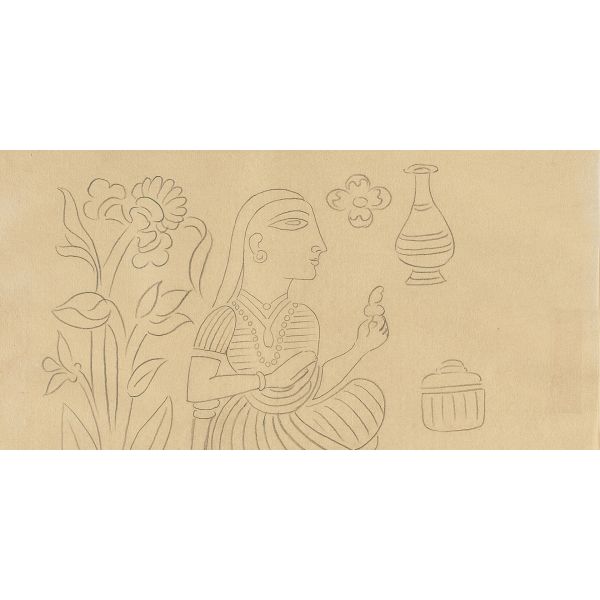 JournalSketching a Temple: Nandalal Bose’s Konark album$0.00
One of India’s nine national treasure artists, Nandalal Bose (1882—1966) forged a long and glittering career as the foremost artist-pedagogue bridging the late-colonial period and the first few decades after Indian independence. He maintained an active drawing practice throughout his life, with many small sketches done on postcards that he carried around with him as a sort of visual notebook.
Learn More -
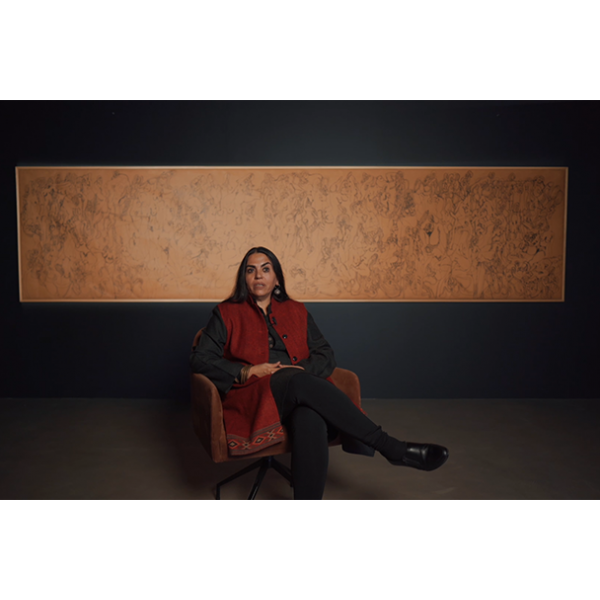 JournalAlita Chandra on Avinash Chandra$0.00
Alita Chandra, daughter of the artist Avinash Chandra reflects on the transcultural influences on his painting and his preoccupation with female subjects.
Learn More -
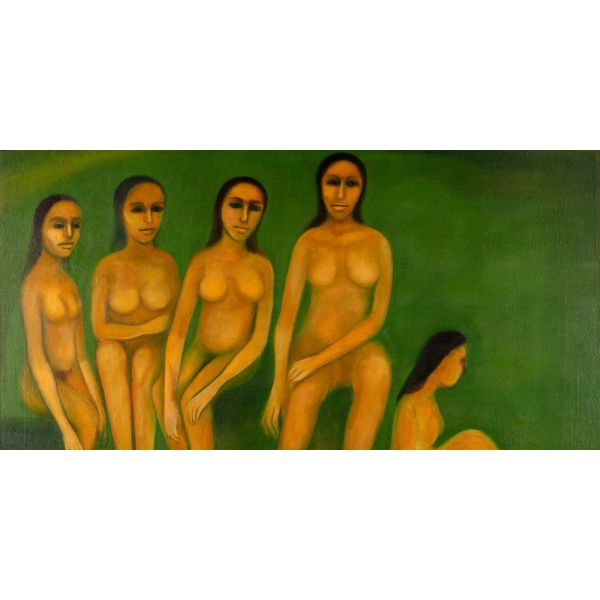 JournalSinging the Body Electric: A Conversation with Gogi Saroj Pal$0.00
Gogi Saroj Pal is one of India's most important artists working with the female body.
Learn More -
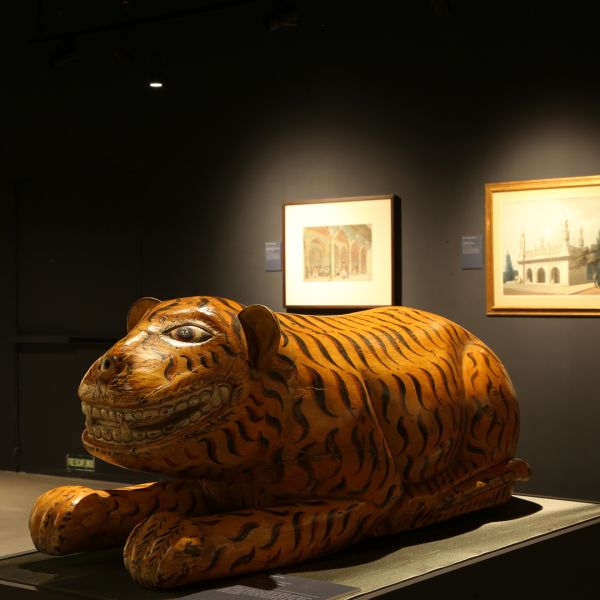 ExhibitionsTipu SultanAs low as $1.00
An extraordinary exhibition of paintings, prints, maps and other objects, curated by Giles Tillotson, that recounts a visual history of the Mysore Wars between the East India Company and Tipu Sultan, this DAG exhibition explores how the narrative might have changed 222 years after the siege of Seringapatnam. The images, based on the British view of the time, reflect changing perceptions and Indian views on this epic battle and its political and social fallouts. A highlight of the exhibition is a painting by Henry Singleton depicting The Last Effort and Fall of Tippoo Sultaun, among other stellar works, that will be seen in India for the first time. Alexander Allan Cpt. R. Frazer David Wilkie Edward Orme Henry Singleton J. B. Mauzaisse James Hunter Johann Peter Krafft John Smart Mather Brown Obadiah Sherratt Robert Hyde Colebrooke Robert Home Robert Ker Porter Thomas Stothard
Learn More -
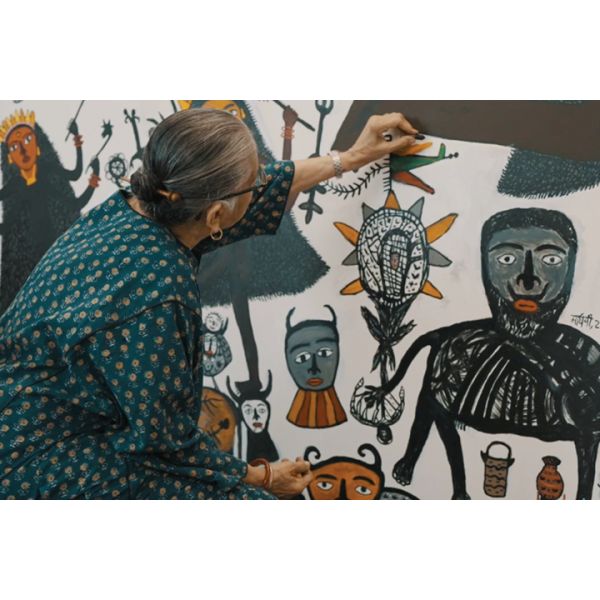 JournalThe art of Madhvi Parekh$0.00
Get a glimpse of Madhvi Parekh as she talks about her practice and the relevance of festivals and celebrations in her art.
Learn More -
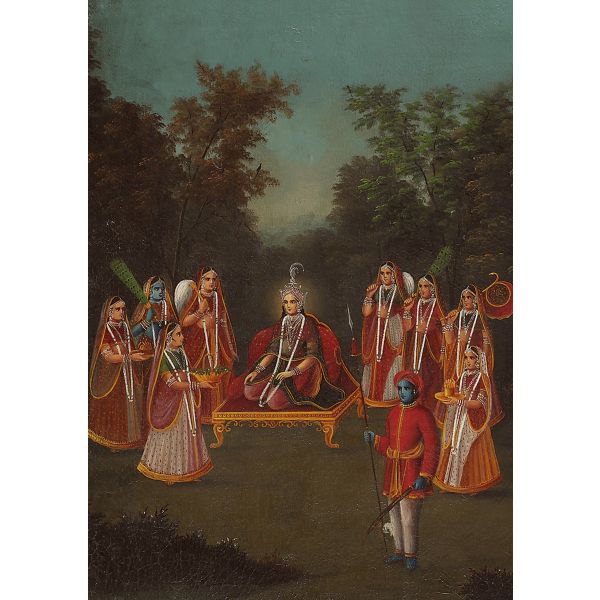 Collection StoriesUNTITLED (RADHA AS QUEEN)$1.00
Radha is painted as a queen in this Early Bengal oil painting, surrounded by her fellow Gopis (cowherds and companions) and Krishna—her divine consort and an incarnation of one of the Hindu trinity—dressed as a sentinel. She sits on her royal throne amid a forest landscape, perhaps recalling her identification as Vrindavaneshwari (goddess of Vrindavan). Going by the small but remarkable details of the jewellery, we can guess that it is the work of an artist trained in the miniature tradition. But does the painting hide other possible secrets?
Learn More -