


Search results for: 'Mash I p'
-
 ExhibitionsBIRDS OF INDIAAs low as $1.00
Works of art made by Indian artists for Western patrons in the early colonial period are what we now call Company Painting. The artists, who might otherwise have worked for an Indian court, sought new markets among those employed in various capacities by the European trading companies, and especially the British East India Company. Some patrons supplied the artists with new materials such as European-made paper and transparent watercolour pigments, and expressed preferences regarding subject matter, leading to new departures in both style and substance in Indian art. One of the most delightful genres of Company Painting was natural history: images of India’s plants, animals, and birds. Company Painting Company Paintings British Era
Learn More -
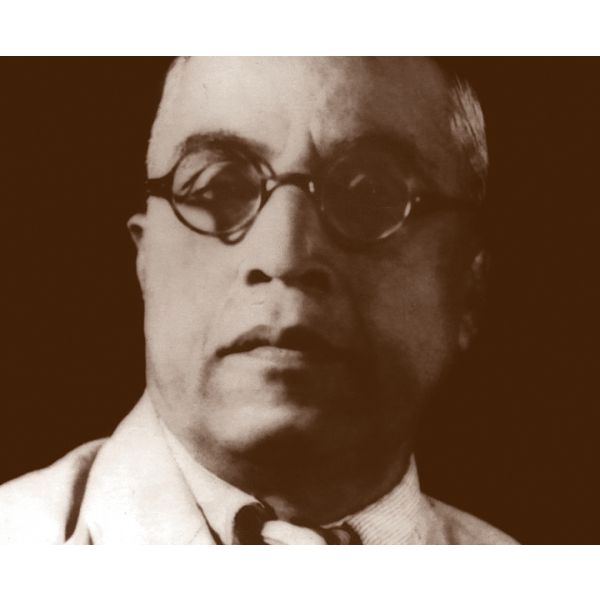 ArtistsM. K. Parandekar$0.00Born in Kolhapur, Maharashtra, M. K. Parandekar was a prolific painter—he made panoramic views of archaeological sites, landscapes and portraits. His initial training was under his father, a Sanskrit scholar and painter, and he followed that up with formal study at Sir J. J. School of Art, Bombay. Learn More
 -
 ExhibitionsShanti Dave: Neither Earth, Nor SkyAs low as $1.00
For Shanti Dave, creativity is a consistent and persistent exploration of the word or akshara—a term defined in the Natyashastra as a stroke in musical notes—which he perceives as the source of all creation. Dave’s abstract iconography, beginning in the early 1950s, adapted to modernism, aesthetic continuity and transcultural exchange. He altered, rejected and improvised the archaic image into a resonant form resembling an ancient script.
Learn More -
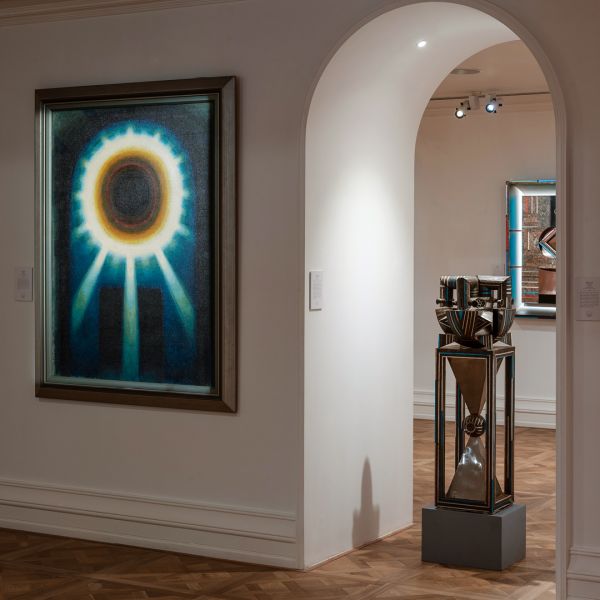 ExhibitionsTantra on the EdgeAs low as $1.00
The exhibition Tantra on the Edge: Inspirations and Experiments in Twentieth Century Indian Art is a pioneering attempt to gather together works of sixteen prominent Indian artists under the single thematic rubric of the transient but least definable phases of contemporary art in the last century. The exhibition features the artworks, inspirations, and experiments, of artists that had a sustained relationship with tantra philosophy, its vivid, abstract, sacred symbols, or their personal spiritual illuminations. Biren De G. R. Santosh Gogi Saroj Pal J. Swaminathan Jyoti Bhatt K. C. S. Paniker Manu Parekh P. T. Reddy Prabhakar Barwe R. B. Bhaskaran S. H. Raza Satish Gujral Shobha Broota Sohan Qadri Sunil Das V. Viswanadhan
Learn More -
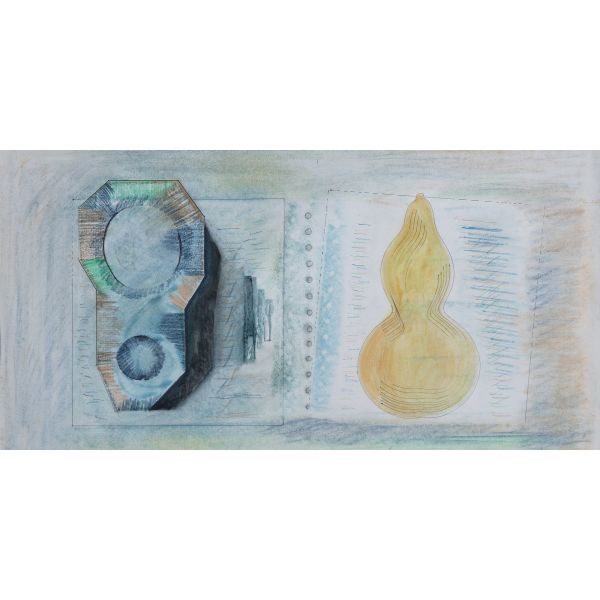 JournalSearching for the ‘Inner Form’ in Prabhakar Barwe’s Blank Canvas$0.00
Artists have often formulated their theories and observations to analyse and become aware of the cognitive modes of art making, and to associate with broader contemporaneous art movements. These manifestos become a window into an artist’s process. Prabhakar Barwe’s seminal treatise, <i>Kora Canvas</I> (The Blank Canvas, 1989), exemplifies his deep understanding of the fundamental elements of art and keen observations of nature and his surroundings.
Learn More -
 JournalBefore the Chaos of Destruction: Jeram Patel's Iconic Works$0.00
Artists often proceed through a trial and error method—an incessant experimentation—leaving behind a singular trail of oeuvre composed of an irreconcilable, yet inseparable, set of works. Born in the small town of Sojitra in the Kheda district of Gujarat, Jeram Patel studied drawing and painting at Sir J. J. School of Art, Bombay. In 1959, excellence in his work led him to pursue commercial design at Central School of Arts and Crafts, London, on a scholarship, and also travel to France and Japan. Thereafter, he successfully held solo exhibition at various places in India and abroad, and participated in international events such as the Tokyo Biennale and Sao Paulo Art Biennale (both in 1963).
Learn More -
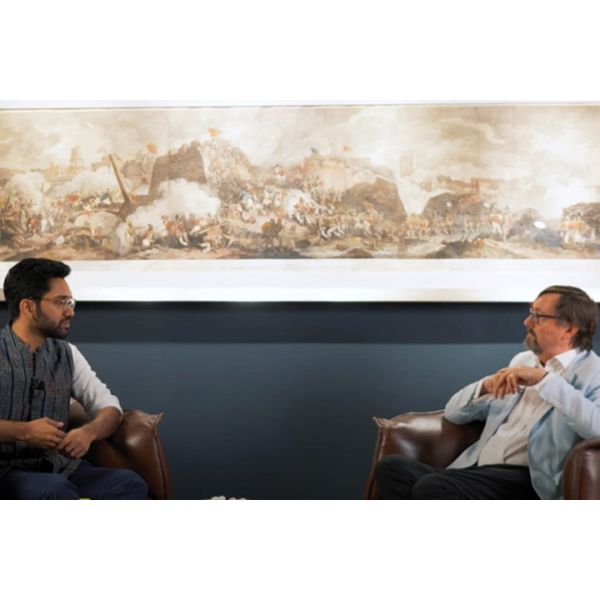 JournalRemembering Tipu Sultan: Manu Pillai and Giles Tillotson$0.00Historian and author Manu S. Pillai in conversation with art historian and curator Giles Tillotson on the subject of Tipu Sultan in the context of DAG’s exhibition, 'Tipu Sultan: Image and Distance' Learn More
 -
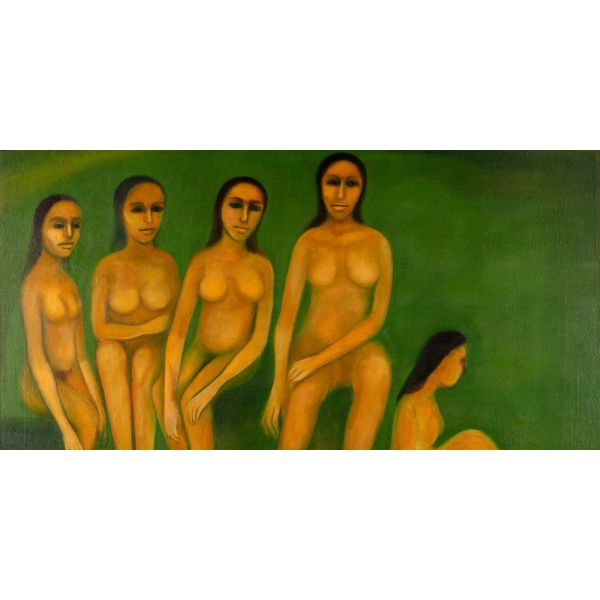 JournalSinging the Body Electric: A Conversation with Gogi Saroj Pal$0.00
Gogi Saroj Pal is one of India's most important artists working with the female body.
Learn More -
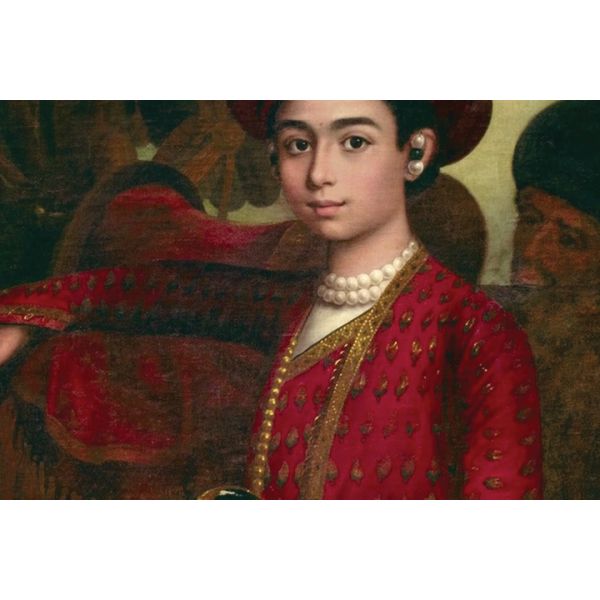 JournalPortraits$0.00With ‘Indian Portraits: The Face of a People’, DAG uncovers the layers that have gone into the practice of portraiture in the country—a survey exhibition spanning two centuries of the genre in India. From British and Indian royalty to streetside portraiture, this is a quick overview of an India past and present. Learn More
 -
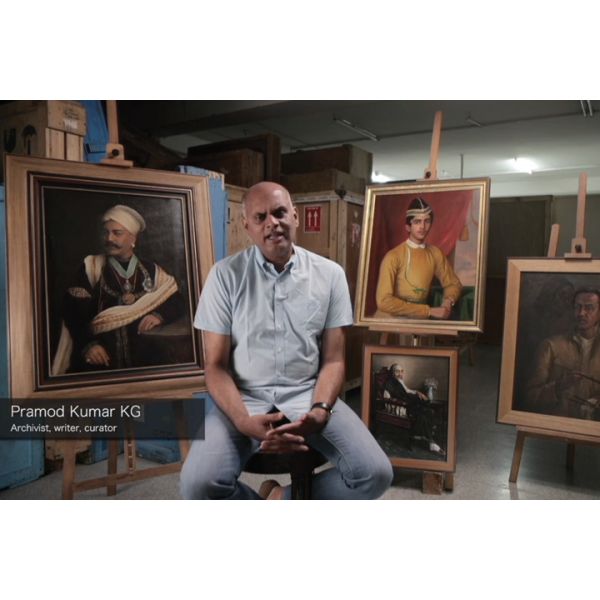 JournalA Portrait of our People$0.00
This exhbition explored the evolution of the genre of portrait painting in India. Curated by Pramod Kumar KG, it was specially created for Drishyakala, a joint collaboration between DAG and the Archaeological Survey of India, at Red Fort, Delhi. Visitors came face to face with dazzling canvases, expressive watercolours and early prints of people known and unknown in this extraordinary exhibition.
Learn More -
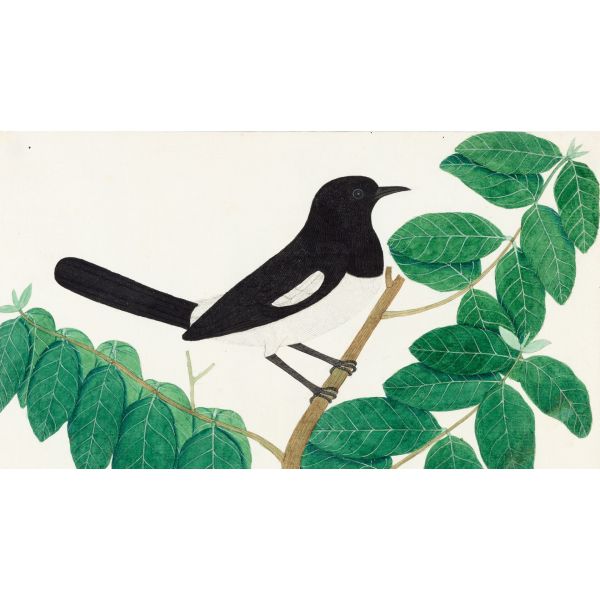 Institutional CollaborationsBirds of India: Company Paintings c. 1800 to 1835$1.00
In celebration of birds and the long relationship art has shared with the winged creatures, this exhibition brings together four folios to present portraits of Indian birds made in the early nineteenth century. While representations of birds date back to the Ajanta murals, naturalistic imagery reached its peak in Mughal art under Emperor Jahangir. In the late 18th century two connected developments emerged in Lucknow and Calcutta. While General Claude Martin provided imported European paper to the artists in Lucknow to prepare botanical studies and other natural history works, in Calcutta Mary, Lady Impey (wife of Chief Justice of the Supreme Court in Bengal, Elijah Impey) had a menagerie where she employed artists to portray variety of animals and birds. Dr. William Roxburgh, superintendent of Calcutta Botanical Garden from 1793, also added to the discourse of natural history by appointing local artists to make botanical studies of the specimens in his charge. The efforts of Martin, Impey, Roxburgh and their artists gave rise to a large body of Company Paintings dedicated to natural history.
Learn More -
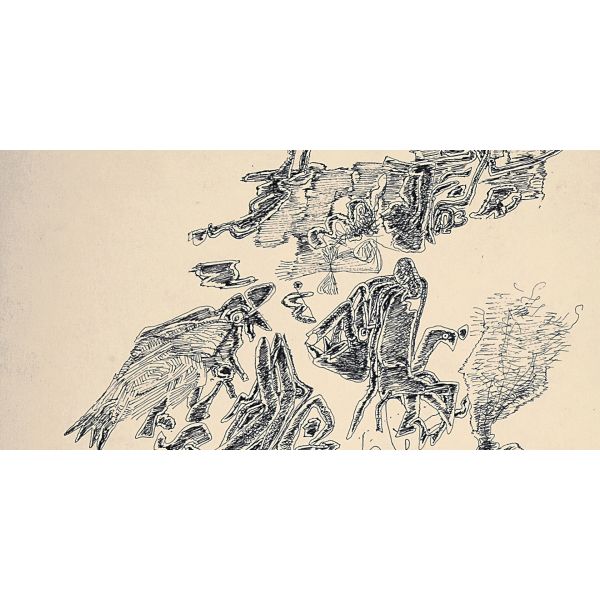 JournalRemembering Ambadas with art critic Prayag Shukla$0.00
A well-known poet and essayist, Prayag Shukla is also one the foremost writers on art in Hindi. He has authored monographs on artists like J. Swaminathan, M. F. Husain and Ambadas, expanding upon these artists’ relationships with local institutions and contexts of art-making in India since the 1960s.
Learn More