Search results for: 'assistente de juiz no tjsp o que faz'
-
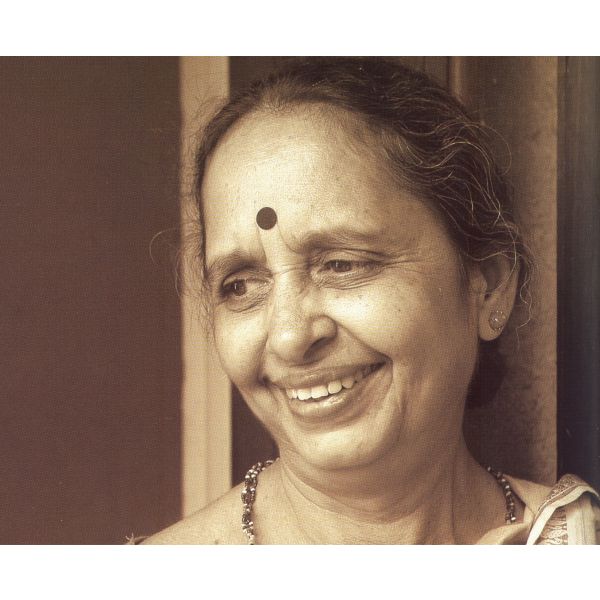 ArtistsShobha Broota$0.00Shobha Broota’s pictorial interpretation of the resonance of classical Indian ragas forms the essence of her celebrated style in which she conveys their subtle variations through minimal use of colours. Born in 1943 in New Delhi in an artistic family that inspired her to study art, Broota obtained a diploma in painting from College of Art, New Delhi, in 1964. Learn More
 -
-
 JournalSearching for the ‘Inner Form’ in Prabhakar Barwe’s Blank Canvas$0.00
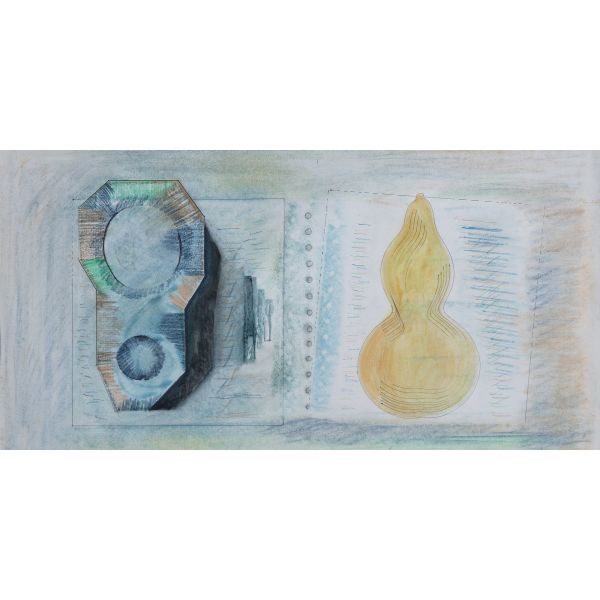
Artists have often formulated their theories and observations to analyse and become aware of the cognitive modes of art making, and to associate with broader contemporaneous art movements. These manifestos become a window into an artist’s process. Prabhakar Barwe’s seminal treatise, <i>Kora Canvas</I> (The Blank Canvas, 1989), exemplifies his deep understanding of the fundamental elements of art and keen observations of nature and his surroundings.
Learn More -
 JournalChittrovanu Mazumdar on Nirode Mazumdar$0.00'Iconic Masterpieces of Indian Modern Art, Edition 2' opened on 11 February, featuring fifty artworks which shaped the trajectory of pre-modern and modern art in the country. As part of the exhibition, Chittrovanu Mazumdar explores the sense of rhythm in his father Nirode Mazumdar’s ‘Boitorini Series’, drawing attention to how its controlled colour palette depicts the flow of life in the metaphor of a river that one must cross during one’s lifetime. Learn More
 -
 JournalA Portrait of our People$0.00
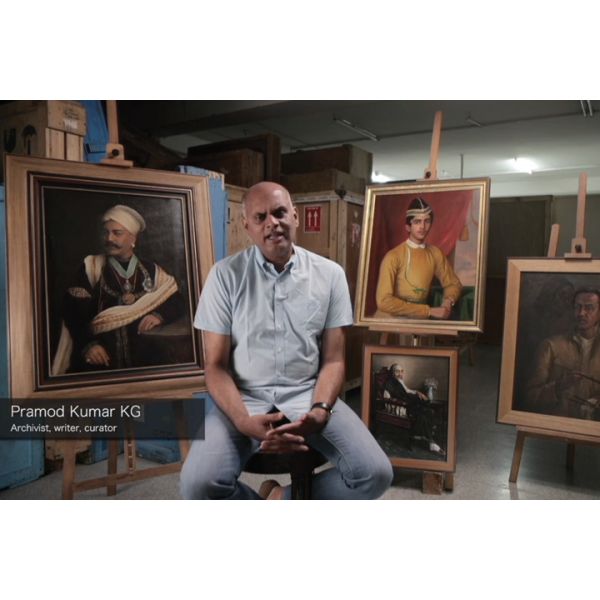
This exhbition explored the evolution of the genre of portrait painting in India. Curated by Pramod Kumar KG, it was specially created for Drishyakala, a joint collaboration between DAG and the Archaeological Survey of India, at Red Fort, Delhi. Visitors came face to face with dazzling canvases, expressive watercolours and early prints of people known and unknown in this extraordinary exhibition.
Learn More -
 Institutional CollaborationsGhare Baire: The World, the Home and Beyond 18th – 20th Century Art in Bengal$1.00
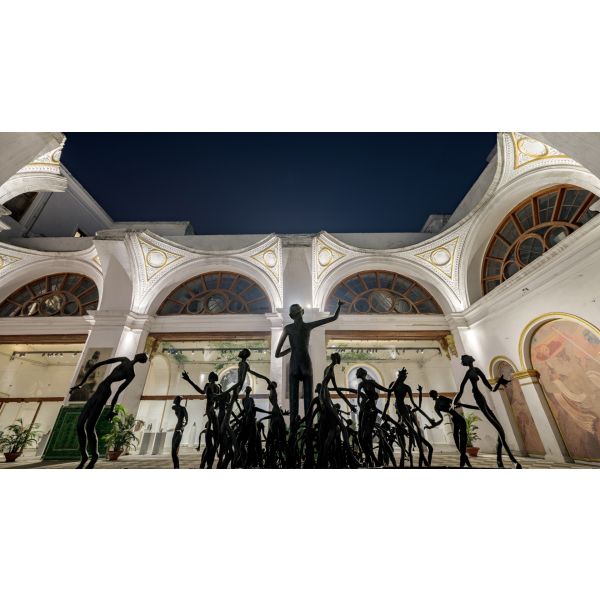
Ghare Baire was a museum-exhibition showcasing over 200 years of art in Bengal. Presented by DAG in collaboration with the National Gallery of Modern Art and the Archaeological Survey of India, the exhibition was housed at the historic Currency Building, across twelve galleries featuring over 700 artworks. The exhibition was the largest showcase of Bengal Art, presenting a panoramic view of the evolution of art in a region that has been critical to the development of Indian modern art. The exhibition starts with the arrival of the travelling European artists at a time of exchange between Bengal and the world. This confluence of cultures stimulated new visual languages as we see in the Kalighat pat, the Bengal School, and the subsequent emergence of artists who fearlessly and freely experimented with form and subject, reshaping the trajectory of art in India.
Learn More -
 JournalBefore the Chaos of Destruction: Jeram Patel's Iconic Works$0.00
Artists often proceed through a trial and error method—an incessant experimentation—leaving behind a singular trail of oeuvre composed of an irreconcilable, yet inseparable, set of works. Born in the small town of Sojitra in the Kheda district of Gujarat, Jeram Patel studied drawing and painting at Sir J. J. School of Art, Bombay. In 1959, excellence in his work led him to pursue commercial design at Central School of Arts and Crafts, London, on a scholarship, and also travel to France and Japan. Thereafter, he successfully held solo exhibition at various places in India and abroad, and participated in international events such as the Tokyo Biennale and Sao Paulo Art Biennale (both in 1963).
Learn More -
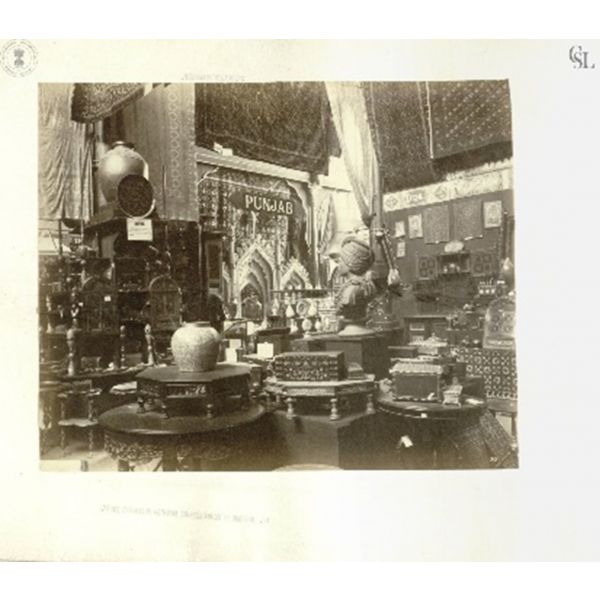 Events and ProgrammesAn Origin Story$1.00
Join Tapati Guha-Thakurta for a museum visit and presentation as we explore the beginnings of the colonial traditions of art and design in India through the twin histories of the Indian Museum and the Government College of Art and Craft.
Learn More -
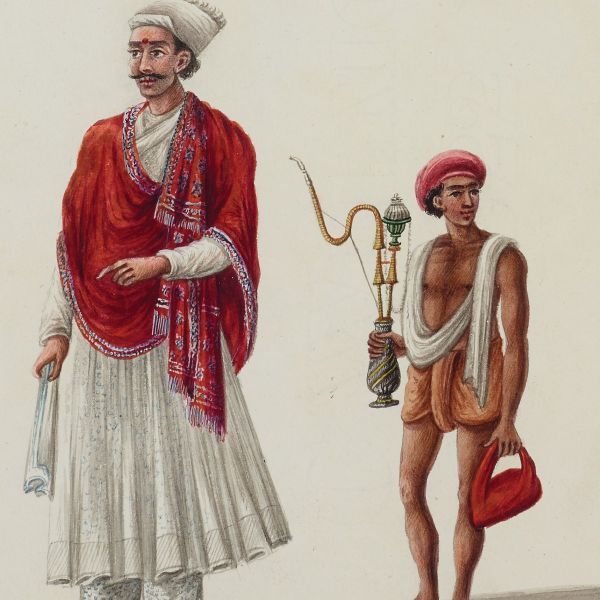 ExhibitionsThe Wonder of IndiaAs low as $1.00
An ancient civilisation, India was always prized for her fabled wealth—textiles, crafts, spices—her knowledge—literature, scholarship, universities—and her culture—music, dance, theatre, art. It is the only country with an unbroken tradition in each of these disciplines extending all the way back to the Indus Valley Civilisation. Ambadas Anonymous (Kalighat Pat) Arun Bose Asit Kumar Haldar Avinash Chandra B. Prabha Balraj Khanna Bikash Bhattacharjee Bimal Dasgupta Biren De Chittaprosad Company Painting D. P. Roy Chowdhury Early Views of India G. R. Santosh Ganesh Haloi Himmat Shah J. Sultan Ali Jamini Roy Jeram Patel K. S. Kulkarni Krishna Reddy L. Munuswamy M. F. Husain M. Suriyamoorthy Natvar Bhavsar Nikhil Biswas P. T. Reddy Paritosh Sen Prodosh Das Gupta Prokash Karmakar Prosanto Roy Rabin Mondal Rajendra Dhawan S. G. Vasudev Sakti Burman Sanat Kar Sankho Chaudhuri Satish Sinha Shanti Dave Shyamal Dutta Ray Sunayani Devi Sunil Das Sunil Madhav Sen V. Viswanadhan
Learn More -
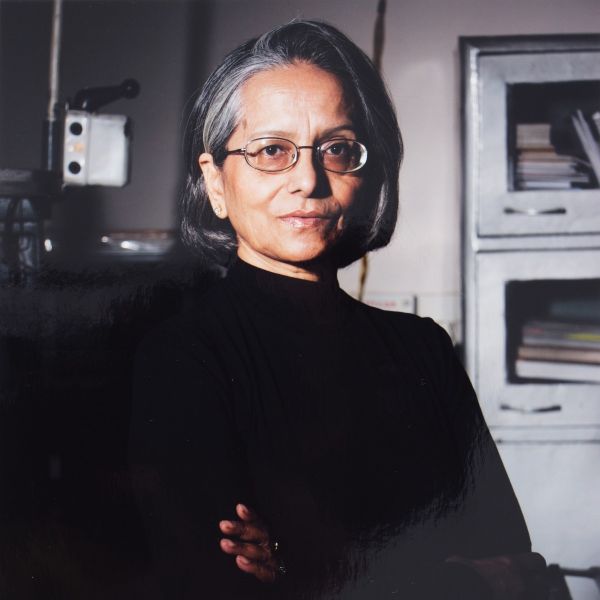 ExhibitionsAnupam SudAs low as $1.00
That Anupam Sud is one of the most prominent printmakers in the country is a given, even though it would be unfair to limit so versatile an artist to only being a printmaker. Indeed, her body of work includes paintings, drawings, sculpture, bookmaking—and as you will see through the pages of the book accompanying the exhibition, a record-keeper observing the passage of time with self-portraits that she has undertaken to make periodically. A role-model for generations of artists and printmakers through her work and for her influence as a teacher at the prestigious College of Art, New Delhi, Anupam Sud’s name evokes recognition around the world where she has admirers, collectors of her work, and students who have trained under her.
Learn More