


Search results for: 'Face to Face A Portrait of a City'
-
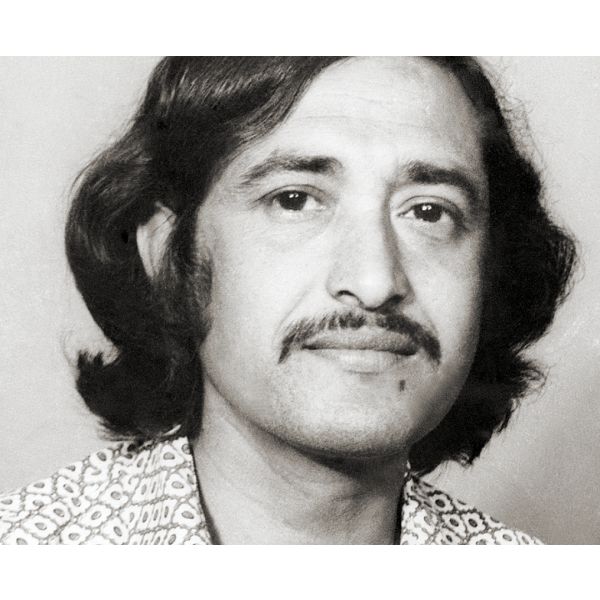 ArtistsB. N. Arya$0.00Born in a well-to-do business family in Peshawar in present-day Pakistan, B. N. Arya showed an inclination towards the arts since childhood. Learn More
 -
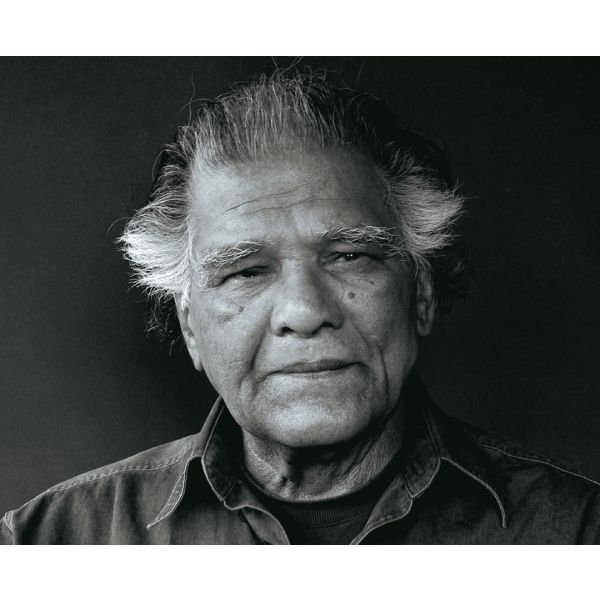 ArtistsAmbadas$0.00Ambadas was born in 1922 in Akola, a town in Maharashtra. After matriculation, he received training at a private art school in Ahmedabad, run by the artist Ravi Shankar Raval. Learn More
 -
 ExhibitionsThe Seventies ShowAs low as $1.00
The 1970s was a decade like no other for a young India gaining in confidence nationally as well as on the global firmament. In 1971, Prime Minister Indira Gandhi led the country to a decisive victory against Pakistan, leading to the creation of Bangladesh. The Green Revolution had borne fruit, and Operation Flood now launched a milk revolution in the country, and the culmination of the privy purse turned it into a socialist republic with a strong handle on its economic button. Internationally, much was made of India’s resilience, and the country’s soft power began to win it recognition for its films, fashion, food and culture. India had arrived. ALTAF AMBADAS AMITAVA AVINASH CHANDRA BIKASH BHATTACHARJEE BIREN DE BIRESWAR SEN ERIC BOWEN F. N. SOUZA G. R. SANTOSH GANESH HALOI GOGI SAROJ PAL INDRA DUGAR J. SULTAN ALI J. SWAMINATHAN K C S PANIKER K. K. HEBBAR K. LAXMA GOUD KRISHNA REDDY LAXMAN PAI M. F. HUSAIN MADHVI PAREKH NAVJOT ALTAF P. T. REDDY PARITOSH SEN PRABHAKAR BARWE PRODOSH DASGUPTA PROKASH KARMAKAR RABIN MONDAL RAJENDRA DHAWAN RAM KUMAR S G VASUDEV SATISH GUJRAL SHANTI DAVE SHYAMAL DUTTA RAY SOHAN QADRI TYEB MEHTA V. VISWANADHAN ZARINA HASHMI
Learn More -
 ExhibitionsPrimitivism and Modern Indian ArtAs low as $1.00
The idea of primitivism centres on the wish to identify with, or respond to, elements of a society that are deemed ‘primitive’. In artistic terms, it is about rejecting realism, simplifying technique and reducing the formal means of expression to a ‘primitive’ state. The term itself is borrowed from discussions of Western art, where high-profile examples include the images of Tahiti and its people made in the 1890s by Paul Gauguin, and responses to African sculpture by Pablo Picasso in 1906-09. The second thread of primitivism—the reduction of formal means—is best exemplified by the ‘cut-outs’ made by Henri Matisse in the 1940s.
Learn More -
-
 ExhibitionsPrabhakar Barwe: Between Object and SpaceAs low as $1.00
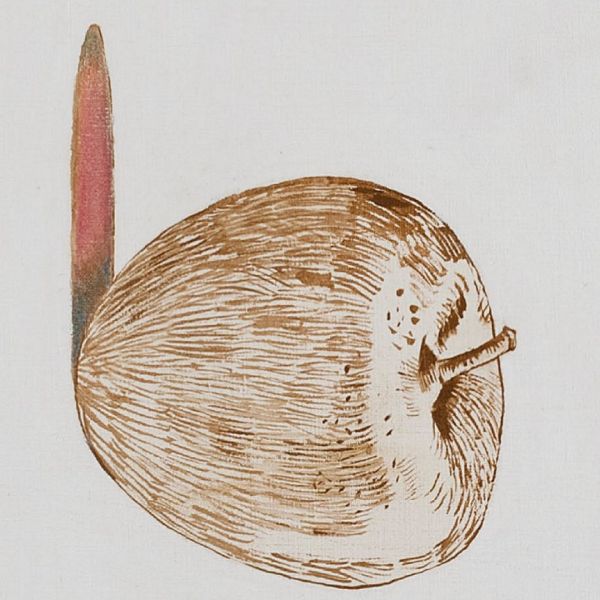
Prabhakar Barwe (1936-95) could well have ended up a theoretician whose book 'Kora Canvas' (Blank Canvas) was a manifesto that established the multi-dimensional relationship between an artist, the object on which he paints, and his subjects. That he was not just an intellectual scholar but an artist whose work speaks for him, is evident through a range of works in which Barwe dissects our understanding of the world and how we view it. Taking commonplace objects and our perception of their existence in the space they occupy, he shifts the dialogue to a point of discomfiture that makes us question our understanding of them. Using scale, discordant juxtapositions, and displacements, he reimagines the everyday in a manner that is thought-provoking, even provocative, as alternate realities—whether perceived or imagined.
Learn More -
 ExhibitionsAmitava: The Complete WorksAs low as $1.00
In a career spanning four decades, Amitava’s location as an artist has determined the authority that he brings to his practice. As an artist studying and working in the 1960s, Amitava Das experienced a decade of fragmented locii. The ’60s, the period of his education at the College of Art, was the decade of wars, fiscal difficulty and an uncertain polity in the wake of the death of Jawaharlal Nehru. Further, as a second generation pravasi (non-residing Indian) Bengali, the roiling political violence of West Bengal’s Naxal movement came to him through the filter of poetry, film and art—much as he would have received the existential writing of Camus, Genet and Rilke. Through the 1960s and ’70s, small groups of artists and filmmakers in different pockets in India had a heightened response: the state of the nation found an uncanny echo in the language of modernism, of the artist’s isolation and purity even within a state of uncertainty.
Learn More -
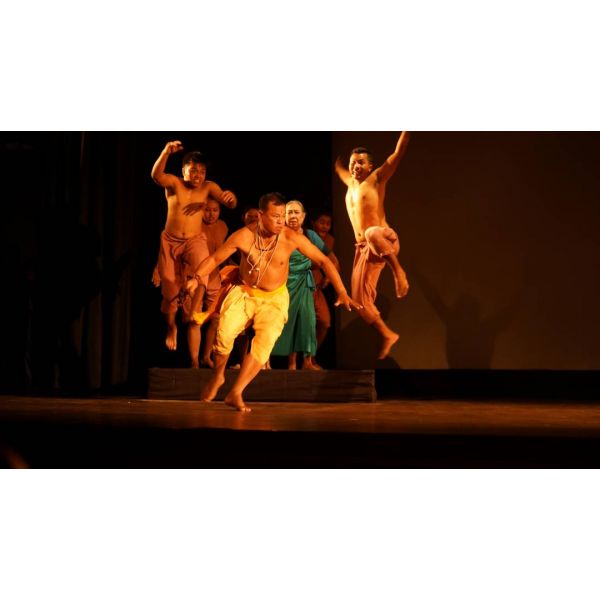 Events and ProgrammesPebet$1.00
Pebet is a ‘phunga wari’, a type of traditional fireside story told to Manipuri children by their grandparents. Directed by the renowned theatre practitioner Heisnam Kanhailal and performed first in 1975, it subverts the familiar icon of the bird and the cat to comment on political and cultural indoctrination.
Learn More -
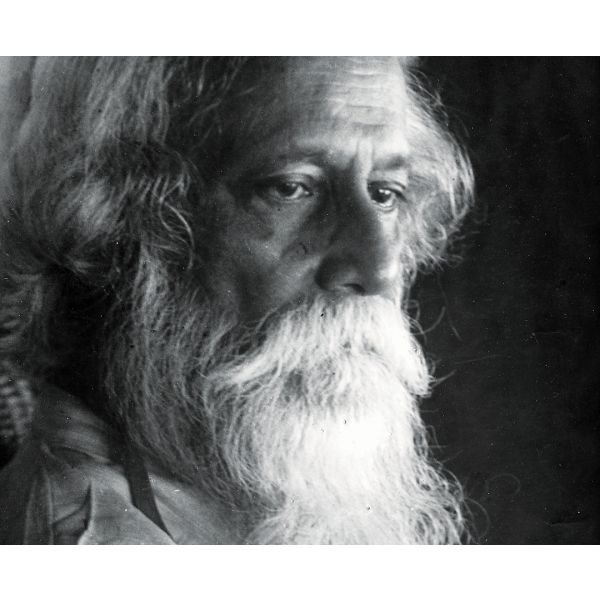 ArtistsRabindranath Tagore$0.00
Poet, novelist, musician, playwright, and Asia’s first Nobel Prize awardee—which he won for literature in 1913—Rabindranath Tagore was born on 7 May 1861, and took to painting and drawing only in his sixties.
Learn More -
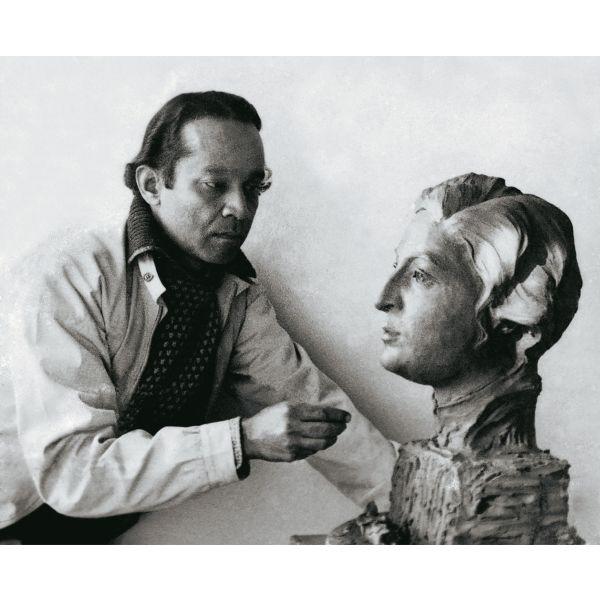 ArtistsSudhir Ranjan Khastgir$0.00Sudhir Ranjan Khastgir was born on 24 September 1907 in Chittagong in present-day Bangladesh, and studied at Kala Bhavana, Santiniketan, under Nandalal Bose. Like his classmate, Ramkinkar Baij, he took up sculpture as a subject, continuing its pursuit in Lucknow under Hiranmoy Roychaudhuri in 1932, and under Ganpath Kashinath Mahatre, in Bombay, in 1933. The same year, he joined Scindia School, Gwalior, as a teacher and, later, Doon School in Dehradun. Learn More
 -
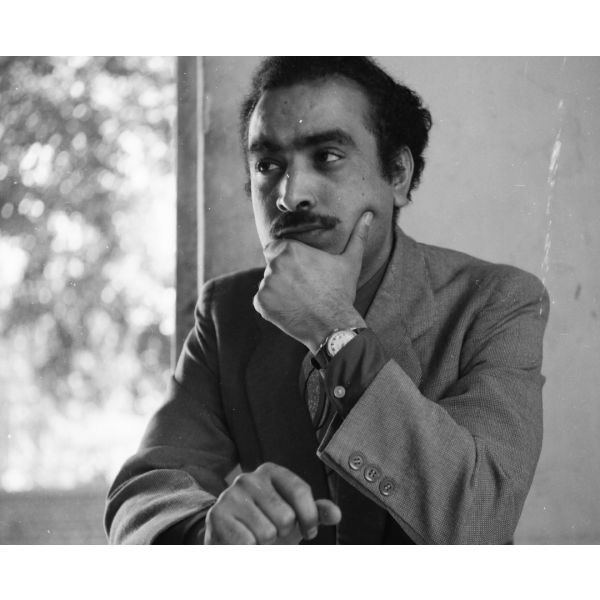 ArtistsG. R. Santosh$0.00Born Gulam Rasool Dar in a Shia Muslim family in Srinagar in Kashmir on 20 June 1929, the artist took on his wife’s Hindu name ‘Santosh’ as his own, in a move opposing patriarchy and religion. His father’s death forced a young Gulam to work as a signboard painter, papier-mâché artist, and weaver. He learnt to paint watercolour landscapes from Dina Nath Raina in Kashmir before studying under N. S. Bendre at M. S. University, Baroda, on the recommendation of S. H. Raza. In Baroda, he produced a large body of figurative and landscape works, mainly in the cubist style. Learn More
 -
 ExhibitionsMadras ModernAs low as $1.00
The Madras Art Movement that emerged in the early 1960s was a late phenomenon of modernity in south India within the national context. It developed as a regional phenomenon that began to take shape from the mid-1950s onwards as a search for authenticity in modernism derived largely from the region’s cultural heritage. D. P. ROY CHOWDHURY A P SANTHANARAJ ACHUTHAN KUDALLUR AKKITHAM NARAYANAN ALPHONSO DOSS C DOUGLAS C J ANTHONY DOSS J. SULTAN ALI K C S PANIKER K M ADIMOOLAM K RAMANUJAM K SREENIVASULU K V HARIDASAN L MUNUSWAMY M SENATHIPATI M SURYAMOORTHY P GOPINATH P PERUMAL P S NANDHAN PANEER SELVAM R B BHASKARAN REDDEPPA NAIDU Rm. PALANIAPPAN S G VASUDEV S. DHANAPAL S. NANDAGOPAL V. VISWANADHAN VIDYASHANKAR STHAPATI
Learn More