


Search results for: 'free art for church for transfiguration of jesus'
-
 ExhibitionsThe Babu and the BazaarAs low as $1.00
Calcutta, flourishing with commerce and maritime trade during the nineteenth century, was regarded as the ‘second city’ of the British Empire. People thronged there in large numbers to make a livelihood, or in holy pilgrimage, seeking blessings at the Kali temple at Kalighat that had been re-built in 1809. Annada Prasad Bagchi Bamapada Banerjee B. C. Law C. W. Lawrie Kshetradas Chitrakar Panchanan Karmakar Madhav Chandra Das Ramadhan Swarnakar Ganganarayan Ghosh Nritya Lal Datta Press Kristohurry Das Chorebagan Art Studio Kansaripara Art Studio Calcutta Jubilee Art Studio Bat-tala
Learn More -
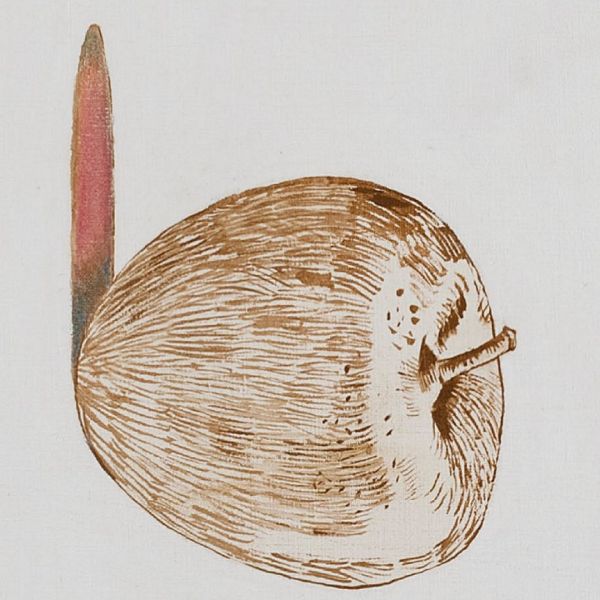 ExhibitionsPrabhakar Barwe: Between Object and SpaceAs low as $1.00
Prabhakar Barwe (1936-95) could well have ended up a theoretician whose book 'Kora Canvas' (Blank Canvas) was a manifesto that established the multi-dimensional relationship between an artist, the object on which he paints, and his subjects. That he was not just an intellectual scholar but an artist whose work speaks for him, is evident through a range of works in which Barwe dissects our understanding of the world and how we view it. Taking commonplace objects and our perception of their existence in the space they occupy, he shifts the dialogue to a point of discomfiture that makes us question our understanding of them. Using scale, discordant juxtapositions, and displacements, he reimagines the everyday in a manner that is thought-provoking, even provocative, as alternate realities—whether perceived or imagined.
Learn More -
-
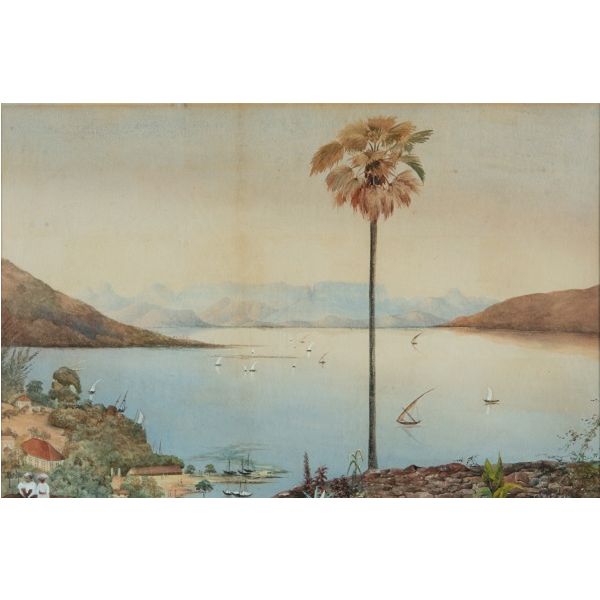 JournalBombay through the eyes of European Artists$0.00
The city was consolidated over the course of the eighteenth century, and its access to global trade routes helped it grow over the following centuries as well, leading some to describe it as the 'door of the East with its Face to the West'. How did European artists view this growing city?
Learn More -
-
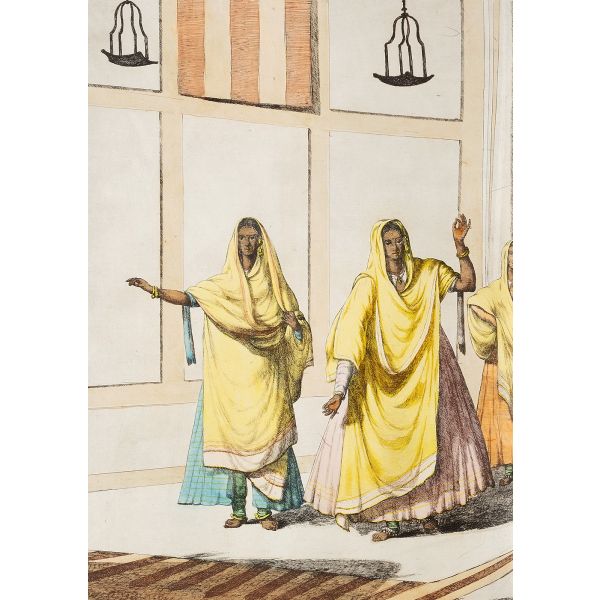
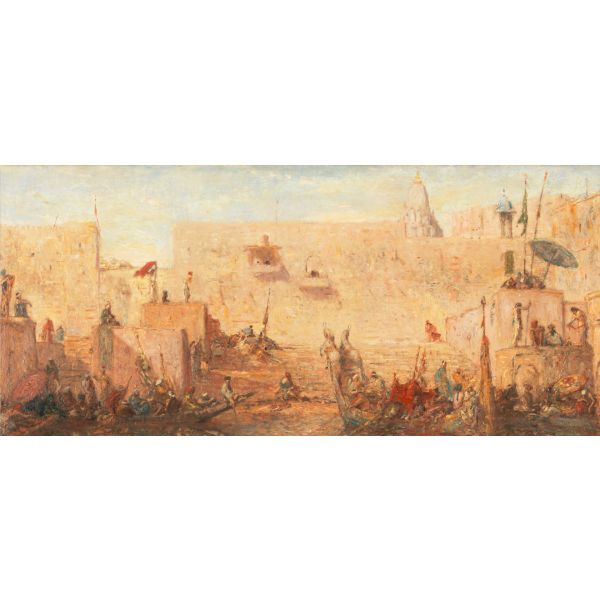 Events and ProgrammesMumbai Gallery Weekend$1.00
The exhibition presents views of the ancient city of Benares (now Varanasi) as depicted by foreign artists in the nineteenth and early twentieth centuries.
Learn More -
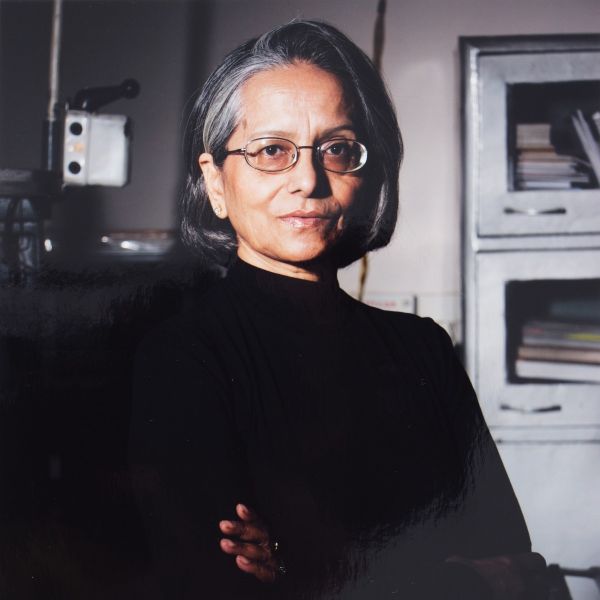 ExhibitionsAnupam SudAs low as $1.00
That Anupam Sud is one of the most prominent printmakers in the country is a given, even though it would be unfair to limit so versatile an artist to only being a printmaker. Indeed, her body of work includes paintings, drawings, sculpture, bookmaking—and as you will see through the pages of the book accompanying the exhibition, a record-keeper observing the passage of time with self-portraits that she has undertaken to make periodically. A role-model for generations of artists and printmakers through her work and for her influence as a teacher at the prestigious College of Art, New Delhi, Anupam Sud’s name evokes recognition around the world where she has admirers, collectors of her work, and students who have trained under her.
Learn More -

-
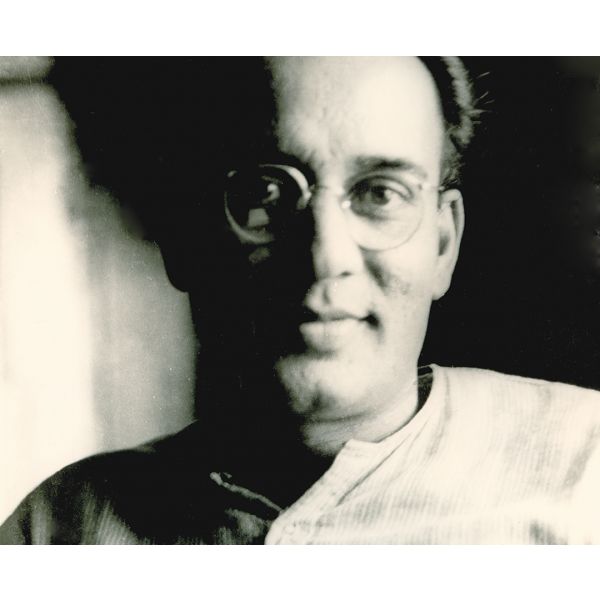 ArtistsIndra Dugar$0.00Indra Dugar, unlike his illustrious father Hirachand Dugar (1898-1951), did not have any formal education in art. Born in 1918 in Jiaganj in Murshidabad, West Bengal, he sub-consciously absorbed the artistic ambience of Santiniketan where he grew up; his father was one of the earliest students at Kala Bhavana at the Visva-Bharati University. Dugar acquired art skills from his father and considered Santiniketan his alma mater. He was inspired by his father’s mentor Nandalal Bose, who saw great promise in him. Learn More
 -
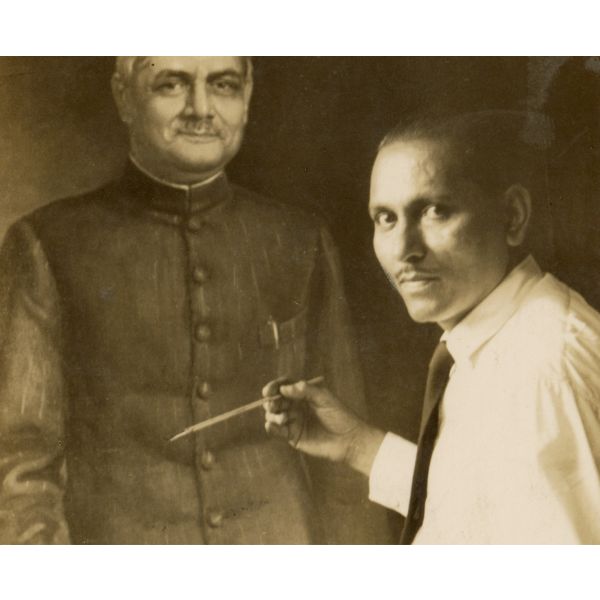 ArtistsV. A. Mali$0.00Born into a family of painters in Kolhapur, Vasant Anant Mali studied art professionally at Sir J. J. School of Art, Bombay, in the 1920s. It was here that he grasped the nuances of painting through academic realism. Working mostly in the medium of watercolour and oil, Mali keenly observed how some of his teachers, including Walter Langhammer, worked with various tools and applied bold brushstrokes with knife. Mali’s work had a forcefulness, a depth that was unique and could be seen, particularly, in portraits done by him. Learn More
 -
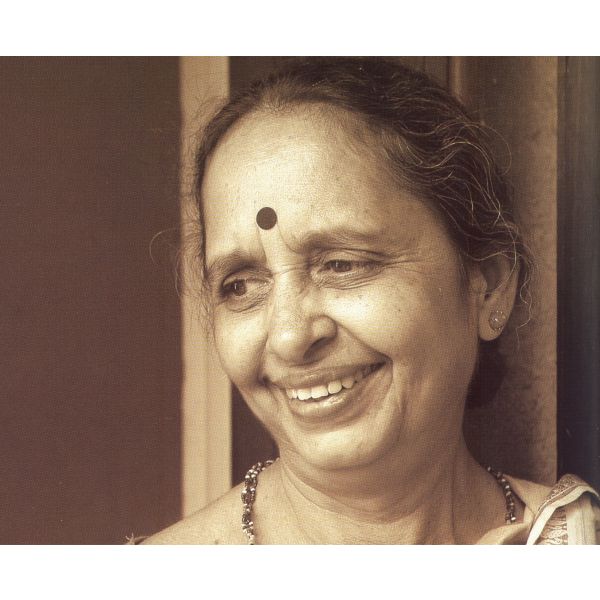 ArtistsShobha Broota$0.00Shobha Broota’s pictorial interpretation of the resonance of classical Indian ragas forms the essence of her celebrated style in which she conveys their subtle variations through minimal use of colours. Born in 1943 in New Delhi in an artistic family that inspired her to study art, Broota obtained a diploma in painting from College of Art, New Delhi, in 1964. Learn More
 -
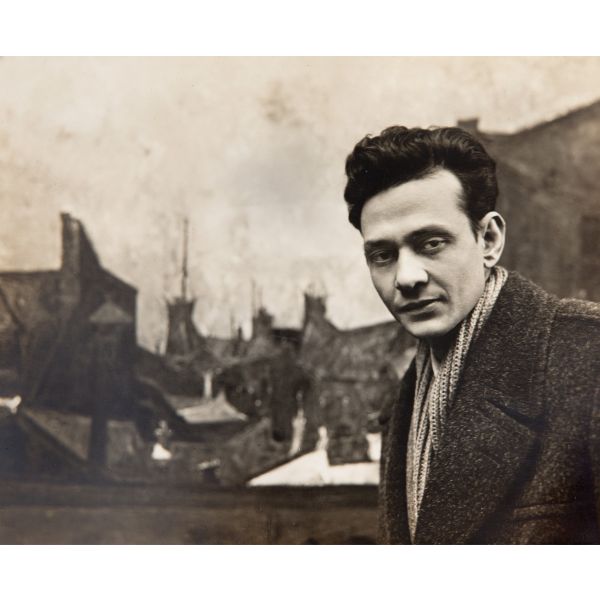 ArtistsS. H. Raza$0.00
One of India’s most seminal modernists, Syed Haider Raza was born on 22 February 1922 in Mandla, Madhya Pradesh, and forged a new language of art by integrating Indian symbolism with Western expression. A student of Sir J. J. School of Art, Bombay (1943-47), and one of the first members of the Progressive Artists’ Group, the turning point of his career was his journey to Paris in 1950 on a French government scholarship to study at École Nationale des Beaux-Arts. In 1956, he became the first non-French artist to win the critic’s award, the Prix de la critique.
Learn More