Search results for: 'que dia e o dia do homem barrigudo'
-
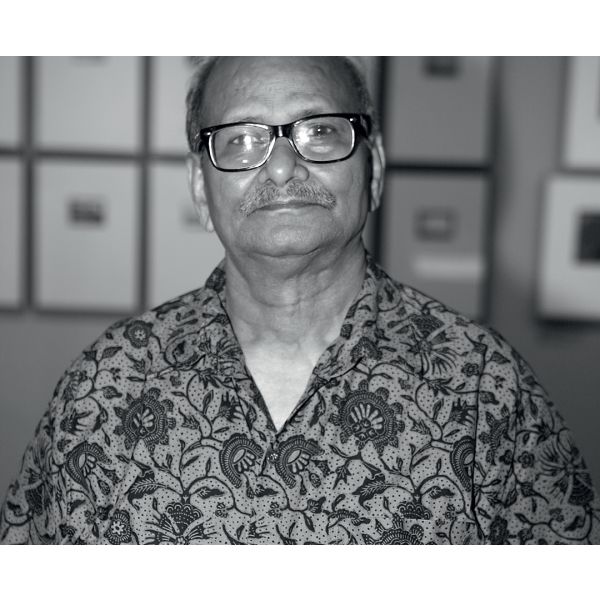 ArtistsJai Zharotia$0.00Known for exploring the mysteries of life beyond the realm of logic through his art, Jai Zharotia was born in Delhi in 1945. He studied fine arts at the Delhi College of Art from 1967-71 and went on to teach at his alma mater for over three decades. Accessible and non-dogmatic as a teacher, he was popular among students. Learn More
 -
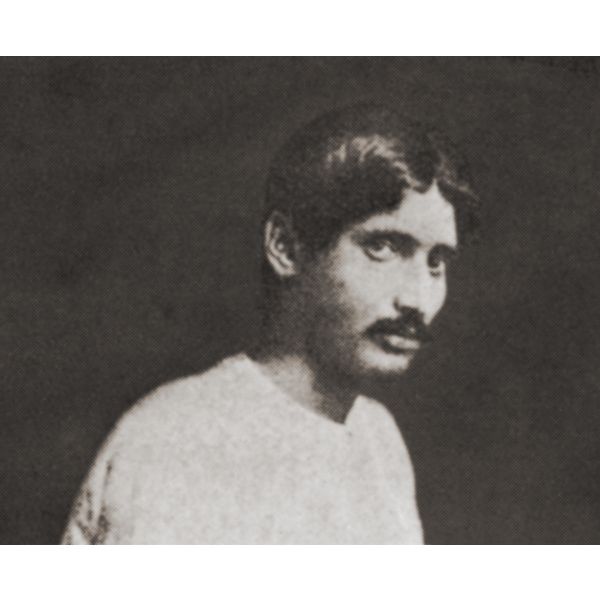 ArtistsHemen Mazumdar$0.00A notable artist of the rebel Jubilee Art School that trained students in the British academic style, breaking away from Abanindranath Tagore’s Orientalist emphasis, Hemendranath Mazumdar enjoyed great artistic success for his academic paintings of sensuous women and portraits of maharajas done in European realist style. Learn More
 -
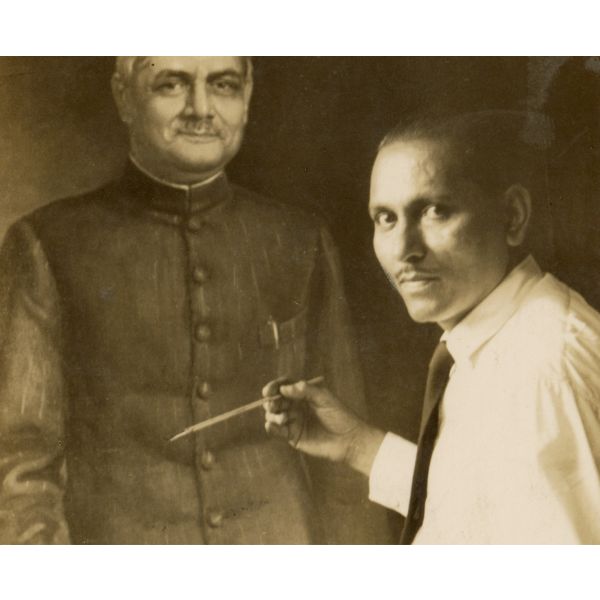 ArtistsV. A. Mali$0.00Born into a family of painters in Kolhapur, Vasant Anant Mali studied art professionally at Sir J. J. School of Art, Bombay, in the 1920s. It was here that he grasped the nuances of painting through academic realism. Working mostly in the medium of watercolour and oil, Mali keenly observed how some of his teachers, including Walter Langhammer, worked with various tools and applied bold brushstrokes with knife. Mali’s work had a forcefulness, a depth that was unique and could be seen, particularly, in portraits done by him. Learn More
 -
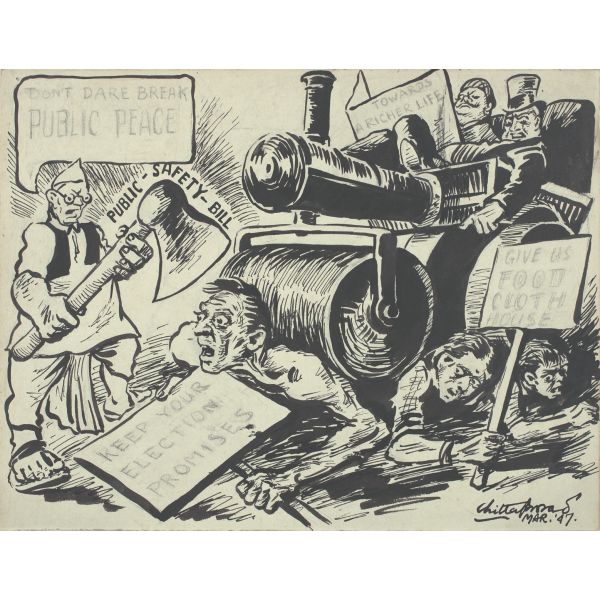 Events and ProgrammesByanga Darshan: Exhibition, Workshop and Concert$1.00
An exhibition and workshop drawing from Cartoon Dol’s archives of Bengal’s caricature art, on confronting social-political issues through humour and satire, with a closing performance by Chandrabindoo.
Learn More -
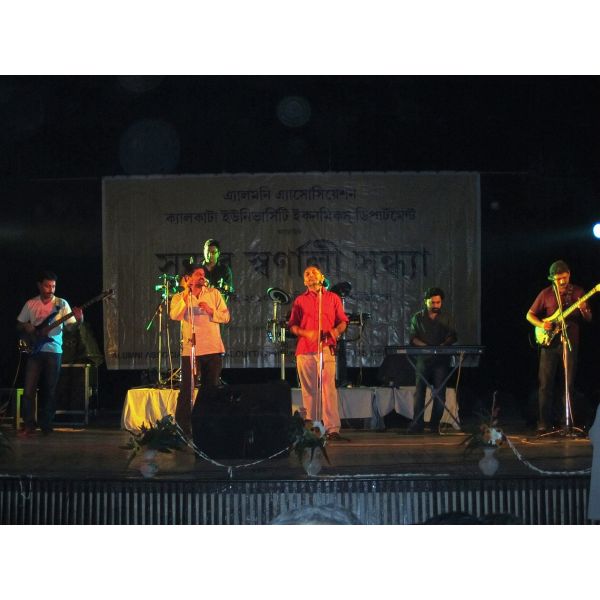 Events and ProgrammesByanga Darshan: Concert$1.00
An exhibition and workshop drawing from Cartoon Dol’s archives of Bengal’s caricature art, on confronting social-political issues through humour and satire, with a closing performance by Chandrabindoo.
Learn More -
 ArtistsM. S. Joshi$0.00Born in Nashik, Maharashtra, M. S. Joshi studied at Sir J. J. School of Art, Bombay, in the 1930s. Joshi combined his training in academic realism with a sense of vitality, precision and aesthetics to reveal India’s rich cityscapes and landscapes in his watercolour and gouache works. There was immense depth in the rendering of his subjects, which included people, places, architectural elements, all done in a subdued yet textured palette. Learn More
 -
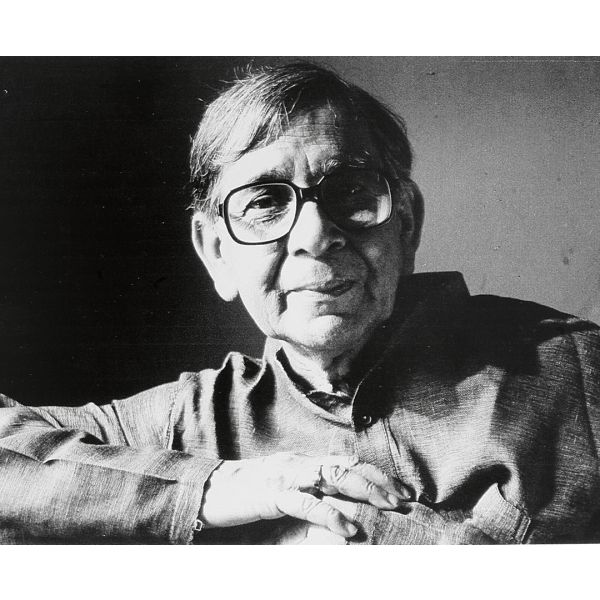 ArtistsGanesh Haloi$0.00Born in Jamalpur in present day Bangladesh on 9 February 1936, Ganesh Haloi migrated with his family to Calcutta upon Partition. From 1952-56, he studied at the city’s Government College of Arts and Crafts, where he acquired his personal style of sophisticated elegance and finish. Upon graduation, he joined the Archaeological Survey of India and was assigned the documentation of the cave paintings of Ajanta from 1957-63. Learn More
 -
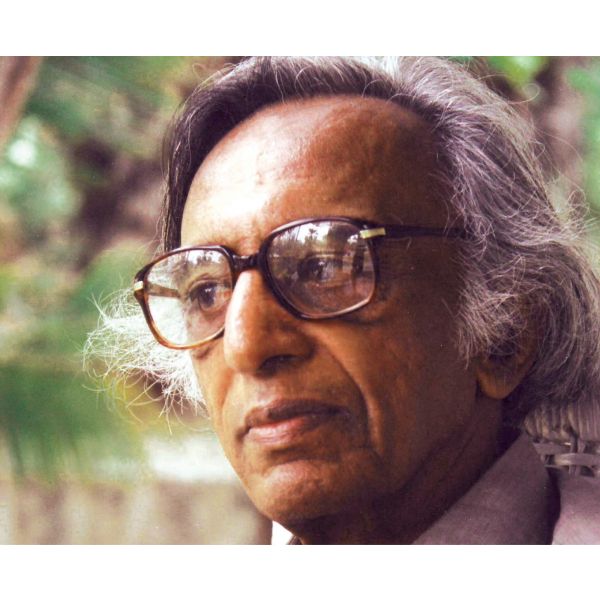 ArtistsTyeb Mehta$0.00It is ironical that works by Tyeb Mehta, who did not attach much merit to the financial value of art, were the first by a living Indian artist to sell for more than Rs 1 crore, and, soon, for more than a million dollars, indicating a beginning of interest in Indian art in the international market. His works Celebration, Kali and Mahishasura marked the beginning of the boom in the Indian art market at the start of this century. Learn More
 -
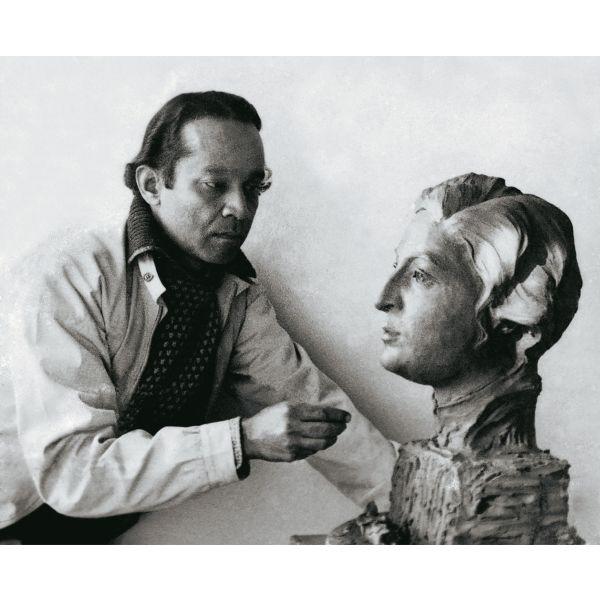 ArtistsSudhir Ranjan Khastgir$0.00Sudhir Ranjan Khastgir was born on 24 September 1907 in Chittagong in present-day Bangladesh, and studied at Kala Bhavana, Santiniketan, under Nandalal Bose. Like his classmate, Ramkinkar Baij, he took up sculpture as a subject, continuing its pursuit in Lucknow under Hiranmoy Roychaudhuri in 1932, and under Ganpath Kashinath Mahatre, in Bombay, in 1933. The same year, he joined Scindia School, Gwalior, as a teacher and, later, Doon School in Dehradun. Learn More
 -
 ExhibitionsSoliloquies of SolitudeAs low as $1.00
The mid-twentieth century saw a churn in the practice of art in India with a number of artists beginning to explore a genre that had swept the West with its absence of figuration in favour of abstraction. The non-representational began to gain traction as artists found within it a way to express themselves purely through colour as a potent tool to communicate emotions. Abstraction emphasised the relationship between originality and expression in ways that were complex, leading one to debate about the eventual goal of art. Ambadas, Krishna Reddy, Sohan Qadri, Zarina Hashmi, Rajendra Dhawan
Learn More -
 ExhibitionsG. R. Santosh: AwakeningAs low as $1.00
An unassuming trailblazer, Gulam Rasool Santosh is the most important artist from the movement known as neo-tantra in Indian art, synonymous with masters such as Biren De and Sohan Qadri. Self-taught, Santosh began his career painting landscapes in his native Kashmir before being spotted by S. H. Raza, which enabled him to study at the Maharaja Sayajirao University at Baroda under the famous artist N. S. Bendre. After a few years of painting figurative and abstract works in the mould of the other Indian Progressives, Santosh’s art changed dramatically towards tantra when he had a mystical experience in the Amarnath cave in 1964. From then on, until his death in 1997, G. R. Santosh dedicated his life to the study and practice of tantra, a yogi as much as an artist.
Learn More -