


Search results for: 'sean-the-pawn d.va'
-
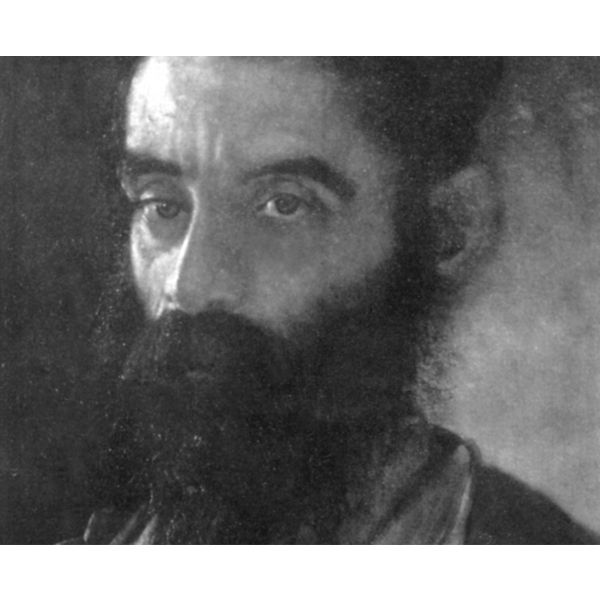 ArtistsPestonji E. Bomanji$0.00Born in Bombay, Pestonji E. Bomanji joined Sir J. J. School of Art at the age of thirteen. While there, the principal, John Griffiths, identified his talent and appointed him a draughtsman on an expedition to the Ajanta caves in 1872, which he came to head in 1880. Though Bomanji initially wanted to be a sculptor, his interest in portraiture was triggered after 1877, when Griffiths recommended him as an apprentice to Valentine Prinsep, a visiting artist; he went on to train under John Lockwood Kipling. Learn More
 -
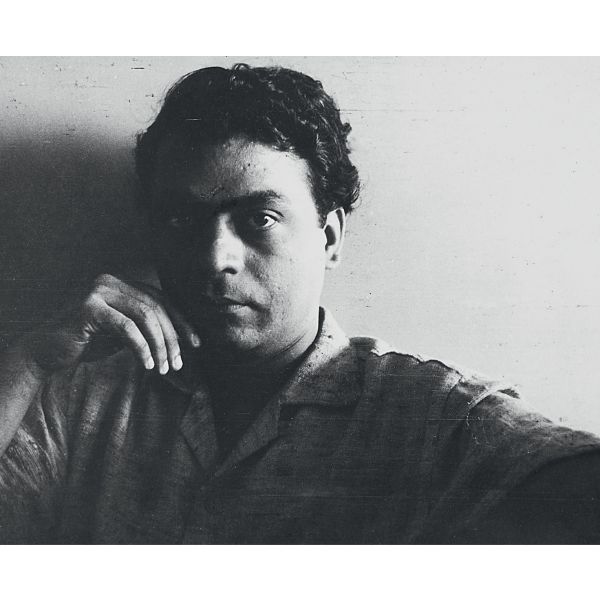 ArtistsV. S. Gaitonde$0.00One of India’s most revered ‘non-objective’ painters—he preferred that term over ‘abstraction’—Vasudeo Santu Gaitonde was born in Nagpur in 1924. He received his diploma in painting from Sir J. J. School of Art, Bombay, in 1948. Impressed by his work, the members of the Progressive Artists’ Group—formed in 1947—pulled him into their meetings. The strength of his talent was soon recognised elsewhere—he won the first prize of the Young Asian Artists Association in Tokyo in 1957, and a John D. Rockefeller III Fund fellowship in 1964. Learn More
 -
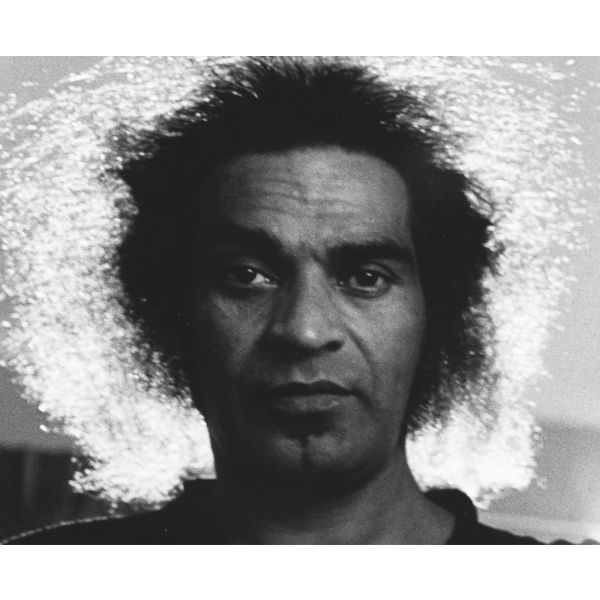 ArtistsSohan Qadri$0.00Sohan Qadri was born in a wealthy farming family in Punjab’s Chachoki village on 2 November 1932. When he was seven, he came across two spiritualists living on the family farm—Bikham Giri, a Bengali Tantric-Vajrayan Yogi, and Ahmed Ali Shah Qadri, a Sufi. Both gurus had a tremendous impact on young Qadri and taught him spiritual ideals through meditation, dance, and music. His association with them heralded a lifelong commitment to spirituality and art. Learn More
 -
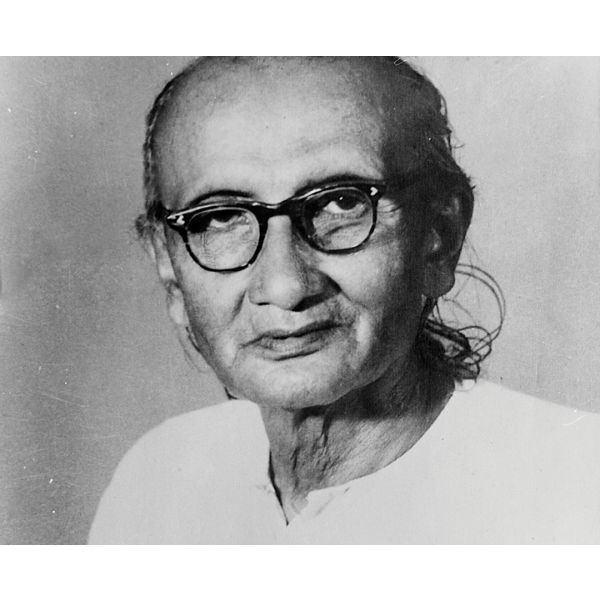 ArtistsKshitindranath Majumdar$0.00Kshitindranath Majumdar, born on July 31, 1891, in Jagtai village of Murshidabad in West Bengal, is often referred to as a saint-artist who considered art as a form of devotion. Strongly influenced by Vaishnavism as propounded by the fifteenth century saint, Chaitanya Mahaprabhu, Majumdar trained in hymn singing, interpreted legends from Indian epics, and acted in productions of the theatre group owned by his father. Learn More
 -
 ExhibitionsG. R. Santosh: AwakeningAs low as $1.00
An unassuming trailblazer, Gulam Rasool Santosh is the most important artist from the movement known as neo-tantra in Indian art, synonymous with masters such as Biren De and Sohan Qadri. Self-taught, Santosh began his career painting landscapes in his native Kashmir before being spotted by S. H. Raza, which enabled him to study at the Maharaja Sayajirao University at Baroda under the famous artist N. S. Bendre. After a few years of painting figurative and abstract works in the mould of the other Indian Progressives, Santosh’s art changed dramatically towards tantra when he had a mystical experience in the Amarnath cave in 1964. From then on, until his death in 1997, G. R. Santosh dedicated his life to the study and practice of tantra, a yogi as much as an artist.
Learn More -
 ExhibitionsThe Art Of SantiniketanAs low as $1.00
The Art of Santiniketan showcases the work of its four chief artists—Santiniketan’s founder, Rabindranath Tagore, its first principal and the architect of the Santiniketan pedagogy, Nandalal Bose, and his two illustrious students who went on to make a name for themselves as highly original and significant artists—Benode Behari Mukherjee and Ramkinkar Baij. Santiniketan was a path-breaking educational institution Rabindranath Tagore set up in rural Bengal in the early twentieth century, and the exhibition begins by examining its genesis in Tagore’s radical ideas of basing education in freedom and in the midst of nature. Benode Behari Mukherjee Nandalal Bose Rabindranath Tagore Ramkinkar Baij
Learn More -
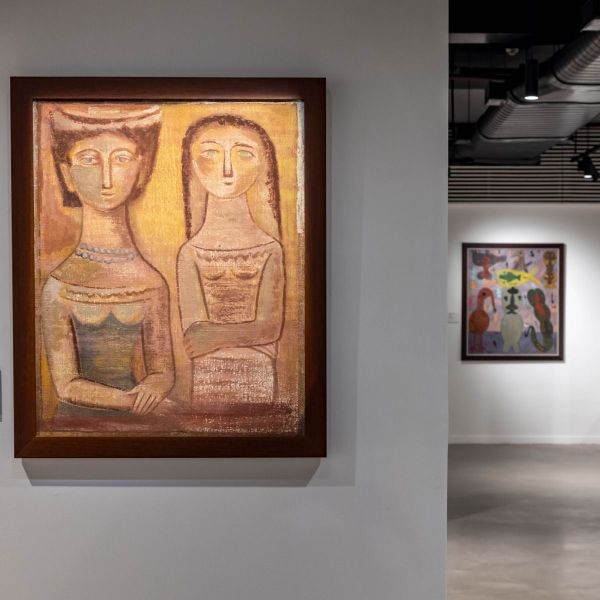 ExhibitionsPrimitivism & Modern Indian ArtAs low as $1.00
This exhibition looks at the diverse range, moods and styles that primitivism has taken in India, some artists practicing entirely in that style, while others experimenting with it in part, or sporadically. One can count simplicity and a move away from sophistication as key components, as also an inclination or at least a nod towards the folk. The exhibition does not attempt to be a comprehensive survey of India’s primitivists—there are others who would bear inclusion—but is an attempt to understand a body of work and how, given its Western countenance, it can be understood in the Indian context. More than anything else, it offers a clearer view than in the past of what primitivism might mean in the context of modern Indian art. Amrita Sher-Gil F. N. Souza George Keyt Himmat Shah J. Sultan Ali Jamini Roy Jogen Chowdhury K. G. Subramanyan K. S. Kulkarni M. F. Husain Madhvi Parekh Mohan Samant Rabin Mondal Rabindranath Tagore Ramkinkar Baij Sunayani Devi
Learn More -
 JournalGroup 1890$0.00Group 1890 remains unique in the journey of modern Indian art for various reasons, the most important being J. Swaminathan as the force behind the short-lived collective that held only one exhibition in its lifetime, in 1963. In 2016, DAG organized a ‘second’ exhibition of the group, featuring works by all its founder members. Learn More
 -
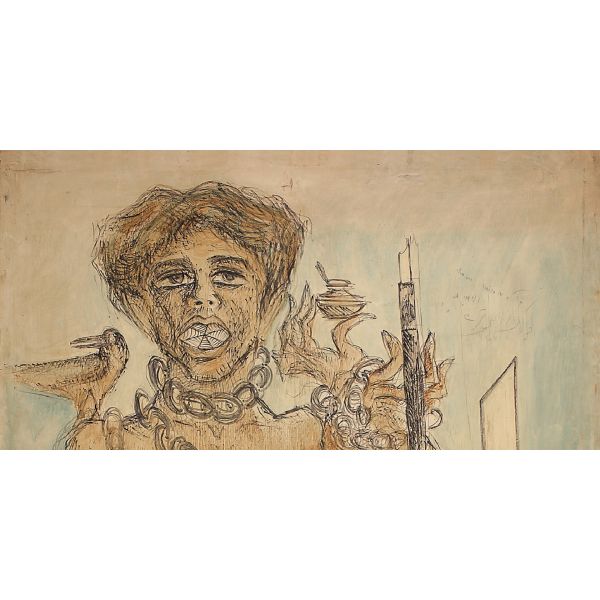 JournalDebating secularism in South Asian Art with Tapati Guha-Thakurta$0.00
This collection of essays, co-edited by eminent scholars of art history, Tapati Guha-Thakurta and Vazira Zamindar, navigate the fraught religio-political contexts of South Asia to bring into relief the fragility and amorphous nature of a contested term like the ‘secular’.
Learn More -
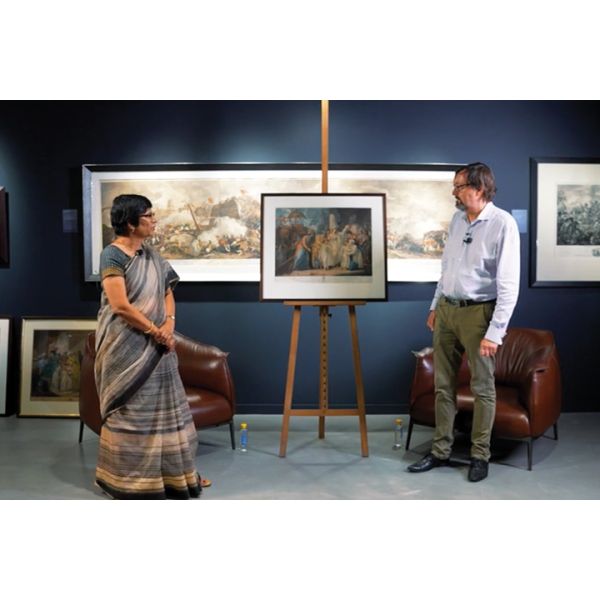 JournalTipu Sultan: Image & Distance$0.00A talk by academician and author Prof. Dr. Vandana Bhandari on Costumes and Textiles from the 18th Century Mysore. Learn More
 -
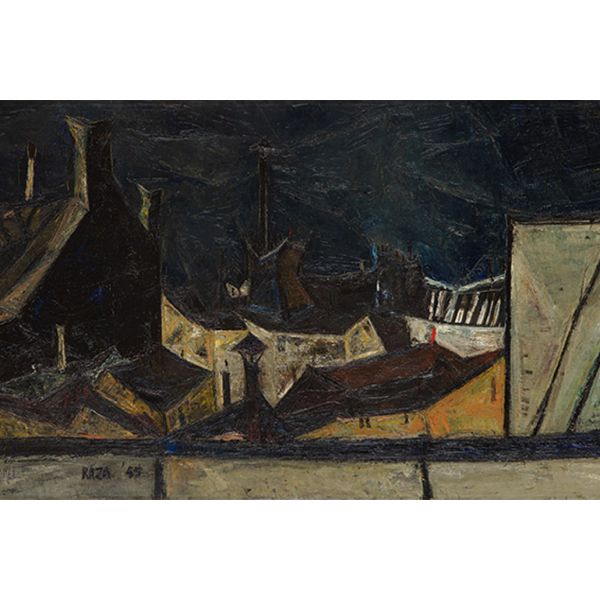 JournalToits (Rooftops) by S. H. Raza$1.00
S. H. Raza had begun to paint using oils, moving away from his impressionistic watercolours, on his way to winning the prestigious critics’ award in 1956. Just a year before, he completed a stunning painting of Parisian rooftops, revealing not a daylight scene but one of the night, only yellow lamplight from the streets dimly silhouetting the chimneys and sloping roofs. This period of Raza’s career is somewhat lesser known than his later, tantra-inspired works, as Ashok Vajpeyi and Aman Nath explain to us.
Learn More -
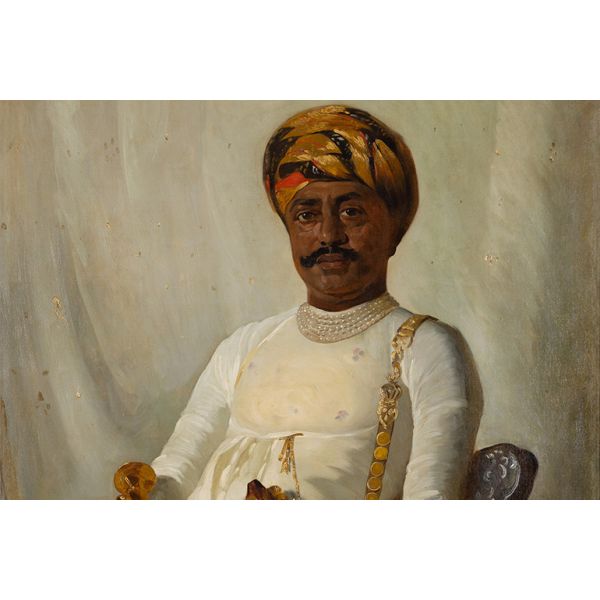 JournalThakor Becharsinhji of Chuda by Frank Brooks$1.00
Did you know that the portrait painter Frank Brooks whose two trips to India won him commissions from the rulers of principalities in the Bombay Presidency, trained Raja Ravi Varma’s brother in the art of figure painting? For his second India voyage (1892-93), he was invited specially to paint the heads of the twenty-eight rulers of the Kathiawar Agency. The subject of this stunning portrait is Thakur Becharsinhji of Chuda, a state so small it did not even merit a gun salute for its ruler. Explore in detail with Kishore Singh, SVP, DAG.
Learn More