


Search results for: 'taj mahal before and after'
-
 JournalSketching a Temple: Nandalal Bose’s Konark album$0.00
One of India’s nine national treasure artists, Nandalal Bose (1882—1966) forged a long and glittering career as the foremost artist-pedagogue bridging the late-colonial period and the first few decades after Indian independence. He maintained an active drawing practice throughout his life, with many small sketches done on postcards that he carried around with him as a sort of visual notebook.
Learn More -
 ExhibitionsWilliam Hodges & the Prospect of IndiaAs low as $1.00
William Hodges (1744-97) was a pioneer in more ways than one. He was the first British landscape painter to visit India, and to portray scenery across the whole breadth of the Gangetic plain. As a writer, he gave the first detailed descriptions of numerous historic Indian buildings, and he theorised about the origins and evolution of Indian architectural design. His art illustrates his exploration into terrain which—in its breadth and scope—was at the time almost as unfamiliar to Indian as to Western eyes.
Learn More -
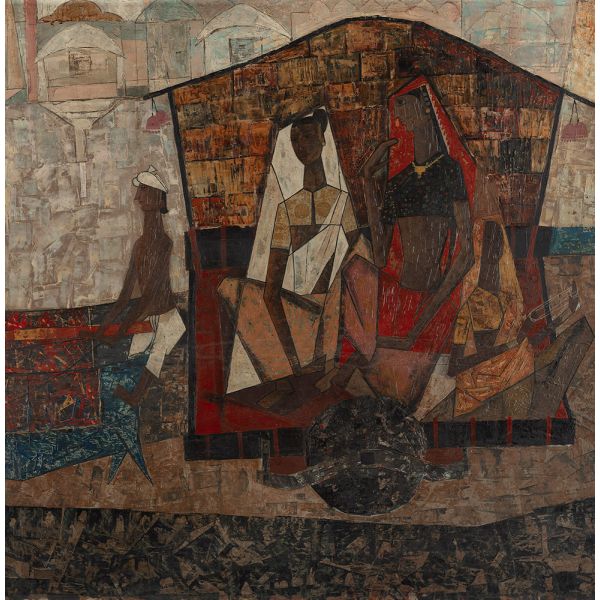 Art FairsArt SG$1.00
As with its history, trade, and culture, so with its art, India has always stood at the crossroads of assimilation, adaptation, change, and experimentation. Ancient and medieval art practices have informed her artists in the 20th century—a point when European and Asian movements found acceptance before being turned into a vibrant lexicon that has remained central to the pursuit of art in the subcontinent. Singapore
AVINASH CHANDRA BIRESWAR SEN F. N. SOUZA G. R. SANTOSH GOGI SAROJ PAL GOPAL GHOSE J. SULTAN ALI LAXMAN PAI M. F. HUSAIN MADHVI PAREKH NATVAR BHAVSAR S. H. RAZA SHANTI DAVE SHOBHA BROOTA SOHAN QADRI Learn More -
 ExhibitionsContinuumAs low as $1.00
Most shows at DAG take time to develop because of the quality of research and scholarship they require to mount, but even by our own exacting standards, Continuum has taken longer than most. This, a retrospective in a sense of the six artists who formed the Progressive Artists’ Group, is seminal because it is for the first time since 1950 that the six artists forming the core group have been brought together in an exhibition of their works. The Progressives have become the rallying point for the modern movement in Indian art, and are considered among the most important artists of the last and current century. Of these, M. F. Husain, F. N. Souza and S. H. Raza dominate the market. Alongside, works by their contemporaries K. H. Ara, H. A. Gade and S. K. Bakre, who have largely been seen to have underperformed in comparison, will help re-draw such distinctions and place them on the same platform as their better-known peers. It will re-define their historical importance and gain them the recognition that is their due. Maqbool Fida Husain M.F.Husain Hari Ambadas Gade Syed Haider Raza Krishnaji Howlaji Ara Sadanandji k. Bakre Francis Newton Souza
Learn More -
 ExhibitionsThe Art Of SantiniketanAs low as $1.00
The Art of Santiniketan showcases the work of its four chief artists—Santiniketan’s founder, Rabindranath Tagore, its first principal and the architect of the Santiniketan pedagogy, Nandalal Bose, and his two illustrious students who went on to make a name for themselves as highly original and significant artists—Benode Behari Mukherjee and Ramkinkar Baij. Santiniketan was a path-breaking educational institution Rabindranath Tagore set up in rural Bengal in the early twentieth century, and the exhibition begins by examining its genesis in Tagore’s radical ideas of basing education in freedom and in the midst of nature. Benode Behari Mukherjee Nandalal Bose Rabindranath Tagore Ramkinkar Baij
Learn More -
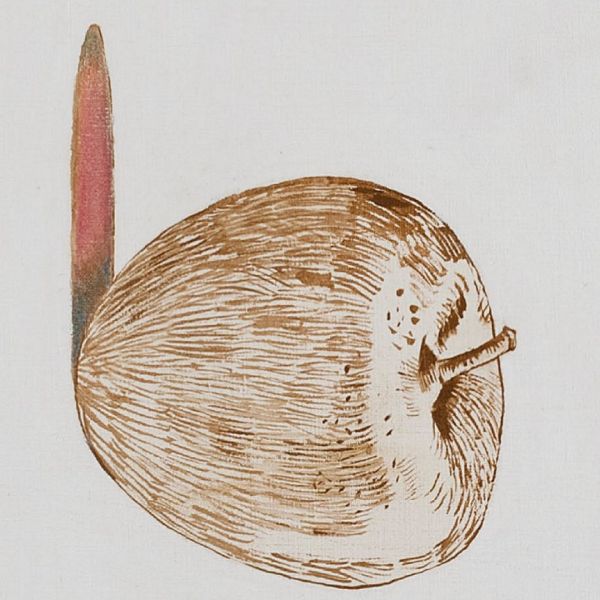 ExhibitionsPrabhakar Barwe: Between Object and SpaceAs low as $1.00
Prabhakar Barwe (1936-95) could well have ended up a theoretician whose book 'Kora Canvas' (Blank Canvas) was a manifesto that established the multi-dimensional relationship between an artist, the object on which he paints, and his subjects. That he was not just an intellectual scholar but an artist whose work speaks for him, is evident through a range of works in which Barwe dissects our understanding of the world and how we view it. Taking commonplace objects and our perception of their existence in the space they occupy, he shifts the dialogue to a point of discomfiture that makes us question our understanding of them. Using scale, discordant juxtapositions, and displacements, he reimagines the everyday in a manner that is thought-provoking, even provocative, as alternate realities—whether perceived or imagined.
Learn More -
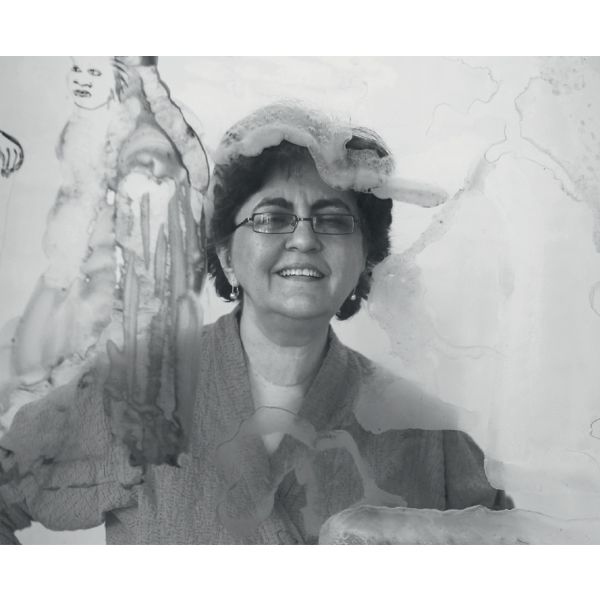 ArtistsNalini Malani$0.00Born in Karachi, a year before it became part of Pakistan, Nalini Malani’s art, unsurprisingly, is built on observing the struggles and strife of people, socio-political changes, and how she observes this. More recently, the lockdown in India on account of the corona pandemic and its impact on migrant workers has impacted her work, even prompting her to post short animations on social media platforms. Learn More
 -
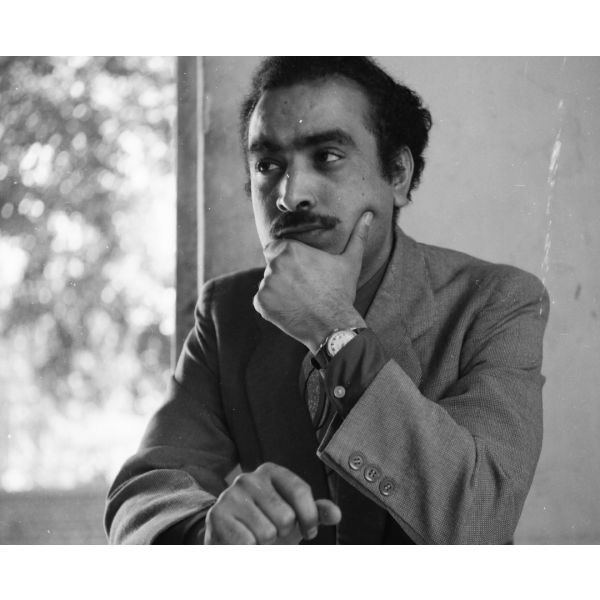 ArtistsG. R. Santosh$0.00Born Gulam Rasool Dar in a Shia Muslim family in Srinagar in Kashmir on 20 June 1929, the artist took on his wife’s Hindu name ‘Santosh’ as his own, in a move opposing patriarchy and religion. His father’s death forced a young Gulam to work as a signboard painter, papier-mâché artist, and weaver. He learnt to paint watercolour landscapes from Dina Nath Raina in Kashmir before studying under N. S. Bendre at M. S. University, Baroda, on the recommendation of S. H. Raza. In Baroda, he produced a large body of figurative and landscape works, mainly in the cubist style. Learn More
 -
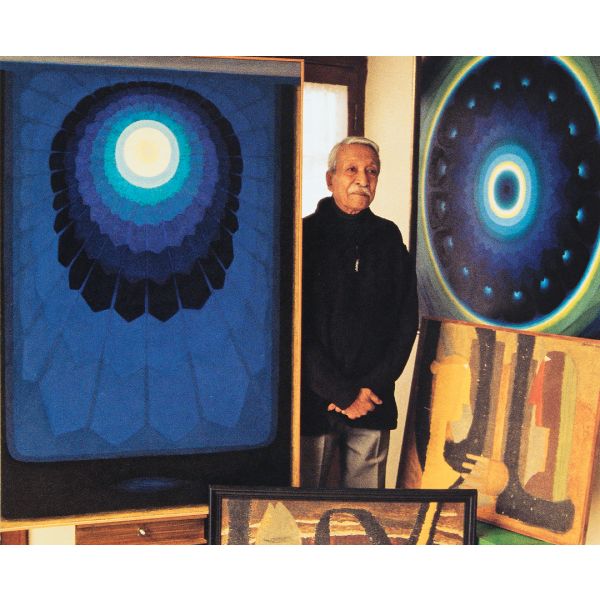 ArtistsBiren De$0.00Born on 8 October 1926, in Faridpur (in present day Bangladesh), Biren De shifted to Calcutta with his family before Partition and studied at the Government College of Arts and Crafts. Later, he moved to New Delhi to teach at College of Art. Years spent in New York and extensive travelling over continents subsequently enriched his artistic expression with new forms. Learn More
 -
 JournalBefore the Chaos of Destruction: Jeram Patel's Iconic Works$0.00
Artists often proceed through a trial and error method—an incessant experimentation—leaving behind a singular trail of oeuvre composed of an irreconcilable, yet inseparable, set of works. Born in the small town of Sojitra in the Kheda district of Gujarat, Jeram Patel studied drawing and painting at Sir J. J. School of Art, Bombay. In 1959, excellence in his work led him to pursue commercial design at Central School of Arts and Crafts, London, on a scholarship, and also travel to France and Japan. Thereafter, he successfully held solo exhibition at various places in India and abroad, and participated in international events such as the Tokyo Biennale and Sao Paulo Art Biennale (both in 1963).
Learn More -
 ExhibitionsSoliloquies of SolitudeAs low as $1.00
The mid-twentieth century saw a churn in the practice of art in India with a number of artists beginning to explore a genre that had swept the West with its absence of figuration in favour of abstraction. The non-representational began to gain traction as artists found within it a way to express themselves purely through colour as a potent tool to communicate emotions. Abstraction emphasised the relationship between originality and expression in ways that were complex, leading one to debate about the eventual goal of art. Ambadas, Krishna Reddy, Sohan Qadri, Zarina Hashmi, Rajendra Dhawan
Learn More -
 ExhibitionsIndian AbstractsAs low as $1.00
The term ‘abstract’ has been loosely used, more so in the Indian context, where we have only a vague notion of what it implies. Even the slightest distortion in art is popularly referred to as abstraction. And while distortion ultimately results in abstraction, the two are at opposing ends of the visual pole as far as understanding the genre goes. Over several years, viewers have been guided almost by a gut instinct of what constitutes abstract art. And though one concedes that rigid compartments to demarcate genres are neither practical, nor desirable, some understanding of what constitutes abstract art is essential. A. M. Davierwalla Akbar Padamsee Ambadas Amitava Amrut Patel Asit Kumar Haldar Avinash Chandra Baburao Sadwelkar Benode Behari Mukherjee Bikash Bhattacharjee Bimal Dasgupta Biren De Bishamber Khanna Biswanath Mukerji Devayani Krishna Devraj Dakoji Dhanraj Bhagat Dharamnarayan Dasgupta F. N. Souza G. R. Santosh Ganesh Haloi H. A. Gade Hemanta Misra Himmat Shah J. Swaminathan Jeram Patel Jyoti Bhatt K. C. S. Paniker K. G. Subramanyan K. S. Kulkarni Krishna Reddy L. Munuswamy Laxman Pai Laxman Shrestha M. F. Husain Nasreen Mohamedi P.Khemraj P.T.Reddy Partha Pratim Deb Piloo Pochkhanawala Prabhakar Barwe Prabhakar Kolte Prokash Karmakar R. M. Palaniappan R. N. Pasricha Rabin Mondal Raghav Kaneria Ram Kumar S. G. Vasudev S. H. Raza S. K. Bakre S. R. Bhushan Sanat Kar Sankho Choudhuri Satish Gujral Shanti Dave Shobha Broota Sohan Qadri Somnath Hore Sunil Das Sunil Madhav Sen Tapan Ghosh V. S. Gaitonde V. Viswanadhan Vivan Sundaram Zarina Hashmi
Learn More