Search results for: 'chittaprosad wood works'
-
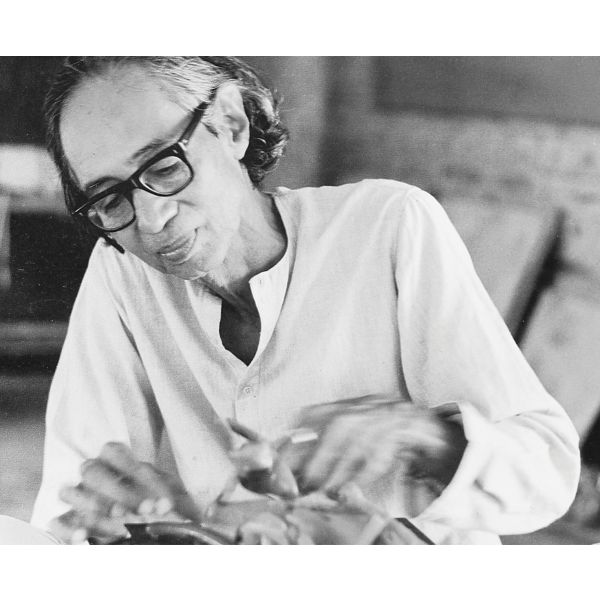 ArtistsSomnath Hore$0.00A multifaceted artist who spent a lifetime exploring human suffering through his sketches, prints and sculptures, Somnath Hore was born in Chittagong in present-day Bangladesh in 1921. Studying briefly at Government School of Art, Calcutta, in the mid-1940s, Hore trained under Zainul Abedin, and, later, under printmaker Saifuddin Ahmed. A participatory practice with fellow artists like Chittaprosad led to his intellectual growth. Learn More
 -
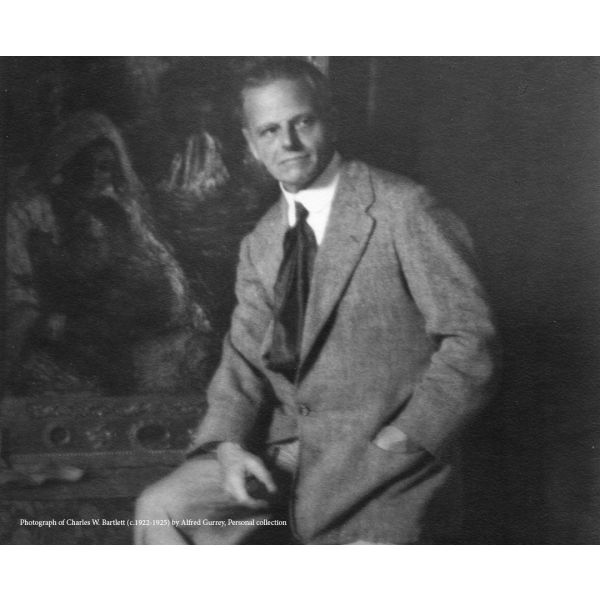 ArtistsCharles W. Bartlett$0.00
English painter Charles William Bartlett remains one of the most exceptional, non-Japanese woodblock artists of the twentieth century.
Learn More -
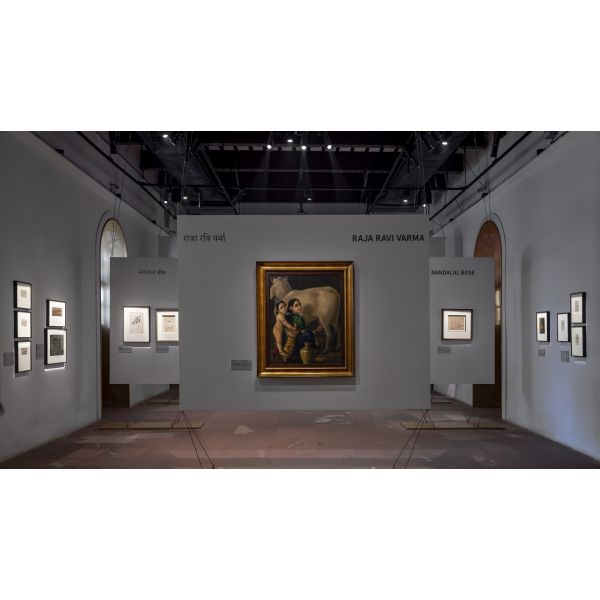 Institutional CollaborationsDRISHYAKALA$1.00
How did the multiple trajectories of visual arts develop in the subcontinent? Where did they originate and how did their paths converge? Drishyakala offers a sweeping journey into the heterogenous histories of visual arts in India, from the first European travelling artists who drew landscapes to popular prints of the earliest woodcuts and lithographs evolving into the thriving advertising visuals of the 20th century. The exhibition is broadly divided into four categories, each exploring an unique area of development—the art of portraiture through photography and painting, oriental sceneries drawn by European travelling artists, popular prints from the late eighteenth century to post-independence and artworks of the nine National Treasure Artists. Together, these sections give brief glimpses into the dizzying variety of forms, styles and languages of South Asian art.
Learn More -
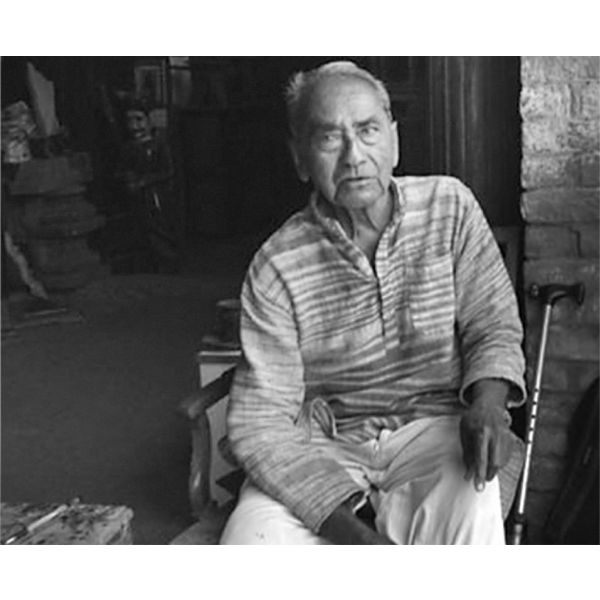 ArtistsPiraji Sagara$0.00An early Indian abstractionist who forged his own vocabulary, distinct from the dominant forces that gripped India’s art community in the early years of Independence, Piraji Sagara came to be known for his collages made of wood relief amalgamated with abstract paintings. Learn More
 -
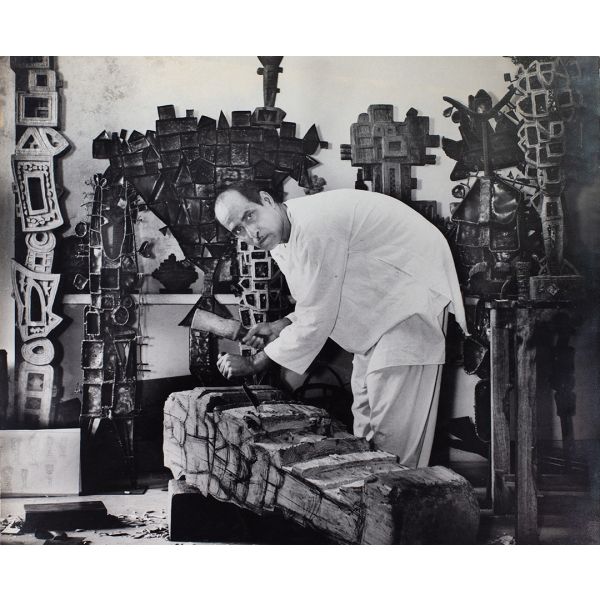 ArtistsDhanraj Bhagat$0.00Born in Lahore in British India, Dhanraj Bhagat acquired a diploma in sculpture from the city’s Mayo College of Art. He began working with clay while studying but it left him uninspired as he found little individuality in its amorphous nature. It was when he got his hands on wood with its uniquely tactile qualities that he felt inspired to carve and create. Learn More
 -
 JournalFour Famous Collectors who shaped Indian art history$0.00
How did the idea of Indian art come to be constructed over the last century and more? The painstaking work of collectors and curators went a long way towards establishing the history of art in India. In this article we highlight some of the most significant collectors of art from South Asia over the course of the twentieth century. Usually starting as personal collections, most of them would eventually donate their works to museums in India or abroad, allowing these rare works to be seen regularly by new generations of art enthusiasts across the world. Their collections, curated exhibitions and publications fashioned the canons of Indian modern and pre-modern art
Learn More -
 ExhibitionsAmitava: The Complete WorksAs low as $1.00
In a career spanning four decades, Amitava’s location as an artist has determined the authority that he brings to his practice. As an artist studying and working in the 1960s, Amitava Das experienced a decade of fragmented locii. The ’60s, the period of his education at the College of Art, was the decade of wars, fiscal difficulty and an uncertain polity in the wake of the death of Jawaharlal Nehru. Further, as a second generation pravasi (non-residing Indian) Bengali, the roiling political violence of West Bengal’s Naxal movement came to him through the filter of poetry, film and art—much as he would have received the existential writing of Camus, Genet and Rilke. Through the 1960s and ’70s, small groups of artists and filmmakers in different pockets in India had a heightened response: the state of the nation found an uncanny echo in the language of modernism, of the artist’s isolation and purity even within a state of uncertainty.
Learn More -
 ExhibitionsThe Seventies ShowAs low as $1.00
The 1970s was a decade like no other for a young India gaining in confidence nationally as well as on the global firmament. In 1971, Prime Minister Indira Gandhi led the country to a decisive victory against Pakistan, leading to the creation of Bangladesh. The Green Revolution had borne fruit, and Operation Flood now launched a milk revolution in the country, and the culmination of the privy purse turned it into a socialist republic with a strong handle on its economic button. Internationally, much was made of India’s resilience, and the country’s soft power began to win it recognition for its films, fashion, food and culture. India had arrived. ALTAF AMBADAS AMITAVA AVINASH CHANDRA BIKASH BHATTACHARJEE BIREN DE BIRESWAR SEN ERIC BOWEN F. N. SOUZA G. R. SANTOSH GANESH HALOI GOGI SAROJ PAL INDRA DUGAR J. SULTAN ALI J. SWAMINATHAN K C S PANIKER K. K. HEBBAR K. LAXMA GOUD KRISHNA REDDY LAXMAN PAI M. F. HUSAIN MADHVI PAREKH NAVJOT ALTAF P. T. REDDY PARITOSH SEN PRABHAKAR BARWE PRODOSH DASGUPTA PROKASH KARMAKAR RABIN MONDAL RAJENDRA DHAWAN RAM KUMAR S G VASUDEV SATISH GUJRAL SHANTI DAVE SHYAMAL DUTTA RAY SOHAN QADRI TYEB MEHTA V. VISWANADHAN ZARINA HASHMI
Learn More -
-
 Events and ProgrammesMuseum as a Classroom: Jorasanko Thakurbari$1.00
A capacity building workshop for teachers on crafting museum-learning experiences for students at the historic house museum of the Tagore family. The workshop will focus on tools that can help make school visits to heritage sites more interactive and engaging.
Learn More