


Search results for: 'surge toward you ch 1 mangabuddy'
-
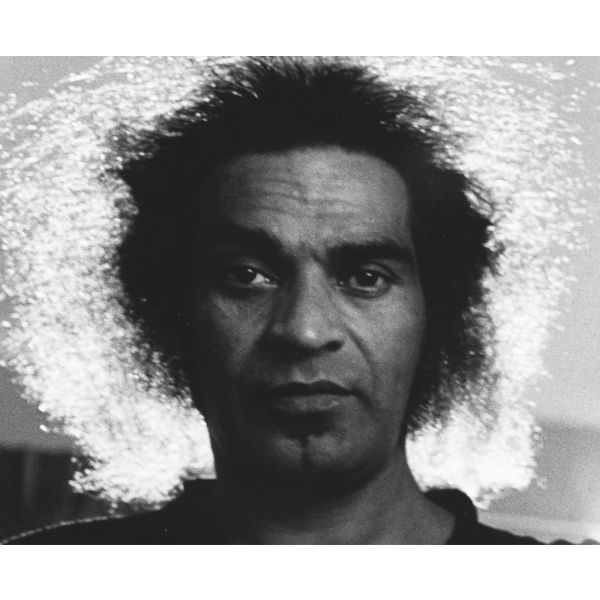 ArtistsSohan Qadri$0.00Sohan Qadri was born in a wealthy farming family in Punjab’s Chachoki village on 2 November 1932. When he was seven, he came across two spiritualists living on the family farm—Bikham Giri, a Bengali Tantric-Vajrayan Yogi, and Ahmed Ali Shah Qadri, a Sufi. Both gurus had a tremendous impact on young Qadri and taught him spiritual ideals through meditation, dance, and music. His association with them heralded a lifelong commitment to spirituality and art. Learn More
 -
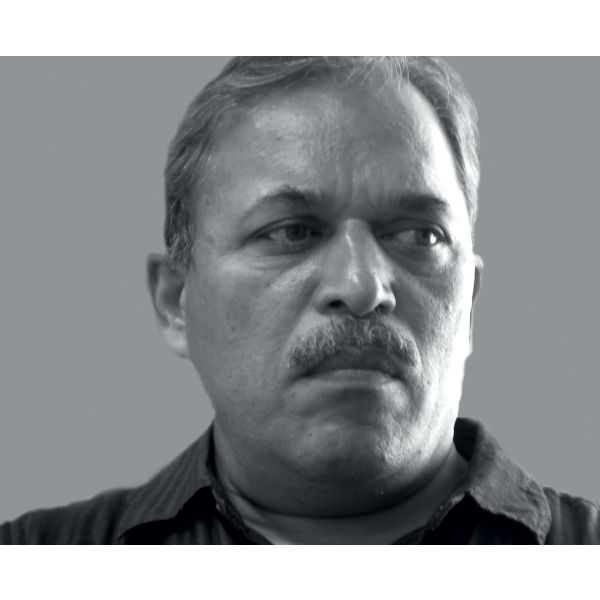 ArtistsDattatraya Apte$0.00Born on 11 April 1953 in Sangli, Maharashtra, Dattatraya Apte grew up in a culturally-charged household. His father was a teacher and used to make Ganehsa idols for puja at home, a skill that young Apte learnt early on. He also learnt to paint photographs and retouch negatives with an uncle who was a photographer. Learn More
 -
 ExhibitionsThe Fifties ShowAs low as $1.00
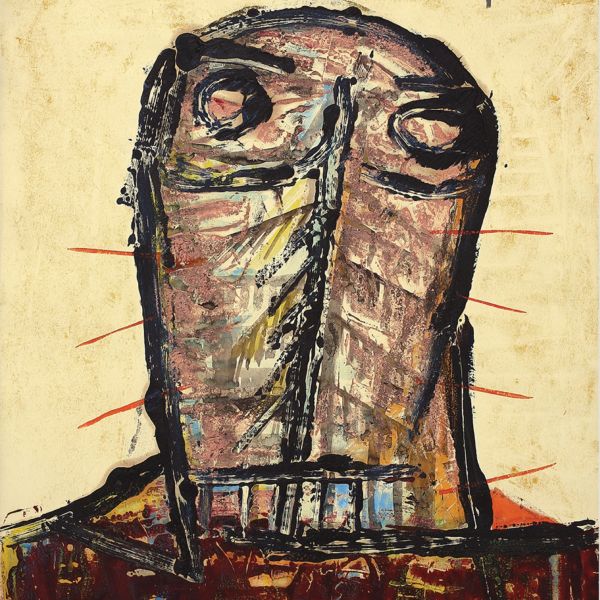
The twentieth century was marked by two important decades—the 1910s, when the Bengal School saw the establishment of a revivalist practice that came to signify Indian modern art in general; and the 1950s, when a newly independent nation put its colonised past behind it and embraced a triumphant modernism. A. A. RAIBA ADI DAVIERWALLA AVINASH CHANDRA BABURAO SADWELKAR BADRI NARAYAN BIREN DE CHITTAPROSAD D. P. ROY CHOWDHURY DEVYANI KRISHNA DHANRAJ BHAGAT G. R. SANTOSH GANESH PYNE HAREN DAS Indra Dugar J. SULTAN ALI JYOTI BHATT K C S PANIKER K S Kulkarni K. G. SUBRAMANYAN K. K. HEBBAR KANWAL KRISHNA KISORY ROY KRISHEN KHANNA KRISHNA REDDY Laxman Pai M. F. HUSAIN MOHAN SAMANT NANDALAL BOSE NIKHIL BISWAS P. T. REDDY PARITOSH SEN S. H. RAZA S. K. BAKRE SAKTI BURMAN SHANTI DAVE SUNIL DAS SUNIL MADHAV SEN VISHWANATH NAGESHKAR
Learn More -
 Events and ProgrammesA Question of Freedom$1.00
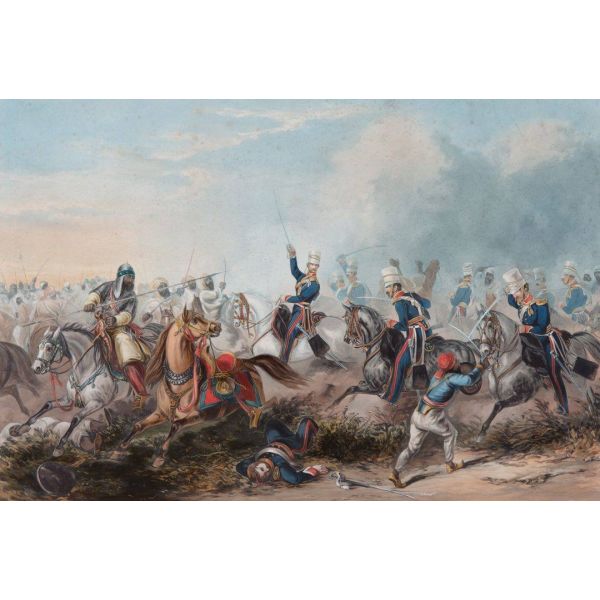
Based on the ‘March to Freedom’ exhibition quizmaster Aryapriya Ganguly asks questions about the journey towards Indian independence and beyond.
Learn More -
 Art FairsFrieze Masters 2023$1.00The medieval ages saw the rise in India and parts of Asia of philosophical, theological, cultural, literary and visual manifestations that derived from diverse faiths but with one aim—to attain enlightened liberation. Its resistance to Brahmanical texts and hegemony resulted in the creation of geometrical aesthetics that were interpreted by way of texts, paintings, and architecture and had a monumental impact on society. At the centre of its geometric configurations—the triangle, the square, and the circle—lay the idea of Creation itself, the source of primal energy that could to be diverted towards a higher consciousness, and all universe was manifest in this. Learn More
 -
 JournalThe Journal Goes Live$0.00
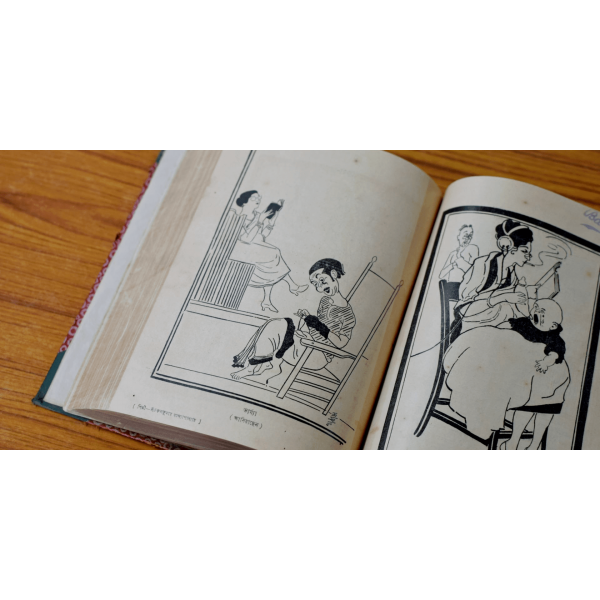
On the thirtieth year of DAG’s presence in the Indian art landscape, we are especially delighted to share with our readers the first issue of our Journal. DAG has upheld a high quality of research through exhibitions and publications that have shaped how people understand Indian modern art. Through this journal, we want to keep those discussions going and point towards newer ways to approach the period of modernism—joining the dots that lead those significant artistic breakthroughs into the contemporary. We also want to create a space where readers can gain privileged access into the people and organizations who works around the clock to keep the art world ticking.
Learn More -
 Art FairsArt Dubai$0.00
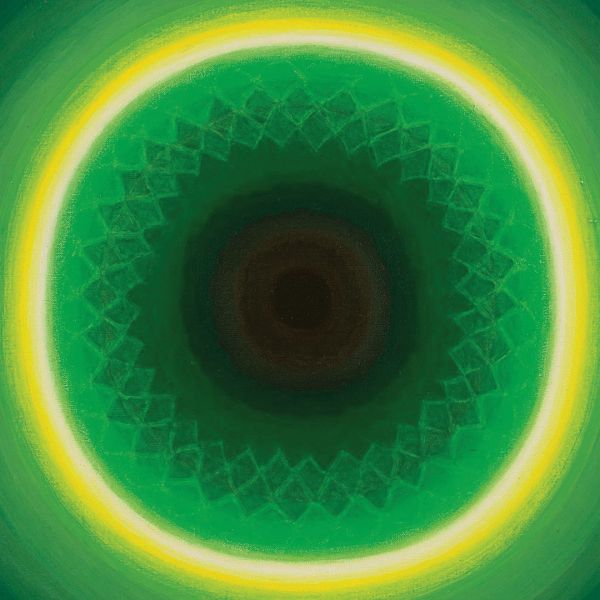
For its debut participation in the modern section of Art Dubai 2017, DAG focussed on the unconventional theme of Neo-Tantra as a way of bringing India’s unique school of abstraction to global attention. The booth featured works by two of the country’s leading practitioners of this school—G. R. Santosh and Biren De. The stunning, colour- and energy-filled canvases drew all eyes towards itself, making it the singularly most-visited booth in the section.
Learn More -
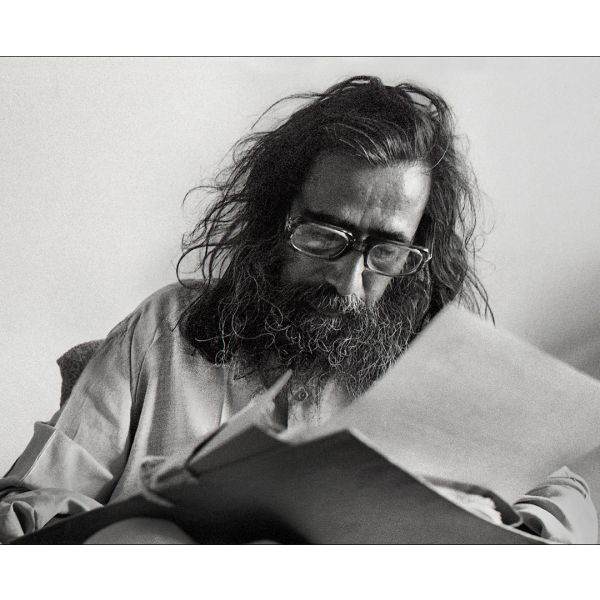 ArtistsJ. Swaminathan$0.00Known for establishing the multi-arts complex, Bharat Bhavan, in Bhopal, and for foregrounding tribal art on the Indian art horizon, Jagdish Swaminathan took up the arts professionally later in life, despite an early aptitude towards drawing and painting. Learn More
 -
 ExhibitionsNavrasaAs low as $1.00
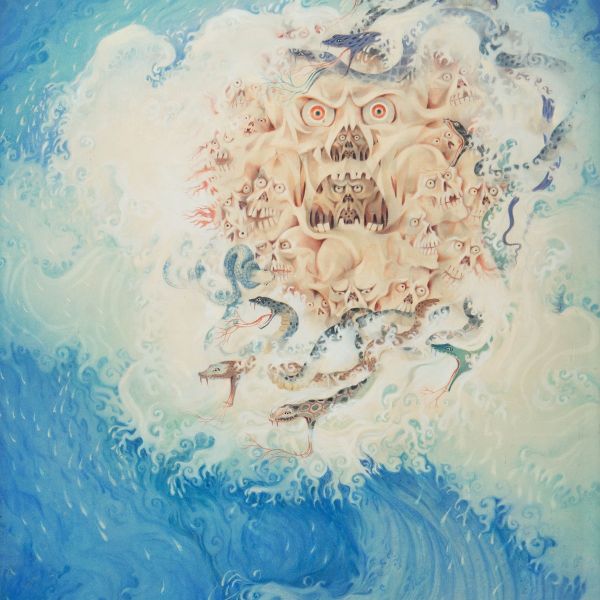
The pinwheel of emotions is the genesis of our current exhibition, 'Navrasa: The Nine Emotions of Art'. This unique treatise of emotions and moods has formed the foundation for the performing and visual arts in India. As we researched deeper to explore the dynamics it shares with Indian modern art, we found that all emotions are intrinsically linked with each other, that they trigger actions and reactions and are catalysts for change. 'Navrasa' explores Indian modernism and looks at the works of masters through the nine primary emotions, and breaks new ground in the visualisation of Indian art. Raiba A. H. Muller A. Ramachandran Altaf Amal Nath Chakladar Amit Ambalal Anonymous Anonymous (Bengal ‘School’) Anonymous (Early Bengal School) Anonymous (Early Bengal, Kalighat Style) Anonymous (Kalighat Pat Anupam Sud Arpana Caur Arun Bose Arup Das Asit Haldar B. N. Arya B. Prabha Badri Narayan Bijan Choudhury Bikash Bhattacharjee Bireswar Sen C. Douglas Chintamoni Kar Chittaprosad D. P. Roy Chowdhury Dattatraya Apte Dharamanarayan Dasgupta F. N. Souza G. Reghu Gogi Saroj Pal Gopal Ghose Gopal Sanyal Haren Das Indu Rakshit J. Sultan Ali Jagadish Dey Jai Zharotia Jamini Roy Jaya Ganguly Jogen Chowdhury Jyoti Bhatt K. C. S. Paniker K. G. Subramanyan K. H. Ara K. K. Hebbar K. S. Kulkarni Kanchan Chander Kartick Chandra Pyne Krishen Khanna Kshitindranath Mazumdar Laxman Pai M. F. Husain Madhvi Parekh Mukul Dey Navjot Nemai Ghosh Nikhil Biswas P. S. Chander Shekar P. T. Reddy Paritosh Sen Prodosh Das Gupta Prokash Karmakar Rabin Mondal Radhacharan Bagchi Raja Ravi Varma Rameshwar Broota Ranbir Singh Kaleka S. Dhanapal Sakti Burman Sanat Chatterjee Sanat Kar Satish Gujral Satish Sinha Shyamal Dutta Ray Somnath Hore Stefan Norblin Subba Ghosh Sudhir Khastgir Sukhvinder Singh Sunil Das Sunil Madhav Sen Thota Vaikuntam Tyeb Mehta V. Nageshkar
Learn More -
-
 Collection StoriesThe Afterlife of the Taj Gardens: Changes in the Landscape$1.00
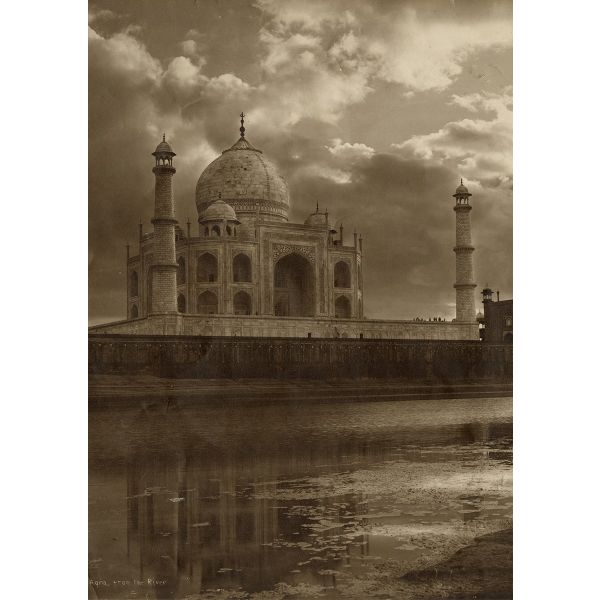
Often described as ‘Poetry in Stone’, the Taj Mahal was laid out between 1631-43 by Mughal Emperor Shah Jahan as a mausoleum for his wife Mumtaz Mahal. It is the architectural elements of the Taj complex that grab the most attention, but in fact the garden is the heart of the complex . The visitors today are so transfixed by the Taj itself that they remember very little of the garden. DAG Archive attempts to illustrate the life and ‘afterlife’ of the Taj gardens, once its control was taken over by the British. This archive deep dive showcases the objects from A. E. P. Griessen’s (1875–1935) collection.
Learn More -
 ExhibitionsThe Babu and the BazaarAs low as $1.00
Calcutta, flourishing with commerce and maritime trade during the nineteenth century, was regarded as the ‘second city’ of the British Empire. People thronged there in large numbers to make a livelihood, or in holy pilgrimage, seeking blessings at the Kali temple at Kalighat that had been re-built in 1809. Annada Prasad Bagchi Bamapada Banerjee B. C. Law C. W. Lawrie Kshetradas Chitrakar Panchanan Karmakar Madhav Chandra Das Ramadhan Swarnakar Ganganarayan Ghosh Nritya Lal Datta Press Kristohurry Das Chorebagan Art Studio Kansaripara Art Studio Calcutta Jubilee Art Studio Bat-tala
Learn More