Search results for: 'Hard photo-collection of sexually lustful girls Xxlaynia Marie The Spirits Reveal Our True Desires'
-
 ExhibitionsAltafAs low as $1.00
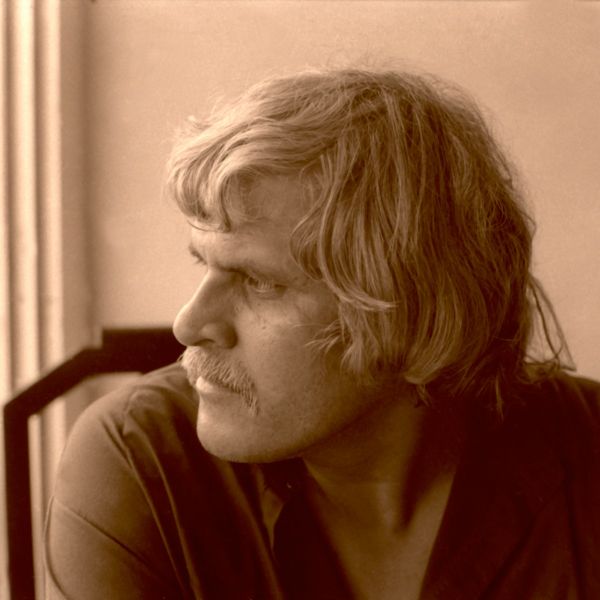
In the articulation of twentieth century art, where does one place Altaf Mohamedi? That question has probably troubled more curators than we realise. Altaf, who studied art in London before returning to Bombay (now Mumbai) was following in the footsteps of his elder sister and artist Nasreen Mohamedi, but that is where all similarities ended. Where Nasreen was an abstract, sparse artist who created a distinctive language using, for most part, rigid, inflexible lines that nevertheless sang on the paper over which they were made, Altaf’s work was intensely political and social.
Learn More -
 ExhibitionsThe Art Of SantiniketanAs low as $1.00
The Art of Santiniketan showcases the work of its four chief artists—Santiniketan’s founder, Rabindranath Tagore, its first principal and the architect of the Santiniketan pedagogy, Nandalal Bose, and his two illustrious students who went on to make a name for themselves as highly original and significant artists—Benode Behari Mukherjee and Ramkinkar Baij. Santiniketan was a path-breaking educational institution Rabindranath Tagore set up in rural Bengal in the early twentieth century, and the exhibition begins by examining its genesis in Tagore’s radical ideas of basing education in freedom and in the midst of nature. Benode Behari Mukherjee Nandalal Bose Rabindranath Tagore Ramkinkar Baij
Learn More -
 ExhibitionsThe Wonder of IndiaAs low as $1.00
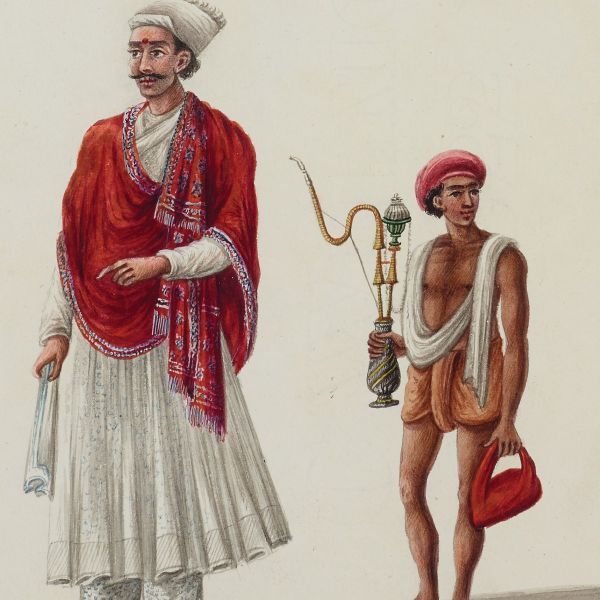
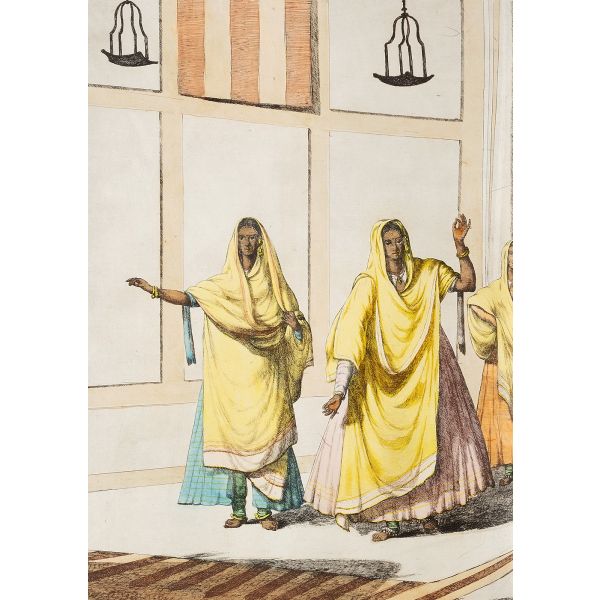
An ancient civilisation, India was always prized for her fabled wealth—textiles, crafts, spices—her knowledge—literature, scholarship, universities—and her culture—music, dance, theatre, art. It is the only country with an unbroken tradition in each of these disciplines extending all the way back to the Indus Valley Civilisation. Ambadas Anonymous (Kalighat Pat) Arun Bose Asit Kumar Haldar Avinash Chandra B. Prabha Balraj Khanna Bikash Bhattacharjee Bimal Dasgupta Biren De Chittaprosad Company Painting D. P. Roy Chowdhury Early Views of India G. R. Santosh Ganesh Haloi Himmat Shah J. Sultan Ali Jamini Roy Jeram Patel K. S. Kulkarni Krishna Reddy L. Munuswamy M. F. Husain M. Suriyamoorthy Natvar Bhavsar Nikhil Biswas P. T. Reddy Paritosh Sen Prodosh Das Gupta Prokash Karmakar Prosanto Roy Rabin Mondal Rajendra Dhawan S. G. Vasudev Sakti Burman Sanat Kar Sankho Chaudhuri Satish Sinha Shanti Dave Shyamal Dutta Ray Sunayani Devi Sunil Das Sunil Madhav Sen V. Viswanadhan
Learn More -
 ExhibitionsIndian LandscapesAs low as $1.00
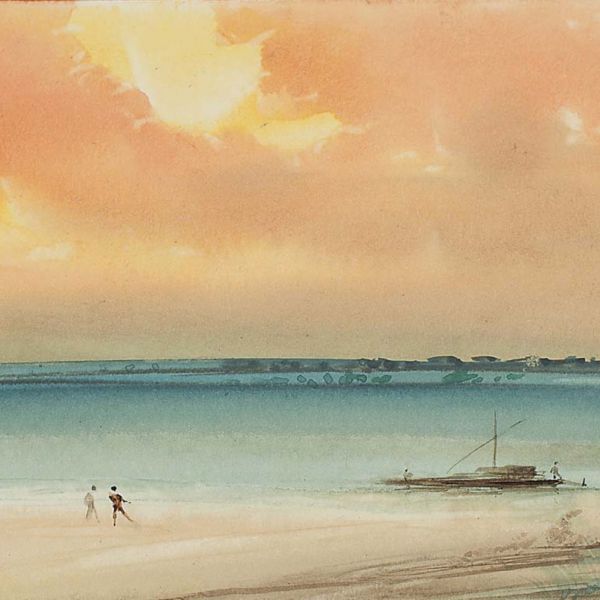
Landscape art arrived in India through travelling European artists who brought the aesthetic of painting mountains, rivers and trees against the sky and a distant horizon—nature as a subject in itself —to Indian art, where it had traditionally only formed a backdrop in narrative-driven, figural paintings. The genre remained popular throughout the nineteenth century with a great demand for landscapes of India both in Europe and among the newly anglicised elite in India. Its popularity began to wane with the advent of modernism and a growing emphasis on the human figure, but several Indian artists, a significant name among them Gopal Ghose, continued to practice the form, now absorbing a wide range of new artistic trends and influences. A.A. Almelkar Abanindranath Tagore Ambika Dhurandhar Amitava Anonymous (Company School) Anonymous (Early Bengal) Atul Bose Avinash Chandra B. C. Gue B. N. Arya Bhupen Khakhar Bijan Choudhary Bikash Bhattcharjee Bimal Dasgupta Bireswar Sen Bishnupada Roychowdhury Chittaprosad D. C. Joglekar D. J. Joshi Devraj Dakoji Devyani Krishna Dharamnarayan Dasgupta Dulal Gue E. A. Dadi Edward Cheney F. N. Souza G. R. Santosh G. S. Haldankar Ganesh Haloi Gobardhan Ash Gopal Ghose H. A. Gade Haren Das Hirachand Dugar Indra Dugar J. P. Gangooly Jamini Roy John Deschamps Jyoti Bhatt K H. Ara K. C. S. Panicker K. K. Hebba K. Laxma Gou K. S. Kulkarni Kanwal Krishna Kisory Roy Kripal Singh Shekhawat L. N. Taskar L. P. Shaw Lalit Mohan Sen Laxman Pai M. F. Husain M. V. Dhurandhar Manishi Dey Mukul Dey N. R. Sardesai N. S. Bendre Nandalal Bose Nikhil Biswas Olinto Ghilardi P. Khemraj Paramjit Singh Pestonji E. Bomanji Prokash Karmakar Prosanto Roy Radha Charan Bagchi Raja Ravi Varma Ram Kumar Ramendranath Chakravorty Ramkinkar Baij Ranen Ayan Dutta Richard Barron Robert Grindlay S. G. Thakur Singh S. K. Bakre S. L. Haldankar Satish Sinha Sudhir Khastgir Sunil Das Thomas Daniell William Carpenter William Hodges
Learn More -
 ExhibitionsPrimitivism and Modern Indian ArtAs low as $1.00
The idea of primitivism centres on the wish to identify with, or respond to, elements of a society that are deemed ‘primitive’. In artistic terms, it is about rejecting realism, simplifying technique and reducing the formal means of expression to a ‘primitive’ state. The term itself is borrowed from discussions of Western art, where high-profile examples include the images of Tahiti and its people made in the 1890s by Paul Gauguin, and responses to African sculpture by Pablo Picasso in 1906-09. The second thread of primitivism—the reduction of formal means—is best exemplified by the ‘cut-outs’ made by Henri Matisse in the 1940s.
Learn More -
-
 JournalThe Last Effort and Fall of Tippoo Sultaun by Henry Singleton$1.00
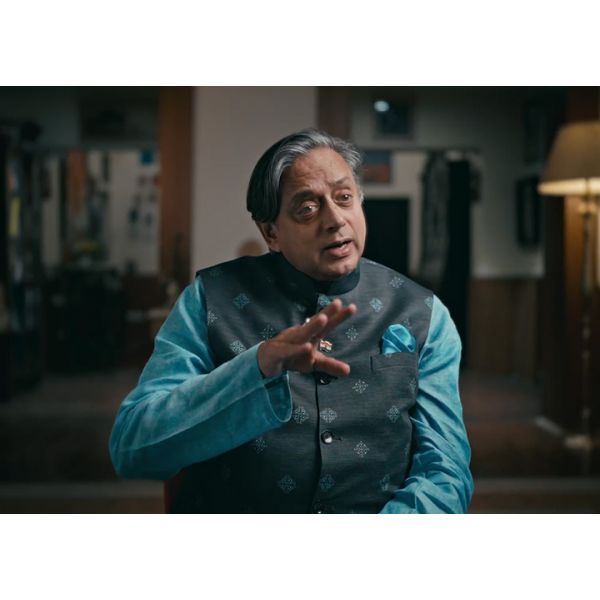
Henry Singleton’s The Last Effort and Fall of Tippoo Sultaun belongs to a genre known as history painting: the depiction of important historical events, usually on a large scale, as if they were playing out in front of one’s eyes. Author and parliamentarian Shashi Tharoor and art historian Giles Tillotson explain the lively imagination deployed in Singleton’s painting that depicts the British assault on Seringapatam and the killing of its ruler, Tipu Sultan—himself the source of so many stories that it was difficult to unravel the truth from the many falsities spun by the biased colonial administration and historians of the time.
Learn More -
 JournalA Child, the Youth, now Man by Rameshwar Broota$1.00
Painted in 2003 by Rameshwar Broota and titled A Child, the Youth, now Man, is bisected horizontally by a hyper-realistic finger, which partially covers a comparatively hazy vertical male torso. The evocative cruciform structure of this composition, possibly alluding to ideas of masculinity, corruption and persecution, also aides the artist in highlighting human vulnerability. There is no face visible here, only an unprotected body.
Learn More -
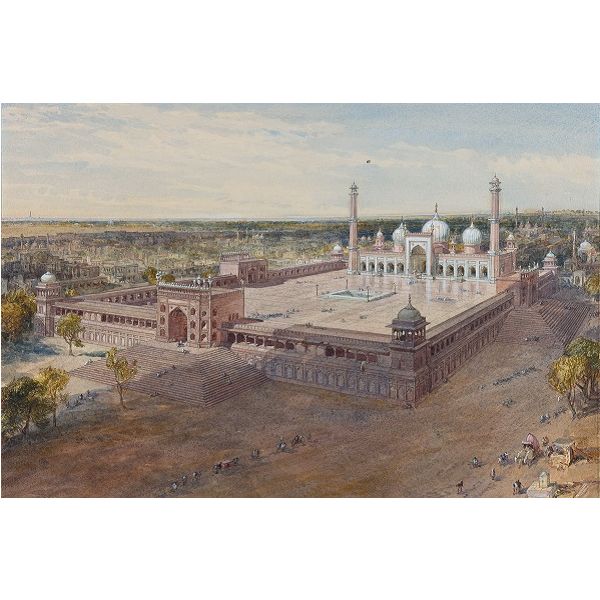 JournalRepresenting Architecture: How art influenced architecture$0.00European artists and architects were deeply influenced by the rich cultural heritage and artistic traditions of India, which, in turn, influenced their architectural designs. Artistic representations served as a bridge between cultures, leading to the incorporation of Indian motifs, styles, and decorative elements in colonial architecture. Learn More
 -
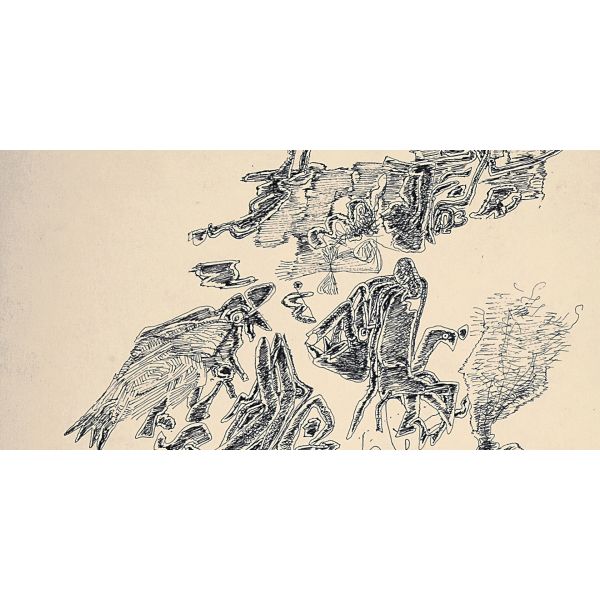 JournalRemembering Ambadas with art critic Prayag Shukla$0.00
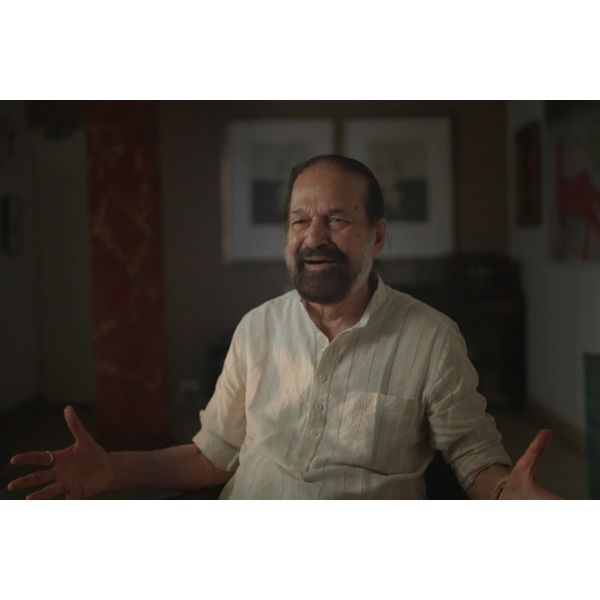
A well-known poet and essayist, Prayag Shukla is also one the foremost writers on art in Hindi. He has authored monographs on artists like J. Swaminathan, M. F. Husain and Ambadas, expanding upon these artists’ relationships with local institutions and contexts of art-making in India since the 1960s.
Learn More -
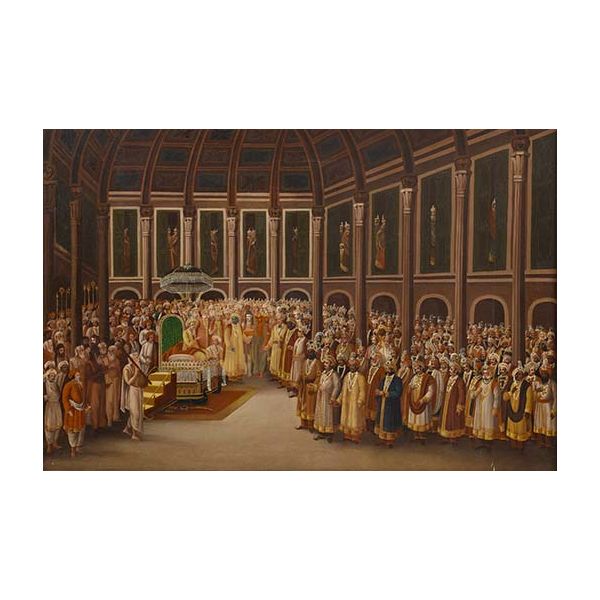 JournalTapati Guha Thakurta on Bengal Oil Paintings$1.00
Artists may be anonymous but their times are not. Art historian and curator Dr. Tapati Guha-Thakurta takes us through the Early Bengal oil paintings from the 19th and early 20th century on display at DAG, New Delhi.
Learn More