Search results for: 'costy asa ar trebui sa fie toate'
-
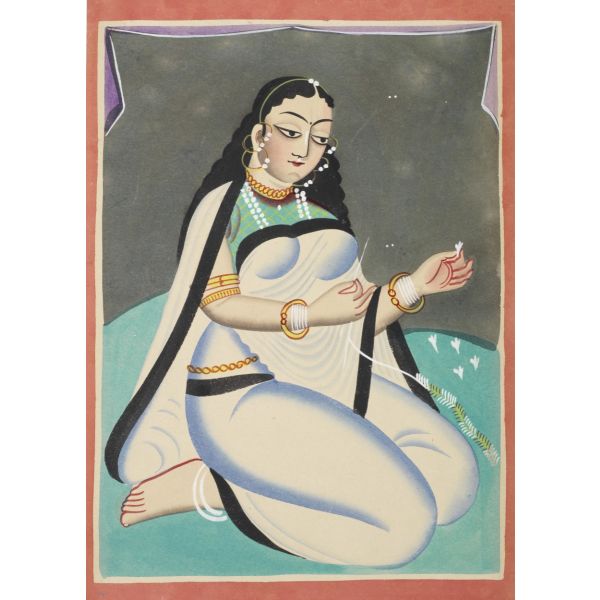 Events and ProgrammesKeyabat Meye$1.00
Queer-Feminist collective Samuho navigates the interplay between the interior and exterior lives of women at the cusp of nineteenth century reform movements through a performance-installation inspired by Shreepantha’s Keyabat Meye and the tradition of Prahasan.
Learn More -
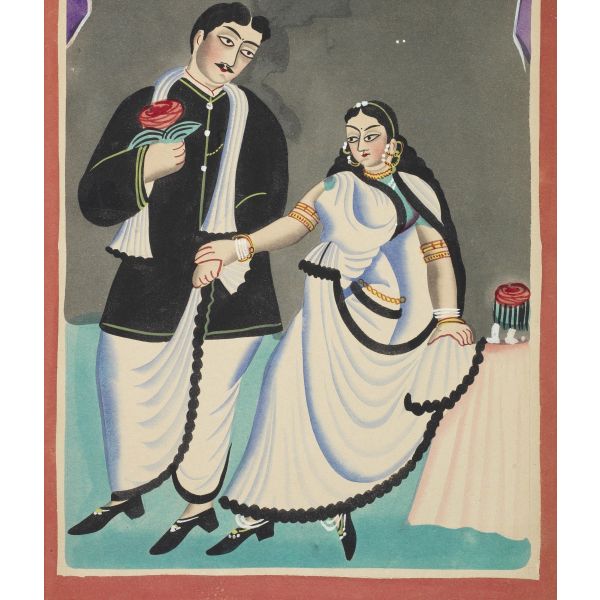 Events and ProgrammesKeyabat Meye$1.00
Feminist collective Samuho navigates the interplay between the interior and exterior lives of women at the cusp of nineteenth century reform movements through a performance-installation inspired by Shreepantha’s Keyabat Meye and the tradition of Prahasan.
Learn More -
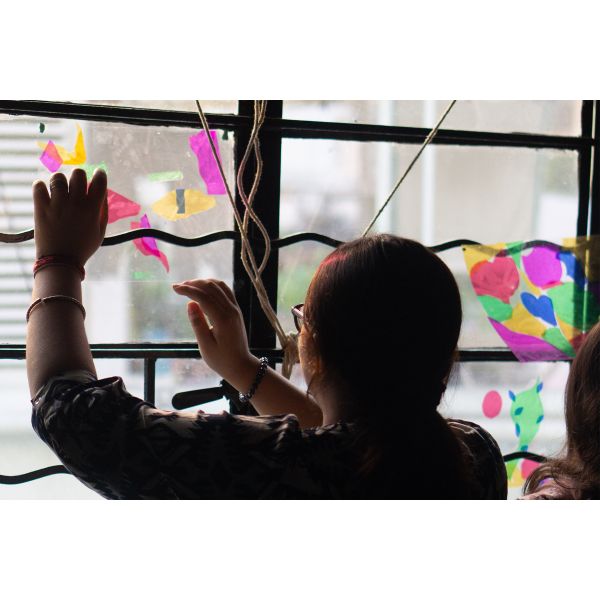 Events and ProgrammesPigment: Histories$1.00
Conversations, sketches and readings on Benode Behari Mukherjee’s practice and his experiments with pigment making, with Sampurna Chakraborty.
Learn More -
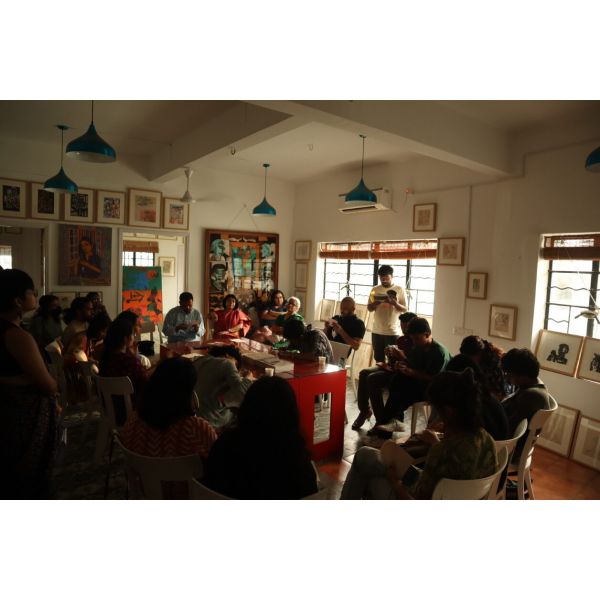 Events and ProgrammesPulp: Drawn from Life$1.00
Conversations, sketches and readings on Somnath Hore's exploration of the concept of 'Wounds' with Sampurna Chakraborty and Sarmistha Bose.
Learn More -
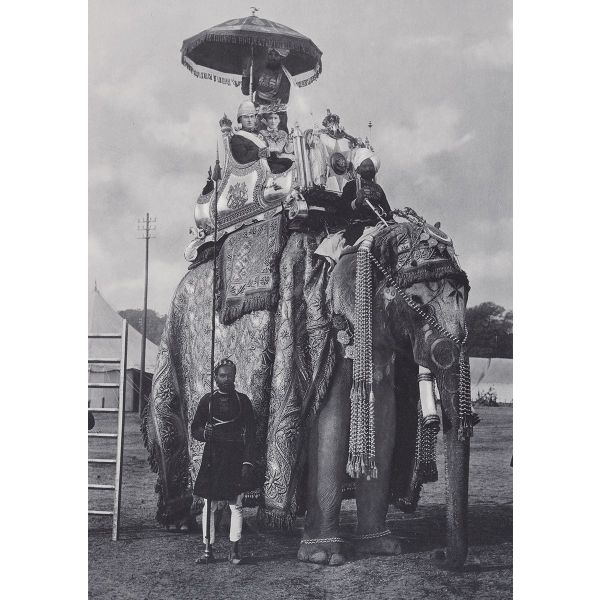 Collection StoriesAn Imperial Spectacle: The Delhi Durbars and its Ceremonies$1.00
The Delhi Durbars were a series of coronation events held by the British in India which formally declared the British monarch as the Emperor or Empress of India. They took place thrice—first, in 1887, acknowledging Queen Victoria as the Empress of India, followed by one in 1903, for King Edward VII, and finally in 1911 for King George V, which saw the monarch’s attendance in person.
Learn More -
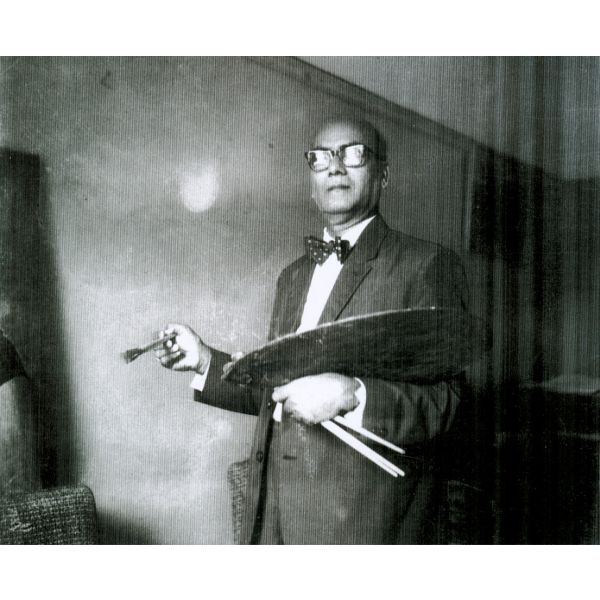 ArtistsV. B. Pathare$0.00Known for his portraits and landscapes rendered in academic-realist style, V. B. Pathare studied painting under S. L. Haldankar in Bombay and Prof. Martin Latuterburg in Bern, Switzerland. After studying portraiture under the renowned Sir Charles Dugdale in London, Pathare painted portraits of several national leaders over time, from Mahatma Gandhi, Rabindranath Tagore and Mahatma Jyotiba Phule to Indira Gandhi and Maharaja Sayajirao Gaekwad of Baroda. Learn More
 -
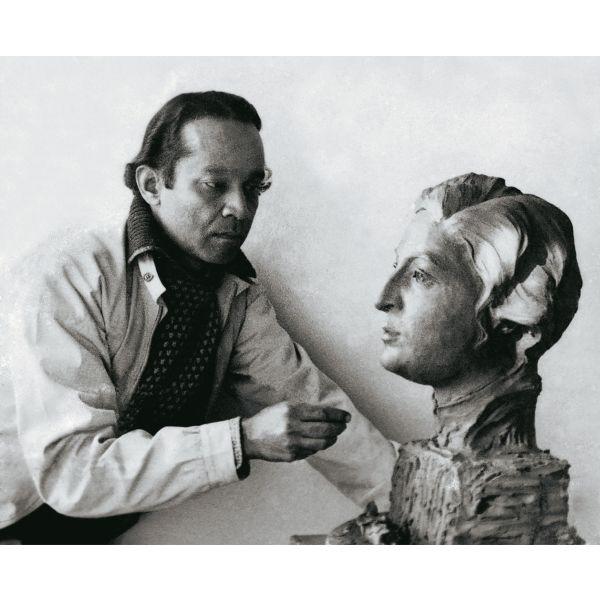 ArtistsSudhir Ranjan Khastgir$0.00Sudhir Ranjan Khastgir was born on 24 September 1907 in Chittagong in present-day Bangladesh, and studied at Kala Bhavana, Santiniketan, under Nandalal Bose. Like his classmate, Ramkinkar Baij, he took up sculpture as a subject, continuing its pursuit in Lucknow under Hiranmoy Roychaudhuri in 1932, and under Ganpath Kashinath Mahatre, in Bombay, in 1933. The same year, he joined Scindia School, Gwalior, as a teacher and, later, Doon School in Dehradun. Learn More
 -
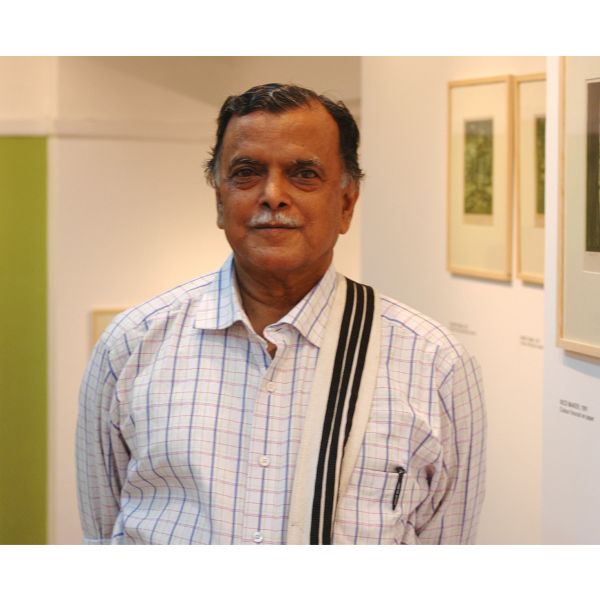 ArtistsPartha Pratim Deb$0.00Born in Sylhet district of present-day Bangladesh, Partha Pratim Deb trained under Ramkinkar Baij and Benode Behari Mukherjee at Kala Bhavan, Santiniketan, from where he graduated in 1966. He then took a post diploma from M. S. University, Baroda, in 1968. Learn More
 -
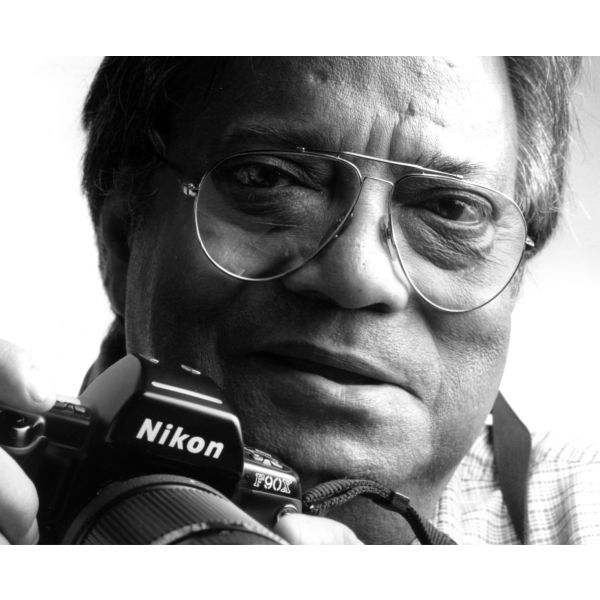 ArtistsNemai Ghosh$0.00Globally renowned filmmaker Satyajit Ray called his photographer Nemai Ghosh ‘Boswell with a camera, instead of a pen’. Just like James Boswell’s biography of English writer Samuel Johnson is considered the finest in the language, Ghosh’s photo-biography of his mentor is one of the finest photo essays on a legend’s life; Ghosh was Ray’s photographer from 1968 until Ray’s death in 1992. Learn More
 -
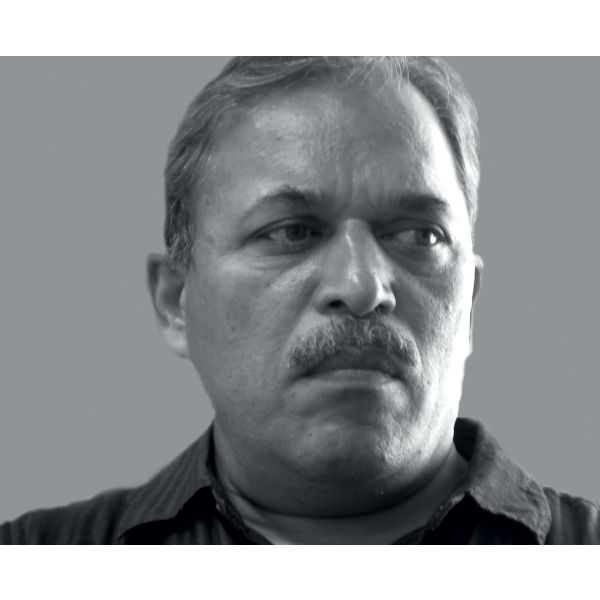 ArtistsDattatraya Apte$0.00Born on 11 April 1953 in Sangli, Maharashtra, Dattatraya Apte grew up in a culturally-charged household. His father was a teacher and used to make Ganehsa idols for puja at home, a skill that young Apte learnt early on. He also learnt to paint photographs and retouch negatives with an uncle who was a photographer. Learn More
 -
 ExhibitionsPrabhakar Barwe: Between Object and SpaceAs low as $1.00
Prabhakar Barwe (1936-95) could well have ended up a theoretician whose book 'Kora Canvas' (Blank Canvas) was a manifesto that established the multi-dimensional relationship between an artist, the object on which he paints, and his subjects. That he was not just an intellectual scholar but an artist whose work speaks for him, is evident through a range of works in which Barwe dissects our understanding of the world and how we view it. Taking commonplace objects and our perception of their existence in the space they occupy, he shifts the dialogue to a point of discomfiture that makes us question our understanding of them. Using scale, discordant juxtapositions, and displacements, he reimagines the everyday in a manner that is thought-provoking, even provocative, as alternate realities—whether perceived or imagined.
Learn More -