Search results for: '19th century indi'
-
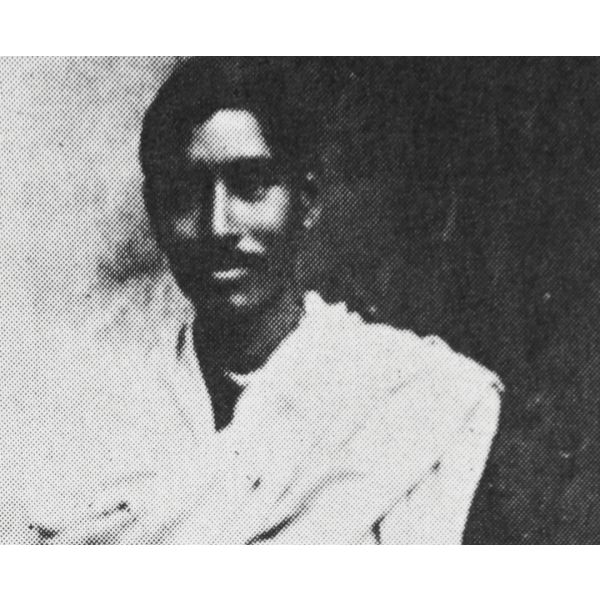 ArtistsJogesh Chandra Seal$0.00Jogesh Chandra Seal was an active member of the enthusiastic art scene of Calcutta in the early decades of the twentieth century. However, due to his short life of thirty-one years, he could not leave behind a comprehensive body of work. His academic oil paintings, Untitled (Disappointed), 1919, and Lady Lighting a Diya, 1921, have recently appeared at international auctions, bringing spotlight on this accomplished artist who was closely associated with the values of the Bengal School of painting. Learn More
 -
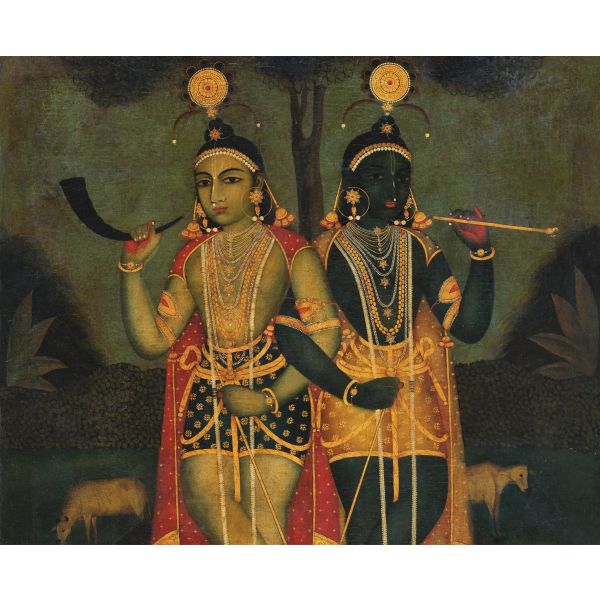 ArtistsEarly Bengal Oils$0.00A large number of anonymous oils on religious and mythological themes began to emerge in Bengal in the late eighteenth–early nineteenth century from the French colony of Chandernagore and the Dutch colony of Chinsurah. Variously called French or Dutch Bengal oils, they also came from other areas like Chitpur and Garanhata localities of Calcutta and thus came to be known as Early Bengal Oils. Learn More
 -
-
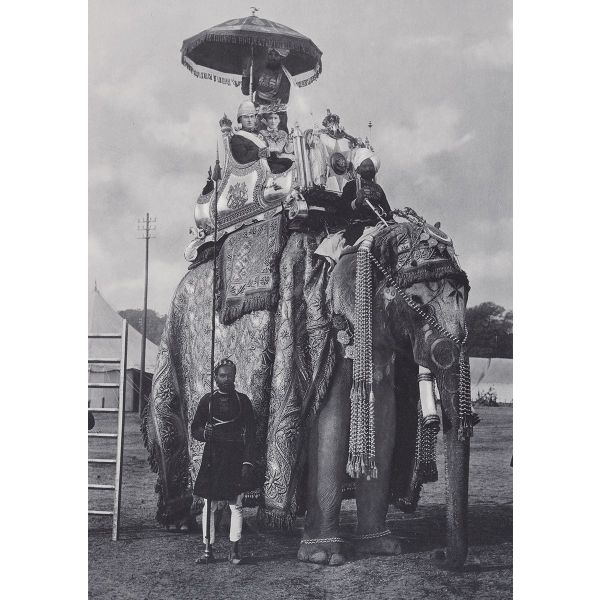 Collection StoriesAn Imperial Spectacle: The Delhi Durbars and its Ceremonies$1.00
The Delhi Durbars were a series of coronation events held by the British in India which formally declared the British monarch as the Emperor or Empress of India. They took place thrice—first, in 1887, acknowledging Queen Victoria as the Empress of India, followed by one in 1903, for King Edward VII, and finally in 1911 for King George V, which saw the monarch’s attendance in person.
Learn More -
 ExhibitionsThe Sixties ShowAs low as $1.00
The 1960s was a period of immense change around the world, and it had deep ramifications on India’s socio-political scenario. The country had left behind the jubilation of Independence and was feeling the pinch of a nation grappling with the issues of development that impacted society and environment. A war with China in 1962 and Pakistan in 1965 had far-reaching implications on the national psyche— the first of shame, the latter of pride. Crippling shortages and unemployment were impacting life, even as the country’s success with the Green Revolution was directed at self-sufficiency. Migration from the villages to urban centres was increasing. Disparities—economic, gender or class—provided fertile ground for the alienation of the other. The more anglicised among the youth found themselves being drawn into the vortex of a global hippie movement. A. A. RAIBA AMBADAS ANUPAM SUD AVINASH CHANDRA BIKASH BHATTACHARJEE BIMAL DASGUPTA DHANRAJ BHAGAT F. N. SOUZA G. R. SANTOSH HIMMAT SHAH J. SULTAN ALI J. SWAMINATHAN JAMINI ROY JERAM PATEL JOGEN CHOWDHURY JYOTI BHATT K. G. SUBRAMANYAN K. LAXMA GOUD KRISHEN KHANNA LAXMAN PAI M. F. HUSAIN MADHVI PAREKH P. T. REDDY PARITOSH SEN PRABHAKAR BARWE PRODOSH DASGUPTA PROKASH KARMAKAR RABIN MONDAL RAM KUMAR RAMESHWAR BROOTA S. H. RAZA S. K. BAKRE SAKTI BURMAN SATISH GUJRAL SHANTI DAVE SOHAN QADRI SOMNATH HORE SUNIL DAS ZARINA HASHMI
Learn More -
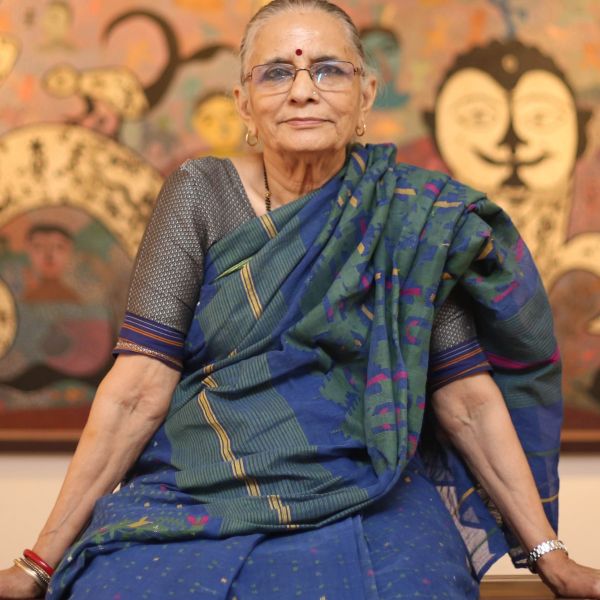 ExhibitionsMadhvi Parekh: The Curious SeekerAs low as $1.00
Spanning five decades of her painterly career, this retrospective includes iconic works by Madhvi Parekh which represent every phase of her illustrious career. The show also includes rare drawings and paintings from the 1960s, when the influence of Paul Klee’s abstraction on her early work was evident. Given the solid representation of Parekh’s paintings from every decade, the exhibition allows viewers to see the continuity in her vision and focus.
Learn More -
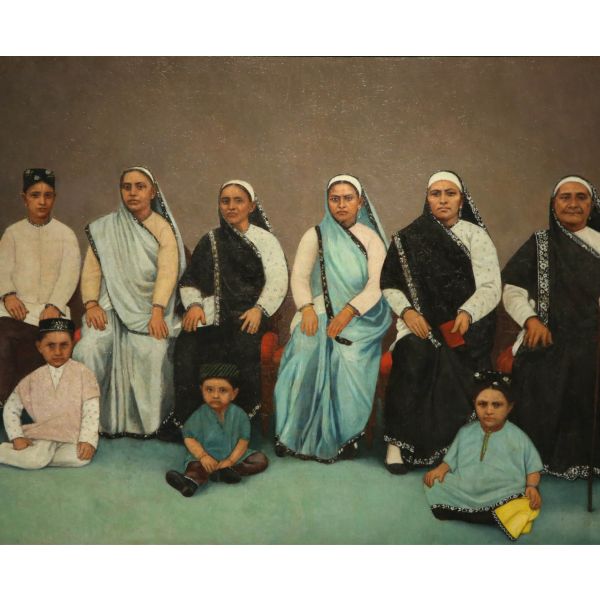 ArtistsAnonymous (Ravi Varma School)$0.00Raja Ravi Varma’s singular impact on Indian art is unparalleled by any artist. Largely self-taught, he is probably the first Indian artist to have articulated Indian subject matters through naturalism and the use of oil paints with brilliant mastery, considered until then a European idiom. Learn More
 -
-