Search results for: 'calcutta street directory p m bagchi'
-
 ExhibitionsIndia’s Rockefeller ArtistsAs low as $1.00
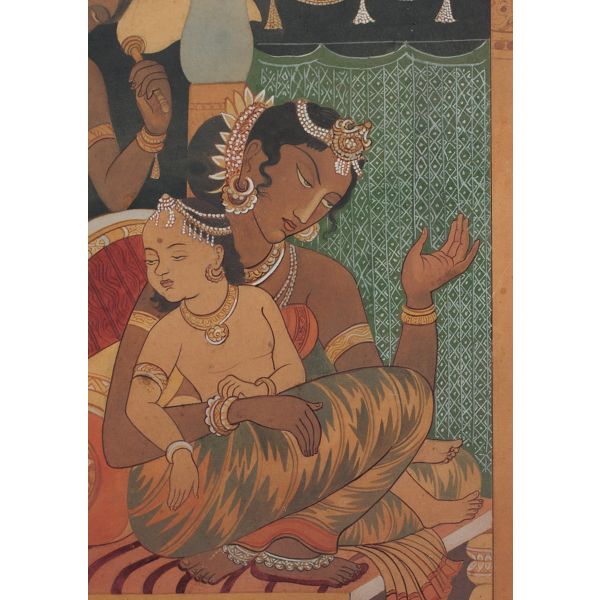
India’s Rockefeller Artists showcases iconic works of the Indian painters and sculptors who travelled to the US on philanthropic grants from the JDR 3rd Fund (1963–1979) and later through the Asian Cultural Council. These artists were exposed to American art and shared their own learnings and experiences through these enriching cultural exchanges. The show examines how and why these artists were selected; their relationships with each other and the American art milieu; the impact of the experience on their work; and the creation of a community of Rockefeller artists.
Learn More -
-
-
 ExhibitionsMadhvi Parekh: The Curious SeekerAs low as $1.00
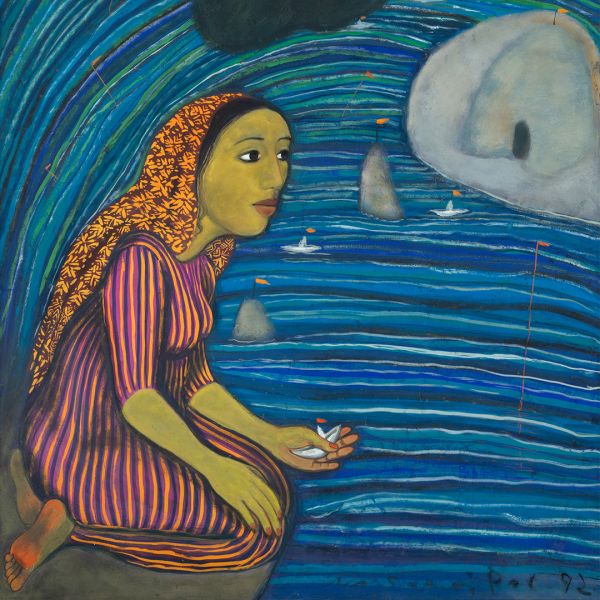
Spanning five decades of her painterly career, this retrospective includes iconic works by Madhvi Parekh which represent every phase of her illustrious career. The show also includes rare drawings and paintings from the 1960s, when the influence of Paul Klee’s abstraction on her early work was evident. Given the solid representation of Parekh’s paintings from every decade, the exhibition allows viewers to see the continuity in her vision and focus.
Learn More -
 ExhibitionsPrimitivism & Modern Indian ArtAs low as $1.00
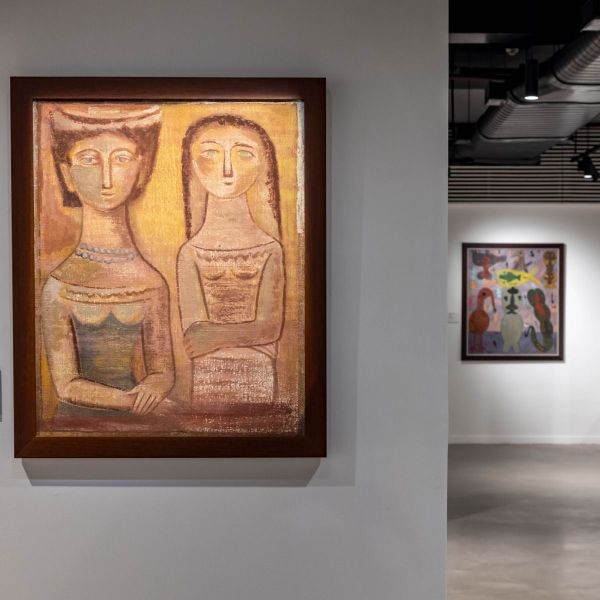
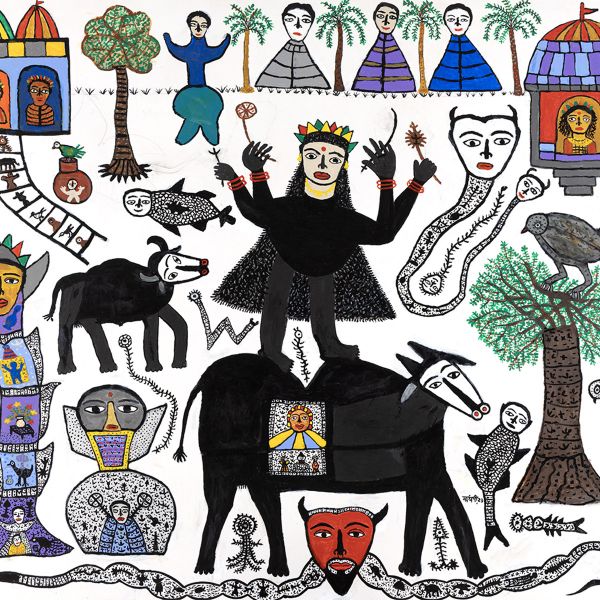
This exhibition looks at the diverse range, moods and styles that primitivism has taken in India, some artists practicing entirely in that style, while others experimenting with it in part, or sporadically. One can count simplicity and a move away from sophistication as key components, as also an inclination or at least a nod towards the folk. The exhibition does not attempt to be a comprehensive survey of India’s primitivists—there are others who would bear inclusion—but is an attempt to understand a body of work and how, given its Western countenance, it can be understood in the Indian context. More than anything else, it offers a clearer view than in the past of what primitivism might mean in the context of modern Indian art. Amrita Sher-Gil F. N. Souza George Keyt Himmat Shah J. Sultan Ali Jamini Roy Jogen Chowdhury K. G. Subramanyan K. S. Kulkarni M. F. Husain Madhvi Parekh Mohan Samant Rabin Mondal Rabindranath Tagore Ramkinkar Baij Sunayani Devi
Learn More -
-
-
 ExhibitionsMemory & IdentityAs low as $1.00
Much of Indian modernism is enriched by the work that some of its best known artists produced after they had left the country, choosing as home another land. F. N. Souza was among the first to leave, in 1949, to head for London, where a successful practice catapulted him to the top of Britain’s artists. He was followed, in 1950, by S. H. Raza, who settled in Paris, winning the coveted critics’ award (Prix de la critique) in 1956, while others such as Krishna Reddy (Paris and New York), S. K. Bakre (London), Sakti Burman (Paris), Avinash Chandra (London and New York), Mohan Samant (New York), Natvar Bhavsar (New York), V. Viswanadhan (Paris), Sohan Qadri (Copenhagen), Rajendra Dhawan (Paris), Eric Bowen (Oslo), Ambadas (Oslo), and Zarina Hashmi (New York), followed in the 1950s-70s. These fourteen artists, with their diverse styles and concerns in art making, are masters lauded for the sheer range of responses to their environment that their work has registered. However, the question this exhibition forefronts, as its curator Kishore Singh asks, is: ‘Does the artist’s ethnic identity mean art too has an ethnic identity?’ Ambadas Avinash Chandra Eric Bowen F. N. Souza Krishna Reddy Mohan Samant Natvar Bhavsar Rajendra Dhawan S. H. Raza S. K. Bakre Sakti Burman Sohan Qadri V. Viswanadhan Zarina Hashmi
Learn More -
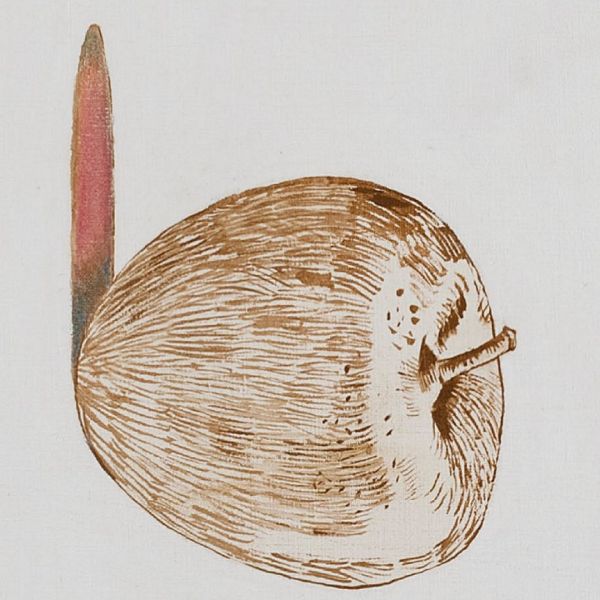 ExhibitionsPrabhakar Barwe: Between Object and SpaceAs low as $1.00
Prabhakar Barwe (1936-95) could well have ended up a theoretician whose book 'Kora Canvas' (Blank Canvas) was a manifesto that established the multi-dimensional relationship between an artist, the object on which he paints, and his subjects. That he was not just an intellectual scholar but an artist whose work speaks for him, is evident through a range of works in which Barwe dissects our understanding of the world and how we view it. Taking commonplace objects and our perception of their existence in the space they occupy, he shifts the dialogue to a point of discomfiture that makes us question our understanding of them. Using scale, discordant juxtapositions, and displacements, he reimagines the everyday in a manner that is thought-provoking, even provocative, as alternate realities—whether perceived or imagined.
Learn More