


Search results for: 'Flower and Fire The Life and Art'
-
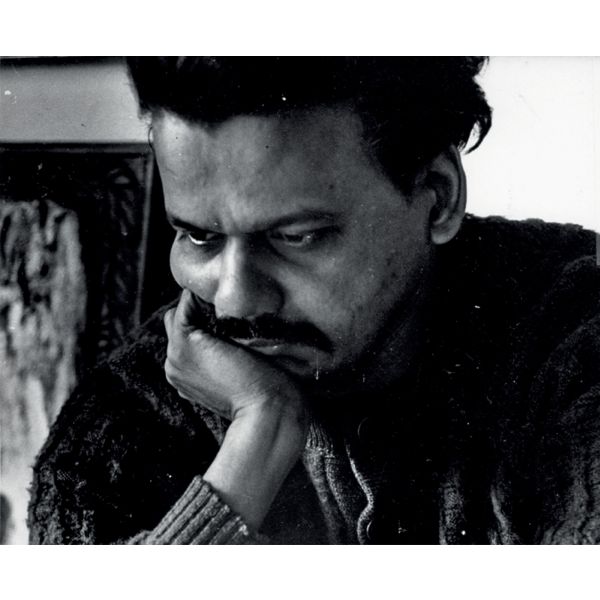 ArtistsMohan Samant$0.00Born in Bombay, Mohan Samant showed early proficiency for both music and art. A lifelong player of sarangi—an Indian bowed, string instrument—Samant chose painting as a career and obtained a diploma from Sir J. J. School of Art, Bombay, in 1952. In the early 1950s, he was influenced by his teacher Shankar Palsikar, a painter of the traditional school, but moved soon towards an expressionistic mode in an attempt to discover his own style, fusing the expressive, the primitive and the abstract in his art. Learn More
 -
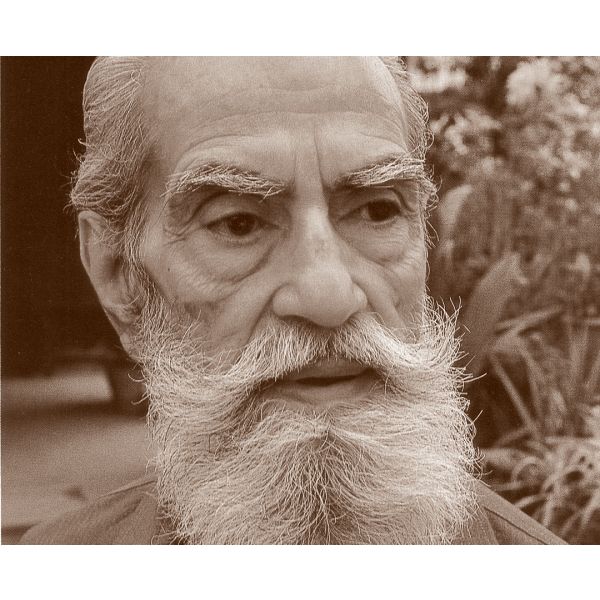 ArtistsB. C. Sanyal$0.00Bhabhesh Chandra Sanyal lived a unique life in the world of Indian art, witnessing the huge arc it cut across the twentieth century—he was born when the revivalist Bengal School was beginning to bloom, and by the time he passed away, modern Indian art had gone global and carved an international art market for itself. Learn More
 -
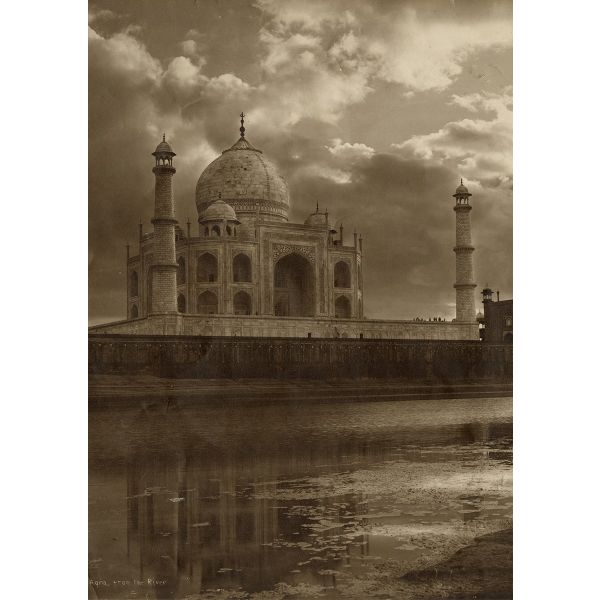 Collection StoriesThe Afterlife of the Taj Gardens: Changes in the Landscape$1.00
Often described as ‘Poetry in Stone’, the Taj Mahal was laid out between 1631-43 by Mughal Emperor Shah Jahan as a mausoleum for his wife Mumtaz Mahal. It is the architectural elements of the Taj complex that grab the most attention, but in fact the garden is the heart of the complex . The visitors today are so transfixed by the Taj itself that they remember very little of the garden. DAG Archive attempts to illustrate the life and ‘afterlife’ of the Taj gardens, once its control was taken over by the British. This archive deep dive showcases the objects from A. E. P. Griessen’s (1875–1935) collection.
Learn More -
 ExhibitionsWilliam Hodges & the Prospect of IndiaAs low as $1.00
William Hodges (1744-97) was a pioneer in more ways than one. He was the first British landscape painter to visit India, and to portray scenery across the whole breadth of the Gangetic plain. As a writer, he gave the first detailed descriptions of numerous historic Indian buildings, and he theorised about the origins and evolution of Indian architectural design. His art illustrates his exploration into terrain which—in its breadth and scope—was at the time almost as unfamiliar to Indian as to Western eyes.
Learn More -
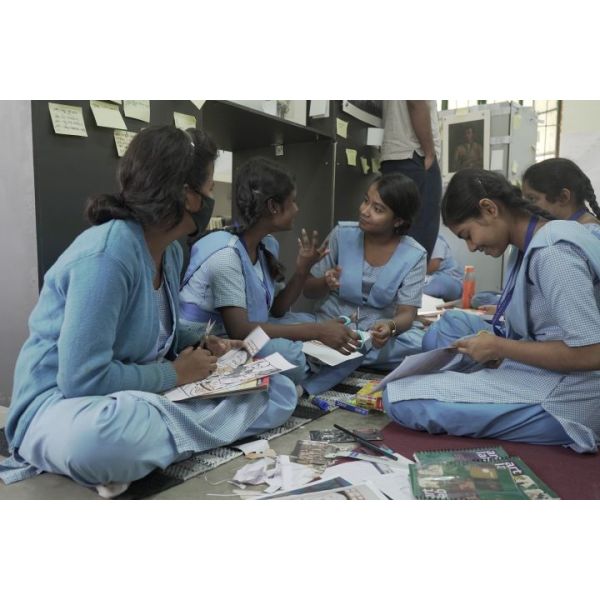 JournalArt Lab: Transforming Classrooms into Museums$0.00
Art Lab by DAG’s Museums Programme is a pop-up art exhibition of facsimiles of works from the DAG Museum Collection that travels to schools and introduces students to modes of visual learning. After two successful iterations in CBSE and ICSE schools in Kolkata, Art Lab travelled to its first Bengali medium West Bengal Board school—Barisha Janakalyan Vidyapith for Girls. Through three days of workshops spread across two weeks, the students interacted with the artworks, learnt the basics of research, delved into historical material, and developed their own creative projects. Take a peek at some of the wonderful projects they curated as they took over the exhibition and made it their own.
Learn More -
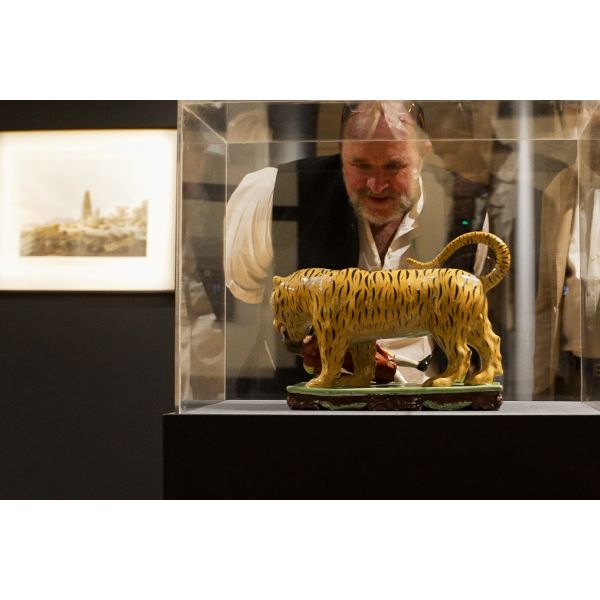 JournalWilliam Dalrymple on Tipu Sultan$0.00Twenty-five years is not a long time in the life of an institution, especially when its scope of work is as overarching as DAG’s is. This short video encapsulates the gallery’s monumental journey undertaken on its silver anniversary, providing a snapshot of the prodigious work it has undertaken in such a short span of time. Learn More
 -
 ExhibitionsMaster Maqbool: Works by M. F. HusainAs low as $1.00
He was the colossus of the Indian art world whose reign over twentieth-century modern art remains unparalleled. M. F. Husain (1913-2011) was the face of Indian modernism and owned it completely. Having started out as a painter of billboards in Bombay, he became its unchallenged monarch as a member of the influential Progressive Artists’ Group in 1947. He claimed the first National Award instituted by the Lalit Kala Akademi in 1955, and went on to become India’s most celebrated artist. In a practice that spanned over seventy years, Husain was playful, experimental, provocative, controversial—but never mediocre.
Learn More -
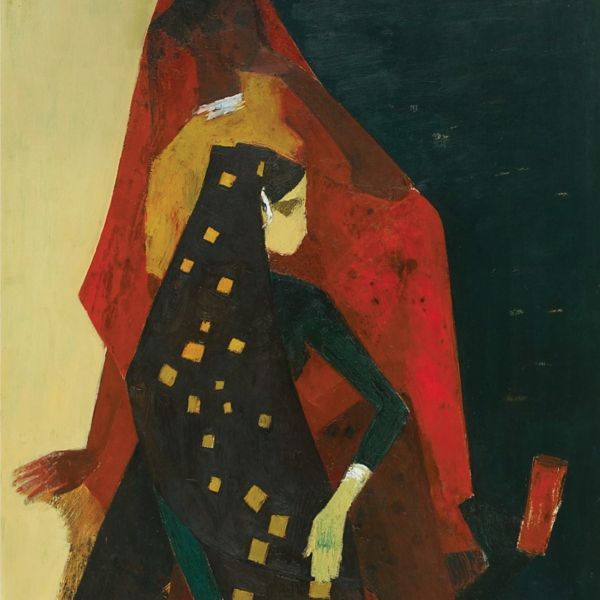 ExhibitionsManifestations XI: 75 ArtistsAs low as $1.00
The art of the twentieth century may be too recent for us to judge it from the viewpoint of longevity, but if the past is any criterion, art is set to outlive us by far—a reason why its documentation is one of the more important tasks before us. This is where the Manifestations series is so important. It encourages discussion and debates around the selection of unique works by seventy-five acknowledged artists spanning a century (or more) of Indian modernism across a range of variously permutable combinations: periods, movements, mediums, materials, regions. Raiba Ambadas Arpana Caur Arun Bose Asit Kumar Haldar Avinash Chandra Bal Chhabda Bikash Bhattacharjee Bimal Dasgupta Biren De Bireswar Sen C. Douglas Chittaprosad Devayani Krishna Dhanraj Bhagat Dharamnarayan Dasgupta Early Bengal (Anonymous) F. N. Souza G. R. Santosh Ganesh Pyne Gogi Saroj Pal Himmat Shah Indra Dugar J. C. Seal J. Sultan Ali J. Swaminathan Gaganendranath Tagore Raja Ravi Varma Jamini Roy Jeram Patel Jyoti Bhatt K. Adimoolam K. C. S. Paniker K. G. Subramanyan K. H. Ara K. K. Hebbar K. Laxma Goud K. S. Radhakrishnan Kalighat Pat (Anonymous) Khagen Roy Krishen Khanna L. Munuswamy Laxman Pai Laxman Shrestha M. F. Husain M. Senathipathi M. V. Dhurandhar N. S. Bendre Nandalal Bose Navjot Nemai Ghosh Nikhil Biswas P. Khemraj P. T. Reddy Paritosh Sen Partha Pratim Deb Prokash Karmakar Prosanto Roy Rabin Mondal Rabindranath Tagore Radha Charan Bagchi Ram Kumar Ranbir S. Kaleka Robert Ker Porter S. H. Raza Sakti Burman Satish Gujral Shanti Dave Shyamal Dutta Ray Gopal Ghose Sohan Qadri Sunil Das Sunil Madhav Sen Thota Vaikuntam Ved Nayar
Learn More -
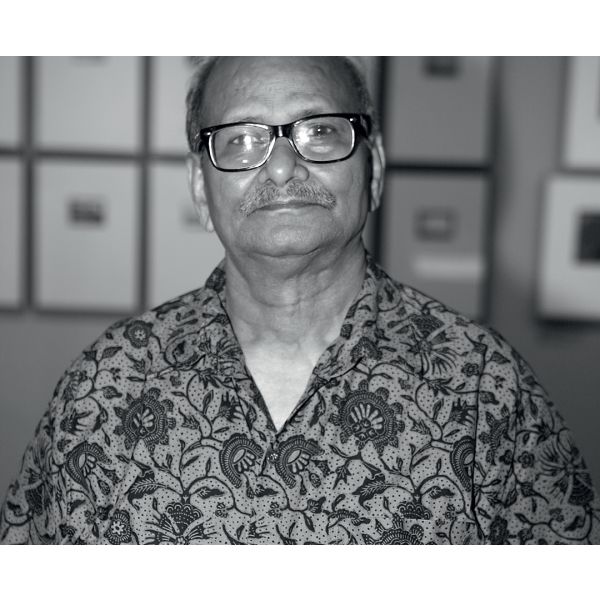 ArtistsJai Zharotia$0.00Known for exploring the mysteries of life beyond the realm of logic through his art, Jai Zharotia was born in Delhi in 1945. He studied fine arts at the Delhi College of Art from 1967-71 and went on to teach at his alma mater for over three decades. Accessible and non-dogmatic as a teacher, he was popular among students. Learn More
 -
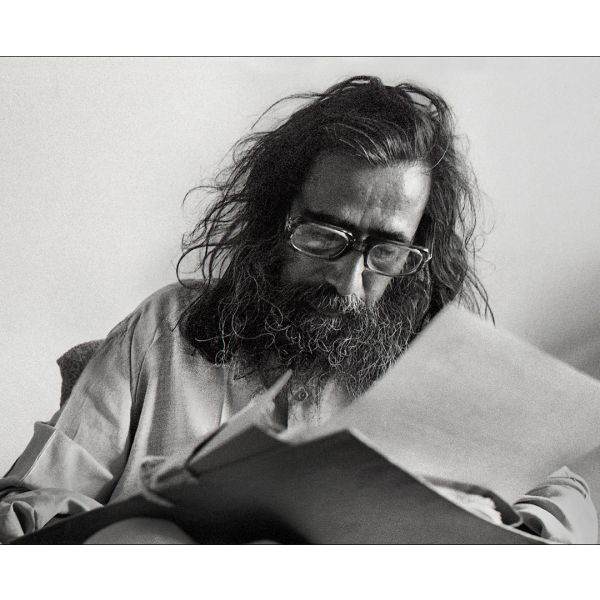 ArtistsJ. Swaminathan$0.00Known for establishing the multi-arts complex, Bharat Bhavan, in Bhopal, and for foregrounding tribal art on the Indian art horizon, Jagdish Swaminathan took up the arts professionally later in life, despite an early aptitude towards drawing and painting. Learn More
 -
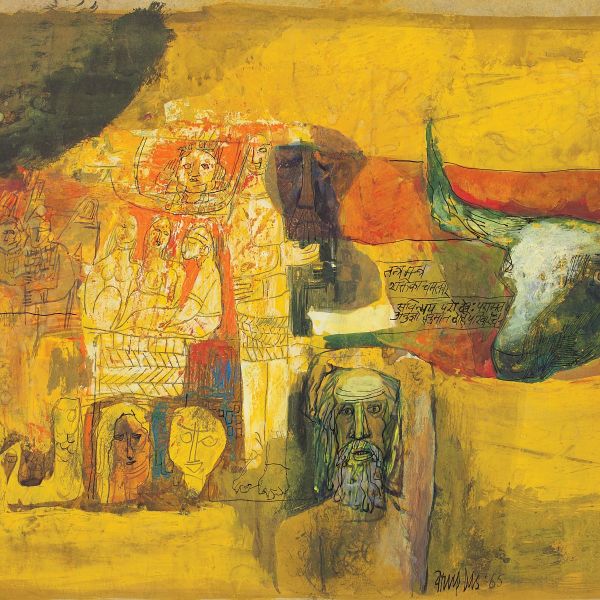 ExhibitionsThe Centum Series Edition 2As low as $1.00
Indian art defies any easily tailored silos to carve for itself a confident assertion of its own identity within a global context, while being a part of its larger assimilative journey. it is this rich legacy of Indian modernism that we hope to explore with The Centum Series which opens a window to the tantalising glimpse of the extraoridnary depth and breadth of its scope and variety. Round numbers are attractive, so we picked one hundred as our choice for this medley of artists and artworks that offers you a unique opportunity to acquire Indian modern art at attractive prices specially tailored for this sale. J. Sultan Ali Altaf Ambadas Amit Ambalal Amitava Anonymous (Early Bengal) Anonymous (Kalighat Pat) Dattatraya Apte B. N. Arya Radha Charan Bagchi Ramkinkar Baij S. K. Bakre Maniklal Banerjee Ananda Moy Banerji Prabhakar Barwe R. B. Bhaskaran Jyoti Bhatt Bikash Bhattacharjee Nikhil Biswas Nandalal Bose Eric Bowen Shobha Broota Vasundhara Tewari Broota Sakti Burman Ramendranath Chakravorty Kanchan Chander Avinash Chandra Sankho Chaudhuri Chittaprosad Jagmohan Chopra Jogen Chowdhury M. A. R. Chughtai Thomas Daniell Arup Das Prodosh Das Gupta Haren Das Sunil Das Bimal Dasgupta Shanti Dave Partha Pratim Deb Jagadish Dey Mukul Dey Rajendra Dhawan Indra Dugar Gopal Ghose Nemai Ghosh Subba Ghosh Bipin Behari Goswami K. Laxma Goud Satish Gujral Ajit Gupta S. L. Haldankar Somnath Hore M. F. Husain Prokash Karmakar Sudhir Khastgir P. Khemraj Bose Krishnamachari K. S. Kulkarni Ram Kumar Walter Langhammer Pradip Maitra Hemanta Misra Dhruva Mistry Rabin Mondal A. H. Müller L. Munuswamy V. Nageshkar Reddeppa Naidu S. Nandagopal Ved Nayar Akbar Padamsee Laxman Pai Gogi Saroj Pal Rm. Palaniappan M. K. Parandekar Madhvi Parekh Manu Parekh R. N. Pasricha Ganesh Pyne Sohan Qadri K. S. Radhakrishnan A. A. Raiba Krishna Reddy P. T. Reddy Rekha Rodwittiya Jamini Roy Prosanto Roy G. R. Santosh Paritosh Sen Nataraj Sharma Lalu Prasad Shaw Shuvaprasanna Paramjeet Singh F. N. Souza Anupam Sud Thota Vaikuntam S. G. Vasudev Jai Zharotia Moti Zharotia
Learn More -
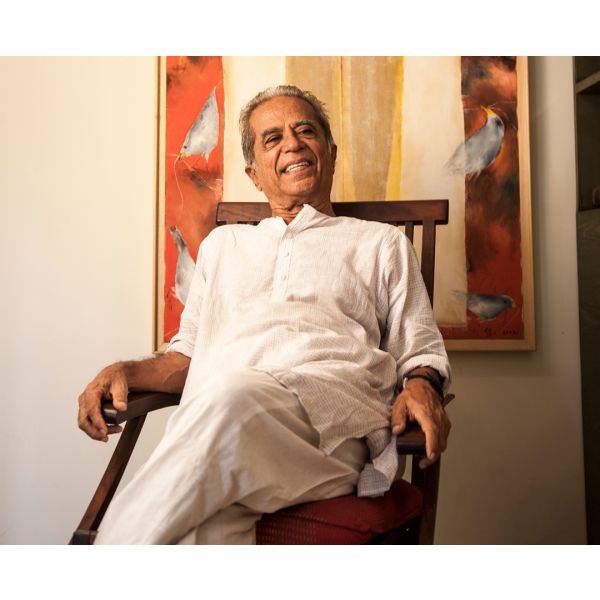 ArtistsHaku Shah$0.00Born on 26 March 1934 in the village of Valod, Gujarat, Haku Shah absorbed deeply the way of life, culture and beliefs of the pastoral and the folk, which he amply manifested in his works. This understanding also moulded him into a cultural anthropologist who brought global academic focus on tribal and folk arts and culture of India. Learn More