


Search results for: 'every dog has its day i could do'
-
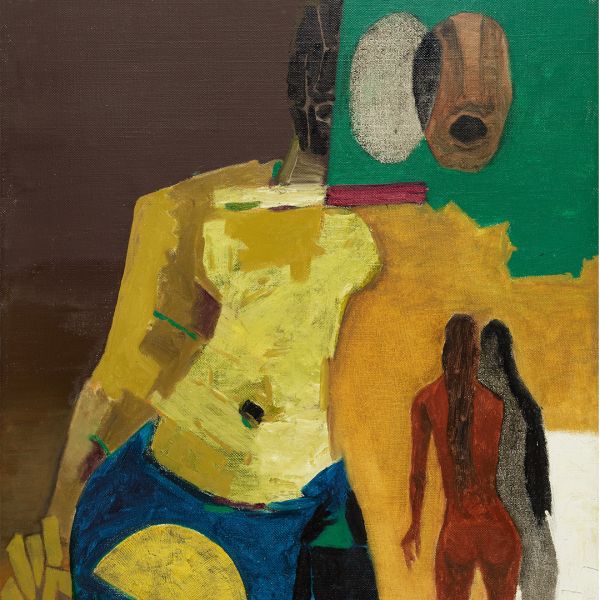 Art FairsAD Design Show 2023$1.00
At the three-day show, DAG will present Celebrating the Modern, an ode to the vibrancy of Indian art with a hand-picked selection that guides us through the development of Indian modernism through diverse movements and genres—a tribute to its appeal that has extended beyond time to be part of a distinctive global language.
Learn More -
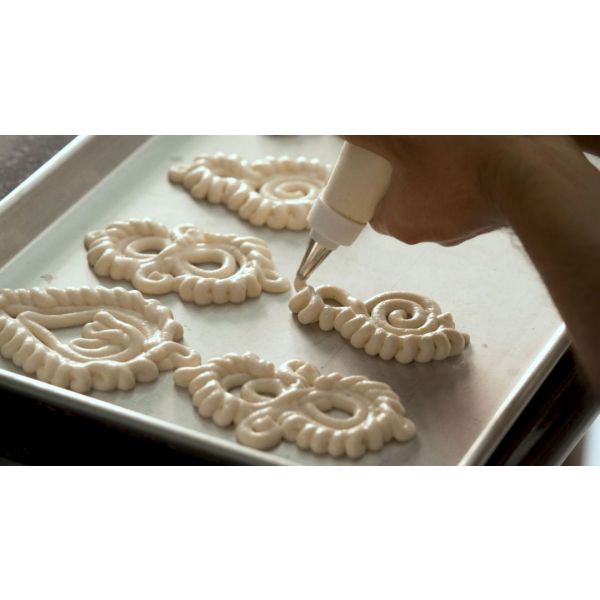 Events and ProgrammesSunday Adda with Bong Eats$1.00
An online cook along with Bong Eats and Pritha Sen, a food historian to delve into the history of dishes, made by our grandmothers and mothers, that form a large part of the art that we experience in our day-to-day life, in the kitchen and on our plates.
Learn More -
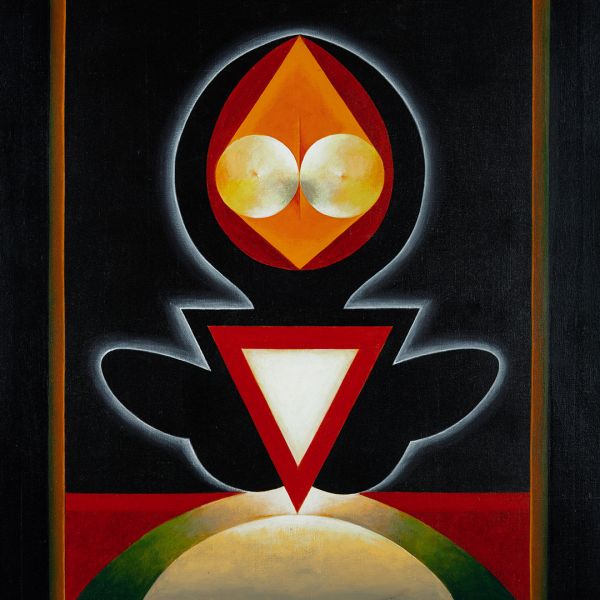 Art FairsFrieze Masters 2023$1.00The medieval ages saw the rise in India and parts of Asia of philosophical, theological, cultural, literary and visual manifestations that derived from diverse faiths but with one aim—to attain enlightened liberation. Its resistance to Brahmanical texts and hegemony resulted in the creation of geometrical aesthetics that were interpreted by way of texts, paintings, and architecture and had a monumental impact on society. At the centre of its geometric configurations—the triangle, the square, and the circle—lay the idea of Creation itself, the source of primal energy that could to be diverted towards a higher consciousness, and all universe was manifest in this. Learn More
 -
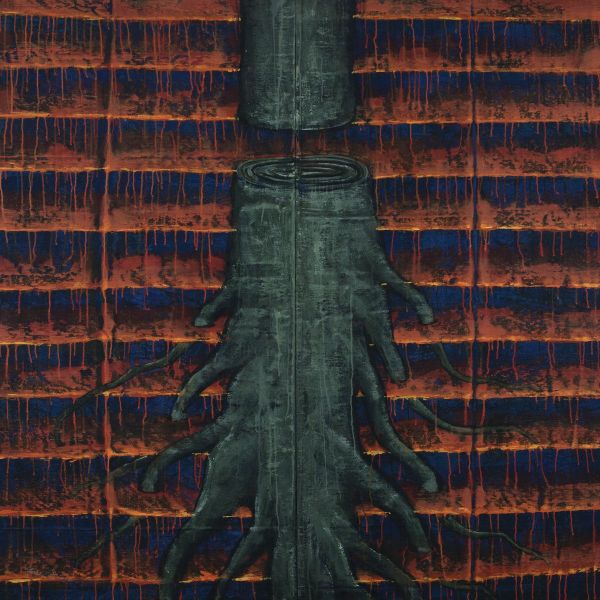 ExhibitionsThe Centum Series Edition 3As low as $1.00
Indian art defies any easily tailored silos to carve for itself a confident assertion of its own identity within a global context, while being a part of its larger assimilative journey. it is this rich legacy of Indian modernism that we hope to explore with The Centum Series which opens a window to the tantalising glimpse of the extraoridnary depth and breadth of its scope and variety. Akhilesh J. Sultan Ali Altaf Ambadas Amit Ambalal Amitava Anonymous (Early Bengal) Dattatraya Apte Radha Charan Bagchi Ramkinkar Baij S. K. Bakre Prabhakar Barwe R. B. Bhaskaran Jyoti Bhatt Natvar Bhavsar Bikash Bhattacharjee Nikhil Biswas Nandalal Bose Shobha Broota Sakti Burman Avinash Chandra Chittaprosad Jagmohan Chopra Bijan Choudhary Jogen Chowdhury Anita Roy Chowdhury D. P. Roy Chowdhury Thomas Daniell Haren Das Sunil Das
Learn More -
 Collection OnlineTHE WASH TECHNIQUE$1.00
The wash technique has come to be associated in India with the art of the Bengal School, but the story of its origins in India takes us back to an era of rich cultural exchanges. In the early twentieth century artists like Abanindranath Tagore were trying to imagine a pan-Asian cultural identity, and they turned for inspiration to traditions from across Persia to Japan. Rabindranath Tagore's friendship with Okakura Kakuzō occasioned the arrival of several Japanese artists in Kolkata, such as Yokoyama Taikan, Hishida Shunsō and Katsuta Shōkin. While the latter found inspiration in the Hindu epics, artists in Bengal adapted techniques that were used by the Japanese, such as the wash technique or the subtle use of ink and brush. Since then, the wash technique has been interpreted widely by individual artists, offering an ethereal quality of light to their works, or, in some cases, like for Gaganendranath Tagore and Prosanto Roy, new possibilities of painting in various shades of darkness.
Learn More -
 ExhibitionsIconicAs low as $1.00
From 1797, when British artist Thomas Daniell painted his masterly landscape of Mahabalipuram, to 2003, the year Rameshwar Broota's painting pitching man against metal resulted in a powerful image, the Indian art world has seen a succession of artists and movements that have enriched its vocabulary in more ways than one. Thomas Daniell Sita Ram Early Bengal School Raja Ravi Varma Edwin Lord Weeks Marius Bauer Ustad Allah Bakhsh Studio of Bourne & Shepherd M. V. Dhurandhar Hemendranath Mazumdar M. A. R. Chughtai Nandalal Bose Jamini Roy Laxman Pai J. Swaminathan Francis Newton Souza J. Sultan Ali Rabin Mondal S. H. Raza K. K. Hebbar Akbar Padamsee Tyeb Mehta K. H. Ara S. K. Bakre Bireswar Sen Nirode Mazumdar Shanti Dave Gulam Rasool Santosh Madhvi Parekh Satish Gujral Bikash Bhattacharjee Maqbool Fida Husain Meera Mukherjee Rameshwar Broota
Learn More -
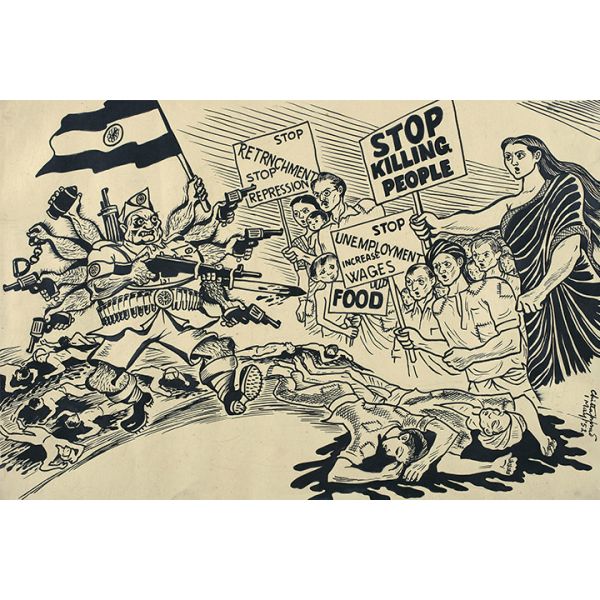 JournalChittaprosad by Nadia Samdani$1.00
Chittaprosad couldn’t have created a more germane work in honour of the people who successfully fought their oppressors to create an independent nation. A close examination of his masterpiece, Bangladesh War, reveals the artist’s use of symbols of hope against persecution and domination, art collector and philanthropist Nadia Samdani tells us.
Learn More -
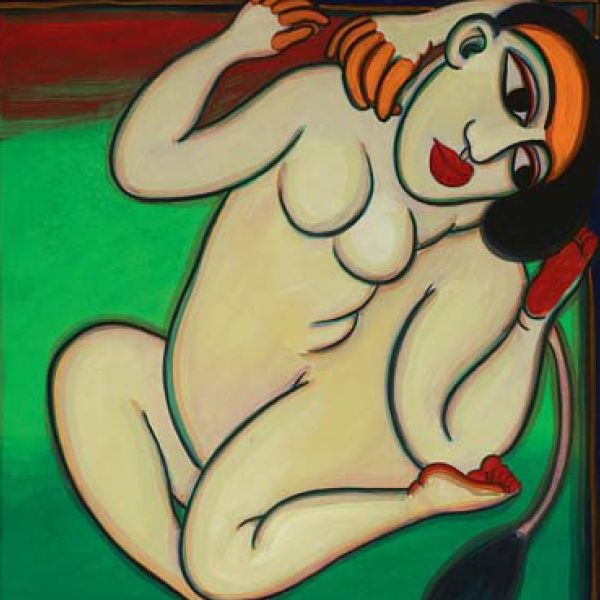 ExhibitionsGogi Saroj Pal: The Feminine UnboundAs low as $1.00
Gogi Saroj Pal, seen often as one of the first ‘feminist’ women painters in modern Indian art, has consistently explored the condition and inner life of women. Women’s lives, their desires and compulsions, and the complex and magical world of the feminine have been Gogi’s frequent subjects. In her work, Gogi explores and responds to the vast reserve of myths, fables and lore that abound in India, interested in excavating, in particular, its religious and literary traditions. She traces and frequently creates new mythical/celestial female beings of great strength and potency, such as the Hathyogini-Kali—skilled yoga practitioner and potent female force—who assert themselves in a modern landscape where women are frequently denied agency.
Learn More -
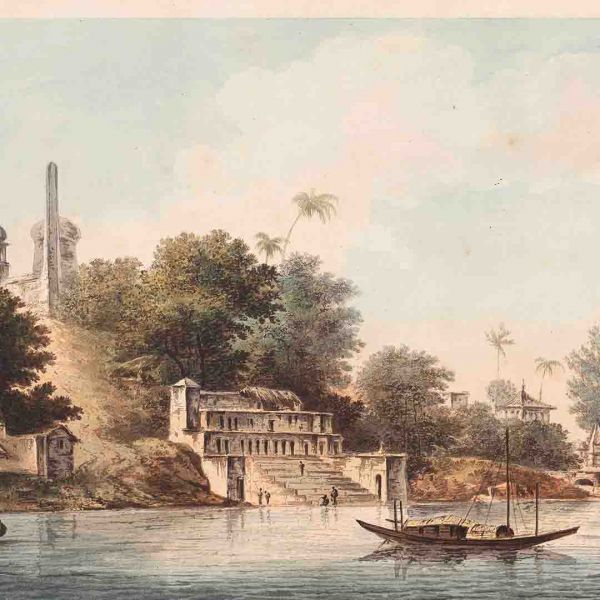 ExhibitionsWilliam Hodges & the Prospect of IndiaAs low as $1.00
William Hodges (1744-97) was a pioneer in more ways than one. He was the first British landscape painter to visit India, and to portray scenery across the whole breadth of the Gangetic plain. As a writer, he gave the first detailed descriptions of numerous historic Indian buildings, and he theorised about the origins and evolution of Indian architectural design. His art illustrates his exploration into terrain which—in its breadth and scope—was at the time almost as unfamiliar to Indian as to Western eyes.
Learn More -
-
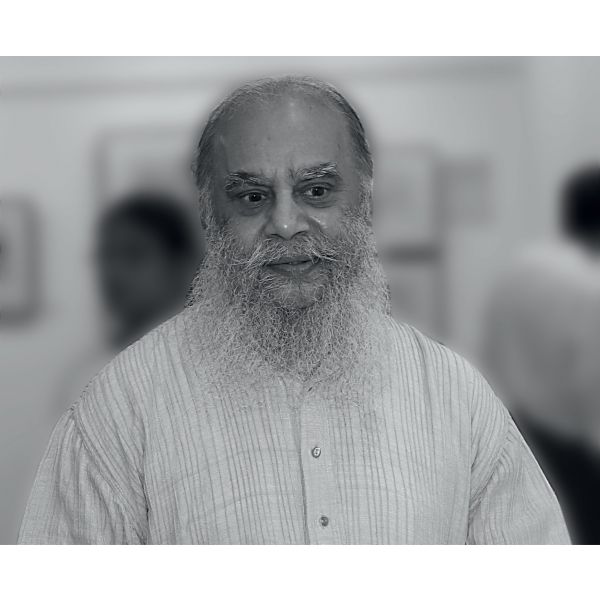 ArtistsShuvaprasanna$0.00Born in Calcutta on 20 October 1947, Shuvaprasanna is a quintessential painter of the eastern metropolis that he unabashedly loves. He graduated from Indian College of Art, Rabindra Bharati University, Calcutta, in 1969. An active member of Calcutta Painters group, urban themes are a constant in his work. Beset by problems and politics, but possessing great potential, Kolkata has remained his abiding inspiration as he absorbs and responds to its upheavals, the tumult of its masses, and its frequent political turbulence. Learn More
 -
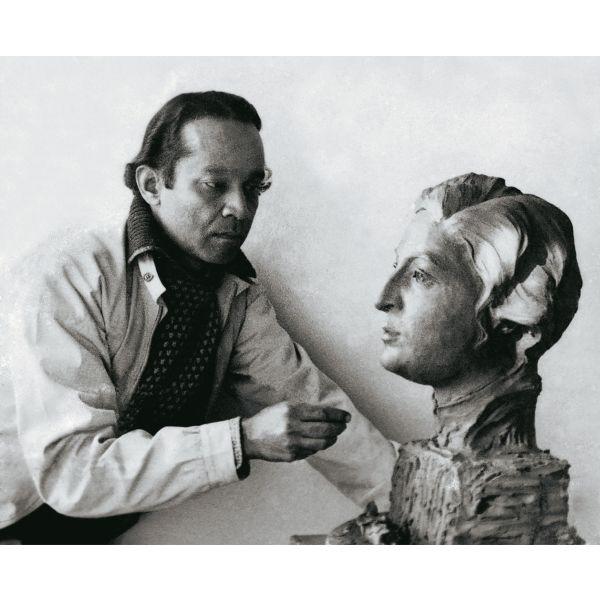 ArtistsSudhir Ranjan Khastgir$0.00Sudhir Ranjan Khastgir was born on 24 September 1907 in Chittagong in present-day Bangladesh, and studied at Kala Bhavana, Santiniketan, under Nandalal Bose. Like his classmate, Ramkinkar Baij, he took up sculpture as a subject, continuing its pursuit in Lucknow under Hiranmoy Roychaudhuri in 1932, and under Ganpath Kashinath Mahatre, in Bombay, in 1933. The same year, he joined Scindia School, Gwalior, as a teacher and, later, Doon School in Dehradun. Learn More