


Search results for: 'steven universe it's over isn't it'
-
 JournalThe French Connection: S. H. Raza at Paris' Centre Pompidou$0.00
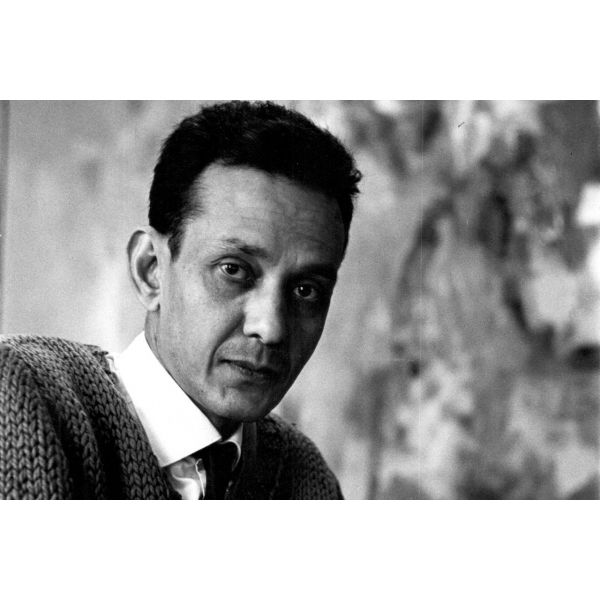
In February, Paris' Centre Pompidou--a premier centre for modern art since its construction in 1977--mounted an extensive solo show looking back at S. H. Raza’s career in painting. It represents a historic moment for Indian modern art’s international story as it unfolded over the twentieth century, and also marked Raza's own symbolic return to the place where he stayed for most of his working life. The fertile post-independent period saw cross-cultural connections being forged by Indian artists in Europe and America on their own terms and this show is a testament to Raza’s evolving encounters with land and mythology. The curators, Catherine David and Diane Toubert, spoke to DAG highlighting some of the takeaways from this major retrospective.
Learn More -
 Art FairsART15$0.00
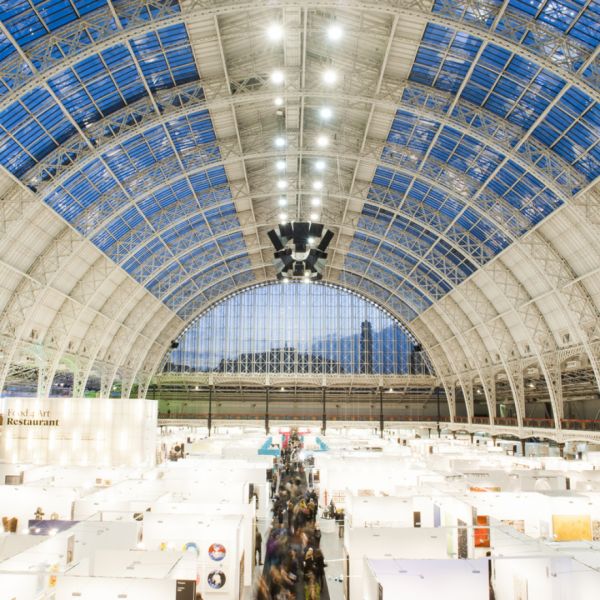
For its debut in London, DAG created a booth-in-booth display space at the historical exhibition venue, Olympia London, that offered glimpses of the artworks from all around, thereby improving its visibility and attracting visitors. Its choice of art too reflected the best from its collection of the twentieth century modern masters of Indian art, who, in turn, had been influenced by movements and artists in the West. Several of these had worked, briefly or for the duration of their careers, in London and Europe. These included Avinash Chandra, F. N. Souza, Ram Kumar, S. H. Raza, Laxman Pai, Manjit Bawa,
Learn More
S. K. Bakre, Sakti Burman and Sohan Qadri among others. The room within the booth was reserved solely for the paintings by F. N. Souza. Akbar Padamsee Ambadas Anjolie Ela Menon Avinash Chandra B. Prabha Bikash Bhattacharjee Dharamnarayan Dasgupta F. N. Souza G.R. Santosh George Keyt Himmat Shah J. Sultan Ali Jogen Chowdhury K. H. Ara K. K. Hebbar K. Laxma Goud Krishen Khanna Laxman Pai M. F. Husain Manjit Bawa N. S. Bendre P. T. Reddy Prodosh Das Gupta Rabin Mondal Ram Kumar S. H. Raza S. K. Bakre Sakti Burman Sohan Qadri Sunil Das -
 ExhibitionsTHE CENTUM SERIES EDITION 1As low as $1.00
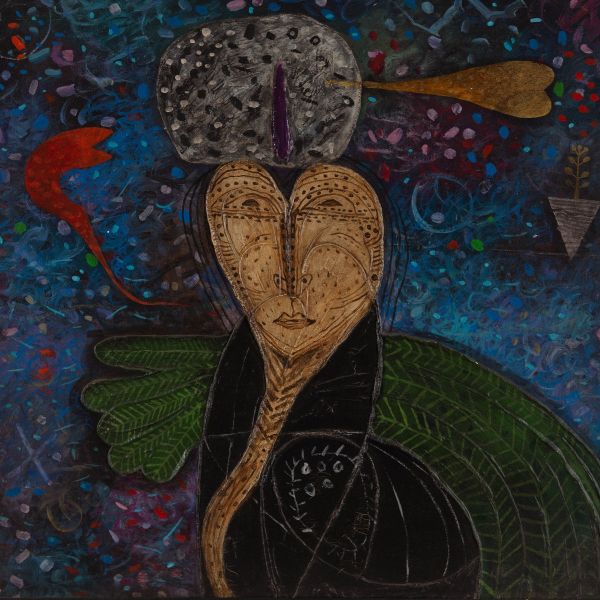
Indian modernism is rich in diversity with a dizzying succession of artists who have each carved a niche for themselves in the rich firmament of art practice in the country. Open to influences from the West, reaching deep into the roots of their own culture, exploring and experimenting across mediums, absorbing ideas, reinterpreting established norms, Indian art defies any easily tailored silos to carve for itself a confident assertion of its own identity within a global context, while being a part of its larger assimilative journey.
Learn More -
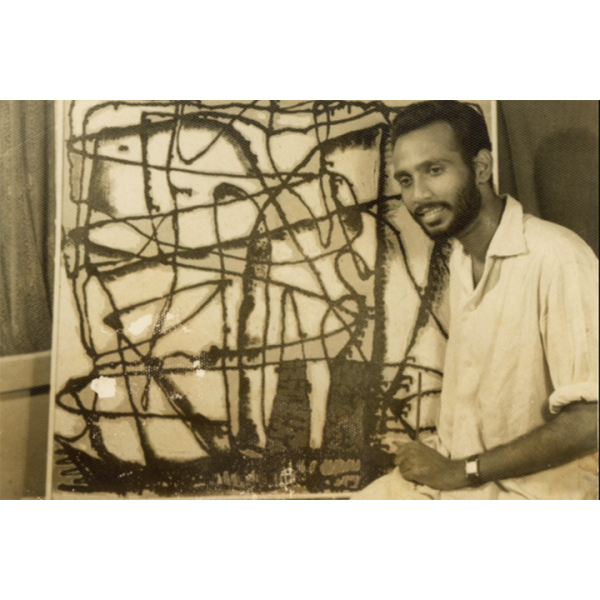 JournalKishore Singh on P. Khemraj$0.00‘Iconic Masterpieces of Indian Modern Art, Edition 2’ opened on 11 February at DAG’s Janpath Gallery in New Delhi featuring fifty artworks which shaped the trajectory of pre-modern and modern art in the country. As part of the exhibition, Kishore Singh speaks on P. Khemraj’s ‘Charpoi’ painting and its sensualist language. The autobiographical elements of the work and its depiction of universally felt emotions within a language of abstraction, personalizes its appeal. Learn More
 -
 ExhibitionsIndian LandscapesAs low as $1.00
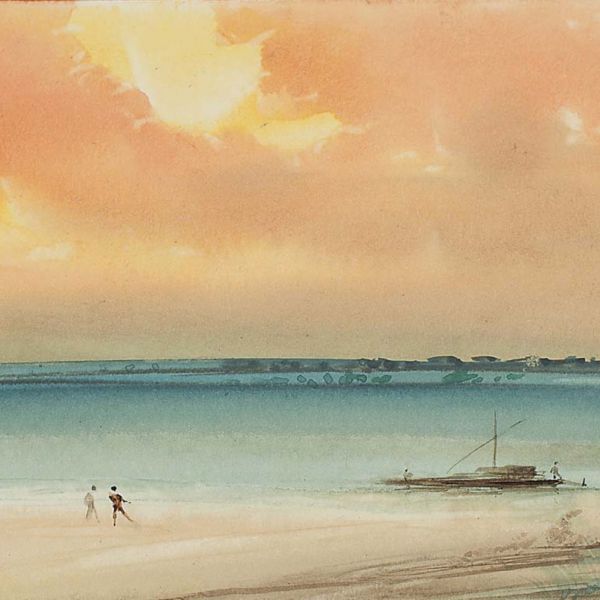
Landscape art arrived in India through travelling European artists who brought the aesthetic of painting mountains, rivers and trees against the sky and a distant horizon—nature as a subject in itself —to Indian art, where it had traditionally only formed a backdrop in narrative-driven, figural paintings. The genre remained popular throughout the nineteenth century with a great demand for landscapes of India both in Europe and among the newly anglicised elite in India. Its popularity began to wane with the advent of modernism and a growing emphasis on the human figure, but several Indian artists, a significant name among them Gopal Ghose, continued to practice the form, now absorbing a wide range of new artistic trends and influences. A.A. Almelkar Abanindranath Tagore Ambika Dhurandhar Amitava Anonymous (Company School) Anonymous (Early Bengal) Atul Bose Avinash Chandra B. C. Gue B. N. Arya Bhupen Khakhar Bijan Choudhary Bikash Bhattcharjee Bimal Dasgupta Bireswar Sen Bishnupada Roychowdhury Chittaprosad D. C. Joglekar D. J. Joshi Devraj Dakoji Devyani Krishna Dharamnarayan Dasgupta Dulal Gue E. A. Dadi Edward Cheney F. N. Souza G. R. Santosh G. S. Haldankar Ganesh Haloi Gobardhan Ash Gopal Ghose H. A. Gade Haren Das Hirachand Dugar Indra Dugar J. P. Gangooly Jamini Roy John Deschamps Jyoti Bhatt K H. Ara K. C. S. Panicker K. K. Hebba K. Laxma Gou K. S. Kulkarni Kanwal Krishna Kisory Roy Kripal Singh Shekhawat L. N. Taskar L. P. Shaw Lalit Mohan Sen Laxman Pai M. F. Husain M. V. Dhurandhar Manishi Dey Mukul Dey N. R. Sardesai N. S. Bendre Nandalal Bose Nikhil Biswas Olinto Ghilardi P. Khemraj Paramjit Singh Pestonji E. Bomanji Prokash Karmakar Prosanto Roy Radha Charan Bagchi Raja Ravi Varma Ram Kumar Ramendranath Chakravorty Ramkinkar Baij Ranen Ayan Dutta Richard Barron Robert Grindlay S. G. Thakur Singh S. K. Bakre S. L. Haldankar Satish Sinha Sudhir Khastgir Sunil Das Thomas Daniell William Carpenter William Hodges
Learn More -
 ExhibitionsArt Exhibitions$0.00
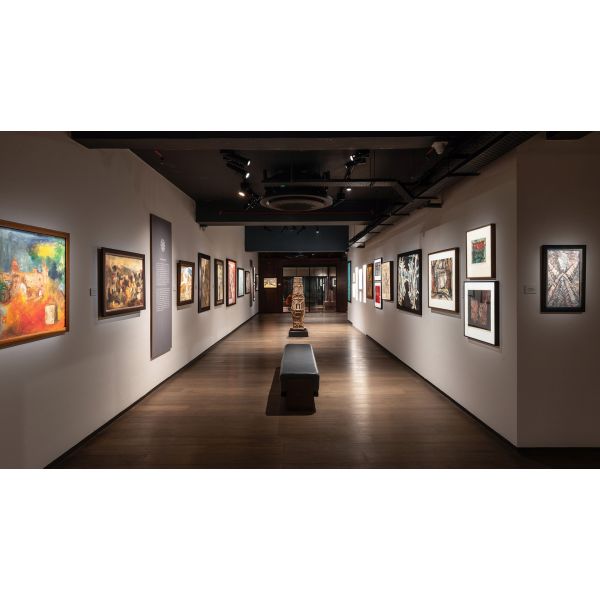
DAG has been a pioneer in curating exhibitions that have historical significance. These have ranged from themes around different genres and art movements to artist retrospectives as well as engagements with forgotten masters. Most exhibitions are sourced from its own inventory and in recent years DAG has begun to explore eighteenth and nineteenth century art and artists in addition to its presence as a stakeholder of twentieth century art. Exhibitions are routinely organised at its galleries in New Delhi, Mumbai, and New York, as well as in collaboration with museums and other institutions. All exhibitions are accompanied by well researched and designed books, adding considerably to the documentation of Indian art history.
Learn More -
 ExhibitionsGogi Saroj Pal: The Feminine UnboundAs low as $1.00
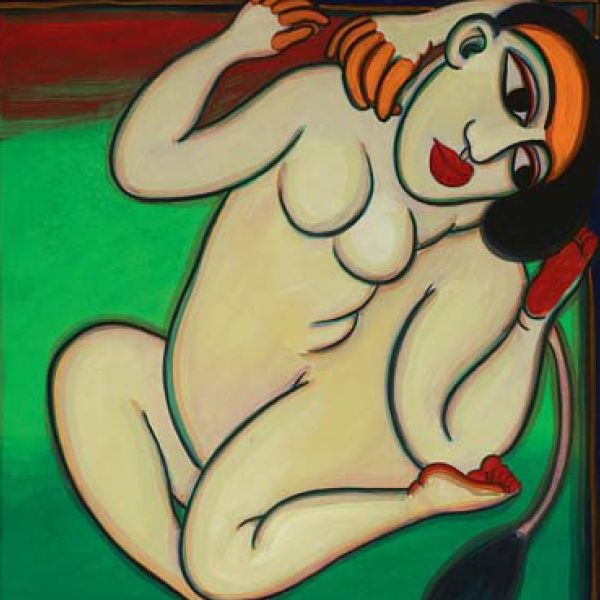
Gogi Saroj Pal, seen often as one of the first ‘feminist’ women painters in modern Indian art, has consistently explored the condition and inner life of women. Women’s lives, their desires and compulsions, and the complex and magical world of the feminine have been Gogi’s frequent subjects. In her work, Gogi explores and responds to the vast reserve of myths, fables and lore that abound in India, interested in excavating, in particular, its religious and literary traditions. She traces and frequently creates new mythical/celestial female beings of great strength and potency, such as the Hathyogini-Kali—skilled yoga practitioner and potent female force—who assert themselves in a modern landscape where women are frequently denied agency.
Learn More -
 ExhibitionsIconicAs low as $1.00
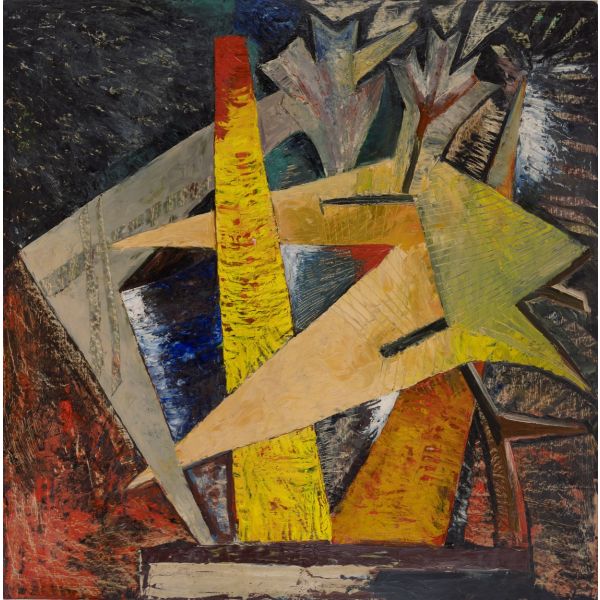
From 1797, when British artist Thomas Daniell painted his masterly landscape of Mahabalipuram, to 2003, the year Rameshwar Broota's painting pitching man against metal resulted in a powerful image, the Indian art world has seen a succession of artists and movements that have enriched its vocabulary in more ways than one. Thomas Daniell Sita Ram Early Bengal School Raja Ravi Varma Edwin Lord Weeks Marius Bauer Ustad Allah Bakhsh Studio of Bourne & Shepherd M. V. Dhurandhar Hemendranath Mazumdar M. A. R. Chughtai Nandalal Bose Jamini Roy Laxman Pai J. Swaminathan Francis Newton Souza J. Sultan Ali Rabin Mondal S. H. Raza K. K. Hebbar Akbar Padamsee Tyeb Mehta K. H. Ara S. K. Bakre Bireswar Sen Nirode Mazumdar Shanti Dave Gulam Rasool Santosh Madhvi Parekh Satish Gujral Bikash Bhattacharjee Maqbool Fida Husain Meera Mukherjee Rameshwar Broota
Learn More -
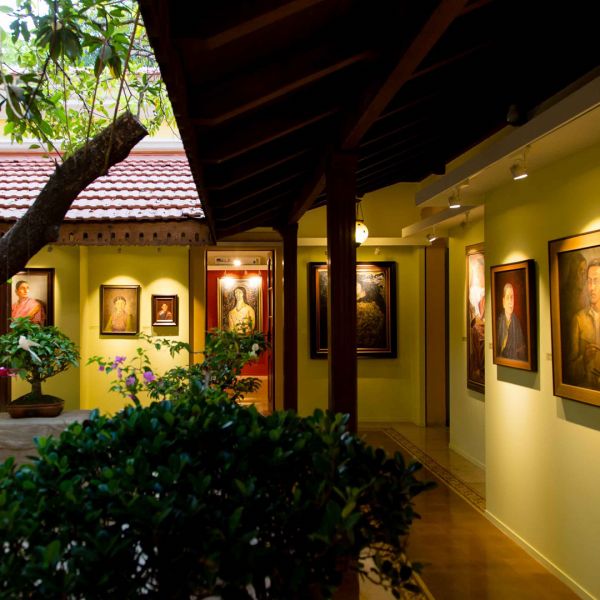 ExhibitionsDAG at Serendipity Goa 2016As low as $1.00
By the end of the century, however, the scene was changing, and infrastructure—following the economic reforms in 1991—began to improve, creating an interest in collecting art. Twentieth century Indian modern art has since been at the forefront of collecting and investing in Indian art, and DAG, which has the largest private collection of Indian art has a marked focus on this period of Indian art. Ambadas F. N. Souza G. R. Santosh George Keyt Jamini Roy K. K. Hebbar Kanwal Krishna Laxman Pai M. F. Husain M. F. Pithawalla M. V. Dhurandhar Madhvi Parekh Nandalal Bose Nemai Ghosh Prokash Karmakar Rabin Mondal
Learn More -
 ExhibitionsPrimitivism and Modern Indian ArtAs low as $1.00
The idea of primitivism centres on the wish to identify with, or respond to, elements of a society that are deemed ‘primitive’. In artistic terms, it is about rejecting realism, simplifying technique and reducing the formal means of expression to a ‘primitive’ state. The term itself is borrowed from discussions of Western art, where high-profile examples include the images of Tahiti and its people made in the 1890s by Paul Gauguin, and responses to African sculpture by Pablo Picasso in 1906-09. The second thread of primitivism—the reduction of formal means—is best exemplified by the ‘cut-outs’ made by Henri Matisse in the 1940s.
Learn More -
 ExhibitionsA Place In The Sun: Women Artists From 20th Century IndiaAs low as $1.00
Sunayani Devi picked up a paintbrush in 1905 when she was thirty years old while supervising her kitchen duties, self-taught, but with enough talent to attract the critical attention of Stella Kramrisch who organised an exhibition of her paintings in Germany in 1927. It was in her worthy footsteps that India’s women artists followed. Devayani Krishna was born five years after Sunayani Devi began painting; Amrita Sher-Gil already had a career in Paris by the time India’s first art school-trained woman artist, Ambika Dhurandhar, earned her diploma in Bombay. B. Prabha followed next, her work reflecting the realities of the marginalised in a piquant language. By the time Nasreen Mohamedi and Zarina Hashmi, both born a decade before Independence, established their careers, women were joining art schools in greater numbers, validating their practice not on the basis of their gender but on its context. Anupam Sud Devayani Krishna Gogi Saroj Pal Latika Katt Madhvi Parekh Mrinalini Mukherjee Navjot Rekha Rodwittiya Shobha Broota Zarina Hashmi
Learn More -
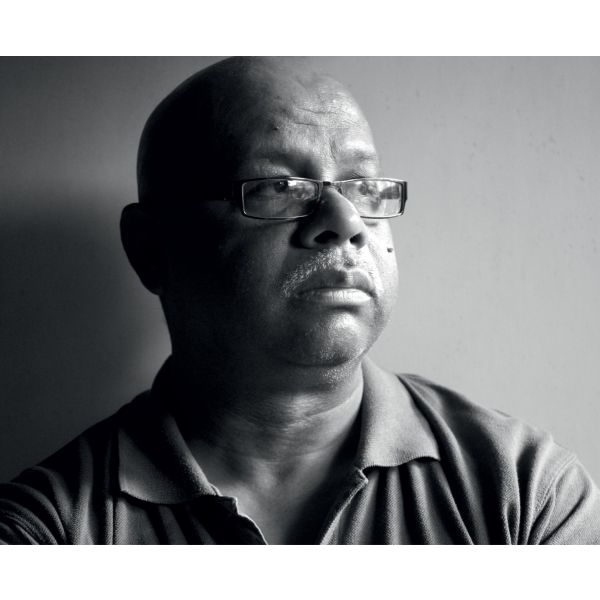 ArtistsSubba Ghosh$0.00Born in New Delhi on 4 June 1961, Subba Ghosh has carved a niche for himself with art that overturns reality to show a mirror to society’s lived hyperreality, through paintings, prints, animation, installations, puppets, and video art. Ghosh’s mirror throws not just a passive light on reality but also makes a critical, political comment on issues such as the relationship between the state and its subjects. Learn More