


Search results for: 'Nikon AF-S 70-200mm f/4G ED VR'
-
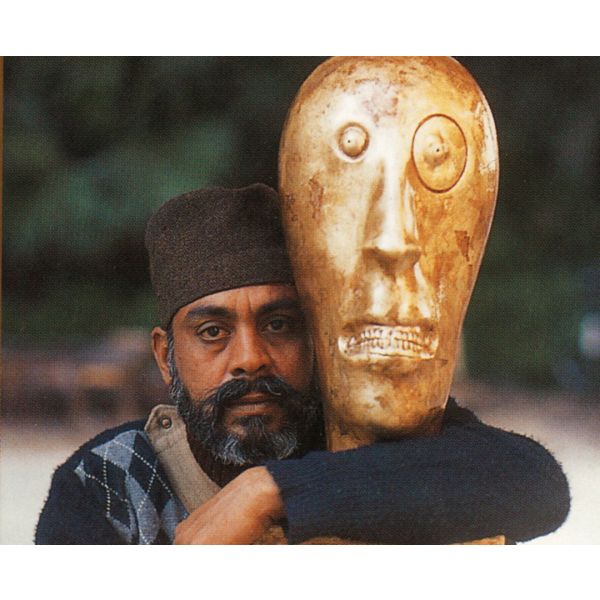 ArtistsHimmat Shah$0.00Born in Lothal in Gujarat, one of the most important sites of the Harappan civilisation (3300-1300 BCE), Himmat Shah’s long-term engagement with terracotta traces its roots to the ancient antecedents of his birthplace, seen especially in his sculptural Heads. Learn More
 -
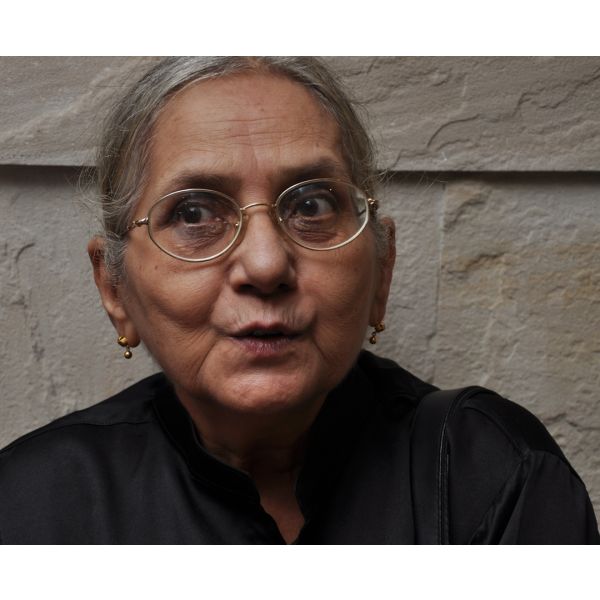 ArtistsGogi Saroj Pal$0.00Born in Uttar Pradesh in 1945, Gogi Saroj Pal studied art in Banasthali, Rajasthan, took a diploma at the Government College of Arts and Crafts, Lucknow, and a postgraduate diploma in painting from the College of Art, New Delhi. Learn More
 -
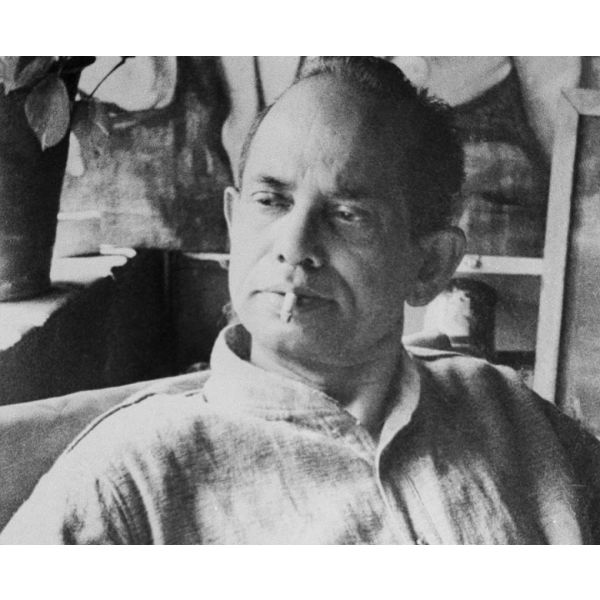 ArtistsAbani Sen$0.00An artist who died with the brush in his hand like a true devotee of his profession, Abani Sen graduated from the Government School of Art, Calcutta, under Percy Brown. Learn More
 -
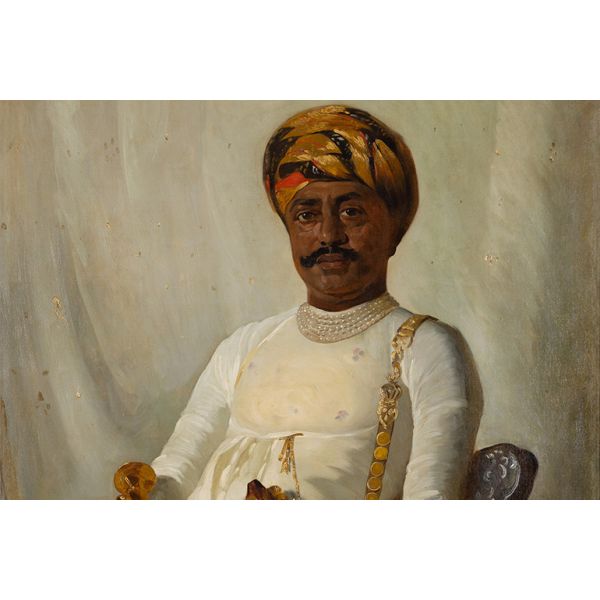 JournalThakor Becharsinhji of Chuda by Frank Brooks$1.00
Did you know that the portrait painter Frank Brooks whose two trips to India won him commissions from the rulers of principalities in the Bombay Presidency, trained Raja Ravi Varma’s brother in the art of figure painting? For his second India voyage (1892-93), he was invited specially to paint the heads of the twenty-eight rulers of the Kathiawar Agency. The subject of this stunning portrait is Thakur Becharsinhji of Chuda, a state so small it did not even merit a gun salute for its ruler. Explore in detail with Kishore Singh, SVP, DAG.
Learn More -
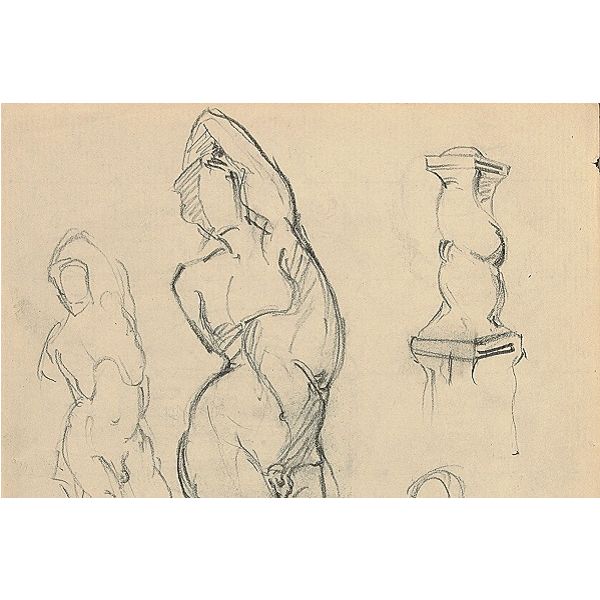 JournalTerm of the Month: Figure Drawing$0.00
The advent of abstraction is a defining moment in art history as we devise divisions between representational, figurative, and abstract art, with the need arising from this pivotal formal shift in the modern world. The term ‘figurative’ has come to represent an antithesis of sorts to the term abstract. One is representational of reality, the latter a derived (abstracted) representation or even non-representational (colour-field paintings for example).
Learn More -
 JournalThe French Connection: S. H. Raza at Paris' Centre Pompidou$0.00
In February, Paris' Centre Pompidou--a premier centre for modern art since its construction in 1977--mounted an extensive solo show looking back at S. H. Raza’s career in painting. It represents a historic moment for Indian modern art’s international story as it unfolded over the twentieth century, and also marked Raza's own symbolic return to the place where he stayed for most of his working life. The fertile post-independent period saw cross-cultural connections being forged by Indian artists in Europe and America on their own terms and this show is a testament to Raza’s evolving encounters with land and mythology. The curators, Catherine David and Diane Toubert, spoke to DAG highlighting some of the takeaways from this major retrospective.
Learn More -
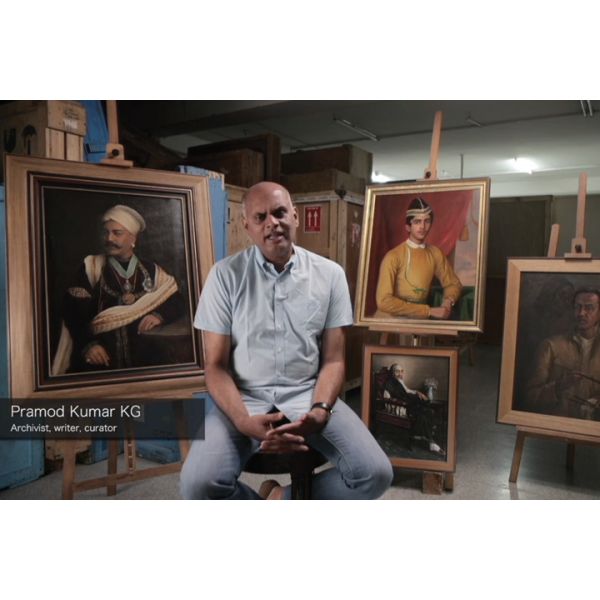 JournalA Portrait of our People$0.00
This exhbition explored the evolution of the genre of portrait painting in India. Curated by Pramod Kumar KG, it was specially created for Drishyakala, a joint collaboration between DAG and the Archaeological Survey of India, at Red Fort, Delhi. Visitors came face to face with dazzling canvases, expressive watercolours and early prints of people known and unknown in this extraordinary exhibition.
Learn More -
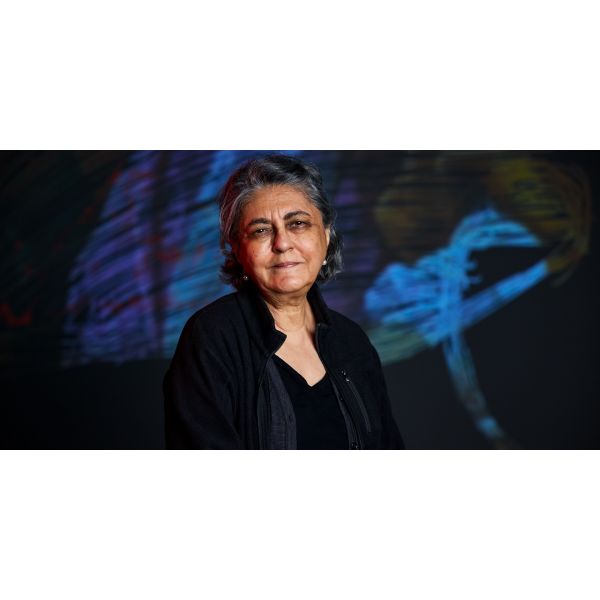 JournalRadical as a way of Being: Inaugural Contemporary Fellow Nalini Malani at London's National Gallery$0.00
What is the role of collectors and collections or archives in the world of art today? Does it simply allude to practices of producing a consumable past today or does it also aspire to question the ways in which history has been shaped by powerful interventions in the form of artworks, performances and installations? In this series of conversations, we wanted to explore the idea of collecting recent or contemporary art—and how it inevitably takes us back to the moderns who influenced such practices heavily.
Learn More -
 Art FairsIndia Art Fair$0.00
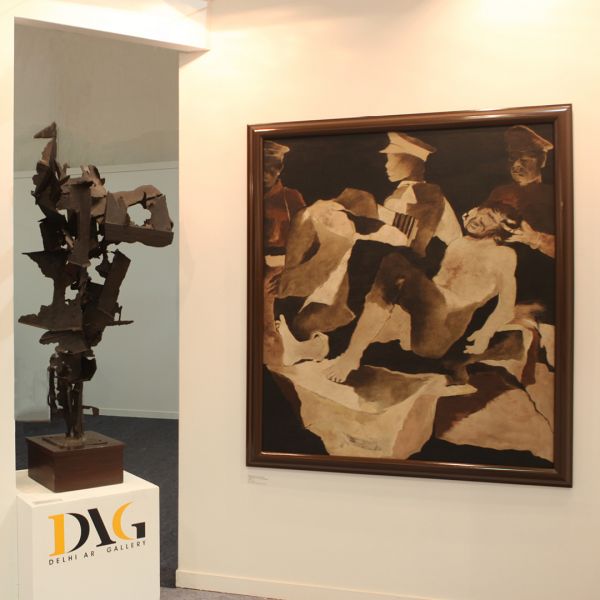
Stepping up its efforts to familiarise viewers with the extensive range of Indian modern art, DAG occupied an extensive booth at the India Art Fair 2014, where over 300 paintings and sculptures were displayed, featuring about 125 artists. The specially designed booth was the centre of attraction at the fair and the most prominent destination for art lovers wanting to understand the development of Indian art from the point of its history, chronology, movements, periods, regions, or genres. It was an art history lesson brought to life and was thronged by visitors. Special talks were organised at the booth. A 332-page catalogue was specially published for the fair and remains a compendium of India’s greatest artists ever. A. A. Almelkar A. A. Raiba A. D. Tavaria A. M. Davierwalla Abalall Rahiman Abanindranath Tagore Akbar Padamsee Altaf Amalnath Chakladhar Ambadas Amitava Aroomoogam Pillay Arpana Caur Avinash Chandra B. C. Law B. Prabha Badri Nath Arya Bal Chhabda Benjamin Hudson Benode Behari Mukherjee Bhupen Khakkar Bijan Choudhary Bikash Bhattacharjee Bimal Dasgupta Bipin Behari Goswami Biren De Bireswar Sen Chintamoni Kar Chittaprosad D. P. Roy Chowdhury Dhanraj Bhagat Dharamanarayan Dasgupta Early Bengal Oil (Anonymous) F. N. Souza G. R. Santosh Gaganendranath Tagore Ganesh Haloi Ganesh Pyne George Keyt Gieve Patel Gogi Saroj Pal Gopal Ghose H. A. Gade Haren Das Hemanta Misra Hemendranath Majumdar Henry Singleton Himmat Shah Indra Dugar J. Sultan Ali J. Swaminthan Jacob Epstein Jamini Roy Jeram Patel Jogen Chowdhury Jyoti Bhatt K. C. S. Panicker K. G. Subramanyan K. H. Ara K. K. Hebbar K. Laxma Goud K. S. Kulkarni Kalighat Pat Kanwal Krishna Khagen Roy Kisory Roy Krishen Khanna Kshitindranath Majumdar L. Munuswamy L. N. Taskar L. P. Shaw Laxman Pai M. A. R. Chughtai M. F. Husain M. F. Pithawalla M. V. Dhurandhar Manjit Bawa Manu Parekh Meera Mukherjee Mohan Samant N. R. Sardesai N. S. Bendre Nandalal Bose Nemai Ghosh Nikhil Biswas P. Chander Sheker P. Khemraj P. T. Reddy P. V. Janakiram Paritosh Sen Pestonji E. Bomanji Portrait (Anonymous) Prabhakar Barwe Prodosh Das Gupta Prokash Karmakar Prosanto Roy R. Vijaivargiya Rabin Mondal Rabindranath Tagore Radha Charan Bagchi Raghav Kaneria Raja Ravi Varma Ram Kumar Ramendranath Chakravorty Rameshwar Broota Ramkinkar Baij Ravi Varma School (Anonymous) S. Dhanapal S. G. Thakur Singh S. H. Raza S. L. Haldankar S.K. Bakre Sailoz Mukherjea Sankho Choudhuri Satish Gujral Shiavax Chavda Shyamal Dutta Ray Sohan Qadri Somnath Hore Suhas Roy Sunil Das Sunil Madhav Sen Thomas Daniell Tyeb Mehta V. Nageshkar V. S. Gaitonde Ved Nayar
Learn More -
 Art FairsIndia Art Fair$0.00
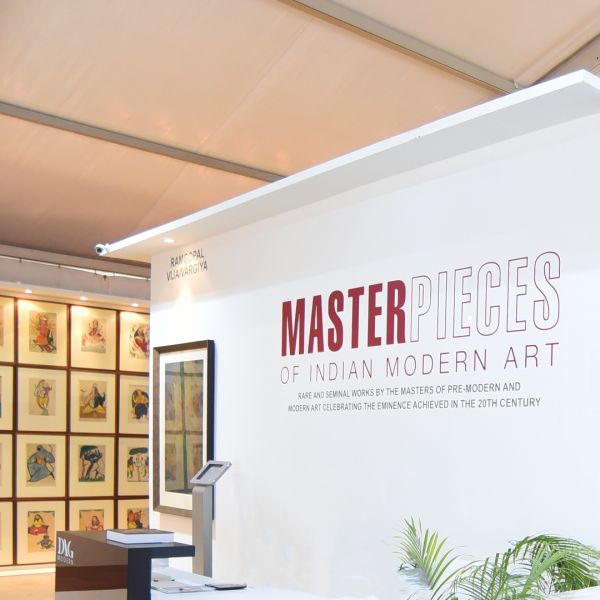
India Art Fair is South Asia’s largest platform for showcasing the best of modern and contemporary art from around the world, and DAG’s booth is the most looked forward to by connoisseurs of Indian art in India and overseas. They were not disappointed at this iteration of the fair where its lavish booth was set up to resemble public rooms in a large mansion with teak-panelled walls, pillars, portrait galleries, a private lounge, a media room for interviewing artists and important visitors that was streamed live, and special provisions for curated walks. It also published a daily art newspaper for the duration of the fair for distribution to all visitors. A large book accompanied the display at the booth. K. K. HEBBAR RABIN MONDAL HIMMAT SHAH SAILOZ MOOKHERJEA J. SULTAN ALI AMBADAS K. H. ARA RAMKINKAR BAIJ S. K. BAKRE PRABHAKAR BARWE DHANRAJ BHAGAT BIKASH BHATTACHARJEE NIKHIL BISWAS PESTONJI E BOMANJI NANDALAL BOSE AVINASH CHANDRA CHITTAPROSAD D. P. ROY CHOWDHURY SHANTI DAVE ADI DAVIERWALLA BIREN DE G. R. SANTOSH PARITOSH SEN HENRY SINGLETON M. F. HUSAIN FN SOUZA KALIGHAT J. SWAMINATHAN RABINDRANATH TAGORE L. N. TASKAR KRISHEN KHANNA RAMGOPAL VIJAIVARGIYA RAM KUMAR JEHANGIR SABAVALA HIMMAT SHAH EARLY BENGAL OIL H. A. GADE MOHAN SAMANT S H RAZA JAMINI ROY GEORGE KEYT B PRABHA PROKASH KARMAKAR K LAXMA GOUD RANBIR KALEKA P. KHEMRAJ DEVYANI KRISHNA VED NAYAR K C S PANIKER GIEVE PATEL PORTRAIT A. RAMACHANDRAN PROSANTO ROY V. VISWANADHAN RAM KUMAR RAVINDER REDDY
Learn More -
 JournalThe Poet (Head of Rabindranath Tagore) by Ramkinkar Baij$1.00
Ramkinkar Baij is rightfully described as India’s first modernist sculptor for his pathbreaking use of cement and laterite as material, his choice of subjects and scale in public art projects, and his unconventional development of ideas.
The Poet is an abstract portrait of Rabindranath Tagore, imagined through negative spaces, concaves and convexes forming the eyes in a hollowed head, a masterclass in Baij’s cubist vocabulary. The portrait shared almost no physical attributes with the subject, instead focusing on distorting Tagore’s visage to give us insights into the state of his mind.
Learn More -
 JournalA Child, the Youth, now Man by Rameshwar Broota$1.00
Painted in 2003 by Rameshwar Broota and titled A Child, the Youth, now Man, is bisected horizontally by a hyper-realistic finger, which partially covers a comparatively hazy vertical male torso. The evocative cruciform structure of this composition, possibly alluding to ideas of masculinity, corruption and persecution, also aides the artist in highlighting human vulnerability. There is no face visible here, only an unprotected body.
Learn More