


Search results for: 'Sunayani Devi as a Feminine Voice of Resistance'
-
 Events and ProgrammesAssemblage: Histories$1.00
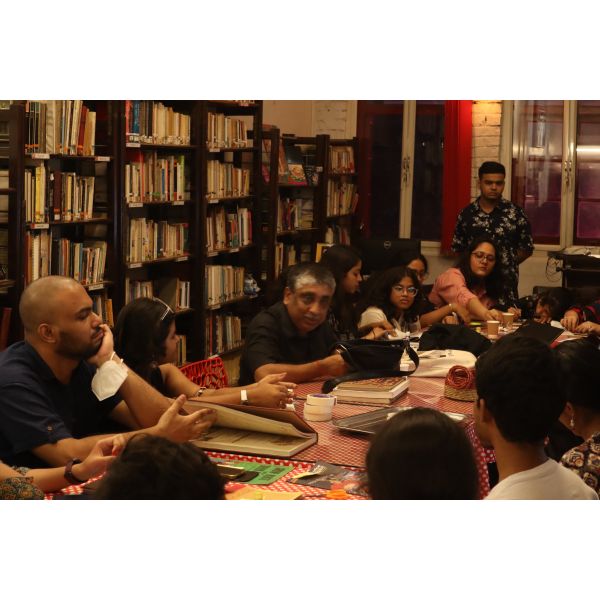
A sketching and reading session with art historian Debdutta Gupta on the artistic practice of assemblage centred on the text Khuddur Jatra by Abanindranath Tagore.
Learn More -
 JournalDebating secularism in South Asian Art with Tapati Guha-Thakurta$0.00
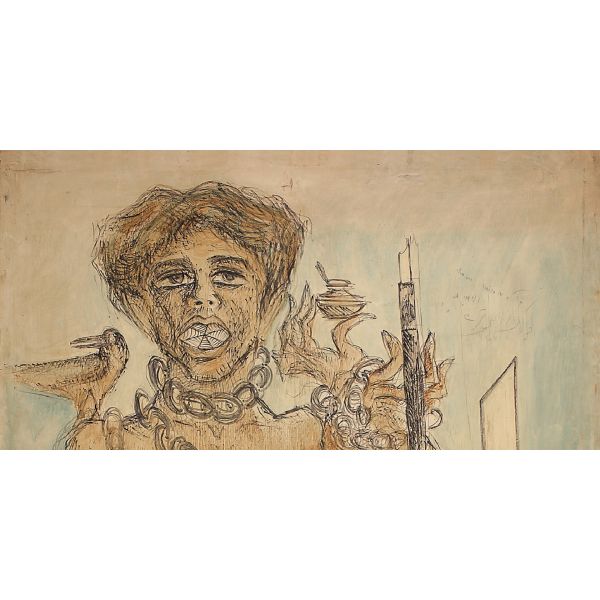
This collection of essays, co-edited by eminent scholars of art history, Tapati Guha-Thakurta and Vazira Zamindar, navigate the fraught religio-political contexts of South Asia to bring into relief the fragility and amorphous nature of a contested term like the ‘secular’.
Learn More -
 JournalDrishyakala by DAG in collaboration with ASI$0.00
DAG in collaboration with ASI (Archaeological Survey of India) presents Drishyakala. An incredible array of over 400 artworks spread over 25,000 square ft. by India’s leading artists from the DAG collection—made all the more unique for its presentation within a UNESCO World Heritage Site—the Red Fort.
Learn More -
-
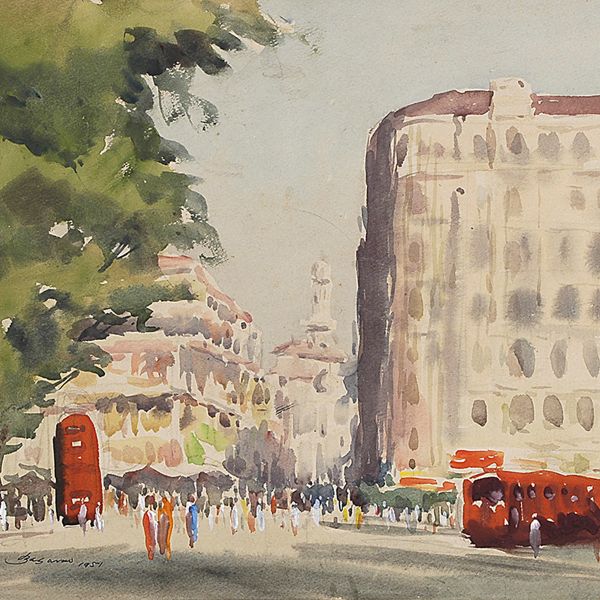
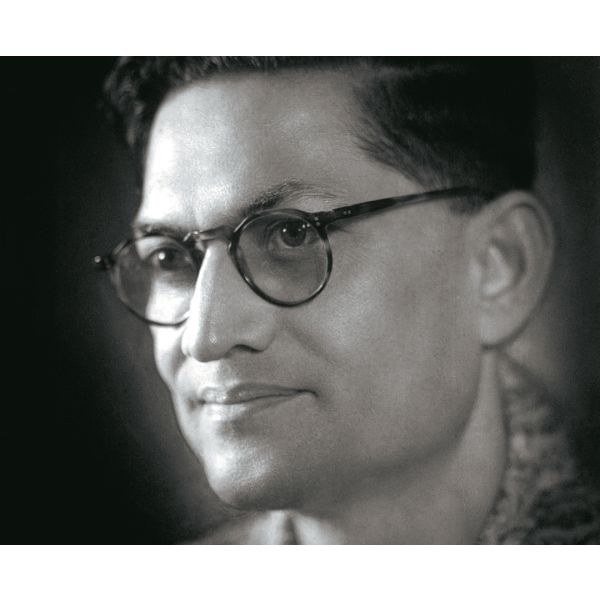 ArtistsAsit Kumar Haldar$0.00Born on 10 September 1890, at the Tagore mansion in Jorasanko, Calcutta, Asit Kumar Haldar was initiated into art by a traditional patua, Jhareshwar Chakravarty. Learn More
 -
 ExhibitionsRabin Mondal: Kingdom of ExileAs low as $1.00
Rabin Mondal is like a striding colossus of our times, scorching up the firmament with images that reflect societal malaise and his own inner turmoil. His determination to paint in a market-unfriendly manner is characteristic of his resolve. His canvases provide no safety net for the unwary viewer. Here is a confident artist aware of his self and his role with no fig leaf to offer those seeking beauty in art—not that his work is unbeautiful.
Learn More -
 ExhibitionsMemory & IdentityAs low as $1.00
Much of Indian modernism is enriched by the work that some of its best known artists produced after they had left the country, choosing as home another land. F. N. Souza was among the first to leave, in 1949, to head for London, where a successful practice catapulted him to the top of Britain’s artists. He was followed, in 1950, by S. H. Raza, who settled in Paris, winning the coveted critics’ award (Prix de la critique) in 1956, while others such as Krishna Reddy (Paris and New York), S. K. Bakre (London), Sakti Burman (Paris), Avinash Chandra (London and New York), Mohan Samant (New York), Natvar Bhavsar (New York), V. Viswanadhan (Paris), Sohan Qadri (Copenhagen), Rajendra Dhawan (Paris), Eric Bowen (Oslo), Ambadas (Oslo), and Zarina Hashmi (New York), followed in the 1950s-70s. These fourteen artists, with their diverse styles and concerns in art making, are masters lauded for the sheer range of responses to their environment that their work has registered. However, the question this exhibition forefronts, as its curator Kishore Singh asks, is: ‘Does the artist’s ethnic identity mean art too has an ethnic identity?’ Ambadas Avinash Chandra Eric Bowen F. N. Souza Krishna Reddy Mohan Samant Natvar Bhavsar Rajendra Dhawan S. H. Raza S. K. Bakre Sakti Burman Sohan Qadri V. Viswanadhan Zarina Hashmi
Learn More -
 ExhibitionsThe Centum Series Edition 2As low as $1.00
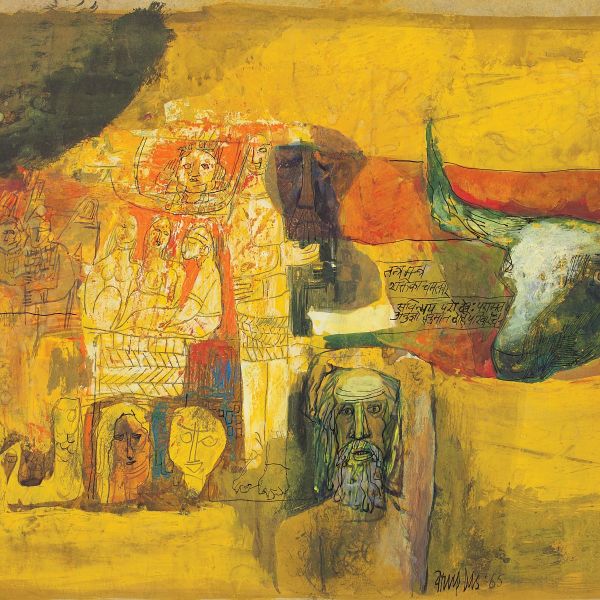
Indian art defies any easily tailored silos to carve for itself a confident assertion of its own identity within a global context, while being a part of its larger assimilative journey. it is this rich legacy of Indian modernism that we hope to explore with The Centum Series which opens a window to the tantalising glimpse of the extraoridnary depth and breadth of its scope and variety. Round numbers are attractive, so we picked one hundred as our choice for this medley of artists and artworks that offers you a unique opportunity to acquire Indian modern art at attractive prices specially tailored for this sale. J. Sultan Ali Altaf Ambadas Amit Ambalal Amitava Anonymous (Early Bengal) Anonymous (Kalighat Pat) Dattatraya Apte B. N. Arya Radha Charan Bagchi Ramkinkar Baij S. K. Bakre Maniklal Banerjee Ananda Moy Banerji Prabhakar Barwe R. B. Bhaskaran Jyoti Bhatt Bikash Bhattacharjee Nikhil Biswas Nandalal Bose Eric Bowen Shobha Broota Vasundhara Tewari Broota Sakti Burman Ramendranath Chakravorty Kanchan Chander Avinash Chandra Sankho Chaudhuri Chittaprosad Jagmohan Chopra Jogen Chowdhury M. A. R. Chughtai Thomas Daniell Arup Das Prodosh Das Gupta Haren Das Sunil Das Bimal Dasgupta Shanti Dave Partha Pratim Deb Jagadish Dey Mukul Dey Rajendra Dhawan Indra Dugar Gopal Ghose Nemai Ghosh Subba Ghosh Bipin Behari Goswami K. Laxma Goud Satish Gujral Ajit Gupta S. L. Haldankar Somnath Hore M. F. Husain Prokash Karmakar Sudhir Khastgir P. Khemraj Bose Krishnamachari K. S. Kulkarni Ram Kumar Walter Langhammer Pradip Maitra Hemanta Misra Dhruva Mistry Rabin Mondal A. H. Müller L. Munuswamy V. Nageshkar Reddeppa Naidu S. Nandagopal Ved Nayar Akbar Padamsee Laxman Pai Gogi Saroj Pal Rm. Palaniappan M. K. Parandekar Madhvi Parekh Manu Parekh R. N. Pasricha Ganesh Pyne Sohan Qadri K. S. Radhakrishnan A. A. Raiba Krishna Reddy P. T. Reddy Rekha Rodwittiya Jamini Roy Prosanto Roy G. R. Santosh Paritosh Sen Nataraj Sharma Lalu Prasad Shaw Shuvaprasanna Paramjeet Singh F. N. Souza Anupam Sud Thota Vaikuntam S. G. Vasudev Jai Zharotia Moti Zharotia
Learn More -
 ExhibitionsIndian DivineAs low as $1.00
The exhibition, Indian Divine, begins with the late nineteenth century art on mythological and religious themes from regions as diverse as Bombay and Bengal—these include Western style oil paintings of deities by such well-known artists of the academic realist styles as Raja Ravi Varma and M. V. Dhurandhar, and mythological/ religious episodes and figures featured in the hybrid style, a mix of Western realistic painting and traditional Indian art and concerns—the Early Bengal style, a very popular form, of which the exhibition presents over fifty works. It goes on to document Kalighat paintings on religious and mythological themes from the late nineteenth and early twentieth centuries that were very popular, as well popular bazaar prints on these themes that flooded the markets with the advent of lithography and mechanical printing. 19th-20th century Popular Print Art School Print A. A. Almelkar A. A. Raiba A. P. Bagchi Asit Haldar B. C. Law B. N. Jija Baburao Painter Bat-tala Print (Anonymous) Bikash Bhattacharjee Bipin Behari Goswami Bishnupada Roychowdhury Chittaprosad D. B. Onkar D. D. Burman D. N. Sharma Debabrata Chakraborty Devyani Krishna Dhanraj Bhagat Dhirendra Narayan Dhruva Mistry Dipen Bose Early Bengal Early Bengal (Anonymous) F. N. Souza G. R. Santosh Ganesh Pyne Gogi Saroj Pal Haren Das Heramba Kumar Ganguly Indu Rakshit J. Sultan Ali Jamini Roy K. C. Pyne K. K. Hebbar K. Laxma Goud K. S. Kulkarni Kalighat pat (Anonymous) Kalipada Ghoshal Kamal Chattopadhyay Kanwal Krishna Krishen Khanna Kshitindranath Majumdar Laxman Pai M. F. Husain M. V. Dhurandhar Madhvi Parekh Mukul Dey Nandalal Bose Nihar Ranjan Sengupta P. T. Reddy P. V. Janakiram R. Vijaivargiya Rabin Mondal Radha Charan Bagchi Raja Ravi Varma Ramananda Bandhopadhyay Ramendranath Chakravorty Ranada Charan Ukil Ravi Varma School (Anonymous) Reddappa Naidu Roopkrishna S. Dhanapal S. G. Vasudev Sanat Chatterjee Sanjay Bhattacharya Sarada Charan Ukil Shyamal Dutta Ray Sohan Qadri Sudhanshu Ghosh Sudhir Ranjan Khastagir Sunil Das Sunil Madhav Sen Surendranath Ganguly V. Nageshkar
Learn More -
 ExhibitionsIndia’s French ConnectionAs low as $1.00
This historic exhibition based on the association twenty-seven Indian artists had with art institutions, museums and art movements in Paris throws light on France as a cradle of modernism and what Indian artists gained from this relationship. Akbar Padamsee Amrita Sher-Gil Anjolie Ela Menon Arun Bose Chintamoni Kar Himmat Shah Jehangir Sabavala Jogen Chowdhury K. K. Hebbar Kanwal Krishna Krishna Reddy Laxman Pai Laxman Shrestha Nalini Malani Nasreen Mohamedi Nirode Mazumdar P. Khemraj Paritosh Sen Prodosh Das Gupta Prokash Karmakar Rajendra Dhawan Ram Kumar Sailoz Mukherjea Sakti Burman Sunil Das Syed Haider Raza V. Nageshkar V. Viswanadhan Zarina Hashmi
Learn More -
 ExhibitionsDelhi Durbar: Empire, Display and the Possession of HistoryAs low as $1.00
DAG invited leading historians of Delhi, Swapna Liddle and Rana Safvi, to explore our archives collection. The items they found there include numerous photographs of the three durbars, taken by prominent photographers of the day. They also include many other objects relating to the durbars, from portraits and medals, to maps and official guidebooks, and to tickets and programmes. Historians in the past have analysed the ideology of the Delhi durbars, but never before has such a collection of the material culture of these events been brought together for display.
Learn More -
 ExhibitionsIndian PortraitsAs low as $1.00
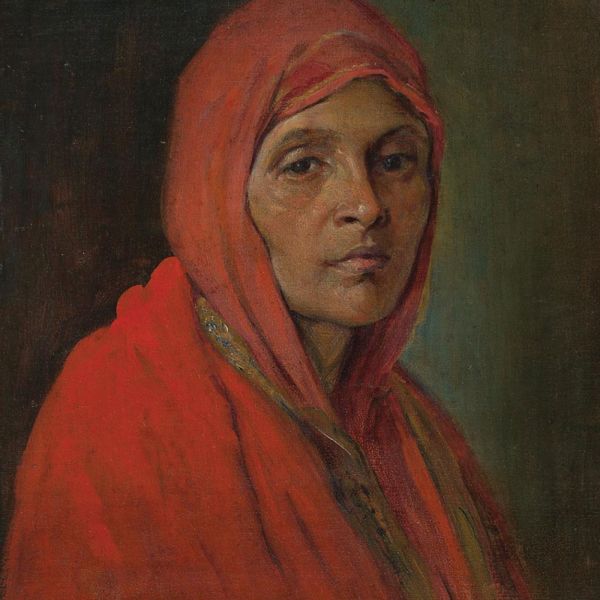
A portrait is a painting, photograph, sculpture, or other artistic representation of a person, in which the face and its expression are predominant. The intent is to display the likeness, personality, and even the mood of the person. For this reason, in photography, a portrait is generally not a snapshot, but a composed image of a person in a still position. A portrait often shows a person looking directly at the painter or photographer, in order to most successfully engage the subject with the viewer A. A. Raiba Abalall Rahiman Abanindranath Tagore Akbar Padamsee Alagiri Naidu Alphonso Doss Ambika Dhurandhar Anjolie Ela Menon Anonymous (Bengal Lithographs) Anonymous (Ladies and Gentlemen) Anonymous (Painted Photographs) Anonymous (Parsi Eminences) 90 Anonymous (Raja Ravi Varma School) Anonymous (Royal Personages) Anonymous (Spiritual) Anonymous (Studio Photographs) Ardeshir Duishajee Tavaria Asit Kumar Haldar B. Paul Baburao Sadwelkar Badri Narayan Benjamin Hudson Bhunath Mukherjee Bhupen Khakhar Bikash Bhattacharjee Bipin Behari Goswami Biswanath Mukerji C. N. Kistnasawmy Naidu Cecil Burns Chintamoni Kar Chittaprosad D. L. N. Reddy D. P. Roy Chowdhury Devyani Krishna F. N. Souza Fatima Ahmed Frank Brooks G. Kamble G. N. Jadhav G. R. Santosh Gaganendranath Tagore George Keyt Gobardhan Ash Gogi Saroj Pal Gopal Deuskar Gopal Ghose Gopal Sanyal H. Hormusji Deboo Himmat Shah Hiranmoy Roychaudhuri J. A. Lalkaka J. Barton J. D. Dalvi J. D. Gondhalekar J. P. Gonsalves J. P. Gangooly J. Sultan Ali Jacob Epstein Jai Zharotia Jamini Roy Jogen Chowdhury Jyoti Bhatt K. C. Pyne K. K. Hebbar K. Lall K. Laxma Goud K. S. Kulkarni Kanwal Krishna Keshavrao Sadashiv Kisory Roy Koulji Ardeshir Tachakra Krishen Khanna L. M. Sen L. Munuswamy L. N. Taskar L. P. Shaw Laxman Pai M. F. Husain M. F. Pithawalla M. K. Parandekar M. R. Acharekar M. V. Dhurandhar Mukul Dey Muni Singh N. R. Sardesai Nemai Ghosh Nirode Majumdar Olinto Ghilardi P. T. Reddy Paritosh Sen Partha Pratim Deb Pestonji E. Bomanji Pradip Maitra Prahlad Karmakar Prokash Karmakar R. D. Panvalkar R. S. Bisht Rabin Mondal Rabindranath Tagore Raja Ravi Varma Rama Lal Ramendranath Chakravorty S. A. Meerza S. Dhanapal S. G. Thakar Singh S. L. Haldankar Sankho Choudhuri Satish Sinha Savi Savarkar Shanti Dave Sudhir Khastgir Suhas Roy Sunil Das Sunil Kumar Paul Sunil Madhav Sen Sunqua Surendran Nair Sushil Chandra Sen Tarak Garai V. A. Mali V. B. Pathare V. M. Oke V. Nageshkar Ved Nayar Vivan Sundaram Wasim Kapoor
Learn More