


Search results for: 'Looking for info on artists BS S'
-
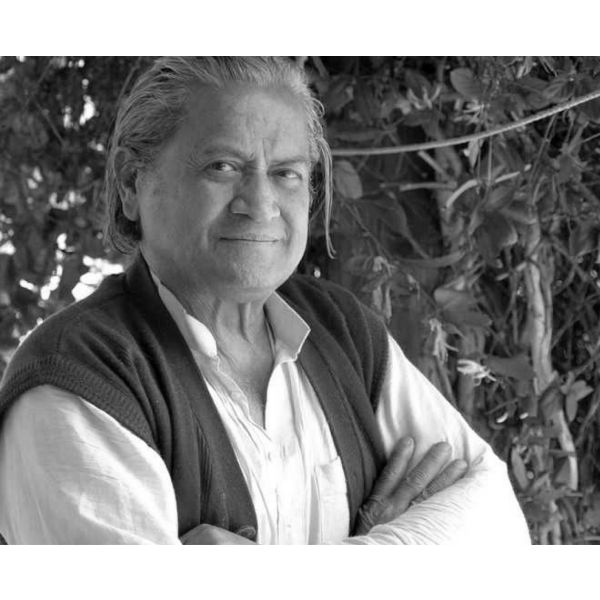 ArtistsSanat Chatterjee$0.00One of the last proponents of the Bengal School, Sanat Kumar Chatterjee was born in 1935 in Lucknow, and grew up in various cities of British India as his father had a transferable job with Indian Railways. Encouraged by his parents, he obtained a diploma in fine arts from the Government College of Arts and Crafts, Lucknow, in 1960. Learn More
 -
 JournalThe Poet (Head of Rabindranath Tagore) by Ramkinkar Baij$1.00
Ramkinkar Baij is rightfully described as India’s first modernist sculptor for his pathbreaking use of cement and laterite as material, his choice of subjects and scale in public art projects, and his unconventional development of ideas.
The Poet is an abstract portrait of Rabindranath Tagore, imagined through negative spaces, concaves and convexes forming the eyes in a hollowed head, a masterclass in Baij’s cubist vocabulary. The portrait shared almost no physical attributes with the subject, instead focusing on distorting Tagore’s visage to give us insights into the state of his mind.
Learn More -
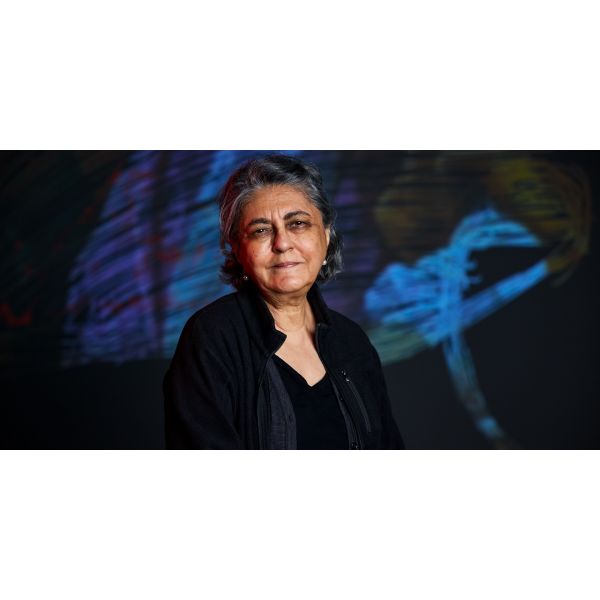 JournalRadical as a way of Being: Inaugural Contemporary Fellow Nalini Malani at London's National Gallery$0.00
What is the role of collectors and collections or archives in the world of art today? Does it simply allude to practices of producing a consumable past today or does it also aspire to question the ways in which history has been shaped by powerful interventions in the form of artworks, performances and installations? In this series of conversations, we wanted to explore the idea of collecting recent or contemporary art—and how it inevitably takes us back to the moderns who influenced such practices heavily.
Learn More -
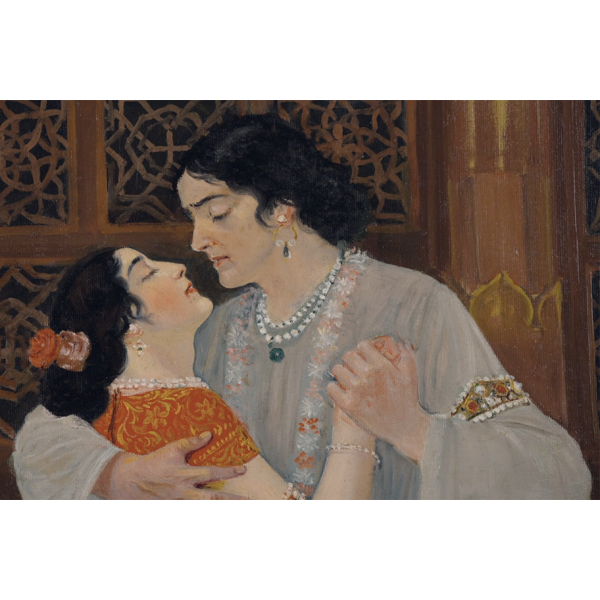 JournalTasneem Zakaria Mehta on M.V. Dhurandhar$0.00'Iconic Masterpieces of Indian Modern Art, Edition 2' opened on 11 February, featuring fifty artworks which shaped the trajectory of pre-modern and modern art in the country. As part of the exhibition, Tasneem Zakaria Mehta reflects on M.V Dhurandhar’s mythological painting of Usha and Anirudhdha’s union, drawing attention to the grace and fluidity that suffuse his expert rendition of form along with his mastery over capturing the intricate details of women’s dresses. Learn More
 -
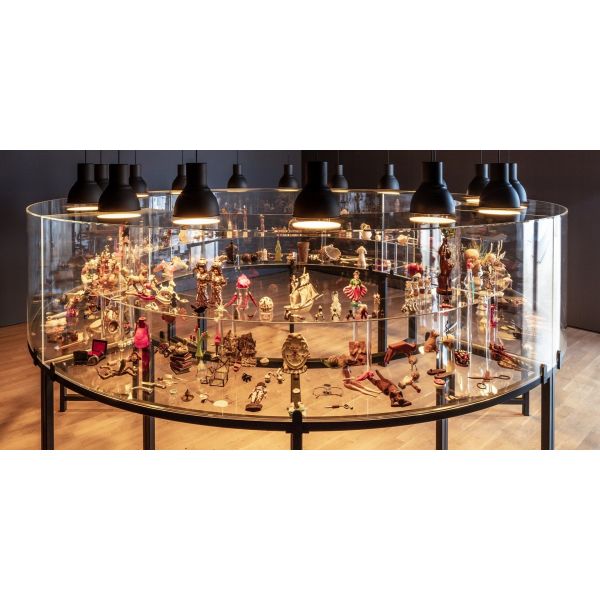 JournalConscious Collecting with Asia Art Archive and Durjoy Rahman$0.00
What is the role of collectors and collections or archives in the world of art today? Does it simply allude to practices of producing a consumable past today or does it also aspire to question the ways in which history has been shaped by powerful interventions in the form of artworks, performances and installations? In this series of conversations, we wanted to explore the idea of collecting recent or contemporary art—and how it inevitably takes us back to the moderns who influenced such practices heavily.
Learn More -
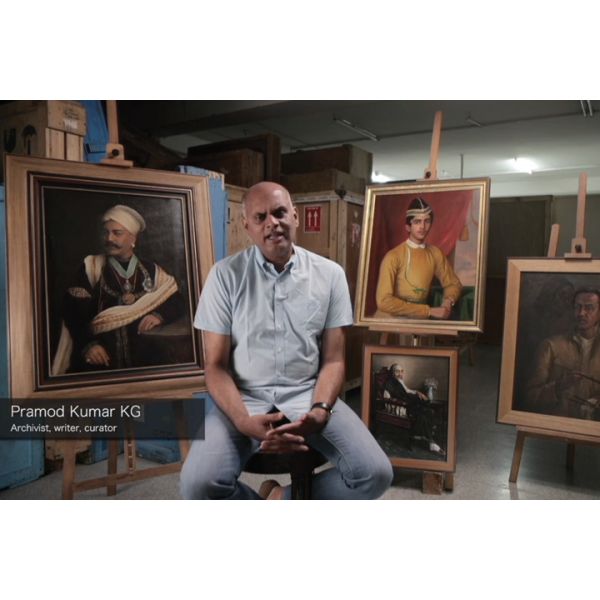 JournalA Portrait of our People$0.00
This exhbition explored the evolution of the genre of portrait painting in India. Curated by Pramod Kumar KG, it was specially created for Drishyakala, a joint collaboration between DAG and the Archaeological Survey of India, at Red Fort, Delhi. Visitors came face to face with dazzling canvases, expressive watercolours and early prints of people known and unknown in this extraordinary exhibition.
Learn More -

-
-
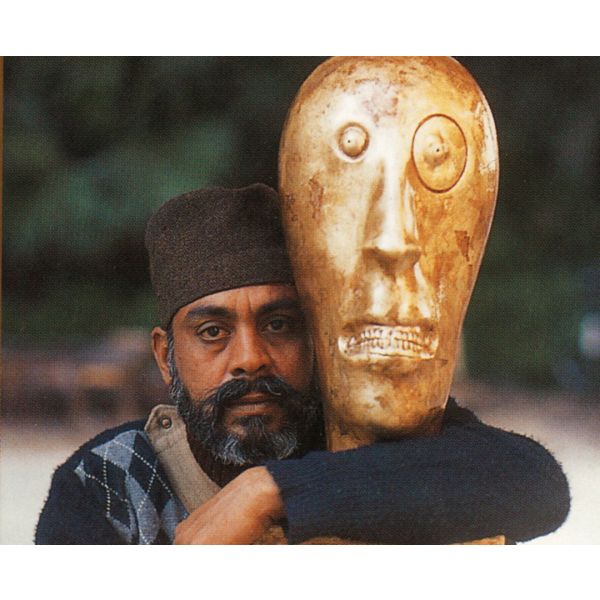 ArtistsHimmat Shah$0.00Born in Lothal in Gujarat, one of the most important sites of the Harappan civilisation (3300-1300 BCE), Himmat Shah’s long-term engagement with terracotta traces its roots to the ancient antecedents of his birthplace, seen especially in his sculptural Heads. Learn More
 -
 Events and ProgrammesSwadeshi Baithakkhana$1.00
A visit to an antique furniture warehouse and the former home of historian Sir Jadunath Sarkar with Professor Rosinka Chaudhuri, as we trace the Swadeshi influence on our living spaces, and the transformation of furniture design.
Learn More -
 Events and ProgrammesCurious Curatorium$1.00
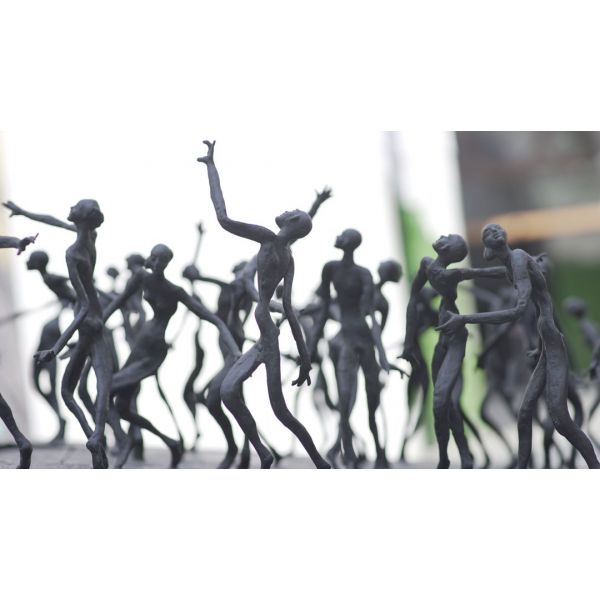
An online opportunity for young researchers and early career professionals, from History, Art History, Cultural Studies and related fields, to develop research projects under the guidance of eminent academicians and scholars.
Learn More -
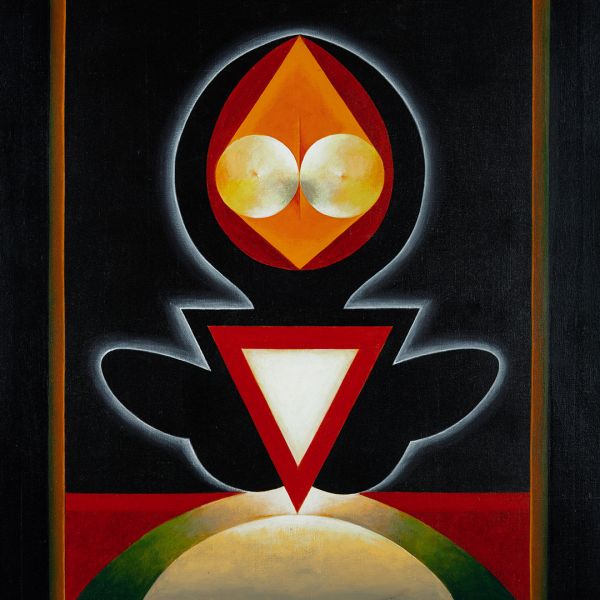 Art FairsFrieze Masters 2023$1.00The medieval ages saw the rise in India and parts of Asia of philosophical, theological, cultural, literary and visual manifestations that derived from diverse faiths but with one aim—to attain enlightened liberation. Its resistance to Brahmanical texts and hegemony resulted in the creation of geometrical aesthetics that were interpreted by way of texts, paintings, and architecture and had a monumental impact on society. At the centre of its geometric configurations—the triangle, the square, and the circle—lay the idea of Creation itself, the source of primal energy that could to be diverted towards a higher consciousness, and all universe was manifest in this. Learn More