Search results for: 'who shot the a harvest of death gettysburg pa'
-
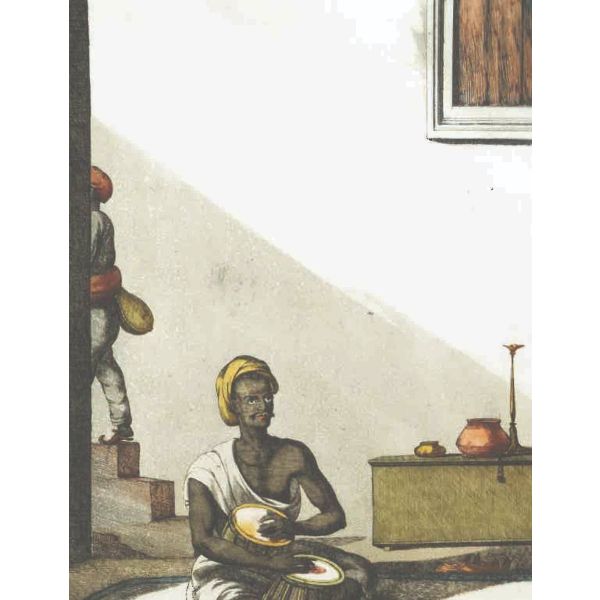 Events and ProgrammesGab-Sur-Kinaar: Of Making and Playing the Tabla$1.00
An exploration of the instrument by tabla artists, Asif Khan and Rohen Bose, followed by a concert where they are joined by Alla Rakha Kalawant on the sarangi at the Jorasanko Thakur Dalan.
Learn More -
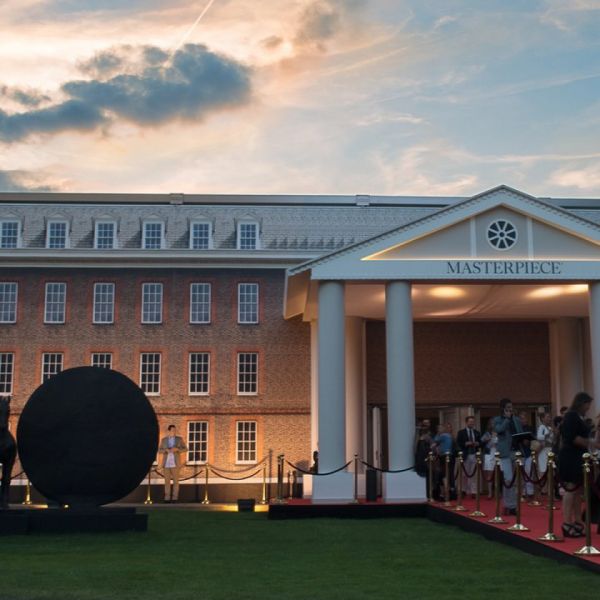 Art FairsMasterpiece$0.00
DAG’s second outing at Masterpiece London, the prestigious fair for everything from exceptional jewellery, furniture and antiquities to works of art held annually at Chelsea, was marked by outstanding inclusions of works by modern masters. The showstopper was a massive sized British Raj - Procession by M. F. Husain (one of two works, the other being his Theorem II) that grabbed everyone’s attention, but equally hypnotising were paintings by Natvar Bhavsar (Eketak), George Keyt (Two Women Amid Plants), F. N. Souza’s fabulous Temple Dancer, tantra-based paintings by G. R. Santosh, Prabhakar Barwe and a work in relief by Satish Gujral. Bikash Bhattacharjee Natvar Bhavsar Avinash Chandra K. K. Hebbar M. F. Husain Ranbir Singh Kaleka George Keyt Krishen Khanna Jehangir Sabavala G. R. Santosh F. N. Souza
Learn More -
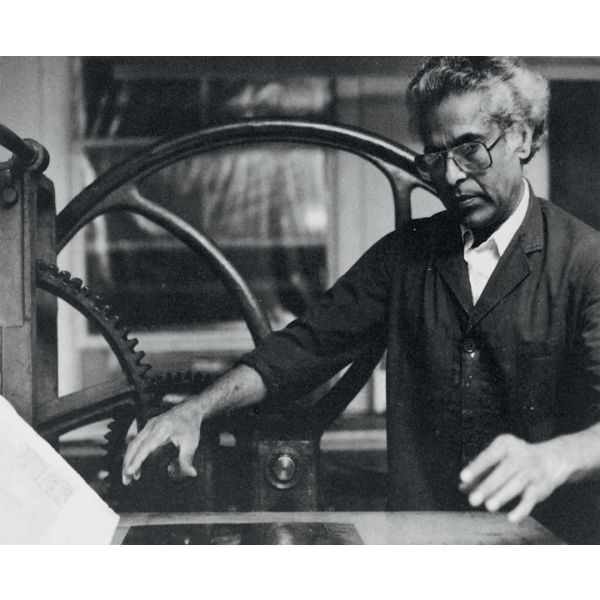 ArtistsKrishna Reddy$0.00Born in Chittoor, Andhra Pradesh, on 15 July 1925, Krishna Reddy is best remembered for pioneering the simultaneous colour printing technique, or the colour viscosity process, along with S. W. Hayter, in Paris. His journey to that seminal moment in Paris was preceded by a stint at Santiniketan, studying under Nandalal Bose (1942-47), and then, as head of the art section at Kalakshetra, Madras (1947-50). Learn More
 -
-
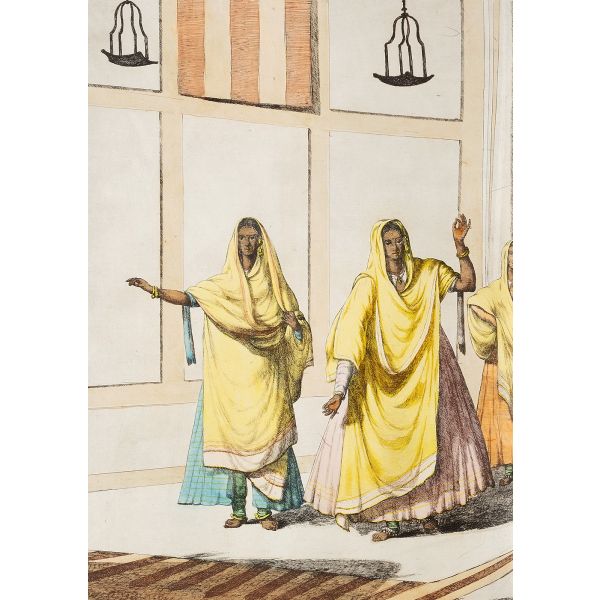
 Collection StoriesAn Imperial Spectacle: The Delhi Durbars and its Ceremonies$1.00
The Delhi Durbars were a series of coronation events held by the British in India which formally declared the British monarch as the Emperor or Empress of India. They took place thrice—first, in 1887, acknowledging Queen Victoria as the Empress of India, followed by one in 1903, for King Edward VII, and finally in 1911 for King George V, which saw the monarch’s attendance in person.
Learn More -
 Institutional CollaborationsNavratna: India’s National Treasure Artists$1.00
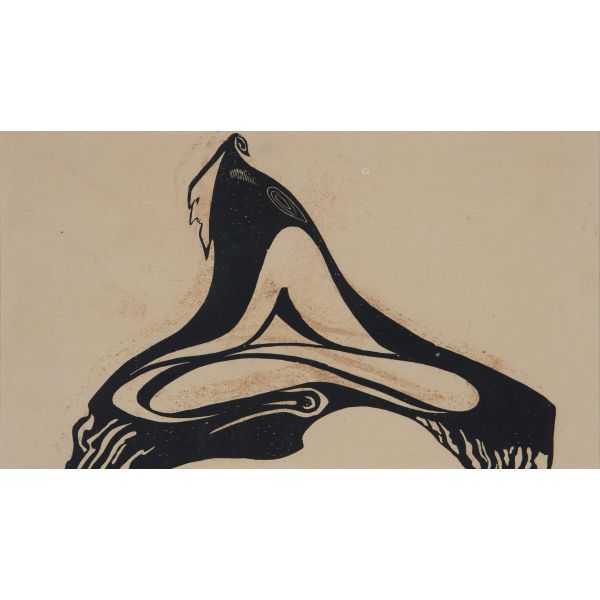
Nine artists find special mention in India as ‘art treasures, having regard to their artistic and aesthetic value’, a directive by the Archaeological Survey of India in the 1970s. Spanning a period of one hundred years of art practice, these artists represent a diversity of art traditions and movements but are unified by one common thread: a return to Indian roots through context, theme, subject, and an engagement with identity.
Learn More -
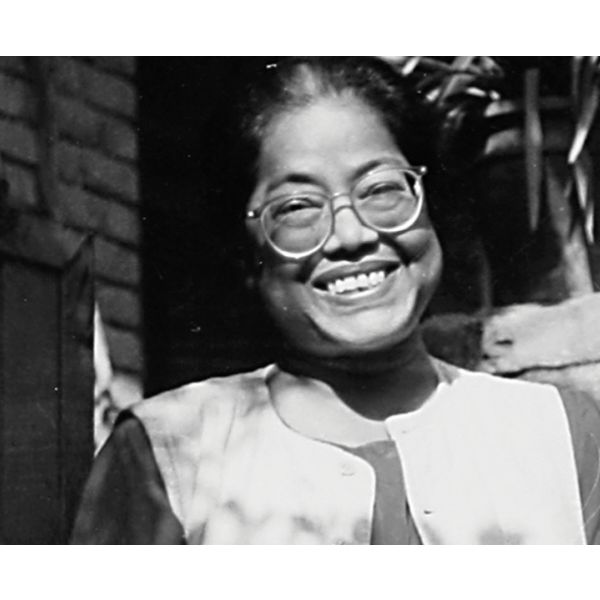 ArtistsArpita Singh$0.00An influential artist who is known for her richly detailed oils and watercolours, Arpita Singh was born in Calcutta in 1937. She studied art at Delhi Polytechnic (now College of Art) from 1954-59, and then joined the Government of India’s cottage industries restoration programme in 1959, which allowed her to meet weavers and artisans. Learn More
 -
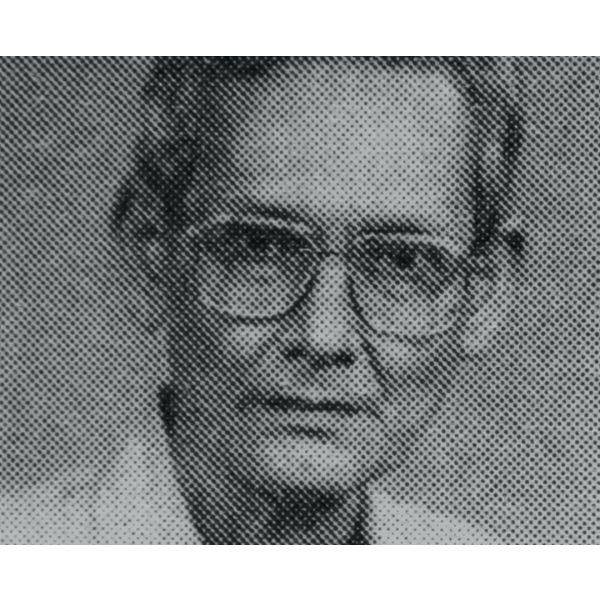 ArtistsAmalnath Chakladhar$0.00Born in present-day Bangladesh, Amalnath Chakladhar belongs to that category of Bengali modernists who carved an identity uniquely their own, despite the overarching influence of the three prominent strains of modern art in Bengal in the first half of the twentieth century—the Bengal School, academic training in art schools of Calcutta, and expressionism in Santiniketan. His contribution to furthering modernism in India, therefore, assumes importance for being a seminal, individual effort. Learn More
 -
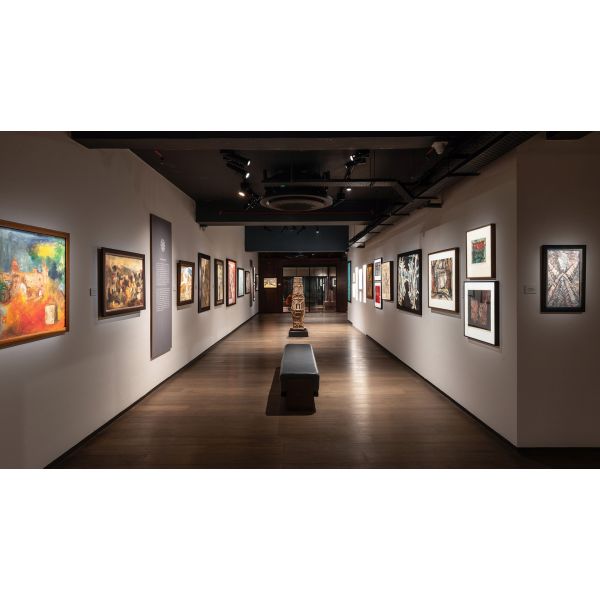 ExhibitionsArt Exhibitions$0.00
DAG has been a pioneer in curating exhibitions that have historical significance. These have ranged from themes around different genres and art movements to artist retrospectives as well as engagements with forgotten masters. Most exhibitions are sourced from its own inventory and in recent years DAG has begun to explore eighteenth and nineteenth century art and artists in addition to its presence as a stakeholder of twentieth century art. Exhibitions are routinely organised at its galleries in New Delhi, Mumbai, and New York, as well as in collaboration with museums and other institutions. All exhibitions are accompanied by well researched and designed books, adding considerably to the documentation of Indian art history.
Learn More -
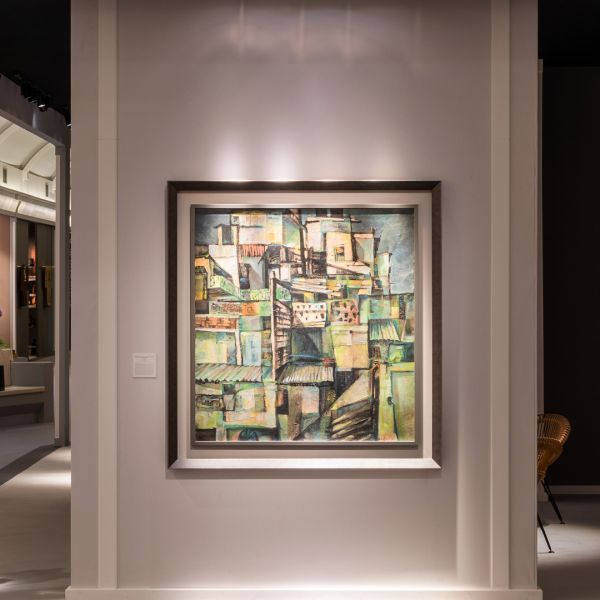 Art FairsMasterpiece$0.00
For its fourth consecutive outing at Masterpiece London, DAG continued with the tradition of showing artists who had grown in appeal at the city’s truly cross-collecting ‘masterpiece’ fair, but with enough surprises to interest even the most fair-hardened visitor. From a large and vivid G. R. Santosh to a collection of small-sized Bireswar Sen watercolours, the selection was sensitively curated keeping in mind the cosmopolitan nature of London city and the visitors to the fair. Along with the Progressives, the exhibition included one of the finest sculptures created by Adi Davierwalla, remarkable paintings by Tyeb Mehta, Bikash Bhattacharjee, J. Sultan Ali, Avinash Chandra, and Hemen Mazumdar. As always, the emphasis in the booth lay in creating a rarefied visitor experience in which a handful of works allowed visitors to enjoy them at leisure without causing visual fatigue. The response was overwhelming. G. R. SANTOSH BIRESWAR SEN MADHVI PAREKH S. H. RAZA F. N. SOUZA TYEB MEHTA J. SULTAN ALI DHANRAJ BHAGAT BIKASH BHATTACHARJEE AVINASH CHANDRA SHANTI DAVE ADI DAVIERWALLA SATISH GUJRAL HEMEN MAZUMDAR SOHAN QADRI BIREN DE
Learn More -
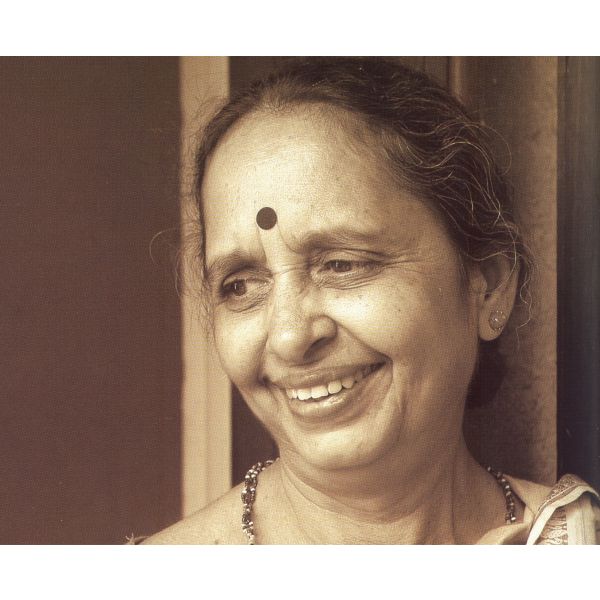 ArtistsShobha Broota$0.00Shobha Broota’s pictorial interpretation of the resonance of classical Indian ragas forms the essence of her celebrated style in which she conveys their subtle variations through minimal use of colours. Born in 1943 in New Delhi in an artistic family that inspired her to study art, Broota obtained a diploma in painting from College of Art, New Delhi, in 1964. Learn More