


Search results for: 'husain the timeless moder'
-
 ArtistsHiranmoy Roychaudhuri$0.00One of the earliest pioneers of European modernism in Indian sculpture, Hiranmoy Roychaudhuri studied under E. B. Havell at the Government School of Art, Calcutta in 1905. He was also one of the earliest Indian artists to go to England to study art; he went to the Royal College of Art, London, in 1910 to train in sculpture. Learn More
 -
 ArtistsHemanta Misra$0.00One of the pioneers of surrealism in Indian modern art, Hemanta Misra was born in Sivasagar, Assam, on 13 October 1917. He went to school in his hometown and later studied at Cotton College, Guwahati, and St. Edmund’s, Shillong. As for the arts, he was self-taught, polishing his skills through a correspondence course with British artist John Hassal. Learn More
 -
 ArtistsGulammohammed Sheikh$0.00Born in Saurashtra, Gujarat, on 16 February 1937, painter, poet, art critic and historian Gulammohammed Sheikh has been a seminal presence on the modern Indian art scene for several decades now. Sheikh obtained a master’s degree in painting from M. S. University, Baroda, in 1961, and studied at the Royal College of Art, London, from 1963-69, on a Commonwealth scholarship. Learn More
 -
 ArtistsChintamoni Kar$0.00Chintamoni Kar, one of the foremost modern sculptors of India, was born on 19 April 1915 in Kharagpur. He trained initially in sculpture with Giridhari Mahapatra, a traditional Oriya sthapati or temple-carver, and learnt painting under Kshitindranath Mazumdar at the Indian Society of Oriental Art, Calcutta. Learn More
 -
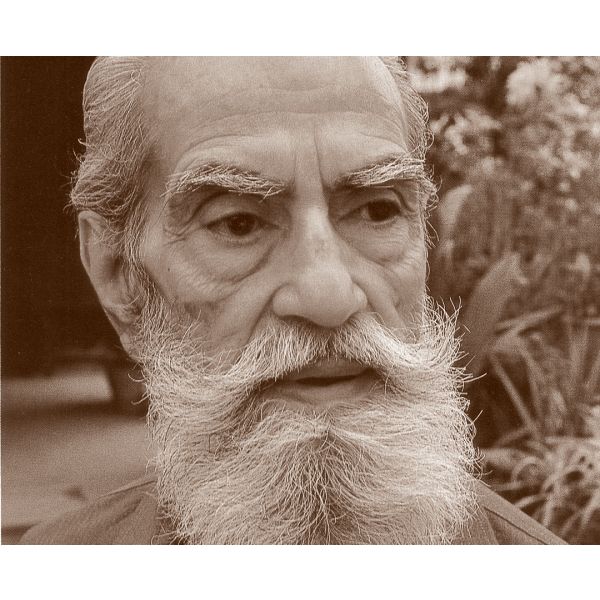 ArtistsB. C. Sanyal$0.00Bhabhesh Chandra Sanyal lived a unique life in the world of Indian art, witnessing the huge arc it cut across the twentieth century—he was born when the revivalist Bengal School was beginning to bloom, and by the time he passed away, modern Indian art had gone global and carved an international art market for itself. Learn More
 -
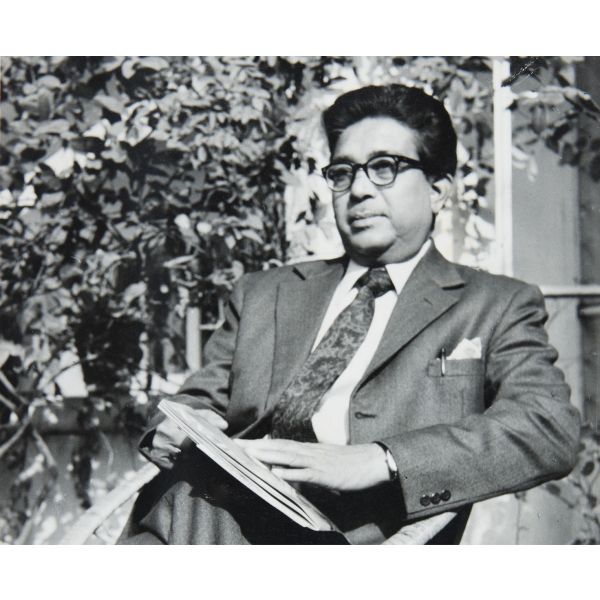 ArtistsArup Das$0.00Born in Bengal, Arup Das remains one of the most formidable muralists and painters of Indian modern art. He graduated from the Government College of Arts and Crafts Calcutta, in the 1940s. Later, in the 1960s, he became a member of All India Fine Arts and Crafts Society, New Delhi. Learn More
 -
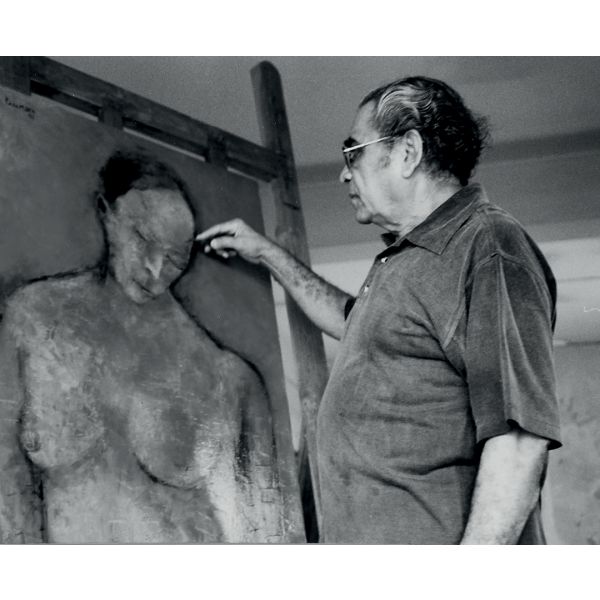 ArtistsAkbar Padamsee$0.00Belonging to the first generation of postcolonial Indian artists that sought cosmopolitan freedom in Paris and London during the 1950s and ’60s, Akbar Padamsee developed his images within the genres of portraiture and landscape as refracted through the prism of high modernism. Learn More
 -
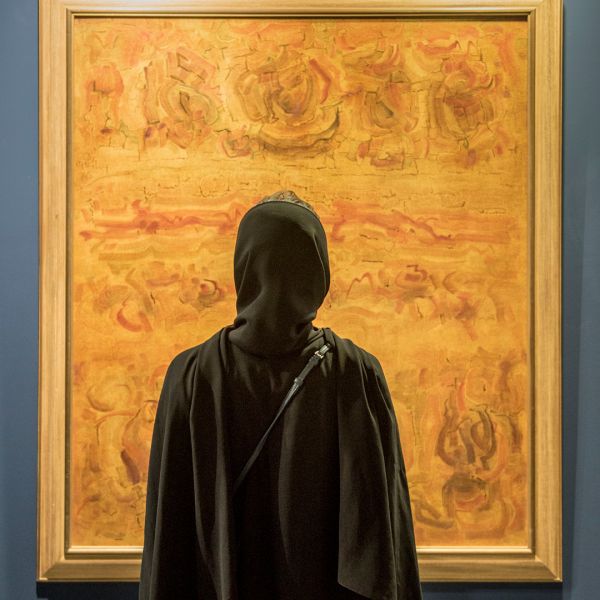 Art FairsArt Dubai$0.00
Continuing its theme of introducing Indian abstractionists at Art Dubai, DAG handpicked works by eight eminent abstract artists and juxtaposed them to bring into focus how brushwork and colour are imbued with emotion and can compel viewers to spend hours studying such works. The artists presented by DAG at Art Dubai 2018—Ambadas, Sohan Qadri, Natvar Bhavsar, Avinash Chandra, Rajendra Dhawan, Shanti Dave, Ram Kumar and S. H. Raza—worked in different styles but their use of vivid colours highlighted this somewhat neglected genre of art in India that has begun to enjoy a premium in recent years. These artists had their studios in different parts of the world—Copenhagen, Oslo, New York, Paris, London, New Delhi—but had one thing in common: they were all of Indian origin and had trained and begun their careers in India. AMBADAS SOHAN QADRI NATVAR BHAVSAR AVINASH CHANDRA SHANTI DAVE G. R. SANTOSH J. SWAMINATHAN RAM KUMAR JERAM PATEL RAJENDRA DHAWAN K. V. HARIDASAN
Learn More -
-
-
 Events and ProgrammesGallery Teach-In$1.00
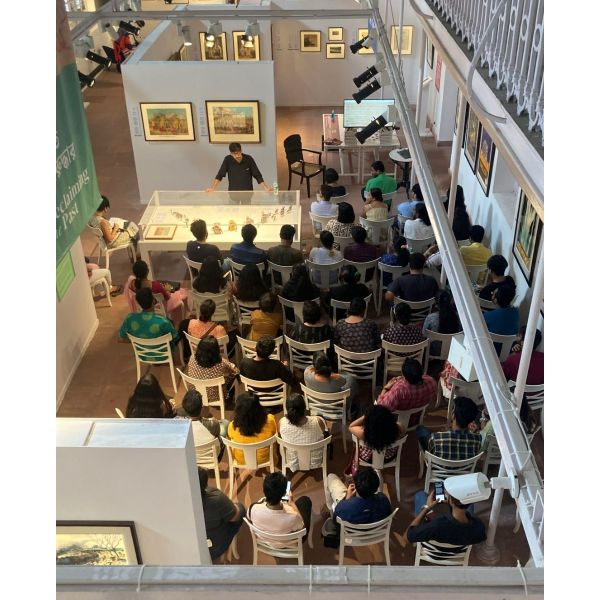
A unique academic engagement where professors from diverse disciplines bring their classrooms into the galleries, explore connections between their curriculum and the collection on view and experiment with new ways of teaching through art.
Learn More -
 ExhibitionsDelhi Durbar: Empire, Display and the Possession of HistoryAs low as $1.00
DAG invited leading historians of Delhi, Swapna Liddle and Rana Safvi, to explore our archives collection. The items they found there include numerous photographs of the three durbars, taken by prominent photographers of the day. They also include many other objects relating to the durbars, from portraits and medals, to maps and official guidebooks, and to tickets and programmes. Historians in the past have analysed the ideology of the Delhi durbars, but never before has such a collection of the material culture of these events been brought together for display.
Learn More