Search results for: 'Delhi p'
-
 ExhibitionsThe World Will Go OnAs low as $1.00
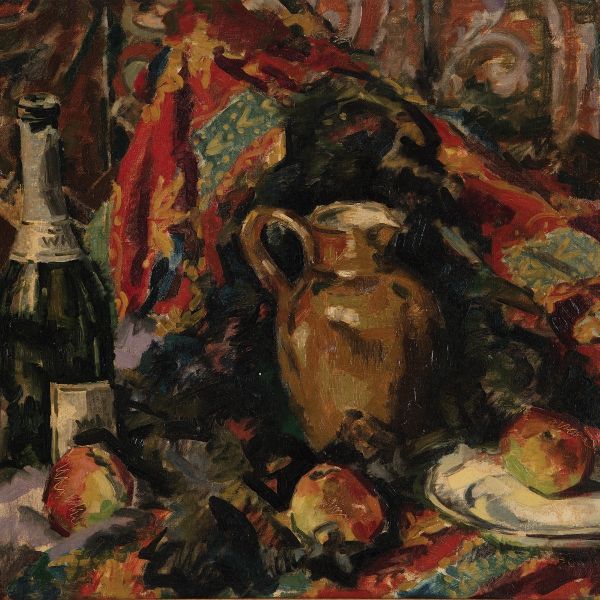
2020 marks a special year in mankind’s history and India’s destiny. Often used in reference to development goals, 2020 has taught us to never take things for granted. While humanity has made major leaps, even conquering outer space, nature has shown us how little we know about it, and how little we appreciate what we have. 2020 has taught us to review our values. We have suffered but also been comforted, and we have learned to acknowledge that irrespective of our joys and sorrows, our triumphs and our failures, the world will not stop, it will go on. Husain Rabin Mondal Santosh Jehangir Sabavala Mohan Samant Swaminathan Paramjit Paramjeet Ramgopal Vijaivargiya Seal Singh Dasgupta Haren Das Shanti Dave Jagadish Dhanapal Dhurandhar Bipin Behari Goswami Laxma Goud George Keyt Ara Nandalal Bose Jyoti Bhatt Natvar Bhavsar Eric Bowen Shobha Broota Avinash Chandra Sanat Chatterjee Shiavax Chavda Hebbar Khemraj Krishen Khanna Walter Langhammer Jeram Patel Aroomogam Pillay Raza Reddy Jamini Roy Vasudev Viswanadhan Manu Madhvi Parekh Laxman Pai Dhirendra Narayan Dharamanarayan.
Learn More -
 ExhibitionsIndia’s Rockefeller ArtistsAs low as $1.00
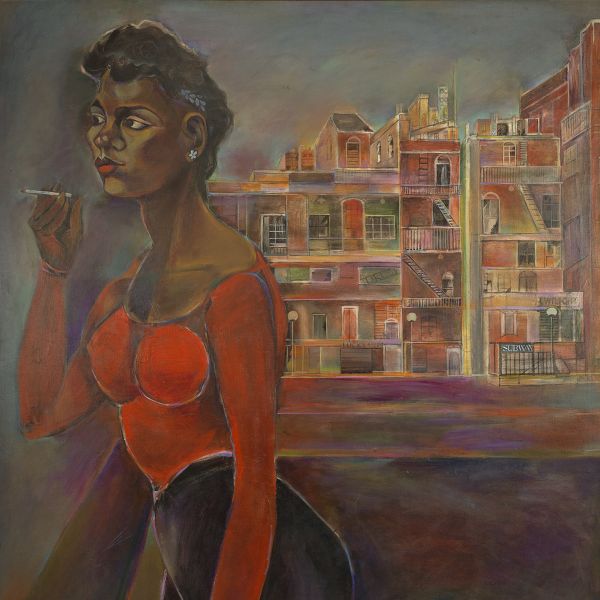
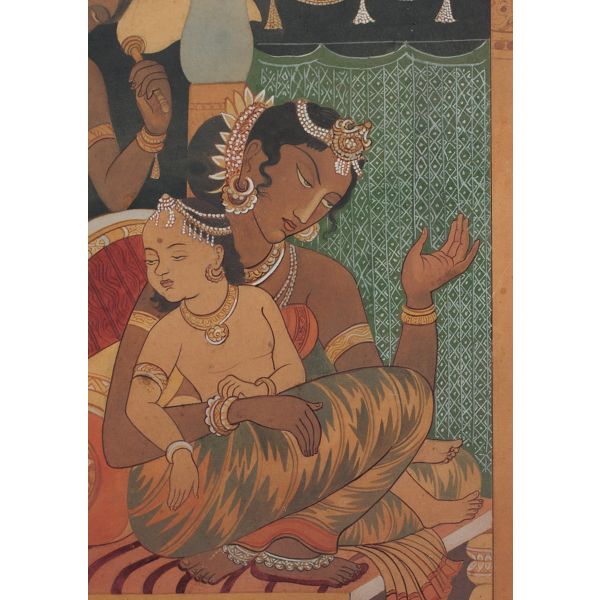
India’s Rockefeller Artists showcases iconic works of the Indian painters and sculptors who travelled to the US on philanthropic grants from the JDR 3rd Fund (1963–1979) and later through the Asian Cultural Council. These artists were exposed to American art and shared their own learnings and experiences through these enriching cultural exchanges. The show examines how and why these artists were selected; their relationships with each other and the American art milieu; the impact of the experience on their work; and the creation of a community of Rockefeller artists.
Learn More -
-
 ExhibitionsPrimitivism & Modern Indian ArtAs low as $1.00
This exhibition looks at the diverse range, moods and styles that primitivism has taken in India, some artists practicing entirely in that style, while others experimenting with it in part, or sporadically. One can count simplicity and a move away from sophistication as key components, as also an inclination or at least a nod towards the folk. The exhibition does not attempt to be a comprehensive survey of India’s primitivists—there are others who would bear inclusion—but is an attempt to understand a body of work and how, given its Western countenance, it can be understood in the Indian context. More than anything else, it offers a clearer view than in the past of what primitivism might mean in the context of modern Indian art. Amrita Sher-Gil F. N. Souza George Keyt Himmat Shah J. Sultan Ali Jamini Roy Jogen Chowdhury K. G. Subramanyan K. S. Kulkarni M. F. Husain Madhvi Parekh Mohan Samant Rabin Mondal Rabindranath Tagore Ramkinkar Baij Sunayani Devi
Learn More -
 ExhibitionsPrabhakar Barwe: Between Object and SpaceAs low as $1.00
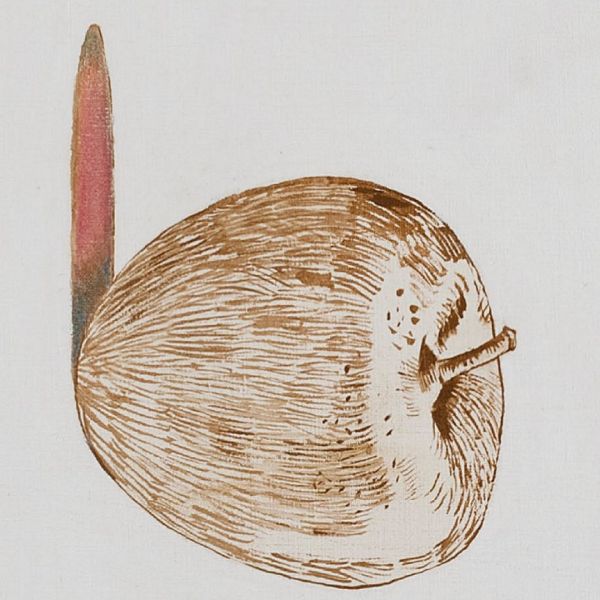
Prabhakar Barwe (1936-95) could well have ended up a theoretician whose book 'Kora Canvas' (Blank Canvas) was a manifesto that established the multi-dimensional relationship between an artist, the object on which he paints, and his subjects. That he was not just an intellectual scholar but an artist whose work speaks for him, is evident through a range of works in which Barwe dissects our understanding of the world and how we view it. Taking commonplace objects and our perception of their existence in the space they occupy, he shifts the dialogue to a point of discomfiture that makes us question our understanding of them. Using scale, discordant juxtapositions, and displacements, he reimagines the everyday in a manner that is thought-provoking, even provocative, as alternate realities—whether perceived or imagined.
Learn More -
 ExhibitionsA Place In The Sun: Women Artists From 20th Century IndiaAs low as $1.00
Sunayani Devi picked up a paintbrush in 1905 when she was thirty years old while supervising her kitchen duties, self-taught, but with enough talent to attract the critical attention of Stella Kramrisch who organised an exhibition of her paintings in Germany in 1927. It was in her worthy footsteps that India’s women artists followed. Devayani Krishna was born five years after Sunayani Devi began painting; Amrita Sher-Gil already had a career in Paris by the time India’s first art school-trained woman artist, Ambika Dhurandhar, earned her diploma in Bombay. B. Prabha followed next, her work reflecting the realities of the marginalised in a piquant language. By the time Nasreen Mohamedi and Zarina Hashmi, both born a decade before Independence, established their careers, women were joining art schools in greater numbers, validating their practice not on the basis of their gender but on its context. Anupam Sud Devayani Krishna Gogi Saroj Pal Latika Katt Madhvi Parekh Mrinalini Mukherjee Navjot Rekha Rodwittiya Shobha Broota Zarina Hashmi
Learn More -
 ExhibitionsNew Found LandsAs low as $1.00
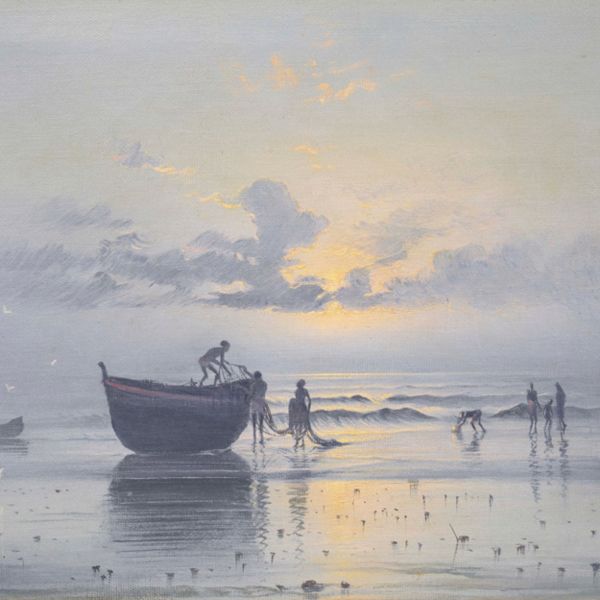
We might think of landscape as the most obvious and natural subject for painting. What could be simpler than an artistic response to the world of nature? And yet, civilisations have not always produced landscape paintings. Landscape as an independent genre—with the primary focus not on action but on scenery—was first championed by the Chinese in the ninth century. It was introduced into English art only in the eighteenth century. Elements of nature have appeared in Indian art since the murals of Ajanta, but in supporting roles, in images that are primarily sacred or courtly. Pure landscape painting arose in India only in the nineteenth century, in response to colonial practice. A A ALMELKAR AVINASH CHANDRA BABURAO SADWELKAR BHUNATH MUKERJEE BIJAN CHOUDHARY BIRESWAR SEN CHITTAPROSAD DEVRAJ DAKOJI DEVYANI KRISHNA DHARAMANARAYAN DASGUPTA GANESH HALOI GOBARDHAN ASH HAREN DAS K. K. HEBBAR KANWAL KRISHNA KISORY ROY M. K. PARANDEKAR M. V. DHURANDHAR MANISHI DEY MUKUL DEY New Found Lands NIKHIL BISWAS PESTONJI E BOMANJI PRAN KISHAN PAUL RABIN MONDAL RAMENDRANATH CHAKRAVORTY RAMKINKAR BAIJ SAKTI BURMAN SUNIL DAS THOMAS DANIELL WILLIAM HODGES WILLIAM PARKER
Learn More -
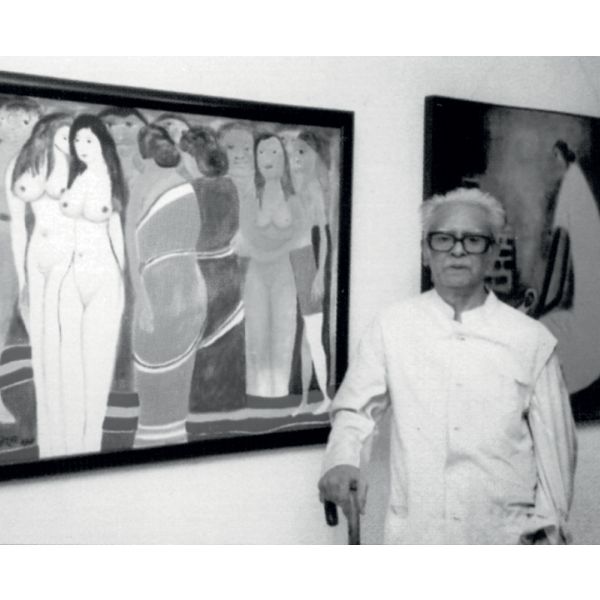 ArtistsKartick Chandra Pyne$0.00Born into an aristocratic family of gold merchants, Kartick Chandra Pyne took an interest in art at an early age. The older cousin of Ganesh Pyne, another remarkable Indian modernist, K. C. Pyne graduated in fine arts from the Government College of Arts and Crafts, Calcutta, in 1955. Later, he taught at Calcutta’s Indian College of Arts and Draughtsmanship in the 1970s, and the Academy of Fine Arts in the ’80s. Learn More
 -
 JournalUntitled by Shanti Dave$1.00
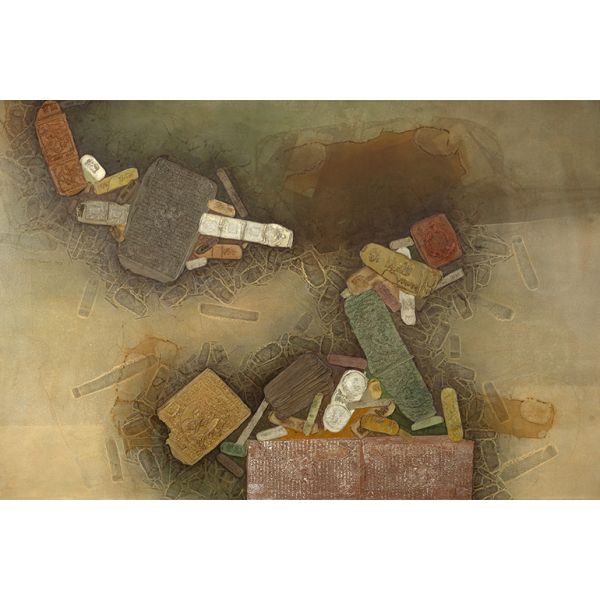
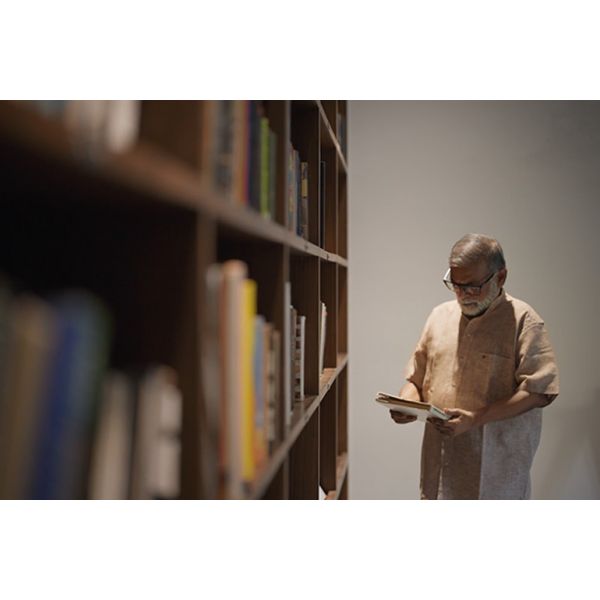
This Untitled painting, created in the early-to-mid-1970s, reflects Shanti Dave's fervent experimentation during a prolific period marked by international recognition in mural making and exhibitions. Drawing inspiration from childhood memories of Badapura and nearby archaeological ruins, the abstract composition blends colour pigments, beeswax, and oil solutions in a dynamic interplay. Employing a reverse image technique with molten wax, the painting challenges perceptions and invites contemplation on the nature of truth. Noted fashion designer and art-collector Tarun Tahiliani explains the nuances of Shanti Dave’s work in a film specially created on the painting.
Learn More -
 JournalThe Poet (Head of Rabindranath Tagore) by Ramkinkar Baij$1.00
Ramkinkar Baij is rightfully described as India’s first modernist sculptor for his pathbreaking use of cement and laterite as material, his choice of subjects and scale in public art projects, and his unconventional development of ideas.
The Poet is an abstract portrait of Rabindranath Tagore, imagined through negative spaces, concaves and convexes forming the eyes in a hollowed head, a masterclass in Baij’s cubist vocabulary. The portrait shared almost no physical attributes with the subject, instead focusing on distorting Tagore’s visage to give us insights into the state of his mind.
Learn More