


Search results for: 'rab'ar john ho ahy irery'
-
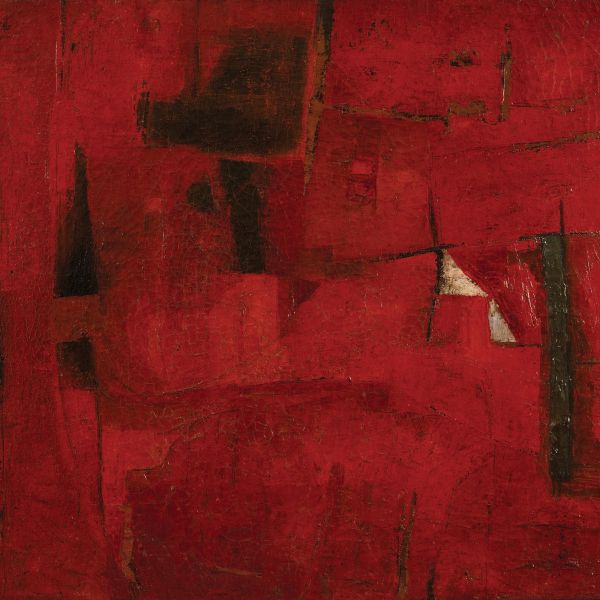 ExhibitionsIndia’s French ConnectionAs low as $1.00
This historic exhibition based on the association twenty-seven Indian artists had with art institutions, museums and art movements in Paris throws light on France as a cradle of modernism and what Indian artists gained from this relationship. Akbar Padamsee Amrita Sher-Gil Anjolie Ela Menon Arun Bose Chintamoni Kar Himmat Shah Jehangir Sabavala Jogen Chowdhury K. K. Hebbar Kanwal Krishna Krishna Reddy Laxman Pai Laxman Shrestha Nalini Malani Nasreen Mohamedi Nirode Mazumdar P. Khemraj Paritosh Sen Prodosh Das Gupta Prokash Karmakar Rajendra Dhawan Ram Kumar Sailoz Mukherjea Sakti Burman Sunil Das Syed Haider Raza V. Nageshkar V. Viswanadhan Zarina Hashmi
Learn More -
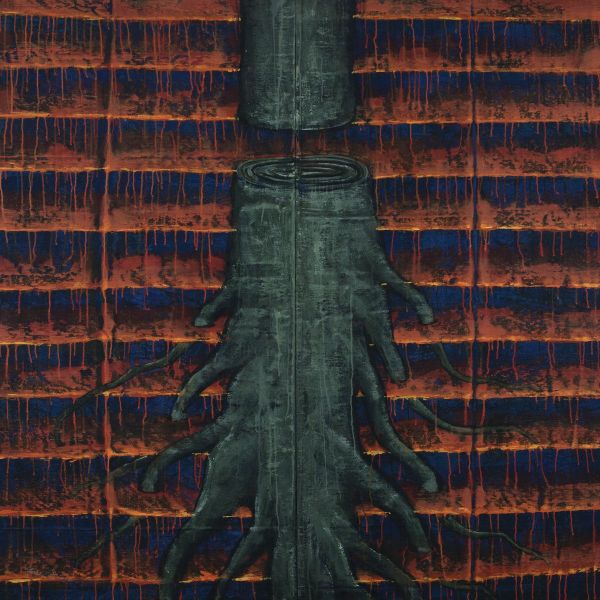 ExhibitionsThe Centum Series Edition 3As low as $1.00
Indian art defies any easily tailored silos to carve for itself a confident assertion of its own identity within a global context, while being a part of its larger assimilative journey. it is this rich legacy of Indian modernism that we hope to explore with The Centum Series which opens a window to the tantalising glimpse of the extraoridnary depth and breadth of its scope and variety. Akhilesh J. Sultan Ali Altaf Ambadas Amit Ambalal Amitava Anonymous (Early Bengal) Dattatraya Apte Radha Charan Bagchi Ramkinkar Baij S. K. Bakre Prabhakar Barwe R. B. Bhaskaran Jyoti Bhatt Natvar Bhavsar Bikash Bhattacharjee Nikhil Biswas Nandalal Bose Shobha Broota Sakti Burman Avinash Chandra Chittaprosad Jagmohan Chopra Bijan Choudhary Jogen Chowdhury Anita Roy Chowdhury D. P. Roy Chowdhury Thomas Daniell Haren Das Sunil Das
Learn More -
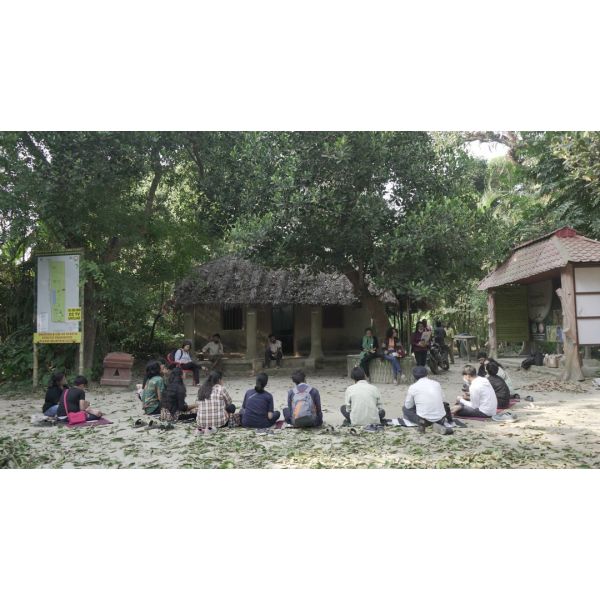 Events and ProgrammesAn Artist's Retreat$1.00
An exploration of the relationship between art and ecology through a visit to the house-museum of artists Chintamoni and Amina Kar with Prasanta Dan, along with a foliage study session in the idyllic bird sanctuary that surrounds it.
Learn More -
-
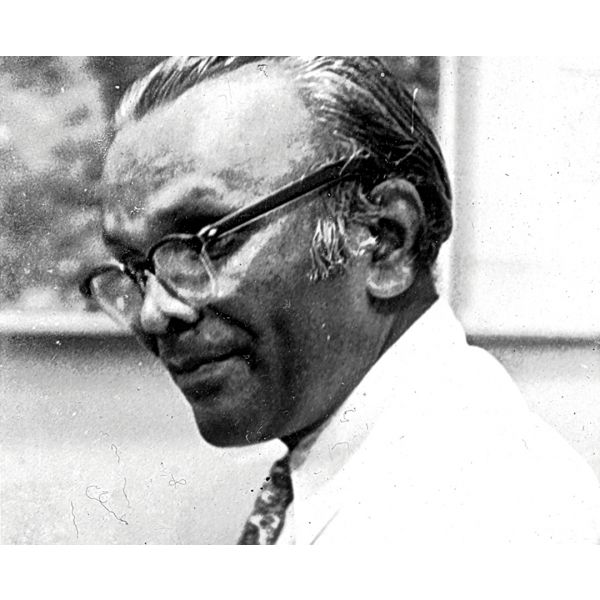 ArtistsK. H. Ara$0.00Krishnaji Howlaji Ara, a founder member of the Progressive Artists’ Group, was born in Secunderabad on 16 April 1914, but ran away to Bombay as a child. Much later, his skills as a painter were spotted by Austrian artist and art director of The Times of India, Walter Langhammer, who encouraged him in his artistic pursuit. Learn More
 -
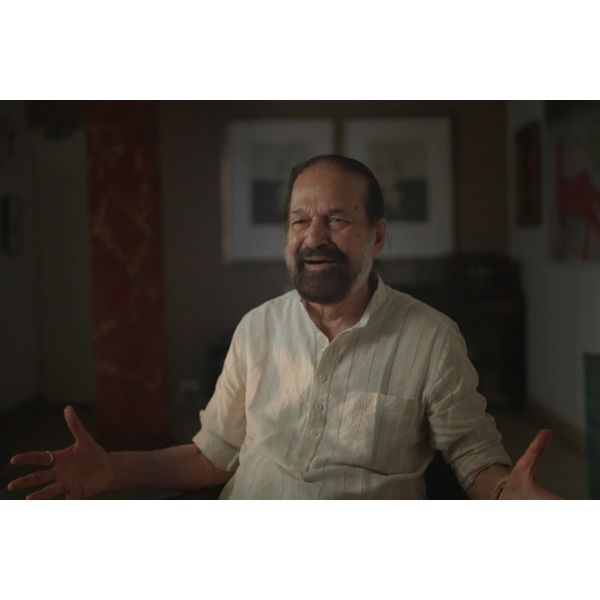 JournalA Child, the Youth, now Man by Rameshwar Broota$1.00
Painted in 2003 by Rameshwar Broota and titled A Child, the Youth, now Man, is bisected horizontally by a hyper-realistic finger, which partially covers a comparatively hazy vertical male torso. The evocative cruciform structure of this composition, possibly alluding to ideas of masculinity, corruption and persecution, also aides the artist in highlighting human vulnerability. There is no face visible here, only an unprotected body.
Learn More -
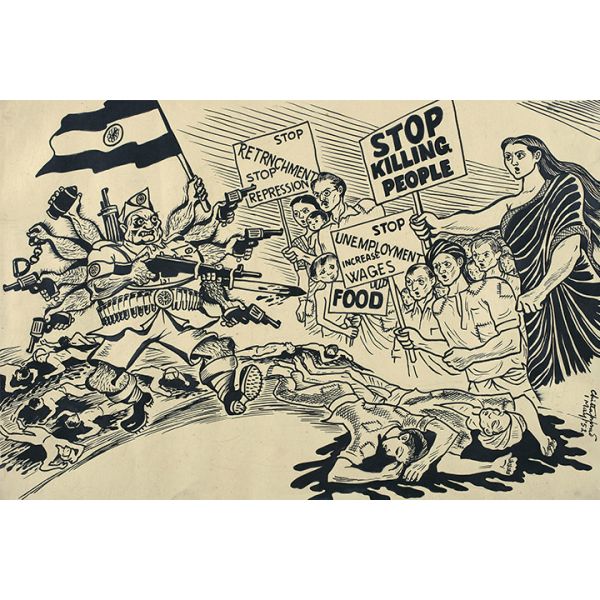 JournalChittaprosad by Nadia Samdani$1.00
Chittaprosad couldn’t have created a more germane work in honour of the people who successfully fought their oppressors to create an independent nation. A close examination of his masterpiece, Bangladesh War, reveals the artist’s use of symbols of hope against persecution and domination, art collector and philanthropist Nadia Samdani tells us.
Learn More -
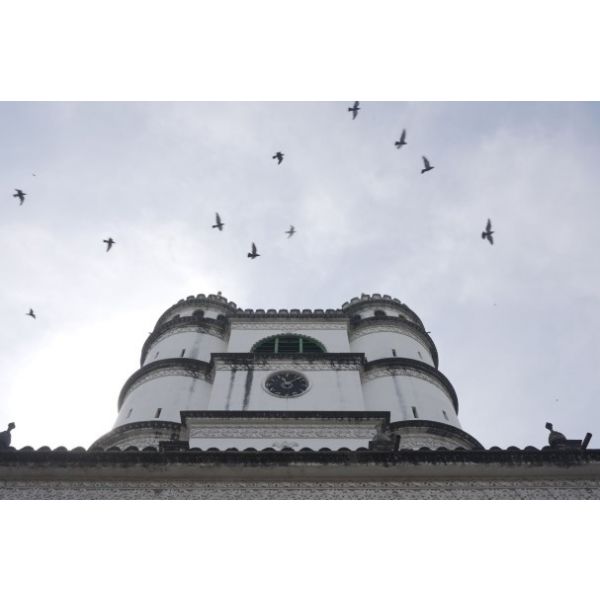 JournalThe City as a Museum: Edition 2, Kolkata 2023$0.00
'The City as a Museum' in an annual art and heritage festival by DAG's Museums Programme. The second edition returned to Kolkata to celebrate the city's rich history of artistic practices and exchange. We travelled across the city and beyond to heritage spaces, artists' homes, and rare collections through unique walks, workshops, talks, performances and more. Explore a snapshot of this journey through photographs by Parameshwar Halder.
Learn More -
 Collection OnlineDEVIS$1.00
The Devi or the female power in Hindu mythology appears in various avatars in our everyday lives—as idols during the puja, on covers of magazines, product labels, calendars and posters. The modern history of visualising the Devi goes back to naturalistic depictions in oil paintings by the Early Bengal artists, which were surpassed in popularity and fame by Raja Ravi Varma and his studio. His representation, however, was regarded as too human-like by artists of the Bengal School in the early twentieth century, who created idealised forms based on a synthesis of classical visual traditions. In the twentieth century, we find artists responding to distinctive traits of the goddess to portray specific aspects of her power, or to convey the artist's own relationship with divinity. Few artists who have turned to Hindu myths have been able to escape the temptation to interpret the female power in their own way, and the diversity in style, medium, and mood is a testament to that.
Learn More -
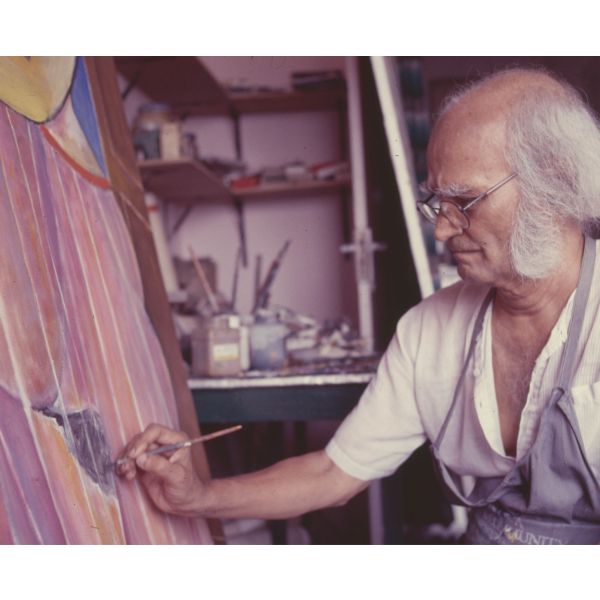 ArtistsParitosh Sen$0.00Drawn to art through the pages of the Bengali art journal Prabasi, Paritosh Sen ran away from his home in Dacca (Dhaka), now in Bangladesh, to learn art in Madras. Learn More
 -
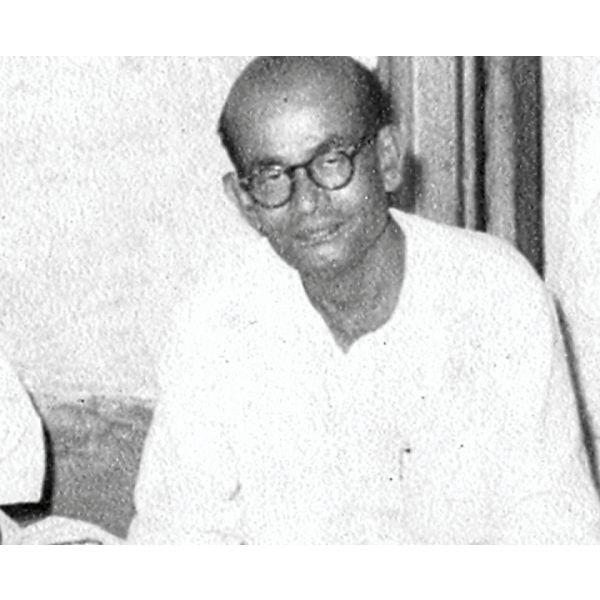 ArtistsKhagen Roy$0.00Khagen Roy hailed from Medinipur in present-day West Bengal and came to Calcutta to study art. However, he left the Government School of Art in Calcutta as well as the College of Arts and Crafts in Lucknow dissatisfied with their curriculum. A chance encounter with painter and sculptor D. P. Roy Chowdhury convinced him to join the Government College of Art and Craft, Madras. Learn More
 -
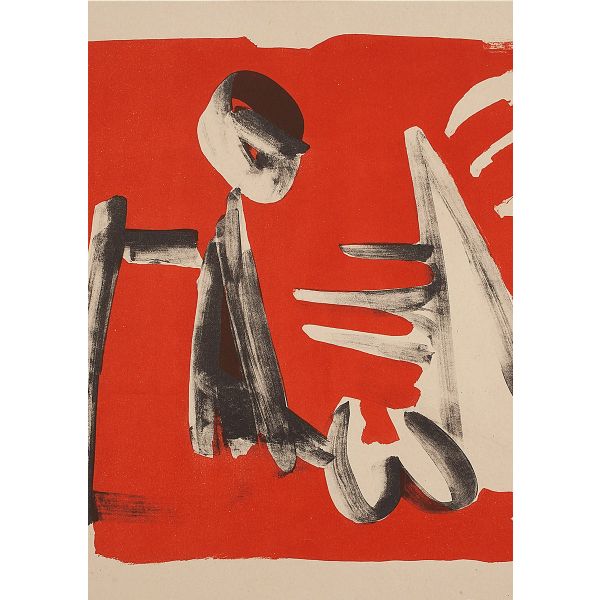 Collection StoriesA Tryst with Destiny: A Visual Journey$1.00
Colonization is perhaps best understood as a process that unfolded over time than as a single historical event. In India and South Asia it began with the East India Company acquiring rights over land in different parts of the country, with the occasional political victories won on the battlefields. Since the Battle of Plassey (1757), their power over legislative and judicial matters grew steadily, backed by a strong military presence. Following the First War of Independence in 1857, the British Crown brought most parts of the Indian subcontinent under its direct rule, continuing to hold power until 1947.
Learn More