


Search results for: 'far fa-microchip-ai'
-
 Collection OnlineDEVIS$1.00
The Devi or the female power in Hindu mythology appears in various avatars in our everyday lives—as idols during the puja, on covers of magazines, product labels, calendars and posters. The modern history of visualising the Devi goes back to naturalistic depictions in oil paintings by the Early Bengal artists, which were surpassed in popularity and fame by Raja Ravi Varma and his studio. His representation, however, was regarded as too human-like by artists of the Bengal School in the early twentieth century, who created idealised forms based on a synthesis of classical visual traditions. In the twentieth century, we find artists responding to distinctive traits of the goddess to portray specific aspects of her power, or to convey the artist's own relationship with divinity. Few artists who have turned to Hindu myths have been able to escape the temptation to interpret the female power in their own way, and the diversity in style, medium, and mood is a testament to that.
Learn More -
 Collection OnlineCHITTAPROSAD$1.00
Chittaprosad (1915 – 1978) was an artist of the people. A firm believer in the power of political art to bring tangible change in society, he is remembered for political cartoons and caricatures lampooning the ruling elite while championing the cause of the working class.
He was also a dedicated journalist working for the Communist Party of India (CPI) and was sent by the party to document the effects of the Great Bengal Famine of 1943 in Bengal’s villages and towns. He would come back with harrowing stories and sketches of hunger and death and publish them in the CPI’s journal People’s War, something that would prove to be extremely important in the face of British censorship on news about the famine.
Post-Independence, Chittaprosad distanced himself from the CPI due to ideological differences and moved to the outskirts of Bombay. He continued registering protest through his art but focussed increasingly on art for children. He setup a puppet studio, Khela-ghar and created beautiful retellings of epics and folk tales in print.
Learn More -
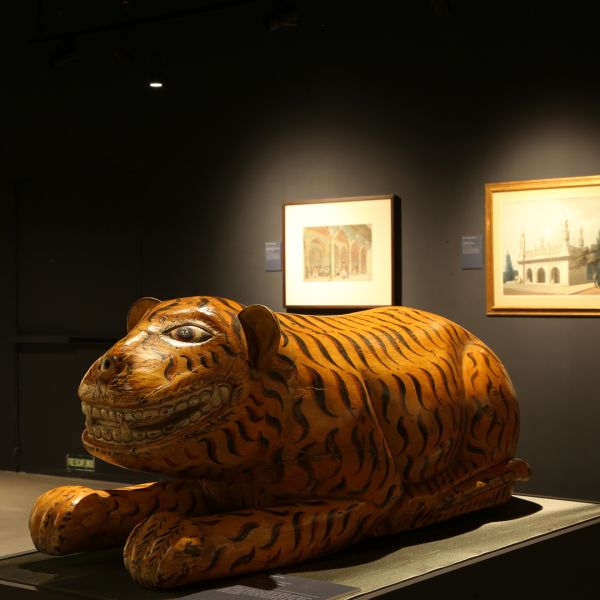 ExhibitionsTipu SultanAs low as $1.00
An extraordinary exhibition of paintings, prints, maps and other objects, curated by Giles Tillotson, that recounts a visual history of the Mysore Wars between the East India Company and Tipu Sultan, this DAG exhibition explores how the narrative might have changed 222 years after the siege of Seringapatnam. The images, based on the British view of the time, reflect changing perceptions and Indian views on this epic battle and its political and social fallouts. A highlight of the exhibition is a painting by Henry Singleton depicting The Last Effort and Fall of Tippoo Sultaun, among other stellar works, that will be seen in India for the first time. Alexander Allan Cpt. R. Frazer David Wilkie Edward Orme Henry Singleton J. B. Mauzaisse James Hunter Johann Peter Krafft John Smart Mather Brown Obadiah Sherratt Robert Hyde Colebrooke Robert Home Robert Ker Porter Thomas Stothard
Learn More -
 Collection OnlineTHE TAGORES$1.00
One of the most distinguished families in Bengal, the Tagores exercised unparalleled influence over the cultural landscape of the region. The Nobel Laureate, Rabindranath Tagore (1861 - 1941), and two of his nephews, Gaganendranath Tagore (1867-1938) and Abanindranath Tagore (1871 - 1951) were recognised as India’s National Art Treasure artists. Sunayani Devi (1875 -1962), their sister, is regarded as one of modern India’s first women painters known by name. Her lyrical paintings and embroideries often looked inward to an imagined world of fables and myths. At the turn of the twentieth century, we see Abanindranath emerging as the founder of the Bengal School as he envisioned a new Indian art that was free of colonial influence, rooted in pan-Asianism. Gaganendranath, on the other hand, was a prolific satirist and cartoonist, who imagined new forms and perspectives inspired by Cubism. Together they formed the influential Indian Society of Oriental Art in 1907, while Rabindranath’s school and university at Santiniketan would continue to shape modern art in Bengal for generations to come.
Learn More -
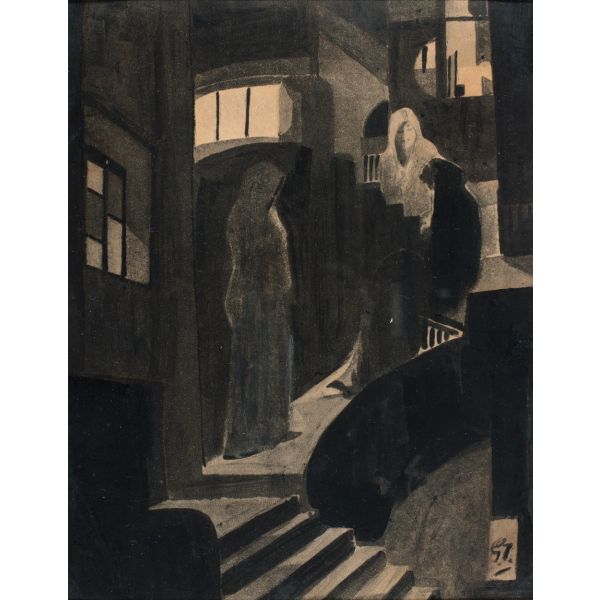 Events and ProgrammesMuseum as a Classroom: Jorasanko Thakurbari$1.00
A capacity building workshop for teachers on crafting museum-learning experiences for students at the historic house museum of the Tagore family. The workshop will focus on tools that can help make school visits to heritage sites more interactive and engaging.
Learn More -
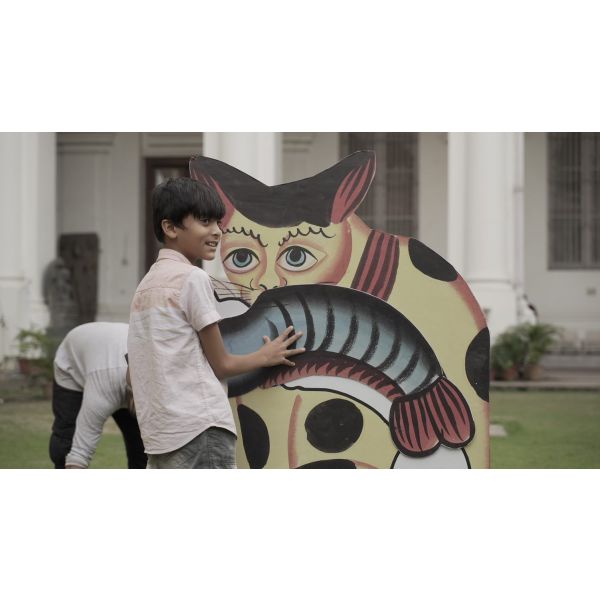 Events and ProgrammesPlayfair$1.00
DAG, in collaboration with the Indian Museum, presents a carnival of games inspired by the artists and art from the DAG collection. Spread over two days on the magnificent lawns of the museum, 'Play Fair' is an invitation to immerse yourself in Bengal art, ending with an after hours concert by The Big Other.
Learn More -
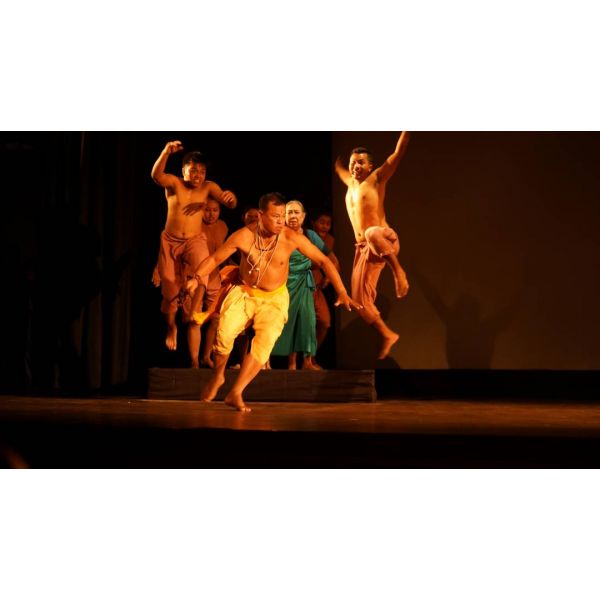 Events and ProgrammesPebet$1.00
Pebet is a ‘phunga wari’, a type of traditional fireside story told to Manipuri children by their grandparents. Directed by the renowned theatre practitioner Heisnam Kanhailal and performed first in 1975, it subverts the familiar icon of the bird and the cat to comment on political and cultural indoctrination.
Learn More -
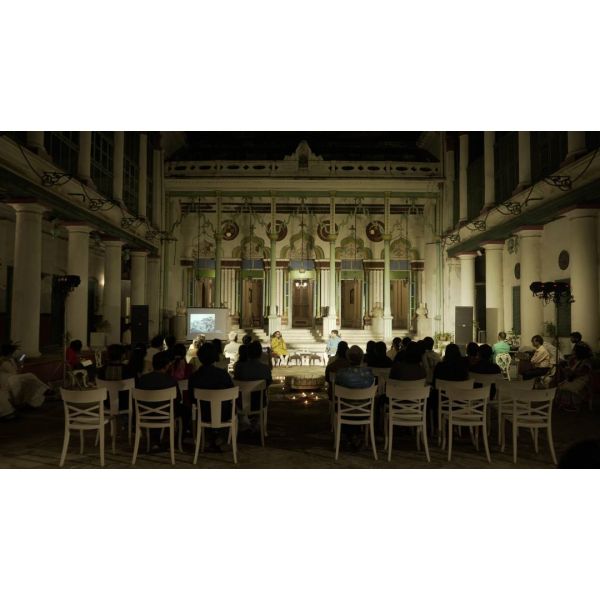 Events and ProgrammesRevisiting the Tagores$1.00
A musical evening at Prasad Tagore Palace, the heritage residence of Pramantha Tagore, preceded by a conversation with Sujaan Mukherjee about the Tagore family’s ties to music, theatre, and art patronage.
Learn More -
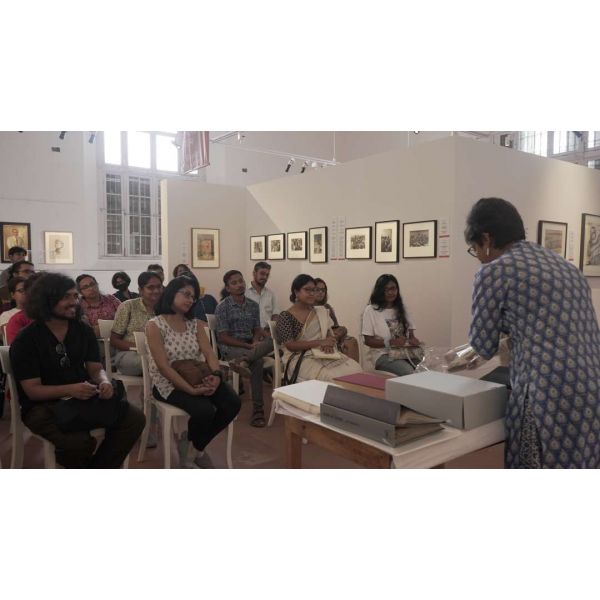 Events and ProgrammesPreserving the Past$1.00
A workshop by archivist Kamalika Mukherjee on the importance of family archives, and DIY methods that can help preserve our own paper-based for the next generation.
Learn More -
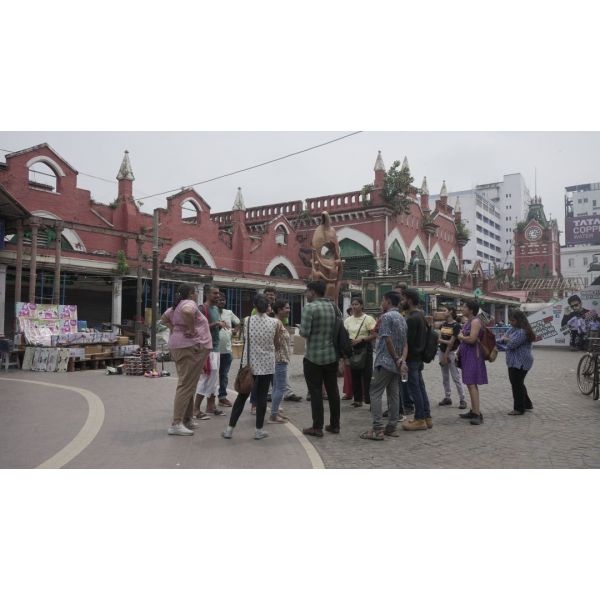 Events and ProgrammesCrossing the Midnight Hour$1.00
A guided walk by urban history researcher Sujaan Mukherjee, uncovering the forgotten histories of monuments and sites around the Indian Museum, and their changing fates after Independence.
Learn More -
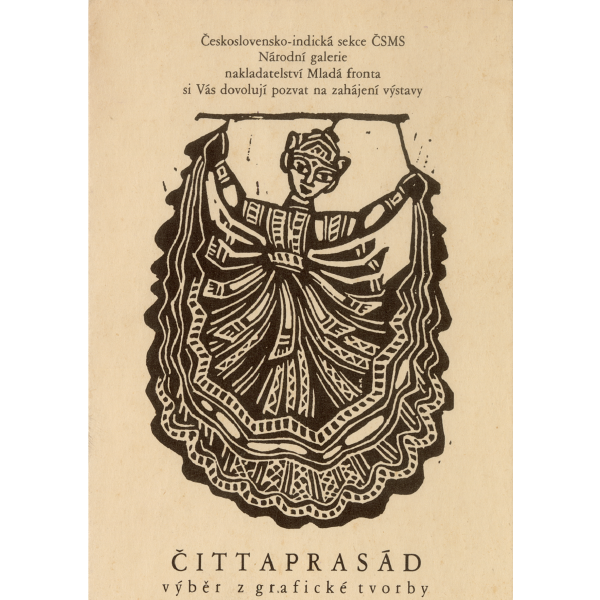 Collection StoriesAfter the Storm: Chittaprosad’s late oeuvre$0.00
Chittaprosad Bhattacharya (1913-1978) was a versatile artist and a lifelong adherent of the socialistic worldview. In 1943, he traveled across the famine-stricken villages of Bengal and produced realistic sketches of human suffering that were regularly published in the pages of the Communist Party journal 'People’s war'. These sketches were later compiled and published as a booklet under the title 'Hungry Bengal'. Fascinated by his artistic skills, the General Secretary of Communist Party of India, Puran Chand Joshi took Chittaprosad to the Party’s headquarters in Bombay (now Mumbai).
Learn More -
 Institutional CollaborationsMARCH TO FREEDOM: REFLECTIONS ON INDIA'S INDEPENDENCE$1.00
March to Freedom re-interprets the well-known story of the Indian freedom struggle and anticolonial movement through works of art and some historic artefacts. Drawn from the collections of DAG, they range from eighteenth and nineteenth century European paintings and prints, to lesser known works by Indian artists that merit greater recognition, alongside some iconic pieces. Rather than following the usual chronological path, the story is structured around eight themes. Each represents one arena, or stage, on which the anti-colonial struggle took place, to expand the story beyond politics, politicians, and battles (which also feature). Conceived to commemorate and celebrate the 75th anniversary of India’s independence, this visual journey seeks to do more. For even as we remember the struggles, the sacrifices, and the stories, such anniversaries are also occasions for reflection, including upon the scholarship that has developed on South Asian history. Some of the latter may be familiar to academics, or those with special interests. For most of the rest of us, our knowledge of this past is derived in large part from hazy memories of school lessons, which change from one generation to the next, and are influenced by concurrent national politics. We also learn from narratives on offer through public channels or in the media, to mark moments of national remembrance or controversy.
Learn More