


Search results for: 'please don't bully me nagatoro characters yoshi'
-
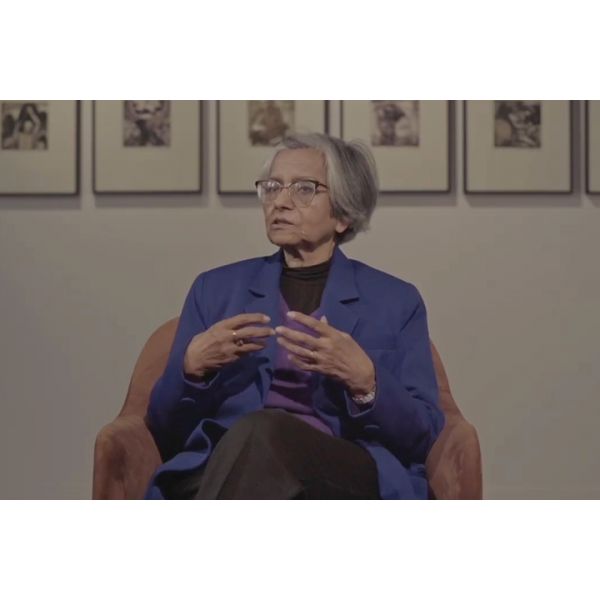 JournalArtists (Un)Scripted – Anupam Sud$0.00India’s foremost printmaker, Anupam Sud is perhaps also the country’s most well-known. What has tethered her to the democratic medium of printmaking—against all odds, needless to say—is a reason worth discovering in this short video in which the artist muses over her motivations and practice. Learn More
 -
 JournalBefore the Chaos of Destruction: Jeram Patel's Iconic Works$0.00
Artists often proceed through a trial and error method—an incessant experimentation—leaving behind a singular trail of oeuvre composed of an irreconcilable, yet inseparable, set of works. Born in the small town of Sojitra in the Kheda district of Gujarat, Jeram Patel studied drawing and painting at Sir J. J. School of Art, Bombay. In 1959, excellence in his work led him to pursue commercial design at Central School of Arts and Crafts, London, on a scholarship, and also travel to France and Japan. Thereafter, he successfully held solo exhibition at various places in India and abroad, and participated in international events such as the Tokyo Biennale and Sao Paulo Art Biennale (both in 1963).
Learn More -
 Collection OnlineDEVIS$1.00
The Devi or the female power in Hindu mythology appears in various avatars in our everyday lives—as idols during the puja, on covers of magazines, product labels, calendars and posters. The modern history of visualising the Devi goes back to naturalistic depictions in oil paintings by the Early Bengal artists, which were surpassed in popularity and fame by Raja Ravi Varma and his studio. His representation, however, was regarded as too human-like by artists of the Bengal School in the early twentieth century, who created idealised forms based on a synthesis of classical visual traditions. In the twentieth century, we find artists responding to distinctive traits of the goddess to portray specific aspects of her power, or to convey the artist's own relationship with divinity. Few artists who have turned to Hindu myths have been able to escape the temptation to interpret the female power in their own way, and the diversity in style, medium, and mood is a testament to that.
Learn More -
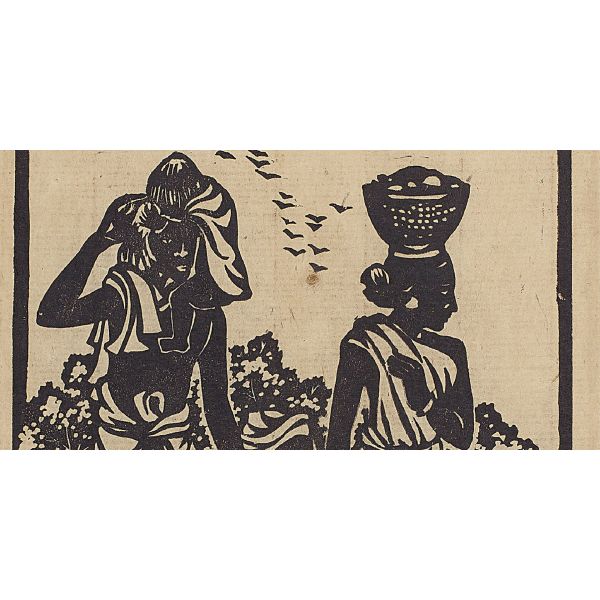 JournalRani Chanda on Nandalal Bose, Jamini Roy and Mukul Dey$0.00
A translation of Rani Chanda's (nee Dey) essay/ memoir of Nandalal Bose, her teacher, and his friendship with Mukul Dey (Chanda's elder brother) and Jamini Roy.
Learn More -
 JournalGroup 1890$0.00Group 1890 remains unique in the journey of modern Indian art for various reasons, the most important being J. Swaminathan as the force behind the short-lived collective that held only one exhibition in its lifetime, in 1963. In 2016, DAG organized a ‘second’ exhibition of the group, featuring works by all its founder members. Learn More
 -
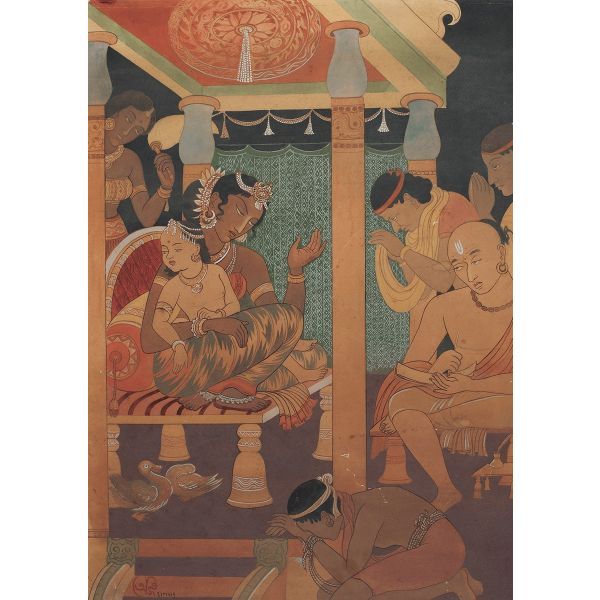 Collection StoriesSYNCRETISM IN BENGAL ART$1.00
As a region that is home to many religions and cultures, South Asia has been a fertile ground for art that blends different styles, ideas, and influences. Conquest, migration, or friendly exchange of cultural ideas and values—be it in the visual arts, food, or politics—all played a part in shaping the region as a melting pot of civilisations. Explore artworks that showcase this syncretic legacy from DAG's museum collection—starting with the early encounters with European realism, the pan-Asian influences on the Bengal School, and beyond.
Learn More -
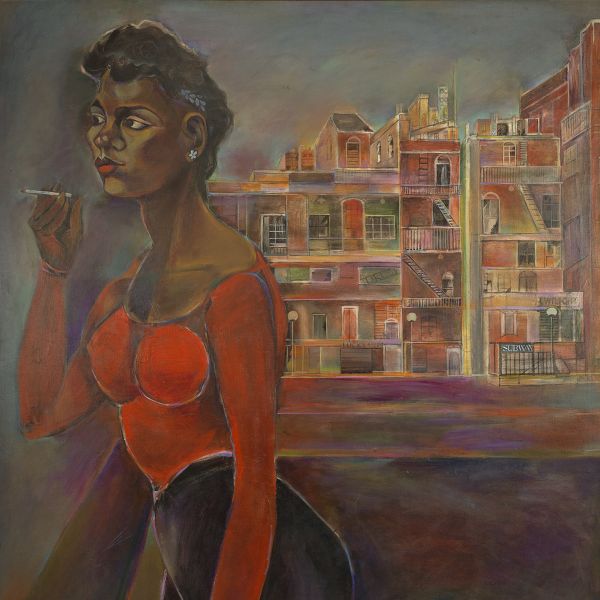 ExhibitionsIndia’s Rockefeller ArtistsAs low as $1.00
India’s Rockefeller Artists showcases iconic works of the Indian painters and sculptors who travelled to the US on philanthropic grants from the JDR 3rd Fund (1963–1979) and later through the Asian Cultural Council. These artists were exposed to American art and shared their own learnings and experiences through these enriching cultural exchanges. The show examines how and why these artists were selected; their relationships with each other and the American art milieu; the impact of the experience on their work; and the creation of a community of Rockefeller artists.
Learn More -
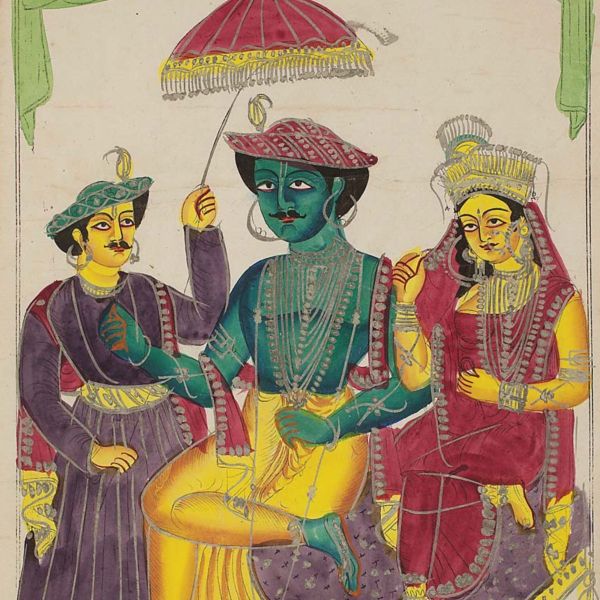 ExhibitionsManifestations X: 75 ArtistsAs low as $1.00
Manifestations, DAG’s signature exhibition showcasing the very best of modern Indian art, appears this winter in its landmark tenth edition, bringing together seventy-five of India’s best-known and most established modernists. The artworks are grouped by genre into the categories of mythology, landscape, still-life, figurative, narrative and abstract art, and present the mature styles of the participating artists. Raiba A. M. Davierwalla Abanindranath Tagore Ambadas Arpana Caur Avinash Chandra Benode Behari Mukherjee Bikash Bhattacharjee Biren De Chittaprosad D. P. Roy Chowdhury Dhanraj Bhagat Early Bengal (Anonymous) F. N. Souza G. R. Santosh Gaganendranath Tagore Ganesh Haloi Ganesh Pyne George Keyt Gieve Patel Gogi Saroj Pal Gopal Ghose Haku Shah Hemanta Misra Hemendranath Majumdar Himmat Shah Indra Dugar J. Sultan Ali J. Swaminathan Jamini Roy Jeram Patel Jogen Chowdhury Jyoti Bhatt K. C. S. Panicker K. G. Subramanyan K. K. Hebbar K. Laxma Goud K. S. Kulkarni K. S. Radhakrishnan Kalighat Pat (Anonymous) Laxman Pai M. A. R. Chughtai M. F. Husain M. V. Dhurandhar Manu Parekh Meera Mukherjee N. S. Bendre Nandalal Bose Dharamnarayan Dasgupta Nikhil Biswas P. Khemraj P. T. Reddy P. V. Janakiram Paritosh Sen Piloo Pochkhanawalla Prosanto Roy R. Vijaivargiya Rabin Mondal Rabindranath Tagore Raghav Kaneria Raja Ravi Varma Ramkinkar Baij S. Dhanapal S. H. Raza S. K. Bakre Satish Gujral Shanti Dave Shyamal Dutta Ray Sohan Qadri Somnath Hore Sunayani Devi Sunil Das Sunil Madhav Sen Thota Vaikuntam V. Nageshkar
Learn More -
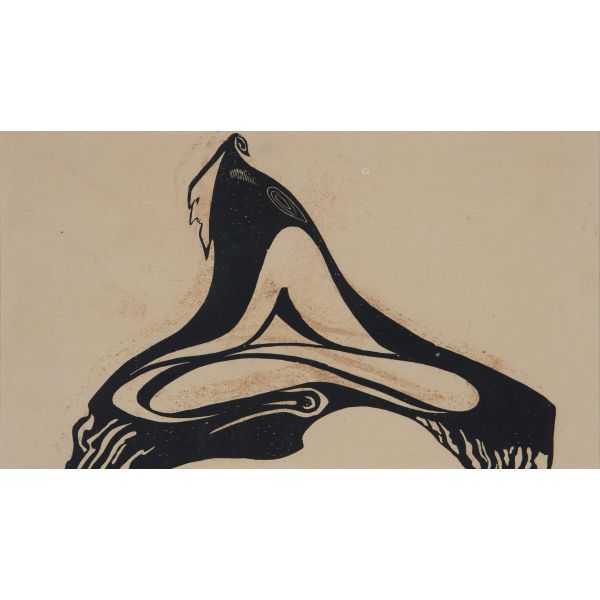 Institutional CollaborationsNavratna: India’s National Treasure Artists$1.00
Nine artists find special mention in India as ‘art treasures, having regard to their artistic and aesthetic value’, a directive by the Archaeological Survey of India in the 1970s. Spanning a period of one hundred years of art practice, these artists represent a diversity of art traditions and movements but are unified by one common thread: a return to Indian roots through context, theme, subject, and an engagement with identity.
Learn More -
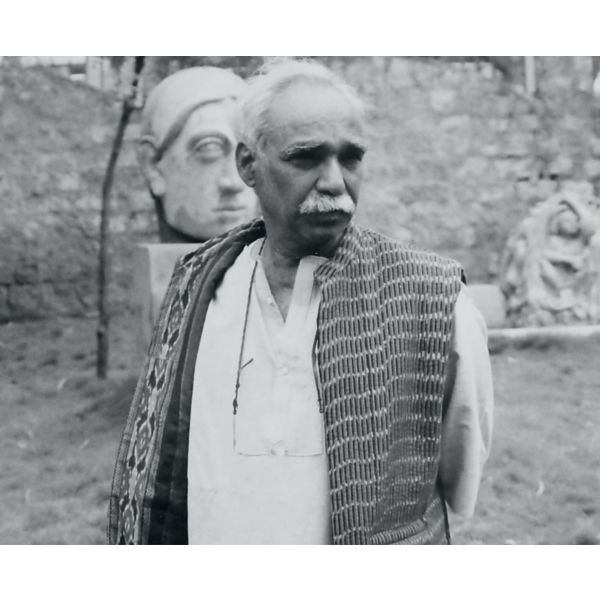 ArtistsThota Vaikuntam$0.00Born in Karimnagar district in undivided Andhra Pradesh, Thota Vaikuntam is known for powerfully-delineated and brightly-coloured portraits of robust men and women of the Telangana region where he grew up. He studied at College of Fine Arts, Hyderabad, from 1965-70, before training under K. G. Subramanyan at M. S. University, Baroda, in 1971-72, on a Lalit Kala Akademi fellowship. Learn More
 -
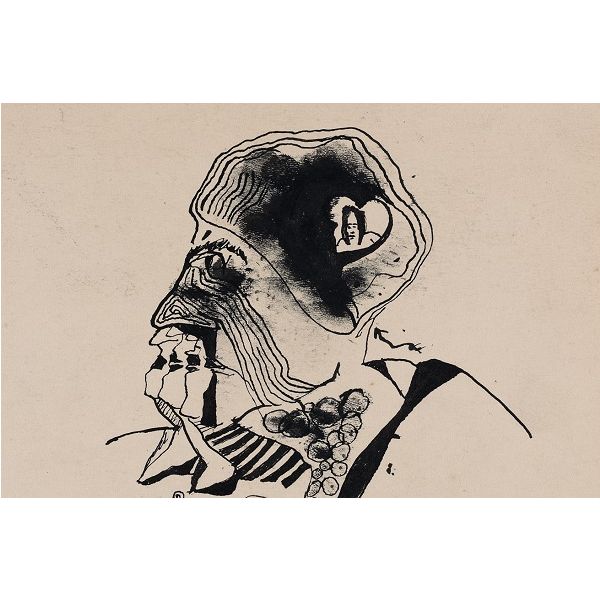 JournalDrawing in the margins: Altaf's sketches and diaries$0.00
Drawing from the Greek word skhedios, meaning ‘to extemporize’, the sketch presents an interiorized, psychological landscape against classical painting’s heroic, externalized construction of the painted tableau. For many artists, sketching and drawing suggest initial explorations for capturing moods, relations and subjectivities that can be expanded through later applications of paint and texture.
Learn More -
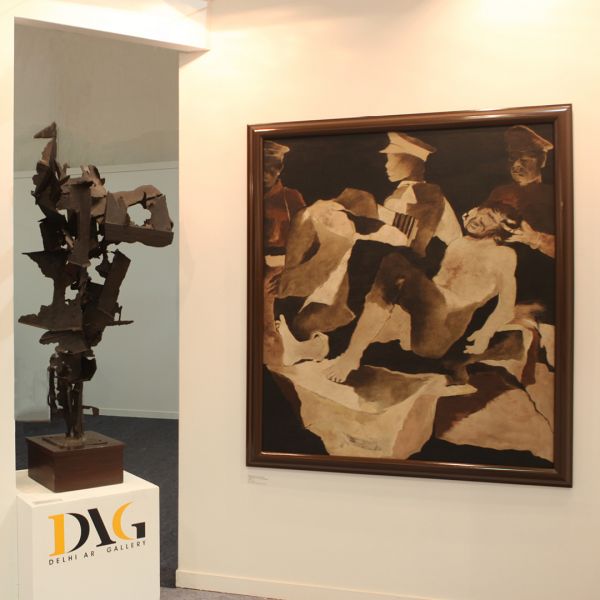 Art FairsIndia Art Fair$0.00
Stepping up its efforts to familiarise viewers with the extensive range of Indian modern art, DAG occupied an extensive booth at the India Art Fair 2014, where over 300 paintings and sculptures were displayed, featuring about 125 artists. The specially designed booth was the centre of attraction at the fair and the most prominent destination for art lovers wanting to understand the development of Indian art from the point of its history, chronology, movements, periods, regions, or genres. It was an art history lesson brought to life and was thronged by visitors. Special talks were organised at the booth. A 332-page catalogue was specially published for the fair and remains a compendium of India’s greatest artists ever. A. A. Almelkar A. A. Raiba A. D. Tavaria A. M. Davierwalla Abalall Rahiman Abanindranath Tagore Akbar Padamsee Altaf Amalnath Chakladhar Ambadas Amitava Aroomoogam Pillay Arpana Caur Avinash Chandra B. C. Law B. Prabha Badri Nath Arya Bal Chhabda Benjamin Hudson Benode Behari Mukherjee Bhupen Khakkar Bijan Choudhary Bikash Bhattacharjee Bimal Dasgupta Bipin Behari Goswami Biren De Bireswar Sen Chintamoni Kar Chittaprosad D. P. Roy Chowdhury Dhanraj Bhagat Dharamanarayan Dasgupta Early Bengal Oil (Anonymous) F. N. Souza G. R. Santosh Gaganendranath Tagore Ganesh Haloi Ganesh Pyne George Keyt Gieve Patel Gogi Saroj Pal Gopal Ghose H. A. Gade Haren Das Hemanta Misra Hemendranath Majumdar Henry Singleton Himmat Shah Indra Dugar J. Sultan Ali J. Swaminthan Jacob Epstein Jamini Roy Jeram Patel Jogen Chowdhury Jyoti Bhatt K. C. S. Panicker K. G. Subramanyan K. H. Ara K. K. Hebbar K. Laxma Goud K. S. Kulkarni Kalighat Pat Kanwal Krishna Khagen Roy Kisory Roy Krishen Khanna Kshitindranath Majumdar L. Munuswamy L. N. Taskar L. P. Shaw Laxman Pai M. A. R. Chughtai M. F. Husain M. F. Pithawalla M. V. Dhurandhar Manjit Bawa Manu Parekh Meera Mukherjee Mohan Samant N. R. Sardesai N. S. Bendre Nandalal Bose Nemai Ghosh Nikhil Biswas P. Chander Sheker P. Khemraj P. T. Reddy P. V. Janakiram Paritosh Sen Pestonji E. Bomanji Portrait (Anonymous) Prabhakar Barwe Prodosh Das Gupta Prokash Karmakar Prosanto Roy R. Vijaivargiya Rabin Mondal Rabindranath Tagore Radha Charan Bagchi Raghav Kaneria Raja Ravi Varma Ram Kumar Ramendranath Chakravorty Rameshwar Broota Ramkinkar Baij Ravi Varma School (Anonymous) S. Dhanapal S. G. Thakur Singh S. H. Raza S. L. Haldankar S.K. Bakre Sailoz Mukherjea Sankho Choudhuri Satish Gujral Shiavax Chavda Shyamal Dutta Ray Sohan Qadri Somnath Hore Suhas Roy Sunil Das Sunil Madhav Sen Thomas Daniell Tyeb Mehta V. Nageshkar V. S. Gaitonde Ved Nayar
Learn More